Building Blocks
Esta sección contiene productos fundamentales para la síntesis de compuestos orgánicos y biológicos. Building blocks son los materiales de partida esenciales utilizados para construir moléculas complejas a través de diversas reacciones químicas. Desempeñan un papel crítico en el descubrimiento de fármacos, la ciencia de materiales y la investigación química. En CymitQuimica, ofrecemos una gama diversa de building blocks de alta calidad para apoyar sus investigaciones innovadoras y proyectos industriales, asegurando que tenga los componentes esenciales para una síntesis exitosa.
Subcategorías de "Building Blocks"
- Ácidos borónicos y derivados del ácido borónico(5.756 productos)
- Building Blocks quirales(1.242 productos)
- Building Blocks de hidrocarburos(6.093 productos)
- Building Blocks orgánicos(60.525 productos)
Se han encontrado 195536 productos de "Building Blocks"
Ordenar por
Pureza (%)
0
100
|
0
|
50
|
90
|
95
|
100
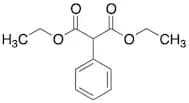
Diethyl Phenylmalonate
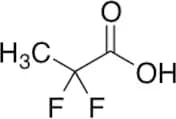
CAS:Producto controlado<p>Applications Diethyl Phenylmalonate is a reagent used in the synthesis of antituberculosis agents.<br>References Ng, P. S., et al.: J. Med. Chem., 106, 144-156 (2015)<br></p>Fórmula:C13H16O4Forma y color:NeatPeso molecular:236.262,2-Difluoropropionic acid
CAS:Producto controlado<p>Applications 2,2-Difluoropropionic acid (cas# 373-96-6) is a useful research chemical.<br></p>Fórmula:C3H4O2F2Forma y color:NeatPeso molecular:110.05Diisopropyl Malonate
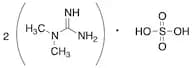
CAS:Producto controlado<p>Applications Diisopropyl Malonate is a disinfection byproduct of Isoprothiolane (I874300); a dithiolane pesticide commonly used in agriculture as a fungicide to control planthoppers and blast disease in rice plants.<br>References Chin, K.M.: Malay. Agric. J., 50, 221 (1975); Ikeda, Y. et al.: Biosci. Biotech. Biochem., 57, 288 (1993); Nakamura, H.: Rev. Plant Prot. Res., 10, 1 (1977); Reddy, A.P.K. et al.: Pesticide, 22, 21 (1988); Jinno, H., et al.: Arch. Toxicol., 71, 550 (1997)<br></p>Fórmula:C9H16O4Forma y color:NeatPeso molecular:188.221,1-Dimethylguanidine Sulfate
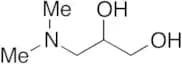
CAS:Producto controlado<p>Applications 1,1-dimethylguanidine Sulfate (cas# 598-65-2) is a useful research chemical.<br></p>Fórmula:(C3H9N3)·H2SO4Forma y color:NeatPeso molecular:272.323-(Dimethylamino)-1,2-propanediol
CAS:Producto controlado<p>Applications 3-(Dimethylamino)-1,2-propanediol is a reagent in the synthesis of 1,2-Dioleoyl-3-trimethylammonium-propane, Chloride (D484450).<br> Not a dangerous good if item is equal to or less than 1g/ml and there is less than 100g/ml in the package<br></p>Fórmula:C5H13NO2Forma y color:NeatPeso molecular:119.164,5-Dimethyl-3-isoxazolamine
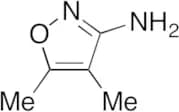
CAS:Producto controlado<p>Applications 4,5-Dimethyl-3-isoxazolamine is an isoxazole derivative used in the preparation of a varitey of biologically active compounds such as selective ETA receptor antagonists.<br>References Murugesan, N. et al.: J. Med. Chem., 46, 125 (2003);<br></p>Fórmula:C5H8N2OForma y color:NeatPeso molecular:112.131,2-Dimethylisothiourea-HI
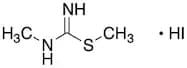
CAS:Producto controlado<p>Applications 1,2-Dimethylisothiourea-HI (cas# 41306-45-0) is a useful research chemical.<br></p>Fórmula:C3H8N2S·HIForma y color:NeatPeso molecular:232.08Diphenyl Chlorophosphonate
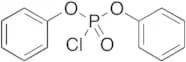
CAS:Producto controlado<p>Applications Diphenyl Chlorophosphonate, is a building block used for the synthesis of various chemical compounds. It can be used for the synthesis of phosphate esters of polyhedral hydroxyboranes, showing enhanced tumor uptake.<br> Not a dangerous good if item is equal to or less than 1g/ml and there is less than 100g/ml in the package<br>References Bechtold, R., et al.: J. Med. Chem., 18, 371 (1975);<br></p>Fórmula:C12H10ClO3PForma y color:NeatPeso molecular:268.63N,N-Dimethylmethyleneiminium Iodide
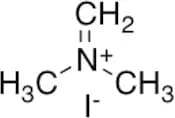
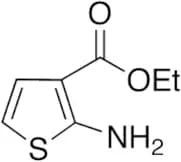
CAS:Producto controlado<p>Applications N,N-Dimethylmethyleneiminium Iodide (cas# 33797-51-2) is a useful research chemical.<br></p>Fórmula:C3H8INForma y color:NeatPeso molecular:185.01Ethyl 2-Aminothiophene-3-carboxylate
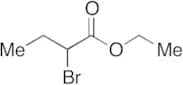
CAS:Producto controlado<p>Applications Ethyl 2-Aminothiophene-3-carboxylate (cas# 31891-06-2) is a compound useful in organic synthesis.<br></p>Fórmula:C7H9NO2SForma y color:NeatPeso molecular:171.22Ethyl 2-Bromobutyrate
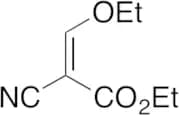
CAS:Producto controlado<p>Applications Ethyl 2-bromobutyrate is used in synthetic chemistry as a polymerization initiator. Ethyl 2-bromobutyrate is also used as a reagent to synthesize Efaroxan, an imidazoline α 2-antagonist that stimulated insulin secretion in rat pancreatic cells.<br> Not a dangerous good if item is equal to or less than 1g/ml and there is less than 100g/ml in the package<br>References Ball, A., et al.: Pharm. Res., 42, 575 (2000); Bibiao. J. et al.: Eur. Polym. J., 42, 179 (2006); Chan, S. & Morgan, N.: Eur. J. Pharm., 176, 97 (1990); Xu, W., et al.: Eur. Polym. J., 39, 1349 (2003)<br></p>Fórmula:C6H11BrO2Forma y color:NeatPeso molecular:195.05Ethyl Cyano(ethoxymethylene)acetate
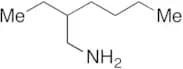
CAS:Producto controlado<p>Applications Ethyl Cyano(ethoxymethylene)acetate is an intermediate in the synthesis of anti-inflammatory agents with gastroprotective effect in rats.<br>References Karoui, A., et al.: Med. Chem. Res., 23, 1591 (2014);<br></p>Fórmula:C8H11NO3Forma y color:NeatPeso molecular:169.182-Ethyl-1-hexanamine
CAS:Producto controlado<p>Applications Used as a reactant or reagent in preparation of N-alkyl carbamates.<br> Not a dangerous good if item is equal to or less than 1g/ml and there is less than 100g/ml in the package<br>References Lazewska, D. et al.: BioMed. Chem. Let., 19, 6682 (2009);<br></p>Fórmula:C8H19NForma y color:NeatPeso molecular:129.243-Mercapto-2-pyridinecarboxylic acid hydrochloride
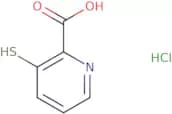
CAS:<p>3-Mercapto-2-pyridinecarboxylic acid hydrochloride (3MP) is a small molecule that is a phosphoenolpyruvate carboxykinase inhibitor. The inhibition of this enzyme leads to an accumulation of 3-phosphoglyceric acid and inhibits the conversion of pyruvate to acetyl CoA, which results in the accumulation of reactive oxygen species. 3MP has been shown to inhibit the activity of mitochondrial phosphoenolpyruvate carboxykinase (PEPCK) in porcine hepatocytes, leading to decreased triglycerides and increased glucose uptake. It also inhibits PEPCK activity in vitro in cultured human cells, leading to increased HSP70 levels and exacerbated oxidative stress.</p>Fórmula:C6H5NO2S·HClPureza:Min. 95%Forma y color:PowderPeso molecular:191.64 g/mol4'-Iodoacetophenone
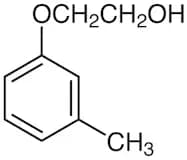
CAS:<p>4'-Iodoacetophenone is a catalyst in organic synthesis. It is a cross-coupling agent that is used to catalyze reactions of alkyl halides with organometallic compounds. The reaction mechanism is the same as for other cross-coupling reactions and involves the formation of a palladium complex. 4'-Iodoacetophenone has been shown to be effective in asymmetric synthesis, where it can be used as a homogeneous catalyst. This compound has also been shown to be an efficient methylating agent and can be used in the methylation of various functional groups, such as amines, nitro groups, and phenols.</p>Fórmula:C8H7IOPureza:Min. 95%Forma y color:Yellow PowderPeso molecular:246.05 g/molEthylene Glycol Mono-m-tolyl Ether
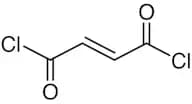
CAS:Fórmula:C9H12O2Pureza:>98.0%(GC)Forma y color:Colorless to Almost colorless clear liquidPeso molecular:152.19Fumaryl Chloride
CAS:Fórmula:C4H2Cl2O2Pureza:>95.0%(GC)(T)Forma y color:Colorless to Light orange to Yellow clear liquidPeso molecular:152.966-Bromo-2-(4-bromophenyl)-indole
CAS:<p>6-Bromo-2-(4-bromophenyl)-indole is a fine chemical with CAS No. 28718-96-9 that can be used as a versatile building block for the synthesis of complex compounds, useful scaffold for research chemicals, and reaction component for speciality chemicals. This compound has high quality and is a reagent in the synthesis of other compounds.</p>Fórmula:C14H9Br2NPureza:Min. 95%Forma y color:Off white to pale yellow powder.Peso molecular:351.04 g/mol(S)-(+)-3-Methyl-1-pentanol
CAS:<p>(S)-(+)-3-Methyl-1-pentanol is a branched-chain, β-unsaturated aldehyde that is produced by the elimination of two molecules of water from (R)-(+)-3-methylbutanal. It is an organocatalytic substrate for the family of enzymes that catalyze the first step in the biosynthetic pathway to abiotic long-chain alcohols. The product is an intermediate in the biosynthesis of escherichia coli and other bacteria. The enzyme involved in this reaction is initially activated by acetate and then inhibited by NADH. In nature, this compound can be found as a natural product or as a metabolic intermediate.</p>Fórmula:C6H14OPureza:Min. 95%Forma y color:Colorless Clear LiquidPeso molecular:102.17 g/mol1-(1,2,3,6-Tetrahydro-4-pyridyl)-2-benzimidazolinone
CAS:Fórmula:C12H13N3OPureza:>97.0%(HPLC)Forma y color:Light orange to Yellow to Green powder to crystalPeso molecular:215.26