Building Blocks
Esta sección contiene productos fundamentales para la síntesis de compuestos orgánicos y biológicos. Building blocks son los materiales de partida esenciales utilizados para construir moléculas complejas a través de diversas reacciones químicas. Desempeñan un papel crítico en el descubrimiento de fármacos, la ciencia de materiales y la investigación química. En CymitQuimica, ofrecemos una gama diversa de building blocks de alta calidad para apoyar sus investigaciones innovadoras y proyectos industriales, asegurando que tenga los componentes esenciales para una síntesis exitosa.
Subcategorías de "Building Blocks"
- Ácidos borónicos y derivados del ácido borónico(5.756 productos)
- Building Blocks quirales(1.242 productos)
- Building Blocks de hidrocarburos(6.093 productos)
- Building Blocks orgánicos(60.522 productos)
Se han encontrado 195533 productos de "Building Blocks"
Ordenar por
Pureza (%)
0
100
|
0
|
50
|
90
|
95
|
100
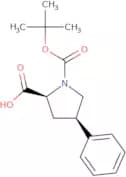
(2S,4R)-Boc-4-phenyl-pyrrolidine-2-carboxylic acid
CAS:<p>(2S,4R)-Boc-4-phenyl-pyrrolidine-2-carboxylic acid is a useful intermediate in the preparation of compounds with a pyrrolidine ring. It has been used as a reagent to convert amines into their corresponding carboxylic acids. The compound has also been used as a building block for other compounds and as an intermediate in the synthesis of more complex compounds. CAS No. 336818-78-1</p>Fórmula:C16H21NO4Pureza:Min. 95%Forma y color:PowderPeso molecular:291.34 g/mol6-Bromo-2,3-dihydro-1H-indole
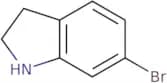
CAS:<p>6-Bromo-2,3-dihydro-1H-indole is a natural product that has been shown to inhibit cancer cell growth in vitro. In the presence of 6-bromoindole, cells are unable to proliferate and undergo apoptosis. This compound also shows anti-cancer activity against human leukemia cells. The mechanism of action for this molecule is not yet known but may be related to its ability to activate the caspase enzyme family or its ability to bind to DNA. 6-Bromoindole has been shown to have anti-inflammatory properties through inhibition of prostaglandin synthesis in animal models.</p>Fórmula:C8H8BrNPureza:Min. 95%Forma y color:Off-White PowderPeso molecular:198.06 g/molBoc-Phe-Pro-OH
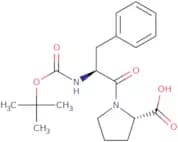
CAS:<p>Boc-Phe-Pro-OH is an opioid receptor agonist. It binds to the δ opioid receptors and activates them, which leads to analgesic effects. Boc-Phe-Pro-OH also has antibacterial properties and can be used for the treatment of bacterial infections. This compound may also have antiinflammatory properties that are mediated by its ability to inhibit prostaglandin synthesis. Boc-Phe-Pro-OH has been shown to possess a high affinity for the μ opioid receptor, but does not activate this receptor subtype.</p>Fórmula:C19H26N2O5Pureza:Min. 95%Forma y color:White To Off-White SolidPeso molecular:362.42 g/mol1-(2-Bromoethoxy)-4-chloro-benzene
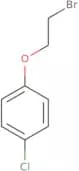
CAS:<p>1-(2-Bromoethoxy)-4-chloro-benzene is a monomer that is soluble in organic solvents and has been shown to be an electron donor. The reaction mechanism of the bromination of 1-(2-bromoethoxy)-4-chlorobenzene involves the formation and subsequent decomposition of a radical anion, which is stabilized by the solvent acetonitrile. This monomer can also be used as a sensitizer for polymerization reactions. The yield of this product has been found to increase with increasing amounts of ethanol in the solution. 1-(2-Bromoethoxy)-4-chlorobenzene can also undergo an intramolecular cyclization to form a five membered ring with two stereogenic centers.<br>1-(2-Bromoethoxy)-4-chlorobenzene yields optical rotation values that are dependent on the concentration of water in the solution and it has been</p>Fórmula:C8H8BrClOPureza:Min. 95%Forma y color:Off-White PowderPeso molecular:235.51 g/mol5-Nitro-7-azaindole
CAS:<p>5-Nitro-7-azaindole is a heterocyclic compound that is structurally related to the furoquinolines. It has been shown to act as an inhibitor of benzene and pyridine oxidases, which are enzymes that catalyze the conversion of these compounds into reactive intermediates. The reaction mechanism of 5-Nitro-7-azaindole with benzene and pyridine oxidases involves the formation of covalent bonds with reactive sulfur atoms in the enzyme active site. 5-Nitro-7-azaindole also inhibits bacterial growth by inhibiting DNA synthesis. This compound has been found to be scalable and can be produced at large scales without loss in quality. 5-Nitro-7-azaindole is not stereoselective and it is not an aromatic system, meaning that it does not have a benzene ring.</p>Fórmula:C7H5N3O2Pureza:Min. 95%Forma y color:PowderPeso molecular:163.13 g/mol2-Nitroimidazole
CAS:<p>2-Nitroimidazole is a compound that has been shown to have significant cytotoxicity against tumor cells. It is also an anti-cancer drug with a matrix effect on solid tumours, and has been shown to inhibit the synthesis of DNA, RNA, and proteins in vitro. 2-Nitroimidazole is also active against infectious diseases such as HIV, herpes simplex virus type 1, and influenza A virus. The biological properties of this compound are currently being studied by analytical methods such as LC/MS and HPLC/UV.</p>Fórmula:C3H3N3O2Pureza:Min. 95%Forma y color:PowderPeso molecular:113.07 g/molPolyethylene Glycol Stearylamine (n=approx. 10)
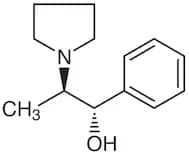
Pureza:min. 90.0 %Forma y color:Orange to Brown to Dark red clear liquid(1S,2R)-1-Phenyl-2-(1-pyrrolidinyl)propan-1-ol
CAS:Fórmula:C13H19NOPureza:>97.0%(GC)Forma y color:White or Colorless to Light yellow powder to lump to clear liquidPeso molecular:205.304-Nitropyridine-2-carboxylic acid
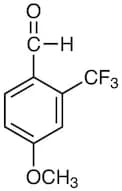
CAS:<p>4-Nitropyridine-2-carboxylic acid (4NPCA) is a nitro compound that can form both an n-oxide and a deuterium isotope effect. 4NPCA has been shown to react with picolinic acid, forming a stable chelate ligand that is stabilized by the electron withdrawal of the nitro group. 4NPCA also reacts with acetonitrile to form isotopomers, which are molecules that differ only in the number of atoms of hydrogen or deuterium present. The formation of these isotopomers occurs through an intramolecular hydrogen transfer from the hydroxyl group on one molecule to the nitro group on another.</p>Fórmula:C6H4N2O4Pureza:Min. 95%Forma y color:Pale yellow solid.Peso molecular:168.11 g/mol4-Methoxy-2-(trifluoromethyl)benzaldehyde
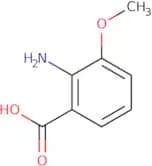
CAS:Fórmula:C9H7F3O2Pureza:>97.0%(GC)Forma y color:White to Almost white powder to lumpPeso molecular:204.152-Amino-3-methoxybenzoic acid
CAS:<p>2-Amino-3-methoxybenzoic acid is a chemical compound that is found in humans. It has antioxidative activity, and it inhibits the conversion of picolinic acid to kynurenine in vitro. 2-Amino-3-methoxybenzoic acid also significantly inhibits the formation of 3-hydroxyanthranilic acid and xanthurenic acid from anthranilic acid. This inhibition may be due to its ability to form hydrogen bonds with the substrate or competitive inhibition of enzymes such as quinoline reductase.<br>2-Amino-3-methoxybenzoic acid has been shown to have significant inhibitory effects on thermodynamic parameters for hydroxy group addition reactions involving quinoline derivatives, which may be due to its ability to bind covalently with these substrates.</p>Fórmula:C8H9NO3Pureza:Min. 95%Forma y color:PowderPeso molecular:167.16 g/molEthyl 2-aminothiophene-3-carboxylate
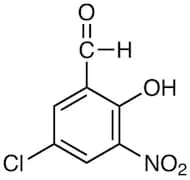
CAS:<p>Ethyl 2-aminothiophene-3-carboxylate is a triazole derivative with anticancer activity. It has been shown to inhibit the adenosine A1 receptor and show anticancer activity in vitro. The drug has also been shown to have potent cytotoxic effects against cancer cells, which may be due to its ability to activate apoptosis in tumor cells through structural modifications that lead to the inhibition of DNA synthesis. This compound has also been shown to be less toxic than other chemotherapeutic drugs, such as thiosemicarbazide and ethylene diamine, and it does not cause red blood cell lysis or hemolysis.</p>Fórmula:C7H9NO2SPureza:Min. 95%Forma y color:Slightly Yellow PowderPeso molecular:171.22 g/mol5-Chloro-3-nitrosalicylaldehyde
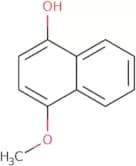
CAS:Fórmula:C7H4ClNO4Pureza:>98.0%(GC)(T)Forma y color:Light orange to Yellow to Green powder to crystalPeso molecular:201.564-Methoxy-1-naphthol
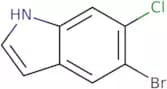
CAS:<p>Spectrophotometric substrate for peroxidase</p>Fórmula:C11H10O2Pureza:Min. 95%Forma y color:Brown PowderPeso molecular:174.2 g/mol5-Bromo-6-chloro-1H-indole
CAS:<p>5-Bromo-6-chloro-1H-indole is a fine chemical that is used as a building block for research chemicals, reagents, and speciality chemicals. It is soluble in chloroform and benzene, but insoluble in water. This product can be used as a reaction component or a useful intermediate in the production of complex compounds. 5-Bromo-6-chloro-1H-indole has been reported to be an effective scaffold for the synthesis of many novel compounds with potential applications such as pharmaceuticals, agrochemicals, and dyes.</p>Fórmula:C8H5BrClNPureza:Min. 95%Forma y color:PowderPeso molecular:230.49 g/mol6-Bromo-2-(4-bromophenyl)-indole
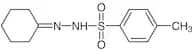
CAS:<p>6-Bromo-2-(4-bromophenyl)-indole is a fine chemical with CAS No. 28718-96-9 that can be used as a versatile building block for the synthesis of complex compounds, useful scaffold for research chemicals, and reaction component for speciality chemicals. This compound has high quality and is a reagent in the synthesis of other compounds.</p>Fórmula:C14H9Br2NPureza:Min. 95%Forma y color:Off white to pale yellow powder.Peso molecular:351.04 g/molCyclohexanone p-Toluenesulfonylhydrazone
CAS:Fórmula:C13H18N2O2SPureza:>98.0%(T)(HPLC)Forma y color:White to Light yellow to Light orange powder to crystalPeso molecular:266.364-(Acetylamino)-2-nitrobenzoic acid
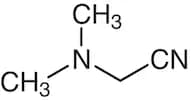
CAS:<p>4-(Acetylamino)-2-nitrobenzoic acid (AAANB) is a versatile building block that can be used in the synthesis of a wide range of organic and pharmaceutical compounds. AAANB is an intermediate in the preparation of 4-Amino-3-nitrophenol, which is an important research chemical. This compound is a useful scaffold for the synthesis of organic compounds with various biological activities. The CAS number for this product is 21573-29-5.</p>Fórmula:C9H8N2O5Pureza:Min. 95%Forma y color:PowderPeso molecular:224.17 g/mol(Dimethylamino)acetonitrile
CAS:Fórmula:C4H8N2Pureza:>96.0%(GC)(T)Forma y color:Colorless to Light yellow to Light orange clear liquidPeso molecular:84.122-(Hydroxymethyl)pyridine
CAS:<p>2-(Hydroxymethyl)pyridine is a metal chelate that has been shown to be a potent inhibitor of picolinic acid amidohydrolase. This enzyme is responsible for the conversion of picolinic acid to nicotinamide adenine dinucleotide (NAD), which is a cofactor in the citric acid cycle. The 2-(hydroxymethyl)pyridine-picolinic acid complex inhibits the activity of this enzyme, blocking the conversion of NAD into nicotinamide adenine dinucleotide phosphate (NADP). This inhibition leads to higher levels of NAD and lower levels of NADP, which may lead to an increase in metabolic activity by increasing the availability of ATP. 2-(Hydroxymethyl)pyridine has been shown to have immunosuppressive properties, as well as anti-inflammatory properties. It also has been shown to be effective against bowel disease and infectious diseases.</p>Fórmula:C6H7NOPureza:Min. 95%Forma y color:Clear LiquidPeso molecular:109.13 g/mol