


Building Blocks
Esta sección contiene productos fundamentales para la síntesis de compuestos orgánicos y biológicos. Building blocks son los materiales de partida esenciales utilizados para construir moléculas complejas a través de diversas reacciones químicas. Desempeñan un papel crítico en el descubrimiento de fármacos, la ciencia de materiales y la investigación química. En CymitQuimica, ofrecemos una gama diversa de building blocks de alta calidad para apoyar sus investigaciones innovadoras y proyectos industriales, asegurando que tenga los componentes esenciales para una síntesis exitosa.
Subcategorías de "Building Blocks"
- Ácidos borónicos y derivados del ácido borónico(5.756 productos)
- Building Blocks quirales(1.242 productos)
- Building Blocks de hidrocarburos(6.095 productos)
- Building Blocks orgánicos(61.051 productos)
Se han encontrado 199813 productos de "Building Blocks"
Ordenar por
Pureza (%)
0
100
|
0
|
50
|
90
|
95
|
100
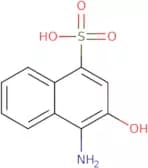
1-Amino-2-naphthol-4-sulfonic acid
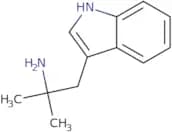
CAS:<p>1-Amino-2-naphthol-4-sulfonic acid is a fluorescent dye that belongs to the class of naphtholsulfonates. It has been shown to react with protonated hydroxyl groups, which are present in the matrix, and form an electrochemical impedance spectrum. The fluorescence of tryptophan can be used as a probe to detect the presence of 1-amino-2-naphthol-4-sulfonic acid in a solution. This reaction mechanism suggests that adsorption is the dominating process for 1-amino-2-naphthol-4-sulfonic acid.</p>Fórmula:C10H9NO4SForma y color:PowderPeso molecular:239.25 g/mol1-(1H-Indol-3-yl)-2-methylpropan-2-amine
CAS:Producto controlado<p>1-(1H-Indol-3-yl)-2-methylpropan-2-amine is a receptor antagonist that belongs to the class of indolealkylamines. It has been shown to produce a dose-dependent inhibition of 5-hydroxytryptamine (5HT) induced contractions in guinea pig trachea preparations. This drug has also been shown to be an effective receptor antagonist at the level of the human trachea, where it was highly selective for 5HT receptors and had no effect on muscarinic receptors. 1-(1H-Indol-3-yl)-2-methylpropan-2-amine is well absorbed after oral administration and is metabolized by liver enzymes into inactive metabolites.</p>Fórmula:C12H16N2Pureza:Min. 95%Forma y color:PowderPeso molecular:188.27 g/mol6,7-Dimethoxy-1-methyl-1,2,3,4-tetrahydro-isoquinoline
CAS:<p>6,7-Dimethoxy-1-methyl-1,2,3,4-tetrahydroisoquinoline is a trifluoroacetic acid derivative that inhibits the synthesis of dopamine by inhibiting the enzyme tyrosine hydroxylase. It has been shown to be an inhibitor of tissue culture cells and natural compounds. The compound was synthesized from allyl carbonate and pueraria lobata in an asymmetric synthesis with a magnesium salt as a catalyst.</p>Fórmula:C12H17NO2Pureza:Min. 90%Forma y color:PowderPeso molecular:207.27 g/mol7-Hydroxy-4-methyl-3-coumarinylacetic acid
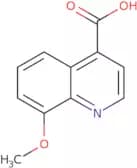
CAS:<p>7-Hydroxy-4-methyl-3-coumarinylacetic acid (7HMCA) is an analog of 7-amino-4-methylcoumarin. It is a fluorescent material that can be used as a dye in analytical chemistry. The fluorescence of 7HMCA depends on the pH and temperature, as well as the presence of reactive oxygen species such as gadolinium or carbostyril. 7HMCA binds to the molecule's amino group, which has been shown to contribute to its stability and reactivity.</p>Fórmula:C12H10O5Pureza:Min. 95%Forma y color:PowderPeso molecular:234.20 g/mol8-Methoxyquinoline-4-carboxylic acid
CAS:<p>8-Methoxyquinoline-4-carboxylic acid is a potent inhibitor of phosphodiesterase I, II, IV and V. It has been shown to inhibit the production of inflammatory prostaglandins in asthma patients. 8-Methoxyquinoline-4-carboxylic acid has been used to study the fluorescence properties of acetonitrile and its derivatives. 8-Methoxyquinoline-4-carboxylic acid has been tested as a fluorescent probe for DNA sequencing and has also shown potential as a fluorescent probe for protein sequencing. This molecule is an inhibitor of phosphodiesterases, which are enzymes that break down cyclic nucleotides such as cAMP and cGMP.<br>8-Methoxyquinoline-4-carboxylic acid is a bicyclic heteroaryl compound with an electron donating group at position 4 on the heterocyclic ring. It can be synthesized from ethanol using</p>Fórmula:C11H9NO3Pureza:(¹H-Nmr) Min. 95 Area-%Forma y color:PowderPeso molecular:203.19 g/molBenzenesulfonyl fluoride
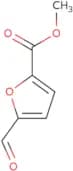
CAS:<p>Benzenesulfonyl fluoride (BSF) is a potent antimicrobial agent that inhibits the growth of bacteria by binding to their ribosomes and preventing protein synthesis. BSF has been shown to be toxic to mouse cells, which may be due to its ability to trigger an inflammatory response mediated by toll-like receptors. This drug has also been shown to have significant cytotoxicity in a variety of cell lines, including fetal bovine lung cells. BSF also has strong antimicrobial activity against Gram-positive bacteria, such as Clostridium difficile and Staphylococcus aureus, and Gram-negative bacteria, including Escherichia coli. It also has moderate activity against Mycobacterium tuberculosis and Mycobacterium avium complex.</p>Fórmula:C6H5FO2SPureza:Min. 95%Forma y color:Clear LiquidPeso molecular:160.16 g/molMethyl 5-formylfuran-2-carboxylate
CAS:<p>Methyl 5-formylfuran-2-carboxylate (MFC) is a furan derivative that has been used for the synthesis of pharmaceuticals, agrochemicals, and other organic compounds. MFC is synthesized from methanol and formaldehyde in a low concentration to produce a mixture containing methyl 5-formylfuran-2-carboxylate. It can also be synthesized from methanol and formaldehyde in a high concentration to produce crystalline solid MFC. The use of MFC as a template for crystallization has been investigated with success. This compound can be used as a catalyst in the oxidative dehydrogenation of 5-hydroxymethylfurfural to produce 5-formylfuran. MFC is efficient and selective for this reaction, making it an attractive candidate for industrial production of furan derivatives.</p>Fórmula:C7H6O4Pureza:Min. 95%Forma y color:PowderPeso molecular:154.1 g/mol(Propan-2-yl)[1-(thiophen-3-yl)ethyl]amine
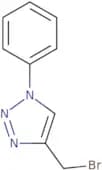
CAS:<p>Versatile small molecule scaffold</p>Fórmula:C9H15NSPureza:Min. 95%Forma y color:Clear LiquidPeso molecular:169.29 g/mol4-(Bromomethyl)-1-phenyl-1H-1,2,3-triazole
CAS:<p>4-(Bromomethyl)-1-phenyl-1H-1,2,3-triazole (4BPHT) is a versatile building block for organic synthesis. It is a speciality chemical that can be used as a reagent or a research chemical. 4BPHT has been used in the synthesis of complex compounds and has been shown to be useful in the preparation of high quality compounds. 4BPHT is also an intermediate for the synthesis of useful scaffolds and can be used as a reaction component.</p>Fórmula:C9H8BrN3Pureza:Min. 95%Forma y color:PowderPeso molecular:238.08 g/mol(R)-1-(Thiazol-2-yl)ethanamine dihydrochloride
CAS:<p>Versatile small molecule scaffold</p>Fórmula:C5H8N2S•(HCl)2Pureza:Min. 95%Forma y color:PowderPeso molecular:200.66 g/mol8-Chloro-1-octanol
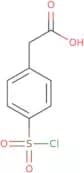
CAS:<p>8-Chloro-1-octanol is an organic compound with a hydroxyl group at the 8th position of the octane ring. It has been shown to inhibit bacterial growth in vitro by binding to fatty acid biosynthesis enzymes and preventing the formation of fatty acids, which are vital for bacterial cell wall synthesis. The 8-chloro-1-octanol also inhibits the population growth of bacteria in corneal epithelium, leading to reduced biofilm formation. This compound has been shown to have regulatory effects on microbial populations. 8-Chloro-1-octanol is currently under study for its potential use as a topical antibacterial agent for treating corneal infections.</p>Fórmula:C8H17ClOPureza:Min. 95%Forma y color:Colorless Clear LiquidPeso molecular:164.67 g/mol4-Chlorosulfonylphenylacetic acid
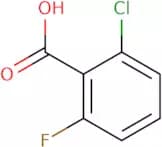
CAS:<p>4-Chlorosulfonylphenylacetic acid is a synthetic chemical that inhibits the production of inflammatory mediators. It has been shown to inhibit LPS-induced macrophage activation and inhibitory activity in vitro. 4-Chlorosulfonylphenylacetic acid has been synthesized by the reaction of phenylacetic acid with chlorosulfonic acid. The synthesis of 4-chlorosulfonylphenylacetic acid is shown in Scheme 1 below.</p>Fórmula:C8H7ClO4SPureza:Min. 95%Forma y color:White PowderPeso molecular:234.66 g/mol2-Chloro-6-fluorobenzoic acid
CAS:<p>2-Chloro-6-fluorobenzoic acid is an aromatic compound that is used as a solvent in the production of pharmaceuticals, plastics, and dyes. The 2-chloro-6-fluorobenzoic acid molecule has an electron rich ring structure that can undergo nucleophilic attack by a nucleophile such as hydrogen chloride or hydrochloric acid. It also has a high affinity for water molecules, which may be attributed to its aromatic hydrocarbon structure. This allows 2-chloro-6-fluorobenzoic acid to act as a good solvent for many organic compounds. This chemical is classified as a possible human carcinogen and is toxic to the liver cells.</p>Fórmula:C7H4ClFO2Pureza:Min. 95%Forma y color:PowderPeso molecular:174.56 g/molL-Cysteine ethyl ester hydrochloride
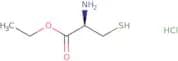
CAS:<p>L-Cysteine ethyl ester HCl is a disulfide bond that is used in the synthesis of proteins. It is also used to prevent hair loss and to treat baldness. L-Cysteine ethyl ester HCl has potent antitumor activity, which may be due to its ability to react with nucleophilic substitutions. In addition, L-Cysteine ethyl ester HCl can induce apoptosis by binding to the apoptosis protein. The reaction mechanism is not well understood but it may involve hydroxide ion and organometallic complexes. L-Cysteine ethyl ester HCl is soluble in water at neutral pH and poorly soluble in ethanol. It hydrolyzes in the presence of acid or base, forming trifluoroacetic acid or sodium hydroxide solution respectively.</p>Fórmula:C5H11NO2S•HClPureza:Min. 95%Forma y color:PowderPeso molecular:185.67 g/mol5-Amino-piperidin-2-one hydrochloride
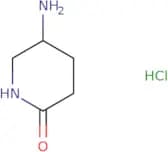
CAS:<p>5-Amino-piperidin-2-one hydrochloride is an enantiomerically pure chiral molecule. It is a white solid with a molecular weight of 138.12 that has been shown to exhibit anti-inflammatory properties in experiments conducted on mice. This drug also has the ability to inhibit the enzyme cyclooxygenase, which plays an important role in the production of prostaglandins. 5-Amino-piperidin-2-one hydrochloride binds to the active site of cyclooxygenase and prevents its conversion of arachadonic acid into prostaglandins. 5-Amino-piperidin-2-one hydrochloride has been shown to be effective against many bacteria, including methicillin resistant Staphylococcus aureus (MRSA) and Mycobacterium tuberculosis, but not against Mycobacterium avium complex.</p>Fórmula:C5H11ClN2OPureza:Min. 95%Peso molecular:150.61 g/mol4-Chlorophenylacetic acid
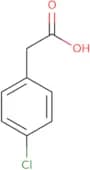
CAS:<p>4-Chlorophenylacetic acid is a fatty acid that reacts with hydroxyl groups to form reaction intermediates. It has been used in antiestrogen therapy as it is able to inhibit the activity of estrogen. It has also been used in polymeric matrices to control the release of silver ions for the treatment of cancer. 4-Chlorophenylacetic acid is synthesized by acylation of phenylacetic acid with chloroacetyl chloride in the presence of hydrochloric acid and sephadex g-100. 4-Chlorophenylacetic acid has been shown to inhibit tumor growth in animal models, which may be due to its ability to induce apoptosis.</p>Fórmula:C8H7ClO2Pureza:Min. 97.5 Area-%Forma y color:White PowderPeso molecular:170.59 g/mol4-Cyanobenzaldehyde
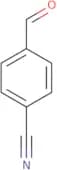
CAS:<p>4-Cyanobenzaldehyde is an acid that inhibits tyrosinase, an enzyme involved in the production of melanin. It has been shown to have a strong inhibitory effect on the activity of this enzyme in a variety of biological studies. 4-Cyanobenzaldehyde is chemically stable and does not react with hydrochloric acid or water at room temperature, making it suitable for use in experiments involving these substances. This chemical also has antiinflammatory properties and can be used as a substitute for phenols in some chemical reactions. 4-Cyanobenzaldehyde is soluble in methanol and reacts with diphenolase, an enzyme involved in the synthesis of lignin, to produce benzophenone and benzoic acid. This reaction may be important for the formation of lignin during wood decomposition.</p>Fórmula:C8H5NOPureza:80%Forma y color:PowderPeso molecular:131.13 g/mol5-Chloro-2-methylaminobenzophenone
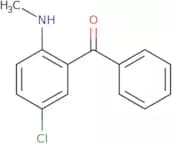
CAS:<p>5-Chloro-2-methylaminobenzophenone is an intermediate in the synthesis of 2,4-dichlorophenoxyacetic acid. 5-Chloro-2-methylaminobenzophenone is a reactive intermediate that can be used for wastewater treatment and for the production of chemicals that are used in the manufacture of other substances. It is also a reaction intermediate in chemical ionization. It has been shown to have chronic toxicity as well as carcinogenic effects when it is present in urine samples or human serum. In addition, 5-Chloro-2-methylaminobenzophenone has been found to cause light sensitivity and skin irritation when it is exposed to UV light. This chemical reacts with hydrochloric acid and pyridoxine hydrochloride to form 2,4,-dichlorophenoxyacetic acid. The activation energies for this process are between 30 and 60 kJ/mol.</p>Fórmula:C14H12NOClPureza:Min. 95%Forma y color:PowderPeso molecular:245.7 g/mol5-methyl-octahydro-1H-pyrrolo[3,4-c]pyridine Dihydrochloride
CAS:<p>Versatile small molecule scaffold</p>Fórmula:C8H16N2·2HClPureza:Min. 95%Forma y color:PowderPeso molecular:213.14 g/mol2-(1-Methyl-4-oxo-1,4-dihydro-5H-pyrazolo[3,4-d]pyrimidin-5-yl)acetohydrazide
CAS:Producto controlado<p>2-(1-Methyl-4-oxo-1,4-dihydro-5H-pyrazolo[3,4-d]pyrimidin-5-yl)acetohydrazide is a fine chemical that is a versatile building block in the synthesis of complex compounds. It is also a useful intermediate for the synthesis of pharmaceuticals and agrochemicals. CAS No. 938018-24-7</p>Fórmula:C8H10N6O2Pureza:Min. 95%Peso molecular:222.2 g/mol




![(Propan-2-yl)[1-(thiophen-3-yl)ethyl]amine](/_next/image/?url=https%3A%2Fstatic.cymitquimica.com%2Fproducts%2F3D%2Fthumb-webp%2FAAC59964.webp&w=3840&q=75)

![5-methyl-octahydro-1H-pyrrolo[3,4-c]pyridine Dihydrochloride](/_next/image/?url=https%3A%2Fstatic.cymitquimica.com%2Fproducts%2F3D%2Fthumb-webp%2FDXC59804.webp&w=3840&q=75)
![2-(1-Methyl-4-oxo-1,4-dihydro-5H-pyrazolo[3,4-d]pyrimidin-5-yl)acetohydrazide](/_next/image/?url=https%3A%2Fstatic.cymitquimica.com%2Fproducts%2F3D%2Fthumb-webp%2FNMB01824.webp&w=3840&q=75)