Building Blocks
Esta sección contiene productos fundamentales para la síntesis de compuestos orgánicos y biológicos. Building blocks son los materiales de partida esenciales utilizados para construir moléculas complejas a través de diversas reacciones químicas. Desempeñan un papel crítico en el descubrimiento de fármacos, la ciencia de materiales y la investigación química. En CymitQuimica, ofrecemos una gama diversa de building blocks de alta calidad para apoyar sus investigaciones innovadoras y proyectos industriales, asegurando que tenga los componentes esenciales para una síntesis exitosa.
Subcategorías de "Building Blocks"
- Ácidos borónicos y derivados del ácido borónico(5.778 productos)
- Building Blocks quirales(1.243 productos)
- Building Blocks de hidrocarburos(6.097 productos)
- Building Blocks orgánicos(61.048 productos)
Se han encontrado 203115 productos de "Building Blocks"
Ordenar por
Pureza (%)
0
100
|
0
|
50
|
90
|
95
|
100
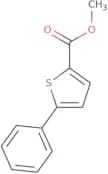
Methyl 5-phenylthiophene-2-carboxylate
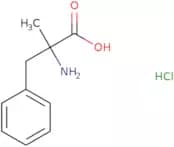
CAS:Versatile small molecule scaffoldFórmula:C12H10O2SPureza:Min. 95%Peso molecular:218.27 g/mol(2R)-2-Amino-2-methyl-3-phenylpropanoic acid hydrochloride
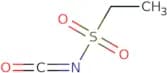
CAS:Versatile small molecule scaffoldFórmula:C10H14ClNO2Pureza:Min. 95%Peso molecular:215.67 g/molEthanesulfonyl isocyanate
CAS:Ethanesulfonyl isocyanate is a salt form of an alkoxycarbonyl group that has been used in agricultural applications. It is also used as a reagent to prepare thioethers and as a source of sulfur in organic synthesis. In the environment, it can be found in gram-negative organisms and metal halides. Ethanesulfonyl isocyanate has been shown to have anti-HIV activity and can be used in the production of cycloaliphatic compounds.Fórmula:C3H5NO3SPureza:Min. 95%Peso molecular:135.14 g/mol3-Methylpyrido[3,4-E][1,2,4]triazine
CAS:<p>Versatile small molecule scaffold</p>Fórmula:C7H6N4Pureza:Min. 95%Peso molecular:146.15 g/mol2,3-Dihydro-benzo[b]thiophen-3-amine 1,1-dioxide hydrochloride
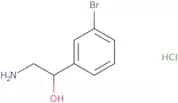
CAS:Versatile small molecule scaffoldFórmula:C8H10ClNO2SPureza:Min. 95%Peso molecular:219.69 g/mol2-Amino-1-(3-bromophenyl)ethanol hydrochloride
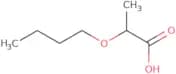
CAS:Versatile small molecule scaffoldFórmula:C8H10BrNO•HClPureza:Min. 95%Peso molecular:252.54 g/mol2-Butoxypropanoic acid
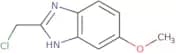
CAS:<p>Versatile small molecule scaffold</p>Fórmula:C7H14O3Pureza:Min. 95%Peso molecular:146.18 g/mol2-(Chloromethyl)-6-methoxy-1H-1,3-benzodiazole
CAS:<p>Versatile small molecule scaffold</p>Fórmula:C9H9ClN2OPureza:Min. 95%Peso molecular:196.63 g/molThieno[3,4-b]thiophene-2-carboxylic acid
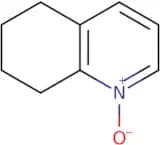
CAS:<p>Thieno[3,4-b]thiophene-2-carboxylic acid is a carboxylic acid. It has the ability to form stable thieno[3,4-b]thiophene-2-carboxylate ions in an aqueous solution. These ions can be detected by spectroscopic studies of the adsorption on electrodes and electrochemical polymerization. Thieno[3,4-b]thiophene-2-carboxylic acid is not easily oxidized or reduced due to its stability and low energy state.</p>Fórmula:C8H6O2S2Pureza:Min. 95%Peso molecular:198.26 g/mol5,6,7,8-Tetrahydroquinolin-1-ium-1-olate
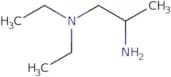
CAS:5,6,7,8-Tetrahydroquinolin-1-ium-1-olate is a white crystalline solid. It has a molecular weight of 178.07 and a melting point of 190°C. 5,6,7,8-Tetrahydroquinolin-1-ium-1-olate is stabilized by hydrogen bonds between the two monomers in the dimer form. It also has an asymmetric conformation with six carbons in its backbone. The hemihydrate form of 5,6,7,8 tetrahydroquinolinium 1 -olate is formed when the water molecule is bound to one oxygen atom on each monomer in the dimer.Fórmula:C9H11NOPureza:Min. 95%Peso molecular:149.19 g/mol(2-Aminopropyl)diethylamine
CAS:Versatile small molecule scaffoldFórmula:C7H18N2Pureza:Min. 95%Peso molecular:130.23 g/mol3-Amino-4(3H)-quinazolinone
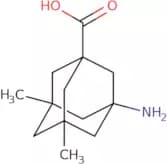
CAS:<p>3-Amino-4(3H)-quinazolinone is a nucleophilic compound that can react with methyl anthranilate, an anthranilic acid derivative. When reacted with aziridine, 3-amino-4(3H) quinazolinone forms a hydroxyl group. This compound is cytotoxic to human liver cells in vitro and exhibits significant cytotoxicity against cancer cells. It has been shown to inhibit the growth of epidermal growth factor (EGF) in vitro and can be used as a tumor promoter. 3-Amino-4(3H)-quinazolinone also reacts with amines such as amino acids, amides, and ammonia to form aziridinium ions. Aziridinium ions are nitrogen nucleophiles that can react with other molecules to form new compounds or break down existing ones.</p>Fórmula:C8H7N3OPureza:Min. 95%Peso molecular:161.16 g/mol3-Amino-5,7-dimethyladamantane-1-carboxylic acid
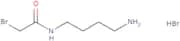
CAS:Versatile small molecule scaffoldFórmula:C13H21NO2Pureza:Min. 95%Peso molecular:223.3 g/molN-(4-Aminobutyl)-2-bromoacetamide hydrobromide
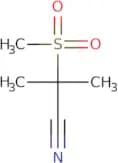
CAS:<p>Versatile small molecule scaffold</p>Fórmula:C6H14Br2N2OPureza:Min. 95%Peso molecular:290 g/mol2-Methanesulfonyl-2-Methylpropanenitrile
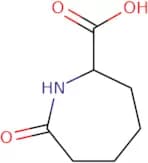
CAS:Versatile small molecule scaffoldFórmula:C5H9NO2SPureza:Min. 95%Peso molecular:147.2 g/mol7-Oxoazepane-2-carboxylic acid
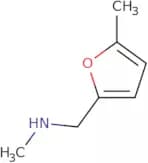
CAS:<p>Versatile small molecule scaffold</p>Fórmula:C7H11NO3Pureza:Min. 95%Peso molecular:157.17 g/molMethyl-(5-methyl-furan-2-ylmethyl)-amine
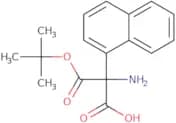
CAS:<p>Versatile small molecule scaffold</p>Fórmula:C7H11NOPureza:Min. 95%Peso molecular:125.17 g/mol(N-BOC-Amino)(naphthalen-1-yl)acetic acid
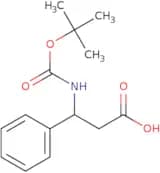
CAS:Versatile small molecule scaffoldFórmula:C17H19NO4Pureza:Min. 95%Peso molecular:301.34 g/mol3-tert-Butoxycarbonylamino-3-phenyl-propionic acid
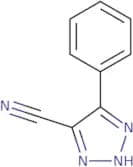
CAS:Versatile small molecule scaffoldFórmula:C14H19NO4Pureza:Min. 95%Peso molecular:265.31 g/mol4-Phenyl-1H-1,2,3-triazole-5-carbonitrile
CAS:<p>Versatile small molecule scaffold</p>Fórmula:C9H6N4Pureza:Min. 95%Peso molecular:170.17 g/mol

![3-Methylpyrido[3,4-E][1,2,4]triazine](/_next/image/?url=https%3A%2Fstatic.cymitquimica.com%2Fproducts%2F3D%2Fthumb-webp%2FPAA61229.webp&w=3840&q=75)
![2,3-Dihydro-benzo[b]thiophen-3-amine 1,1-dioxide hydrochloride](/_next/image/?url=https%3A%2Fstatic.cymitquimica.com%2Fproducts%2F3D%2Fthumb-webp%2FPAA61343.webp&w=3840&q=75)
![Thieno[3,4-b]thiophene-2-carboxylic acid](/_next/image/?url=https%3A%2Fstatic.cymitquimica.com%2Fproducts%2F3D%2Fthumb-webp%2FPAA63008.webp&w=3840&q=75)