Building Blocks
Subcategorías de "Building Blocks"
- Ácidos borónicos y derivados del ácido borónico(5.779 productos)
- Building Blocks quirales(1.238 productos)
- Building Blocks de hidrocarburos(6.099 productos)
- Building Blocks orgánicos(60.997 productos)
Se han encontrado 205208 productos de "Building Blocks"
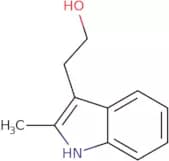
2-(2-Methyl-1H-indol-3-yl)ethan-1-ol
CAS:Versatile small molecule scaffold
Fórmula:C11H13NOPureza:Min. 95%Peso molecular:175.23 g/mol2-[5-(2-Chlorophenyl)-1,3,4-oxadiazol-2-yl]benzoic acid
CAS:Versatile small molecule scaffold
Fórmula:C15H9ClN2O3Pureza:Min. 95%Peso molecular:300.69 g/mol4,6-Dimethylisothiazolo[5,4-b]pyridin-3-amine
CAS:Versatile small molecule scaffold
Fórmula:C8H9N3SPureza:Min. 95%Peso molecular:179.24 g/mol7-Aminothieno[2,3-b]pyrazine-6-carboxylic acid
CAS:7-Aminothieno[2,3-b]pyrazine-6-carboxylic acid is an organic solvent that is soluble in water. It has a nitrogen atom, two silver atoms and a fatty acid. This compound has shown to have insulin resistance properties when it was expressed in mice and rats. 7-Aminothieno[2,3-b]pyrazine-6-carboxylic acid also has the ability to inhibit the growth of bacteria. It binds to silver halide and halide ions, which are found in tissues, and can be used as a contrast agent for X-rays or MRI scans of tissues.
Fórmula:C7H5N3O2SPureza:Min. 95%Peso molecular:195.2 g/molEthyl 7-aminothieno[2,3-b]pyrazine-6-carboxylate
CAS:Versatile small molecule scaffold
Fórmula:C9H9N3O2SPureza:Min. 95%Peso molecular:223.26 g/mol3-[(1-Hydroxy-2-methylpropan-2-yl)amino]-1λ⁶-thiolane-1,1-dione
CAS:Versatile small molecule scaffoldFórmula:C8H17NO3SPureza:Min. 95%Peso molecular:207.29 g/molRef: 3D-GCA87892
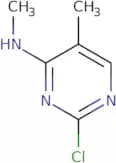
Producto descatalogado(2-Chloro-5-methyl-pyrimidin-4-yl)-methyl-amine
CAS:Versatile small molecule scaffold
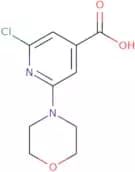
Fórmula:C6H8ClN3Pureza:Min. 95%Peso molecular:157.6 g/mol2-Chloro-6-(morpholin-4-yl)pyridine-4-carboxylic acid
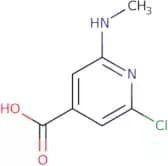
CAS:Versatile small molecule scaffoldFórmula:C10H11ClN2O3Pureza:Min. 95%Peso molecular:242.66 g/mol2-Chloro-6-(methylamino)pyridine-4-carboxylic acid
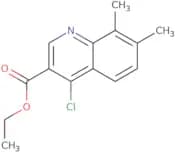
CAS:Versatile small molecule scaffoldFórmula:C7H7ClN2O2Pureza:Min. 95%Peso molecular:186.59 g/molEthyl 4-Chloro-7,8-dimethylquinoline-3-carboxylate
CAS:Versatile small molecule scaffold
Fórmula:C14H14NO2ClPureza:Min. 95%Peso molecular:263.71 g/mol1-(5-Bromothiophen-2-yl)-2-phenylethan-1-one
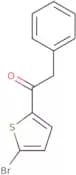
CAS:Versatile small molecule scaffoldFórmula:C12H9BrOSPureza:Min. 95%Peso molecular:281.17 g/mol2,3,4-Triiodo-1H-pyrrole
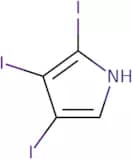
CAS:2,3,4-Triiodo-1H-pyrrole is a model compound that is used to study the reactivity of the functional groups on the molecule. The functional groups include an olefinic group (double bond) and a carbonyl group (single bond). The reactivity of these functional groups depends on their position in the molecule. If they are on adjacent carbon atoms, they will have similar reactivity. This model compound is classified as a reductant because it can be reduced by glutathione and other reductants. It has been shown that 2,3,4-Triiodo-1H-pyrrole can be synthesized from salicylic acid and lead iodide in a reaction with catalytic amounts of sodium borohydride.
Fórmula:C4H2I3NPureza:Min. 95%Peso molecular:444.78 g/molN,N,4-Trimethyl-1,3-thiazol-2-amine
CAS:Versatile small molecule scaffold
Fórmula:C6H10N2SPureza:Min. 95%Peso molecular:142.22 g/molEthyl 3-methyl-5-oxo-[1,3]thiazolo[3,2-a]pyrimidine-6-carboxylate
CAS:Versatile small molecule scaffoldFórmula:C10H10N2O3SPureza:Min. 95%Peso molecular:238.27 g/molMethyl 2-nitropropanoate
CAS:Methyl 2-nitropropanoate is a reactive compound that is used as an epigenetic marker. It reacts with lysine residues in proteins and histones, resulting in the methylation of these proteins. Methyl 2-nitropropanoate has been shown to inhibit the replication of DNA and induce cellular apoptosis in mammalian cells. The effector proteins H3K9me2 and H4K5me1 are involved in epigenetic changes that include gene silencing and histone demethylation. Methyl 2-nitropropanoate can also cause clastogenic effects by forming adducts on dna replication enzymes, such as amide and demethylation. Histone lysines are methylated by methyl 2-nitropropanoate, which causes histones to condense into tight bundles of DNA that contribute to the formation of actin filaments.
Fórmula:C4H7NO4Pureza:Min. 95%Peso molecular:133.1 g/mol2,3-Dimethyl-1H-indole-5-carboxamide
CAS:Versatile small molecule scaffold
Fórmula:C11H12N2OPureza:Min. 95%Peso molecular:188.23 g/mol4-(4-Nitrophenyl)-1H-1,2,3-triazole
CAS:4-(4-Nitrophenyl)-1H-1,2,3-triazole (NPT) is a bioactive molecule that inhibits the growth of promyelocytic leukemia cells by interfering with the activity of certain enzymes. NPT has been shown to inhibit the influenza virus and human cervical carcinoma cells in vitro. In addition, it has been shown to inhibit the proliferation of leukemia HL60 cells. NPT is an unsymmetrical molecule that forms an imine during the enzymatic process. The molecular modeling studies show that this compound binds to the active site of enzyme histidine kinase in a manner similar to ATP. This binding prevents ATP from forming a stable complex with histidine kinase and phosphorylating its target protein, which disrupts cellular homeostasis and leads to cell death.
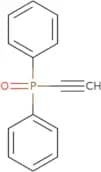
Fórmula:C8H6N4O2Pureza:Min. 95%Peso molecular:190.16 g/molEthynyl(diphenyl)phosphine oxide
CAS:Ethynyl(diphenyl)phosphine oxide is an amide that has been shown to be useful in coordination, catalysis, and organic chemistry. It is a conformational analog of the amide group. Ethynyl(diphenyl)phosphine oxide has been used as a hydrogen-bond donor in esterification reactions. This compound can be synthesized by reacting the corresponding boronic acid with ethynyl alcohol. The yields of this reaction are dependent on the temperature and have been found to range from 60% to 70%. The nmr spectra of this compound show two signals at δ 2.95 and δ 4.85 ppm, corresponding to two different conformers of ethynyl(diphenyl)phosphine oxide.
Fórmula:C14H11OPPureza:Min. 95%Peso molecular:226.21 g/mol2,4,6-Trimethylphenyl Isothiocyanate
CAS:2,4,6-Trimethylphenyl Isothiocyanate is a reactive compound that can inactivate enzymes. It is used as a catalyst and an intermediate in the production of dyes and pharmaceuticals. 2,4,6-Trimethylphenyl Isothiocyanate reacts with dimethyldioxirane to form diphenylphosphine acid. This acid reacts with choline to produce sulfines. The sulfines react with hydrogen to yield the desired product or prodrug. 2,4,6-Trimethylphenyl Isothiocyanate also catalyzes the reaction between sulfur and hydrogen gas at high temperatures to form hydrogen sulfide gas.br>br>
br>br>
Yield: 100%Fórmula:C10H11NSPureza:Min. 95%Peso molecular:177.27 g/mol2-Hydroxy-3-iodo-5-methylbenzoic acid
CAS:Versatile small molecule scaffoldFórmula:C8H7IO3Pureza:Min. 95%Peso molecular:278.04 g/mol

![2-[5-(2-Chlorophenyl)-1,3,4-oxadiazol-2-yl]benzoic acid](/_next/image/?url=https%3A%2Fstatic.cymitquimica.com%2Fproducts%2F3D%2Fthumb-webp%2FGCA89441.webp&w=3840&q=75)
![4,6-Dimethylisothiazolo[5,4-b]pyridin-3-amine](/_next/image/?url=https%3A%2Fstatic.cymitquimica.com%2Fproducts%2F3D%2Fthumb-webp%2FGCA89166.webp&w=3840&q=75)
![7-Aminothieno[2,3-b]pyrazine-6-carboxylic acid](/_next/image/?url=https%3A%2Fstatic.cymitquimica.com%2Fproducts%2F3D%2Fthumb-webp%2FGCA88131.webp&w=3840&q=75)
![Ethyl 7-aminothieno[2,3-b]pyrazine-6-carboxylate](/_next/image/?url=https%3A%2Fstatic.cymitquimica.com%2Fproducts%2F3D%2Fthumb-webp%2FGCA88121.webp&w=3840&q=75)
![3-[(1-Hydroxy-2-methylpropan-2-yl)amino]-1λ⁶-thiolane-1,1-dione](/_next/image/?url=https%3A%2Fstatic.cymitquimica.com%2Fproducts%2F3D%2Fthumb-webp%2FGCA87892.webp&w=3840&q=75)

![Ethyl 3-methyl-5-oxo-[1,3]thiazolo[3,2-a]pyrimidine-6-carboxylate](/_next/image/?url=https%3A%2Fstatic.cymitquimica.com%2Fproducts%2F3D%2Fthumb-webp%2FGAA12413.webp&w=3840&q=75)