Building Blocks
Subcategorías de "Building Blocks"
- Ácidos borónicos y derivados del ácido borónico(5.774 productos)
- Building Blocks quirales(1.237 productos)
- Building Blocks de hidrocarburos(6.098 productos)
- Building Blocks orgánicos(60.980 productos)
Se han encontrado 205158 productos de "Building Blocks"
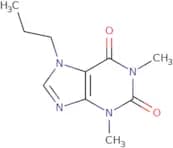
1,3-Dimethyl-7-propyl-3,7-dihydro-1H-purine-2,6-dione
CAS:Producto controladoVersatile small molecule scaffoldFórmula:C10H14N4O2Pureza:Min. 95%Peso molecular:222.24 g/molThieno[3,2-c]pyridin-4-ol
CAS:Thieno[3,2-c]pyridin-4-ol is a thienopyridone that is an inhibitor of the bromodomain. It has been shown to inhibit the bromodomain, which is a protein domain that also binds acetylated histones. The inhibition of this domain leads to chromatin condensation and DNA compaction, inhibiting transcription and replication. Thieno[3,2-c]pyridin-4-ol has been shown to have anti-inflammatory effects in vivo and in vitro.
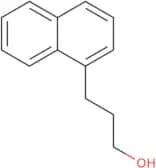
Fórmula:C7H5NOSPureza:Min. 95%Peso molecular:151.19 g/mol3-(Naphthalen-1-yl)propan-1-ol
CAS:3-(Naphthalen-1-yl)propan-1-ol is a tannin isolated from the bark of the naphthalene tree. It has been shown to have hepatoprotective effects, normalizing hepatic enzyme activity and protecting against environmental pollution. 3-(Naphthalen-1-yl)propan-1-ol also has antidiabetic properties, and may act as an acetate extract by inhibiting the absorption of glucose in the gut. The laxative effect of 3-(Naphthalen-1-yl)propan-1-ol may be due to its ability to stimulate intestinal peristalsis.
Fórmula:C13H14OPureza:Min. 95%Peso molecular:186.25 g/mol1-(3-Bromopropyl)naphthalene
CAS:Versatile small molecule scaffold
Fórmula:C13H13BrPureza:Min. 95%Peso molecular:249.15 g/mol1-(1,2,3-Thiadiazol-4-yl)ethan-1-one
CAS:Versatile small molecule scaffold
Fórmula:C4H4N2OSPureza:Min. 95%Peso molecular:128.15 g/mol4-Hydroxy-N-methylbenzamide
CAS:4-Hydroxy-N-methylbenzamide (4HMB) is an organic compound that consists of a benzene ring with a methyl group attached to the 4 position. It has been found to have amide, chloride and hydrogen bonding interactions with other molecules. The filtrate was collected by passing the reaction liquid through a filter paper. This stepwise process allowed for the isolation of 4HMB from the mixture of compounds called benzenes.
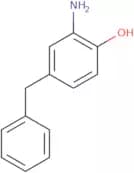
Fórmula:C8H9NO2Pureza:Min. 95%Peso molecular:151.16 g/mol2-Amino-4-benzylphenol
CAS:Versatile small molecule scaffold
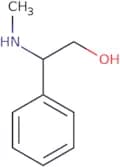
Fórmula:C13H13NOPureza:Min. 95%Peso molecular:199.25 g/mol2-(Methylamino)-2-phenylethan-1-ol
CAS:Versatile small molecule scaffold
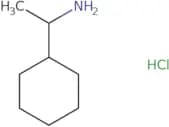
Fórmula:C9H13NOPureza:Min. 95%Peso molecular:151.21 g/mol(1-Cyclohexylethyl)amine hydrochloride
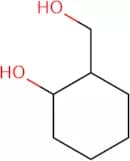
CAS:Versatile small molecule scaffoldFórmula:C8H18ClNPureza:Min. 95%Peso molecular:163.69 g/mol2-(Hydroxymethyl)cyclohexan-1-ol
CAS:2-(Hydroxymethyl)cyclohexan-1-ol is a potassium salt that is used as an intermediate for the synthesis of other chemicals. It has been shown to be a strong inhibitor of the enzyme acetylcholinesterase in vitro, which leads to increased levels of acetylcholine and neurotransmission. The compound has also been shown to inhibit the growth of bacteria by inhibiting protein synthesis through an unknown mechanism. 2-(Hydroxymethyl)cyclohexan-1-ol is isolated from a variety of sources, including wood tar, coal tar, and petroleum.
2-(Hydroxymethyl)cyclohexan-1-ol can be synthesized by solvolysis with potassium hydroxide or tetrafluoroborate followed by acetolysis with acetic anhydride.
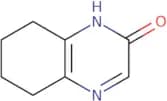
Potassium acetate can also be used to synthesize 2-(hydroxymethyl)-cyclohexan-1-Fórmula:C7H14O2Pureza:Min. 95%Peso molecular:130.18 g/mol1,2,5,6,7,8-Hexahydroquinoxalin-2-one
CAS:1,2,5,6,7,8-Hexahydroquinoxalin-2-one is a stimulant that has been shown to be effective for the prophylaxis and/or treatment of diabetes. It is also a prophylactic agent for the prevention of pyrazinone. This drug has been shown to stimulate insulin secretion from pancreatic beta cells in vitro. 1,2,5,6,7,8-Hexahydroquinoxalin-2-one stimulates the release of insulin by stimulating exocytosis and inhibiting vesicle fusion in response to glucose. It can also inhibit or stimulate the release of insulin in response to other stimuli such as amino acids and fatty acids.
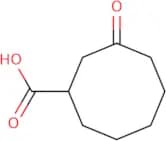
Fórmula:C8H10N2OPureza:Min. 95%Peso molecular:150.18 g/mol3-Oxocyclooctane-1-carboxylic acid
CAS:Versatile small molecule scaffold
Fórmula:C9H14O3Pureza:Min. 95%Peso molecular:170.21 g/molTributyl(methoxymethyl)stannane
CAS:Producto controladoTributyl(methoxymethyl)stannane is a synthetic organo-tin compound that has antifungal, antiviral, and antibacterial properties. It is also used in the treatment of idiopathic pulmonary fibrosis, hepatitis, cirrhosis, heart disease, and scleroderma. Tributyl(methoxymethyl)stannane inhibits the synthesis of proteins by binding to the 30S ribosomal subunit through a number of mechanisms. It has been shown to inhibit the growth of many fungi including those that cause athlete's foot and ringworm. Tributyl(methoxymethyl)stannane also shows some promise as an anti-inflammatory agent.
Fórmula:C14H32OSnPureza:Min. 95%Peso molecular:335.1 g/molRef: 3D-CBA49032
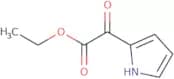
Producto descatalogadoEthyl 2-oxo-2-(1H-pyrrol-2-yl)acetate
CAS:Versatile small molecule scaffold
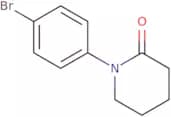
Fórmula:C8H9NO3Pureza:Min. 95%Peso molecular:167.16 g/mol1-(4-Bromophenyl)piperidin-2-one
CAS:Versatile small molecule scaffold
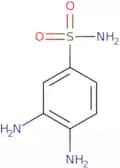
Fórmula:C11H12BrNOPureza:Min. 95%Peso molecular:254.13 g/mol3,4-Diaminobenzenesulphonamide
CAS:3,4-Diaminobenzenesulphonamide is a chemical compound that is used as an intermediate in organic synthesis and non-apoptotic cell death. 3,4-Diaminobenzenesulphonamide reacts with iron chloride to form ferroptosis, an environmental pollutant. It can also be used for the treatment of various cancers. 3,4-Diaminobenzenesulphonamide binds to the iron in the cell and causes cell death by forming reactive oxygen species that induce ferroptosis. 3,4-Diaminobenzenesulphonamide is also a non-apoptotic cell death agent that inhibits mitochondrial membrane potential and leads to cellular necrosis.
Fórmula:C6H9N3O2S·2ClHPureza:Min. 95%Peso molecular:260.14 g/molRef: 3D-CAA36020
Producto descatalogado(N-4,N-4,2-Trimethyl)-1,4-benzenediamine
CAS:Versatile small molecule scaffold
Fórmula:C9H14N2Pureza:Min. 95%Peso molecular:150.23 g/mol2-(Propan-2-yl)butanedioic acid
CAS:2-(Propan-2-yl)butanedioic acid is a depsipeptide with microbial activity. It inhibits bacterial growth by binding to the beta-subunit of ATP synthase in the microbial cell membrane, which prevents the synthesis of ATP and other metabolites required for cell division. 2-(Propan-2-yl)butanedioic acid has been shown to inhibit Salmonella typhimurium and Staphylococcus aureus in vitro and in vivo. The mechanism by which this drug inhibits bacterial growth is not yet fully understood, but it may be due to its ability to bind to fatty acids or hydrocarbons that are found on the surface of microorganisms.
Fórmula:C7H12O4Pureza:Min. 95%Peso molecular:160.17 g/molRef: 3D-CAA33845
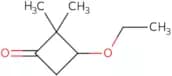
Producto descatalogado3-Ethoxy-2,2-dimethylcyclobutanone
CAS:3-Ethoxy-2,2-dimethylcyclobutanone is a cycloadduct that is produced by the reaction of an enol ether with dichloride. It is a nonpolar solvent used in chemistry and solvents. 3-Ethoxy-2,2-dimethylcyclobutanone is also an oxygenated compound and can be used as a nucleophile in reactions. The regioselectivity of 3-ethoxy-2,2-dimethylcyclobutanone depends on the type of reaction that it is involved in; however, it has been shown to preferentially form the cyclohexanone product in most cases.
Fórmula:C8H14O2Pureza:Min. 95%Peso molecular:142.2 g/mol2-(3-Chlorophenoxymethyl)oxirane
CAS:Versatile small molecule scaffold
Fórmula:C9H9ClO2Pureza:Min. 95%Peso molecular:184.62 g/mol

![Thieno[3,2-c]pyridin-4-ol](/_next/image/?url=https%3A%2Fstatic.cymitquimica.com%2Fproducts%2F3D%2Fthumb-webp%2FCBA68592.webp&w=3840&q=75)