Building Blocks
Subcategorías de "Building Blocks"
- Ácidos borónicos y derivados del ácido borónico(5.780 productos)
- Building Blocks quirales(1.240 productos)
- Building Blocks de hidrocarburos(6.100 productos)
- Building Blocks orgánicos(61.009 productos)
Se han encontrado 205248 productos de "Building Blocks"
4-[(Carboxymethyl)sulfanyl]-3-nitrobenzoic acid
CAS:Versatile small molecule scaffoldFórmula:C9H7NO6SPureza:Min. 95%Peso molecular:257.22 g/mol3-(Methylsulfanyl)pyridin-4-amine
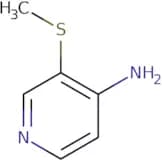
CAS:Versatile small molecule scaffold
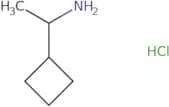
Fórmula:C6H8N2SPureza:Min. 95%Peso molecular:140.21 g/mol(1R)-1-Cyclobutylethan-1-amine hydrochloride
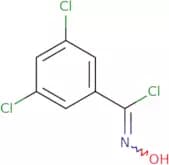
CAS:Versatile small molecule scaffoldFórmula:C6H14ClNPureza:Min. 95%Peso molecular:135.63 g/mol3,5-Dichloro-N-hydroxybenzene-1-carbonimidoyl chloride
CAS:Versatile small molecule scaffold
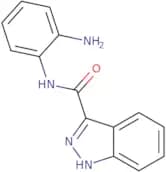
Fórmula:C7H4Cl3NOPureza:Min. 95%Peso molecular:224.5 g/molN-(2-Aminophenyl)-1H-indazole-3-carboxamide
CAS:Versatile small molecule scaffold
Fórmula:C14H12N4OPureza:Min. 95%Peso molecular:252.27 g/mol7-(Bromomethyl)pentadecane
CAS:7-(Bromomethyl)pentadecane is a molecule that has been used as an acceptor in organic photovoltaic devices. This molecule has a phenothiazine ring, which is electron deficient and low energy. 7-(Bromomethyl)pentadecane molecules are able to absorb light and convert it into electricity with high efficiency.
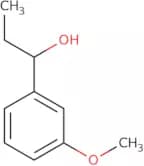
Fórmula:C16H33BrPureza:Min. 95%Peso molecular:305.34 g/mol1-(3-Methoxyphenyl)propan-1-ol
CAS:1-(3-Methoxyphenyl)propan-1-ol is a trialkylborane that reacts with alcohols to form alkylated products. It is used in the synthesis of benzene derivatives, and also has been used to react with magnesium halides. 1-(3-Methoxyphenyl)propan-1-ol can be used as an alternative to the toxic 1,2-dibromoethane when making alkylated products.
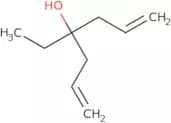
Fórmula:C10H14O2Pureza:Min. 95%Peso molecular:166.22 g/mol4-Ethyl-1,6-heptadien-4-ol
CAS:Versatile small molecule scaffold
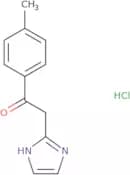
Fórmula:C9H16OPureza:Min. 95%Peso molecular:140.22 g/mol2-(1H-Imidazol-2-yl)-1-(4-methylphenyl)ethan-1-one hydrochloride
CAS:Versatile small molecule scaffold
Fórmula:C12H13ClN2OPureza:Min. 95%Peso molecular:236.7 g/mol2-(5-Methyl-1,3-oxazol-2-yl)aniline
CAS:Versatile small molecule scaffold
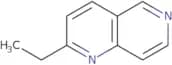
Fórmula:C10H10N2OPureza:Min. 95%Peso molecular:174.2 g/mol2-Ethyl-1,6-naphthyridine
CAS:Versatile small molecule scaffold
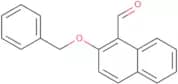
Fórmula:C10H10N2Pureza:Min. 95%Peso molecular:158.2 g/mol2-(Benzyloxy)-1-naphthaldehyde
CAS:2-(Benzyloxy)-1-naphthaldehyde is a synthetic compound that has been shown to inhibit the growth of P. aeruginosa. The synthesis of 2-(benzyloxy)-1-naphthaldehyde was achieved through the copper complex reaction with chalcone, which produced this compound in an efficient manner. In addition, 2-(benzyloxy)-1-naphthaldehyde has been shown to be a potent inhibitor of methyltransferase and dihedral molecular geometry studies. This makes it an attractive target for cancer therapy as well as Alzheimer's disease research because it inhibits the production of amyloid beta peptides, which are linked to these diseases.
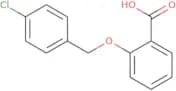
Fórmula:C18H14O2Pureza:Min. 95%Peso molecular:262.3 g/mol2-((4-Chlorobenzyl)oxy)benzoic acid
CAS:Versatile small molecule scaffold
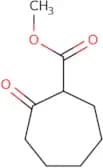
Fórmula:C14H11ClO3Pureza:Min. 95%Peso molecular:262.69 g/molMethyl 2-oxo-1-cycloheptanecarboxylate
CAS:Methyl 2-oxo-1-cycloheptanecarboxylate is a quinoline derivative that inhibits the activity of sirtuin 2 enzyme. It has been shown to inhibit cancer cells in vitro and in vivo, as well as to induce apoptosis. This drug also inhibits the growth of human leukemia cells by inhibiting protein synthesis, which may be due to its ability to activate hydroxy groups in proteins. Methyl 2-oxo-1-cycloheptanecarboxylate is an activated form that can be synthesized from cyclohexanol and transfer reactions with amidines or alkoxycarbonyls. The carbonyl group on this compound is metabolized into carbon dioxide, water, and energy via oxidative reactions with glutathione peroxidase.
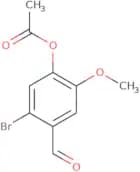
Fórmula:C9H14O3Pureza:Min. 95%Peso molecular:170.21 g/mol4-Acetoxy-2-bromo-5-methoxybenzaldehyde
CAS:Versatile small molecule scaffold
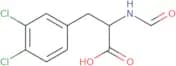
Fórmula:C10H9BrO4Pureza:Min. 95%Peso molecular:273.08 g/mol3-(3,4-Dichlorophenyl)-2-formamidopropanoic acid
CAS:Versatile small molecule scaffold
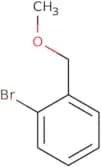
Fórmula:C10H9Cl2NO3Pureza:Min. 95%Peso molecular:262.09 g/mol1-Bromo-2-(methoxymethyl)benzene
CAS:1-Bromo-2-(methoxymethyl)benzene is a boronic acid that is used in the synthesis of palladium complexes. It is synthesized by reacting 1-bromobenzene with methanol and methoxymethyl chloride. The 1-bromo-2-(methoxymethyl)benzene has been used as a ligand for palladium complexes, which are often used to catalyze organic reactions, such as the metathesis reaction. Synthetic methods have been developed to produce the compound and NMR spectra have been obtained to provide kinetic data on these reactions.
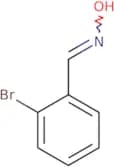
Fórmula:C8H9BrOPureza:Min. 95%Peso molecular:201.06 g/mol2-Bromobenzaldoxime
CAS:2-Bromobenzaldoxime is a biologically active molecule that has been shown to have significant physiological activities. It is an aldehyde, which is metabolized by the liver or kidneys into the corresponding alcohol, 2-bromoethanol. 2-Bromobenzaldoxime has been shown to be synthesized from diethyl ether and potassium phosphate in the presence of amino acids. The reaction proceeds with dehydration of the intermediate bromohydrin to form an aldoxime. This molecule can be used as a pharmaceutical drug for various diseases such as diabetes mellitus, hypertension, and inflammation.
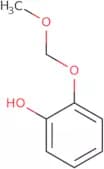
Fórmula:C7H6BrNOPureza:Min. 95%Peso molecular:200.03 g/mol2-(Methoxymethoxy)phenol
CAS:Versatile small molecule scaffold
Fórmula:C8H10O3Pureza:Min. 95%Peso molecular:154.16 g/mol3-Methanesulfonylpyridine
CAS:Versatile small molecule scaffold
Fórmula:C6H7NO2SPureza:Min. 95%Peso molecular:157.19 g/mol
![4-[(Carboxymethyl)sulfanyl]-3-nitrobenzoic acid](/_next/image/?url=https%3A%2Fstatic.cymitquimica.com%2Fproducts%2F3D%2Fthumb-webp%2FCIA19124.webp&w=3840&q=75)