Building Blocks
Subcategorías de "Building Blocks"
- Ácidos borónicos y derivados del ácido borónico(5.780 productos)
- Building Blocks quirales(1.240 productos)
- Building Blocks de hidrocarburos(6.100 productos)
- Building Blocks orgánicos(61.009 productos)
Se han encontrado 205248 productos de "Building Blocks"
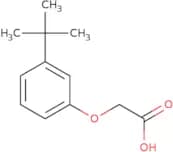
2-(3-tert-Butylphenoxy)acetic acid
CAS:Versatile small molecule scaffold
Fórmula:C12H16O3Pureza:Min. 95%Peso molecular:208.25 g/mol2-[3-(Propan-2-yl)phenoxy]acetic acid
CAS:2-[3-(Propan-2-yl)phenoxy]acetic acid is a chemical compound that is used as an additive in benzene, and is a phytotoxic chemical. It prevents the formation of chlorophyll by blocking electron transport and inhibiting photosynthesis. 2-[3-(Propan-2-yl)phenoxy]acetic acid is used to induce callus tissue from lettuce, radish, and other plants. This compound also inhibits the growth of various bacteria including Escherichia coli and Pseudomonas aeruginosa.
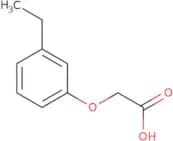
Fórmula:C11H14O3Pureza:Min. 95%Peso molecular:194.23 g/mol2-(3-Ethylphenoxy)acetic acid
CAS:2-(3-Ethylphenoxy)acetic acid is a phenoxyacetic acid that can be used as an igniting agent. It can be synthesized by the reaction of an alcohol with a carboxylic acid chloride in the presence of a base. The compound weighs 130.2 g/mol and has a melting point of 50°C. 2-(3-Ethylphenoxy)acetic acid is often used as a reagent for weighing zirconium oxide, which is used in some dental prostheses and dentures. It reacts with zirconia to produce ZrO2 and CO2 gas. The compound also reacts with water to form hydrogen gas, which makes it useful as a catalyst for oxidation reactions when heating zirconium metal in air.
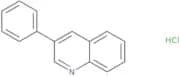
Fórmula:C10H12O3Pureza:Min. 95%Peso molecular:180.2 g/mol3-Phenylquinoline hydrochloride
CAS:Versatile small molecule scaffold
Fórmula:C15H12ClNPureza:Min. 95%Peso molecular:241.71 g/molRef: 3D-BAA87537
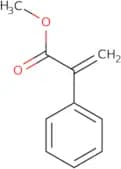
Producto descatalogadoMethyl 2-phenylacrylate
CAS:Methyl 2-phenylacrylate is a synthetic chemical that is used in the production of polymers. It reacts with oxygen to give an oxidative carbonylation product, which consists of a particle and a functional group. The particle can be made insoluble by polymerisation. The reaction mechanism involves the donation of a methyl cinnamate group to the carbonyl group, which has a redox potential and kinetic energy that are sufficient for the reaction to proceed. Methyl 2-phenylacrylate has been used as an initiator for free radical polymerisation, which leads to cross-linked polymers. This initiator also reacts with other functional groups such as phenol or amine groups.
Fórmula:C10H10O2Pureza:Min. 95%Peso molecular:162.19 g/mol6H-Benzo[C][1,2]benzothiazine 5,5-dioxide
CAS:6H-Benzo[C][1,2]benzothiazine 5,5-dioxide is a white crystalline solid with a molecular weight of 169.14. It is soluble in ether and benzene, but insoluble in water. 6H-Benzo[C][1,2]benzothiazine 5,5-dioxide has been shown to yield adducts with hydrochlorination and to react with quinones and other electrophiles to form chlorinated products. The regioselectivity of the reaction is determined by the anion of the substrate; chloride being the most reactive. The interaction of 6H-Benzo[C][1,2]benzothiazine 5,5-dioxide with anions such as diimide or sulfinic acid leads to the formation of different isomeric adducts.
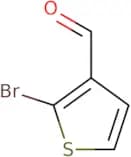
Fórmula:C12H9NO2SPureza:Min. 95%Peso molecular:231.27 g/mol2-Bromothiophene-3-carbaldehyde
CAS:2-Bromothiophene-3-carbaldehyde is a versatile monomer that can be used for the synthesis of a wide range of products. 2-Bromothiophene-3-carbaldehyde has been used in the synthesis of hexacyclic and grignard reagents, as well as aldehydes, which are precursors to many other chemicals. It is also an isomeric compound and can be used for cross coupling reactions. The yields of this chemical are high, making it an ideal choice for use in organic syntheses. 2-Bromothiophene-3-carbaldehyde can also be used in solar cells to produce polymers with optimal reaction rates. This chemical is often used as a monomer in the formylation and dimethylformamide processes.
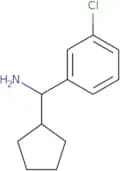
Fórmula:C5H3BrOSPureza:Min. 95%Peso molecular:191.05 g/mol(3-Chlorophenyl)(cyclopentyl)methanamine
CAS:Versatile small molecule scaffold
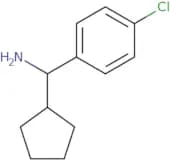
Fórmula:C12H16ClNPureza:Min. 95%Peso molecular:209.71 g/mol(4-Chlorophenyl)(cyclopentyl)methanamine
CAS:Versatile small molecule scaffold
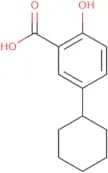
Fórmula:C12H16ClNPureza:Min. 95%Peso molecular:209.71 g/mol5-Cyclohexyl-2-hydroxybenzoic acid
CAS:5-Cyclohexyl-2-hydroxybenzoic acid is a compound that belongs to the group of phenolic compounds. It has been clinically used for the treatment of systemic hypertension and is used in the manufacture of dyes, resins, flavors and fragrances. 5-Cyclohexyl-2-hydroxybenzoic acid can be found in light exposure, metal cations and environmental pollution. The use of this compound may lead to depression, which may be due to its effects on the vessel diameter. This drug also has an effect on blood pressure by stimulating vasodilatation through an endothelium-dependent mechanism.
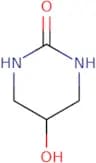
Fórmula:C13H16O3Pureza:Min. 95%Peso molecular:220.26 g/mol5-Hydroxy-1,3-diazinan-2-one
CAS:Versatile small molecule scaffold
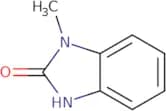
Fórmula:C4H8N2O2Pureza:Min. 95%Peso molecular:116.12 g/mol1-Methyl-2-benzimidazolinone
CAS:1-Methyl-2-benzimidazolinone is a synthetic compound that has been shown to be cytotoxic to cancer cells. It binds to metal ions and forms reactive intermediates, which are able to react with nucleophiles in cellular macromolecules. The reaction mechanism of 1-methyl-2-benzimidazolinone is similar to the reaction of picolinic acid with metal hydroxides. The heteroarylations of this compound have also been studied using chemical ligation, and it has been found that the d4 receptor may play a role in its cytotoxicity.
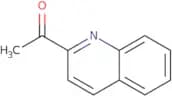
Fórmula:C8H8N2OPureza:Min. 95%Peso molecular:148.16 g/mol1-(Quinolin-2-yl)ethanone
CAS:1-(Quinolin-2-yl)ethanone is an inhibitor of proteolytic enzymes. It is a triazolopyrimidine that binds to the active site of proteases, thereby inhibiting their activity. 1-(Quinolin-2-yl)ethanone has been shown to be effective against viruses such as herpes simplex virus and Streptococcus faecalis, and bacterial infections such as streptococcus faecalis and Staphylococcus aureus. 1-(Quinolin-2-yl)ethanone also inhibits the production of matrix metalloproteinases, which play an important role in tumor development, by binding to the zinc ion in the enzyme's active site. This compound can also be used synergistically with copper chloride or hydrochloric acid to inhibit protease activity.
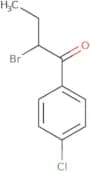
Fórmula:C11H9NOPureza:Min. 95%Peso molecular:171.2 g/mol2-Bromo-1-(4-chlorophenyl)butan-1-one
CAS:Versatile small molecule scaffold
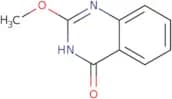
Fórmula:C10H10BrClOPureza:Min. 95%Peso molecular:261.54 g/mol2-Methoxyquinazolin-4-ol
CAS:Versatile small molecule scaffold
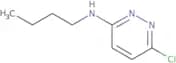
Fórmula:C9H8N2O2Pureza:Min. 95%Peso molecular:176.17 g/mol3-(Butylamino)-6-chloropyridazine
CAS:Versatile small molecule scaffold
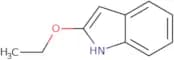
Fórmula:C8H12ClN3Pureza:Min. 95%Peso molecular:185.66 g/mol2-Ethoxy-1H-indole
CAS:2-Ethoxy-1H-indole is a synthetic, nucleophilic compound that has been shown to be an effective hydrogenation catalyst. The biological properties of 2-ethoxy-1H-indole have been studied in both animals and humans. In rats, this compound has shown to be an effective analgesic and antiinflammatory agent with few side effects. 2-Ethoxy-1H-indole also has shown efficacy in the treatment of Parkinson's disease in animal models. This drug can be used as a precursor for a variety of compounds including carboximidamides, enecarbamates, amines, or sulfoxides. It is also possible to control the stereocontrol of 2-ethoxy-1H-indole by using chiral reagents or by converting it to its chiral counterpart (2-(2'-ethoxy)-1H-indole).
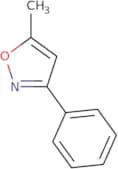
Fórmula:C10H11NOPureza:Min. 95%Peso molecular:161.2 g/mol5-Methyl-3-phenyl-1,2-oxazole
CAS:5-Methyl-3-phenyl-1,2-oxazole is a synthetic molecule that is postulated to be an isoxazole derivative. It has been shown to react with sodium chloride in the presence of organic solvents and hydrogen chloride to form a fluorinated salt. The reaction yield for this process was found to be low, however, the product was obtained in high purity. When irradiated or heated, 5-methyl-3-phenyl-1,2-oxazole undergoes thermal isomerization to form 3-(difluoromethyl)-5-(methyl)isoxazole.
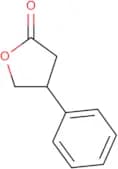
Fórmula:C10H9NOPureza:Min. 95%Peso molecular:159.18 g/mol4-Phenyloxolan-2-one
CAS:Versatile small molecule scaffold
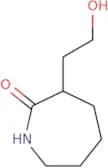
Fórmula:C10H10O2Pureza:Min. 95%Peso molecular:162.18 g/mol3-(2-Hydroxyethyl)azepan-2-one
CAS:Versatile small molecule scaffold
Fórmula:C8H15NO2Pureza:Min. 95%Peso molecular:157.2 g/molRef: 3D-BAA00684
Producto descatalogado

![2-[3-(Propan-2-yl)phenoxy]acetic acid](/_next/image/?url=https%3A%2Fstatic.cymitquimica.com%2Fproducts%2F3D%2Fthumb-webp%2FBAA87852.webp&w=3840&q=75)
![6H-Benzo[C][1,2]benzothiazine 5,5-dioxide](/_next/image/?url=https%3A%2Fstatic.cymitquimica.com%2Fproducts%2F3D%2Fthumb-webp%2FBAA86433.webp&w=3840&q=75)