


Building Blocks
Subcategorías de "Building Blocks"
- Ácidos borónicos y derivados del ácido borónico(5.780 productos)
- Building Blocks quirales(1.239 productos)
- Building Blocks de hidrocarburos(6.100 productos)
- Building Blocks orgánicos(61.005 productos)
Se han encontrado 205234 productos de "Building Blocks"
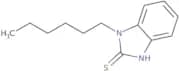
1-Hexyl-1H-1,3-benzodiazole-2-thiol
CAS:Versatile small molecule scaffold
Fórmula:C13H18N2SPureza:Min. 95%Peso molecular:234.36 g/mol1,4-Benzodioxine-2-carboxylic acid
CAS:1,4-Benzodioxine-2-carboxylic acid is a synthetic compound that is a member of the c1-6 alkyl group. It has been synthesized in four different stereoisomers, including cis and trans isomers. 1,4-Benzodioxine-2-carboxylic acid has potent inhibitory effects on protein synthesis in cell preparations at multigram concentrations. It also inhibits the activity of translation or replication of DNA or RNA by binding to the active site of the enzyme ribonuclease H and inhibiting its cleavage at the 3'-terminal nucleotide bonds. The trifluoromethyl group on 1,4-benzodioxine-2-carboxylic acid may be responsible for some of its biological properties. Molecular modeling studies have shown that 1,4 benzodioxine carboxylic acid binds to DNA through hydrogen bonding with one water molecule and two guanidine
Fórmula:C9H6O4Pureza:Min. 95%Peso molecular:178.14 g/molRef: 3D-SCA47101
Producto descatalogado(1-Cyanocyclopentyl)methyl methanesulfonate
CAS:Versatile small molecule scaffoldFórmula:C8H13NO3SPureza:Min. 95%Peso molecular:203.26 g/mol4-(Propan-2-yl)imidazolidin-2-one
CAS:Versatile small molecule scaffold
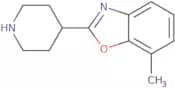
Fórmula:C6H12N2OPureza:Min. 95%Peso molecular:128.2 g/mol7-Methyl-2-(piperidin-4-yl)-1,3-benzoxazole
CAS:Versatile small molecule scaffold
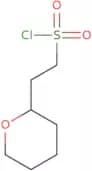
Fórmula:C13H16N2OPureza:Min. 95%Peso molecular:216.28 g/mol2-(Oxan-2-yl)ethane-1-sulfonyl chloride
CAS:Versatile small molecule scaffold
Fórmula:C7H13ClO3SPureza:Min. 95%Peso molecular:212.7 g/mol1-(1-Butyl-1H-1,2,3,4-tetrazol-5-yl)methanamine
CAS:Versatile small molecule scaffold
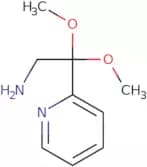
Fórmula:C6H13N5Pureza:Min. 95%Peso molecular:155.2 g/mol2,2-Dimethoxy-2-(pyridin-2-yl)ethan-1-amine
CAS:Versatile small molecule scaffold
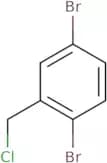
Fórmula:C9H14N2O2Pureza:Min. 95%Peso molecular:182.22 g/mol1,4-Dibromo-2-(chloromethyl)benzene
CAS:1,4-Dibromo-2-(chloromethyl)benzene is a synthetic compound that has been used as an anti-hepatitis C virus (HCV) agent. It is effective against HCV genotype 1 and 2, but not 3. It has been shown to be active in inhibiting the replication of HCV RNA by binding to the viral enzyme RNA polymerase. This drug has also been found to inhibit the growth of Mycobacterium tuberculosis and is being investigated for use in treating tuberculosis. The drug is prepared by reacting bromobenzene with sodium hydroxide and chloromethyl chloride in aqueous solution at 0°C. Dibromoethane reacts with paraformaldehyde and cuprous cyanide to form 1,4-dibromo-2-(chloromethyl)benzene, which can then be treated with hydrochloric acid to form the desired product.
Fórmula:C7H5Br2ClPureza:Min. 95%Peso molecular:284.37 g/mol1,6-Naphthyridin-2-amine
CAS:A 1,6-Naphthyridin-2-amine is a chemical compound that can be synthesized in various yields by extracting it from coal tar. It has been used in the past to make n-substituted derivatives for use in combinatorial and screening studies. A 1,6-Naphthyridin-2-amine can be synthesized using a microwave irradiation technique that uses malononitrile as its starting material. The microwave irradiation technique is operational at low temperatures and can be tracked with a radiotracer. Microwave irradiation of malononitrile produces an intermediate that reacts with ammonia to produce the desired 1,6-naphthyridinone product. This product can then be converted into the desired 1,6-naphthyridin-2 amine via hydrogenation or nitration.
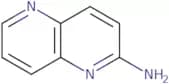
Fórmula:C8H7N3Pureza:Min. 95%Peso molecular:145.16 g/mol1,5-Naphthyridin-2-ylamine
CAS:1,5-Naphthyridin-2-ylamine is a monocyclic heterocycle that is derived from the amination of 1,5-naphthyridine. It has been used in the preparation of amides and carbocycles. The reaction also produces nitro compounds. The naphthyridinone reacts with a variety of alkyl groups to produce either alkenyl or alkynyl groups. This reaction can be carried out on an industrial scale by using Grignard reagents. The reaction proceeds via a tautomerization mechanism to produce the desired products. It has been shown that this chemical is toxic to cells and can produce DNA damage.
Fórmula:C8H7N3Pureza:Min. 95%Peso molecular:145.16 g/mol5-bromo-1,7-naphthyridine
CAS:5-bromo-1,7-naphthyridine is a heterocyclic compound that can be derived from pyrrole by the introduction of an electron deficiency. This molecule has been shown to react with nucleophiles such as water and amide in order to yield unsaturated products. The molecule also has electron-donating groups on it, which can be used to optimize yields. 5-bromo-1,7-naphthyridine is often used as a reagent in organic synthesis.
Fórmula:C8H5BrN2Pureza:Min. 95%Peso molecular:209 g/mol4-(Furan-2-yl)-4-oxobutanenitrile
CAS:Versatile small molecule scaffold
Fórmula:C8H7NO2Pureza:Min. 95%Peso molecular:149.15 g/mol2,6-Dimethyl-2H-1,4-benzoxazin-3(4H)-one
CAS:Versatile small molecule scaffold
Fórmula:C10H11NO2Pureza:Min. 95%Peso molecular:177.2 g/mol4-Amino-2,3,6-trimethylphenol
CAS:4-Amino-2,3,6-trimethylphenol (4ATMP) is a halogenated phenol that has been used as a developer in the production of silver halide photographic emulsions. It interacts with hydrogen chloride to form a gaseous product and can be used as an indicator for the presence of chlorine gas. 4ATMP is also known to react with formaldehyde and acetaldehyde to produce formic acid and acetic acid respectively. 4ATMP is most commonly prepared by reacting phenol with diethylaminopropyl chloride in the presence of hydrogen chloride gas.
Fórmula:C9H13NOPureza:Min. 95%Peso molecular:151.21 g/mol[4-(Bromomethyl)phenyl]trimethylsilane
CAS:Versatile small molecule scaffold
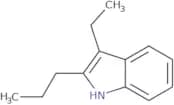
Fórmula:C10H15BrSiPureza:Min. 95%Peso molecular:243.21 g/mol3-Ethyl-2-propyl-1H-indole
CAS:3-Ethyl-2-propyl-1H-indole is an indole that can be used as a synthetic intermediate. It can also be used in nucleophilic substitution reactions to produce functionalized indoles. 3-Ethyl-2-propyl-1H-indole is nontoxic and does not react with most functional groups. This chemical is a good nucleophile and reacts regioselectively with electron deficient or neutral substrates to generate substituted indoles.
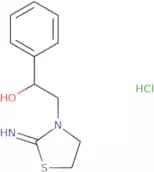
Fórmula:C13H17NPureza:Min. 95%Peso molecular:187.28 g/mol3-Thiazolidineethanol, 2-imino-α-phenyl-, hydrochloride
CAS:Versatile small molecule scaffoldFórmula:C11H15ClN2OSPureza:Min. 95%Peso molecular:258.77 g/molMethyl 5-ethynylpyridine-2-carboxylate
CAS:Methyl 5-ethynylpyridine-2-carboxylate is a ligand that binds in the active site of many enzymes. It can enhance the activity of these enzymes and also change their conformations. Methyl 5-ethynylpyridine-2-carboxylate interacts with four subunits to form a tetradentate framework, which is responsible for this molecule's ability to bind to any type of ligand. This enhancement effect is reversible, and it can be reversed by oxidizing methyl 5-ethynylpyridine-2-carboxylate with nitric acid. The yield of methyl 5-ethynylpyridine-2-carboxylate depends on the reaction conditions and the type of arylacetylene used. Methyl 5-ethynylpyridine-2-carboxylate has been shown to be an effective ligand with a high emission yield when using 1,3
Fórmula:C9H7NO2Pureza:Min. 95%Peso molecular:161.2 g/mol[(1-Methoxycyclopentyl)methyl](methyl)amine
CAS:Versatile small molecule scaffold
Fórmula:C8H17NOPureza:Min. 95%Peso molecular:143.23 g/mol






![[4-(Bromomethyl)phenyl]trimethylsilane](/_next/image/?url=https%3A%2Fstatic.cymitquimica.com%2Fproducts%2F3D%2Fthumb-webp%2FSAA90342.webp&w=3840&q=75)

amine](/_next/image/?url=https%3A%2Fstatic.cymitquimica.com%2Fproducts%2F3D%2Fthumb-webp%2FSAA86031.webp&w=3840&q=75)