Building Blocks
Subcategorías de "Building Blocks"
- Ácidos borónicos y derivados del ácido borónico(5.780 productos)
- Building Blocks quirales(1.240 productos)
- Building Blocks de hidrocarburos(6.100 productos)
- Building Blocks orgánicos(61.009 productos)
Se han encontrado 205248 productos de "Building Blocks"
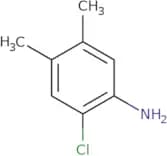
2-Chloro-4,5-dimethylaniline
CAS:Versatile small molecule scaffold
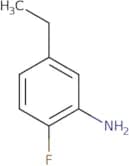
Fórmula:C8H10ClNPureza:Min. 95%Peso molecular:155.63 g/mol5-Ethyl-2-fluoroaniline
CAS:Versatile small molecule scaffold
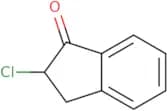
Fórmula:C8H10FNPureza:Min. 95%Peso molecular:139.17 g/mol2-Chloro-2,3-dihydro-1H-inden-1-one
CAS:2-Chloro-2,3-dihydro-1H-inden-1-one is a nitrogen heterocycle that can be synthesized by an asymmetric synthesis. It has been shown to inhibit the proliferation of T cells in vitro and in vivo and to suppress the development of autoimmune diseases. 2-Chloro-2,3-dihydro-1H-inden-1-one binds to a receptor on T cells and inhibits the function of this receptor. The drug was also found to be effective against trichomonas vaginalis in mice, although it has not yet been tested on humans. 2CHDI reacts with malonic acid or pyrazine carboxylic acid under acidic conditions to form a molecule with two carbonyl groups. This reaction is synergistic with hydrogen fluoride (HF) as a catalyst, which can also react with water molecules to form hydrogen gas and hydrofluoric acid.
Fórmula:C9H7ClOPureza:Min. 95%Peso molecular:166.6 g/mol2-Fluorohexanoic acid
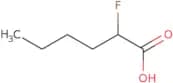
CAS:2-Fluorohexanoic acid is a synthetic chemical that belongs to the group of fluorinated aliphatic acids. It has been shown to inhibit the NS3 protease from hepatitis C virus. The hydroxy group on the 2-fluorohexanoic acid molecule allows it to cleave peptide bonds in proteins, which are necessary for their function. This chemical can be used as a linker between two proteins or other molecules that need to be attached together.
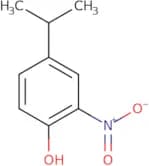
Fórmula:C6H11FO2Pureza:Min. 95%Forma y color:PowderPeso molecular:134.15 g/mol2-Nitro-4-(propan-2-yl)phenol
CAS:Versatile small molecule scaffold
Fórmula:C9H11NO3Pureza:Min. 95%Peso molecular:181.2 g/mol2-Ethylpent-4-enoic acid
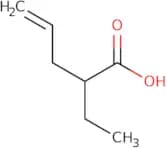
CAS:2-Ethylpent-4-enoic acid is an analog of 4-pentenoic acid that can be used as a catalyst in the gas phase. It has been shown to catalyze the metathesis of cis and trans 4-pentene. 2-Ethylpent-4-enoic acid has an enthalpy of formation of -5.6 kJ/mol and an enthalpy of activation at 298 K of -2.8 kJ/mol, which means that it is a relatively strong catalyst for this reaction. 2-Ethylpent-4-enoic acid has also been shown to have a higher catalytic activity than 1,3,5,7,9,11,-heptadecane (1HPD) or 1,3,5,7,-octadecane (OD).
Fórmula:C7H12O2Pureza:Min. 95%Peso molecular:128.17 g/mol4-Hydroxy-2-naphthoic acid
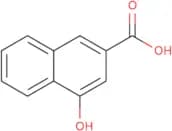
CAS:4-Hydroxy-2-naphthoic acid is a hydrocarbon with a carboxylic acid group. It can act as an antagonist to the hydrocarbon receptor (HCR). 4-Hydroxy-2-naphthoic acid has been shown to be effective in treating colon cancer cells in vitro, and has been shown to inhibit the growth of cancer cells in vivo. This compound is also effective at inhibiting the proliferation of human colon cancer cells (Caco2) that have been exposed to benzo(a)pyrene, an aromatic hydrocarbon found in cigarette smoke. The mechanism by which this drug inhibits cell proliferation is not fully understood but may involve inhibition of cytochrome P450 1A1 (CYP1A1), which metabolizes benzo(a)pyrene into carcinogenic intermediates. 4-Hydroxy-2-naphthoic acid has also been shown to be anisotropic and microreactor, meaning
Fórmula:C11H8O3Pureza:Min. 95%Peso molecular:188.17 g/mol(S)-1-(4-Methoxyphenyl)ethanol
CAS:(S)-1-(4-Methoxyphenyl)ethanol is an enantiopure chemical compound that is a reaction intermediate in the synthesis of various pharmaceuticals. The reaction system is immobilized, and the biological function of this molecule is activation energy. The surface methodology used for this compound is surface methodology, and the substrate concentration required for the reaction to occur is high. This compound also reacts with water, which may be due to its hydrophilic nature. The strain used in this experiment was Staphylococcus aureus, and the extents of the reaction were determined by measuring the rate at which the substrate concentration decreased over time. (S)-1-(4-Methoxyphenyl)ethanol has an asymmetric synthesis that can be caused by a surfactant or by adding a chiral catalyst to a racemic mixture.
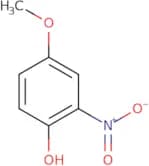
Fórmula:C9H12O2Pureza:Min. 95%Peso molecular:152.19 g/mol4-Methoxy-2-nitrophenol
CAS:4-Methoxy-2-nitrophenol is a chemical compound that has been shown to have a potential use in the functional theory of organic compounds. It can be prepared by hydrolysis of nitrobenzene with sodium hydroxide, which leads to the formation of 3-methoxy-4-nitrobenzoic acid. 4-Methoxy-2-nitrophenol can also be synthesized from an intramolecular hydrogen transfer reaction using sodium nitrite and potassium cyanide as reagents. 4MMP has been shown to bind to monoclonal antibodies, and it has been used for the detection of epitopes on proteins or peptides. The crystal structure of 4MPN was determined using X-ray diffraction analysis and was found to show three isomers. Heterostructures are also known for this compound.
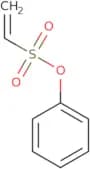
Fórmula:C7H7NO4Pureza:Min. 95%Peso molecular:169.13 g/molPhenyl vinylsulfonate
CAS:Phenyl vinylsulfonate is a redox-active molecule that binds to the phosphate group of glutamate and cross-links amide groups. The stability of this film-forming polymer can be increased by adding an asymmetric synthesis and quinoline derivatives. Phenyl vinylsulfonate has been used as a cross-linking agent for the production of amide hydrogels, which are film forming polymers. This polymer is also used in the manufacture of antimicrobial agents.
Fórmula:CH2CHSO3C6H5Pureza:Min. 95%Peso molecular:184.21 g/molSodium 2-hydroxypropane-1-sulfonate
CAS:Sodium 2-hydroxypropane-1-sulfonate is a surfactant that is used in the production of polymers. It can be used as a hydroxyethyl monomer and an oxidant, or as an initiator for polymerization reactions. This compound can also be used as an abrasive and to produce yields of propanesulfonic acid. Sodium 2-hydroxypropane-1-sulfonate has shown to yield piperazine from 2-amino-2-methyl-1-propanol and zwitterion from ethanesulfonic acid.
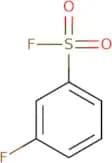
Fórmula:C3H8O4SPureza:Min. 95%Peso molecular:140.16 g/mol3-Fluorobenzene-1-sulfonyl fluoride
CAS:3-Fluorobenzene-1-sulfonyl fluoride is a chemical compound that can be used as a catalyst to synthesize organic compounds. It is a colorless liquid, which is soluble in water and organic solvents. This catalyst has been shown to be more efficient than the traditional catalysts, such as tetraphenylphosphonium chloride, potassium fluoride or sodium borohydride. 3-Fluorobenzene-1-sulfonyl fluoride also reacts with nitro groups to produce dinitro compounds, which are valuable synthetic intermediates for the production of dyes and pharmaceuticals. The synthesis of this compound can be carried out in high yields with stoichiometric amounts of reactants.
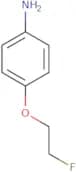
Fórmula:C6H4F2O2SPureza:Min. 95%Peso molecular:178.16 g/mol4-(2-Fluoroethoxy)aniline
CAS:Versatile small molecule scaffold
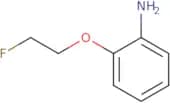
Fórmula:C8H10FNOPureza:Min. 95%Peso molecular:155.17 g/mol2-(2-Fluoroethoxy)aniline
CAS:Versatile small molecule scaffold
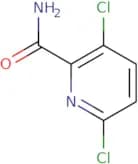
Fórmula:C8H10FNOPureza:Min. 95%Peso molecular:155.17 g/mol3,6-Dichloropicolinamide
CAS:3,6-Dichloropicolinamide is a chemical compound with the molecular formula C5H4Cl2N2O. It belongs to the class of pyridine compounds. 3,6-Dichloropicolinamide is a potent inhibitor of cellular activity. The inhibition of synovial fibroblasts was shown using fluorescence and x-ray analysis. This chemical has also been shown to lower the solvents in human recombinant proteins and can be used as an alternative in these experiments.
Fórmula:C6H4Cl2N2OPureza:Min. 95%Peso molecular:191.01 g/mol9H-Fluorene-9-carbonitrile
CAS:9H-Fluorene-9-carbonitrile is a nitrate that functions as a growth regulator. It has been shown to inhibit the growth of plants by inhibiting the activity of nucleophilic enzymes and reactive nitrogen species. It is also used as an intermediate for the synthesis of triazole fungicides, which are used in agriculture to control diseases on crops such as wheat, oats, barley, and corn. 9H-Fluorene-9-carbonitrile reacts with carbanions derived from c1-6 alkyl halides or protonated amines to form carbenes. 9H-Fluorene-9-carbonitrile undergoes nucleophilic substitution reactions with electrophiles such as ketones or carboxylic acids at temperatures between 0°C and 100°C. This compound is also used for mechanistic studies on the reaction of carbenes with other molecules containing a carbonyl group.
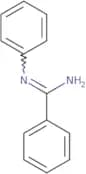
Fórmula:C14H9NPureza:Min. 95%Peso molecular:191.23 g/molN-Phenylbenzamidine
CAS:N-Phenylbenzamidine is a bicyclic heterocycle that has been synthesized and characterized as an amide. Its functional theory is based on the molecule's nucleophilic nature. The sodium hydrogen tautomeric form of N-phenylbenzamidine can be obtained by acidifying the molecule in water, which results in a chloride ion being released. The chloride is then regenerated by reaction with carbon disulphide. N-Phenylbenzamidine is used in plant cell cultures for the inhibition of protein synthesis, which may be due to its ability to inhibit the enzyme carbonic anhydrase.
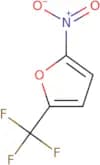
Fórmula:C13H12N2Pureza:Min. 95%Peso molecular:196.25 g/mol2-Nitro-5-(trifluoromethyl)furan
CAS:Versatile small molecule scaffold
Fórmula:C5H2F3NO3Pureza:Min. 95%Peso molecular:181.07 g/mol[Dimethyl(oxo)-λ⁶-sulfanylidene]urea
CAS:Versatile small molecule scaffold
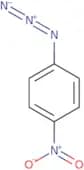
Fórmula:C3H8N2O2SPureza:Min. 95%Peso molecular:136.18 g/mol1-Azido-4-nitrobenzene
CAS:1-Azido-4-nitrobenzene is a chemical compound with the molecular formula C6H5N3O2, which is derived from nitrobenzene. It has the ability to react with primary amines to form diarylamines and aziridination. 1-Azido-4-nitrobenzene has antiviral properties and can be used in the synthesis of a number of pharmaceuticals, such as chloramphenicol and zanamivir. The compound may also be used in the synthesis of dyes, explosives, and other products. 1-Azido-4-nitrobenzene reacts with chloride to produce carbon tetrachloride and nitrogen gas. This reaction can be used to make transfer reactions with other compounds, such as alkenes or ketones.
Fórmula:C6H4N4O2Pureza:Min. 95%Forma y color:PowderPeso molecular:164.12 g/mol



![[Dimethyl(oxo)-λ⁶-sulfanylidene]urea](/_next/image/?url=https%3A%2Fstatic.cymitquimica.com%2Fproducts%2F3D%2Fthumb-webp%2FBAA52015.webp&w=3840&q=75)