Building Blocks
Subcategorías de "Building Blocks"
- Ácidos borónicos y derivados del ácido borónico(5.780 productos)
- Building Blocks quirales(1.240 productos)
- Building Blocks de hidrocarburos(6.100 productos)
- Building Blocks orgánicos(61.009 productos)
Se han encontrado 205248 productos de "Building Blocks"
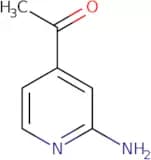
1-(2-aminopyridin-4-yl)ethanone
CAS:Versatile small molecule scaffold
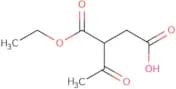
Fórmula:C7H8N2OPureza:Min. 95%Peso molecular:136.15 g/mol3-(Ethoxycarbonyl)-4-oxopentanoic acid
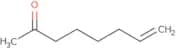
CAS:Versatile small molecule scaffoldFórmula:C8H12O5Pureza:Min. 95%Peso molecular:188.18 g/molOct-7-en-2-one
CAS:Oct-7-en-2-one is a reactive diketone that reacts with oxygen to form peroxides and other reactive oxygen species. This isomeric compound has been shown to react with nucleophiles, such as styrene, forming an intermediate that undergoes a nucleophilic attack by the carbonyl group. The mechanism of this reaction remains unclear, but it may be rationalized by invoking the following steps: 1) Oct-7-en-2-one reacts with molecular oxygen to form peroxides and other reactive oxygen species; 2) The peroxides then react with styrene to produce an intermediate; 3) Finally, the carbonyl group of the intermediate reacts with the nucleophilic group on the styrene molecule.
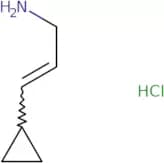
Fórmula:C8H14OPureza:Min. 95%Peso molecular:126.2 g/mol3-Cyclopropylprop-2-en-1-amine hydrochloride
CAS:Versatile small molecule scaffold
Fórmula:C6H12ClNPureza:Min. 95%Peso molecular:133.62 g/molRef: 3D-HXC89614
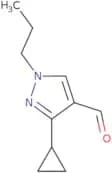
Producto descatalogado3-Cyclopropyl-1-propyl-1H-pyrazole-4-carbaldehyde
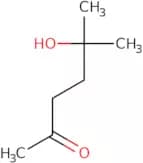
CAS:Versatile small molecule scaffoldFórmula:C10H14N2OPureza:Min. 95%Peso molecular:178.23 g/mol5-Hydroxy-5-methylhexan-2-one
CAS:Versatile small molecule scaffold
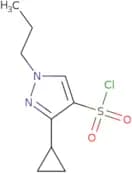
Fórmula:C7H14O2Pureza:Min. 95%Peso molecular:130.18 g/mol3-Cyclopropyl-1-propyl-1H-pyrazole-4-sulfonyl chloride
CAS:Versatile small molecule scaffoldFórmula:C9H13ClN2O2SPureza:Min. 95%Peso molecular:248.73 g/mol6-(4-Methoxyphenyl)-2-(trifluoromethyl)imidazo[2,1-b][1,3,4]thiadiazole
CAS:Versatile small molecule scaffold
Fórmula:C12H8F3N3OSPureza:Min. 95%Peso molecular:299.27 g/molRef: 3D-YGB57342
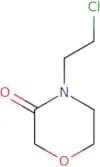
Producto descatalogado4-(2-Chloroethyl)morpholin-3-one
CAS:Versatile small molecule scaffold
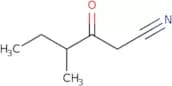
Fórmula:C6H10ClNO2Pureza:Min. 95%Peso molecular:163.6 g/mol4-Methyl-3-oxohexanenitrile
CAS:Versatile small molecule scaffold
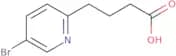
Fórmula:C7H11NOPureza:Min. 95%Peso molecular:125.17 g/mol4-(5-Bromopyridin-2-yl)butanoic acid
CAS:Versatile small molecule scaffold
Fórmula:C9H10BrNO2Pureza:Min. 95%Peso molecular:244.08 g/molRef: 3D-EIC92883
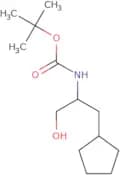
Producto descatalogadotert-Butyl N-(1-cyclopentyl-3-hydroxypropan-2-yl)carbamate
CAS:Versatile small molecule scaffold
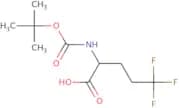
Fórmula:C13H25NO3Pureza:Min. 95%Peso molecular:243.34 g/mol2-((tert-Butoxycarbonyl)amino)-5,5,5-trifluoropentanoic acid
CAS:Versatile small molecule scaffold
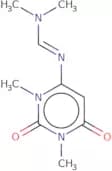
Fórmula:C10H16F3NO4Pureza:Min. 95%Peso molecular:271.23 g/mol(E)-N'-(1,3-Dimethyl-2,6-dioxo-1,2,3,6-tetrahydropyrimidin-4-yl)-N,N-dimethylmethanimidamide
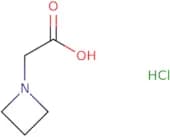
CAS:Versatile small molecule scaffoldFórmula:C9H14N4O2Pureza:Min. 95%Peso molecular:210.2 g/mol2-(Azetidin-1-yl)acetic acid hydrochloride
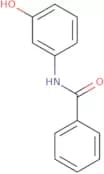
CAS:Versatile small molecule scaffoldFórmula:C5H9NO2·HClPureza:Min. 95%Peso molecular:151.59 g/mol3-Hydroxy-N-phenylbenzamide
CAS:3-Hydroxy-N-phenylbenzamide (3HB) is a chemical compound that has been isolated from the plant Caryophyllaceae. This compound is an electrophile, which can react with nucleophiles in biological systems. 3HB produces anthranilic acid when it reacts with amino acids, and this compound may be responsible for the antimicrobial activity of 3HB. 3HB was shown to have fungitoxic effects against some fungi including Fusarium oxysporum, Rhizoctonia solani, and Stemphylium sp., but not against other fungi such as Alternaria alternata and Penicillium cyclopium. The phytoalexin caryophyllin, which is produced by infected plants, also inhibits fungal growth.
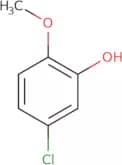
Fórmula:C13H11NO2Pureza:Min. 95%Peso molecular:213.23 g/mol5-Chloro-2-methoxyphenol
CAS:5-Chloro-2-methoxyphenol is a phenolic compound that is used in wastewater treatment. It can be synthesized from 2-chloro-5-hydroxyphenol and sodium hydroxide. 5-Chloro-2-methoxyphenol has been shown to inhibit the growth of Pseudomonas strains, including P. aeruginosa, P. putida, and P. fluorescens. This inhibition may be due to its ability to release Mn2+ ions from the bacteria's cell wall by oxidation reactions. The bacterial strain also needs a carbon source for 5-chloro-2-methoxyphenol to be effective against it and it is not active against radiation, oxidation products, or hplc analysis.BR>BR>
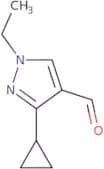
Fórmula:C7H7ClO2Pureza:Min. 95%Peso molecular:158.58 g/mol3-Cyclopropyl-1-ethyl-1H-pyrazole-4-carbaldehyde
CAS:Versatile small molecule scaffoldFórmula:C9H12N2OPureza:Min. 95%Peso molecular:164.2 g/mol2-[1-(trifluoromethyl)cyclopropyl]ethan-1-amine hydrochloride
CAS:Versatile small molecule scaffold
Fórmula:C6H10NF3·HClPureza:Min. 95%Peso molecular:189.6 g/molRef: 3D-EIC69080
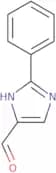
Producto descatalogado2-Phenyl-1H-imidazole-4-carbaldehyde
CAS:2-Phenyl-1H-imidazole-4-carbaldehyde is an aldehyde that is used as a ligand in asymmetric synthesis. It can be used in the nitroaldol reaction to produce chiral imidazole derivatives. The compound is useful for the synthesis of molecules with high molecular weight and low reactivity, which can be further modified to produce pharmaceuticals. The compound has been shown to catalyze organic reactions, such as condensation products and stereospecific reactions.Fórmula:C10H8N2OPureza:Min. 95%Peso molecular:172.19 g/mol

![6-(4-Methoxyphenyl)-2-(trifluoromethyl)imidazo[2,1-b][1,3,4]thiadiazole](/_next/image/?url=https%3A%2Fstatic.cymitquimica.com%2Fproducts%2F3D%2Fthumb-webp%2FYGB57342.webp&w=3840&q=75)
![2-[1-(trifluoromethyl)cyclopropyl]ethan-1-amine hydrochloride](/_next/image/?url=https%3A%2Fstatic.cymitquimica.com%2Fproducts%2F3D%2Fthumb-webp%2FEIC69080.webp&w=3840&q=75)