Building Blocks
Esta sección contiene productos fundamentales para la síntesis de compuestos orgánicos y biológicos. Building blocks son los materiales de partida esenciales utilizados para construir moléculas complejas a través de diversas reacciones químicas. Desempeñan un papel crítico en el descubrimiento de fármacos, la ciencia de materiales y la investigación química. En CymitQuimica, ofrecemos una gama diversa de building blocks de alta calidad para apoyar sus investigaciones innovadoras y proyectos industriales, asegurando que tenga los componentes esenciales para una síntesis exitosa.
Subcategorías de "Building Blocks"
- Ácidos borónicos y derivados del ácido borónico(5.781 productos)
- Building Blocks quirales(1.242 productos)
- Building Blocks de hidrocarburos(6.101 productos)
- Building Blocks orgánicos(61.033 productos)
Se han encontrado 205320 productos de "Building Blocks"
Ordenar por
Pureza (%)
0
100
|
0
|
50
|
90
|
95
|
100
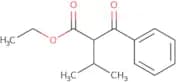
ethyl 2-benzoyl-3-methylbutanoate
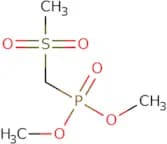
CAS:Versatile small molecule scaffoldFórmula:C14H18O3Pureza:Min. 95%Peso molecular:234.29 g/molDimethyl (methanesulfonylmethyl)phosphonate
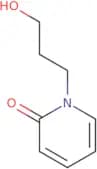
CAS:Versatile small molecule scaffoldFórmula:C4H11O5PSPureza:Min. 95%Peso molecular:202.17 g/mol1-(3-Hydroxypropyl)-1,2-dihydropyridin-2-one
CAS:Versatile small molecule scaffold
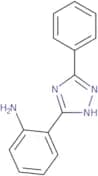
Fórmula:C8H11NO2Pureza:Min. 95%Peso molecular:153.18 g/mol2-(5-Phenyl-1H-1,2,4-triazol-3-yl)aniline
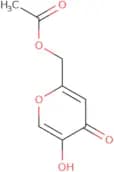
CAS:Versatile small molecule scaffoldFórmula:C14H12N4Pureza:Min. 95%Peso molecular:236.27 g/mol(5-Hydroxy-4-oxo-4H-pyran-2-yl)methyl acetate
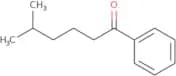
CAS:Versatile small molecule scaffoldFórmula:C8H8O5Pureza:Min. 95%Peso molecular:184.15 g/mol5-Methyl-1-phenylhexan-1-one
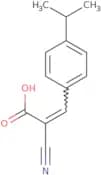
CAS:5-Methyl-1-phenylhexan-1-one is an antiviral agent that inhibits the infectivity of human immunodeficiency virus (HIV). It has been shown to be potent against HIV. The antiviral effect of 5-Methyl-1-phenylhexan-1-one is due to its ability to inhibit the action of HIV reverse transcriptase, which is an enzyme that catalyzes the synthesis of viral DNA from viral RNA. It is a 6 membered heterocycle with aspartyl and cyclopentyl rings. 5-Methyl-1 phenylhexan-1 one has not been tested for mutagenicity or carcinogenicity.Fórmula:C13H18OPureza:Min. 95%Peso molecular:190.28 g/mol(2Z)-2-Cyano-3-(4-isopropylphenyl)acrylic acid
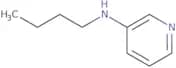
CAS:Versatile small molecule scaffoldFórmula:C13H13NO2Pureza:Min. 95%Peso molecular:215.25 g/molN-Butylpyridin-3-amine
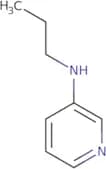
CAS:Versatile small molecule scaffoldFórmula:C9H14N2Pureza:Min. 95%Peso molecular:150.22 g/molN-Propylpyridin-3-amine
CAS:Versatile small molecule scaffold
Fórmula:C8H12N2Pureza:Min. 95%Peso molecular:136.19 g/mol2-[2-(4-Methylphenoxy)phenyl]acetic acid
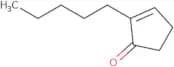
CAS:Versatile small molecule scaffoldFórmula:C15H14O3Pureza:Min. 95%Peso molecular:242.27 g/mol2-Pentyl-2-cyclopenten-1-one
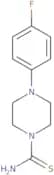
CAS:2-Pentyl-2-cyclopenten-1-one is a stereoselective reaction product. It is synthesized by reacting cyclopentyl amines with sodium carbonate in acidic solution. The reaction is carried out at room temperature and the optimal reaction time appears to be 18 hours. This compound reacts with chloride to form an acid chloride, which undergoes dehydration to form the desired product. The resulting chemical structures are shown below.Fórmula:C10H16OPureza:Min. 95%Peso molecular:152.24 g/mol4-(4-Fluorophenyl)piperazine-1-carbothioamide
CAS:Versatile small molecule scaffoldFórmula:C11H14FN3SPureza:Min. 95%Peso molecular:239.31 g/mol4-(4-Chlorophenyl)piperazine-1-carbothioamide
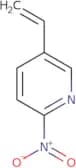
CAS:Versatile small molecule scaffoldFórmula:C11H14ClN3SPureza:Min. 95%Peso molecular:255.77 g/mol5-Ethenyl-2-nitropyridine
CAS:Versatile small molecule scaffoldFórmula:C7H6N2O2Pureza:Min. 95%Peso molecular:150.13 g/mol(2,5-Dichlorothiophen-3-yl)methanesulfonyl chloride
CAS:Versatile small molecule scaffold
Fórmula:C5H3Cl3O2S2Pureza:Min. 95%Peso molecular:265.6 g/mol2-[3-(Trifluoromethyl)phenyl]ethanimidamide hydrochloride
CAS:Versatile small molecule scaffoldFórmula:C9H10ClF3N2Pureza:Min. 95%Peso molecular:238.64 g/mol2-Chloroquinoline-3-methanol
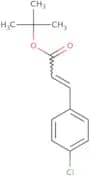
CAS:2-Chloroquinoline-3-methanol is a synthetic chemical that is dehydrated to form 2,4-dichloroaniline. It is used as an antimycotic and antibacterial agent for the control of test organisms in the laboratory. 2-Chloroquinoline-3-methanol has been shown to react with amines and quinoline derivatives, resulting in an increase in the functional groups on these molecules. The catalytic activity of this compound can be increased by adding a strong base such as potassium hydroxide or sodium methoxide.Fórmula:C10H8ClNOPureza:Min. 95%Peso molecular:193.63 g/moltert-Butyl (2E)-3-(4-chlorophenyl)prop-2-enoate
CAS:Versatile small molecule scaffoldFórmula:C13H15ClO2Pureza:Min. 95%Peso molecular:238.71 g/mol5-(2-Aminoethyl)-2-methoxybenzene-1-sulfonamide hydrochloride
CAS:Producto controladoVersatile small molecule scaffoldFórmula:C9H15ClN2O3SPureza:Min. 95%Peso molecular:266.75 g/mol4,6-Dimethoxypyrimidine-2yl-carbaldehyde
CAS:4,6-Dimethoxypyrimidine-2yl-carbaldehyde is a pyrimidine derivative that can be used in the synthesis of pharmaceuticals.Fórmula:C7H8N2O3Pureza:Min. 95%Peso molecular:168.15 g/mol

![2-[2-(4-Methylphenoxy)phenyl]acetic acid](/_next/image/?url=https%3A%2Fstatic.cymitquimica.com%2Fproducts%2F3D%2Fthumb-webp%2FABA56303.webp&w=3840&q=75)


![2-[3-(Trifluoromethyl)phenyl]ethanimidamide hydrochloride](/_next/image/?url=https%3A%2Fstatic.cymitquimica.com%2Fproducts%2F3D%2Fthumb-webp%2FAFA90376.webp&w=3840&q=75)