Building Blocks
Esta sección contiene productos fundamentales para la síntesis de compuestos orgánicos y biológicos. Building blocks son los materiales de partida esenciales utilizados para construir moléculas complejas a través de diversas reacciones químicas. Desempeñan un papel crítico en el descubrimiento de fármacos, la ciencia de materiales y la investigación química. En CymitQuimica, ofrecemos una gama diversa de building blocks de alta calidad para apoyar sus investigaciones innovadoras y proyectos industriales, asegurando que tenga los componentes esenciales para una síntesis exitosa.
Subcategorías de "Building Blocks"
- Ácidos borónicos y derivados del ácido borónico(5.778 productos)
- Building Blocks quirales(1.242 productos)
- Building Blocks de hidrocarburos(6.098 productos)
- Building Blocks orgánicos(61.059 productos)
Se han encontrado 199580 productos de "Building Blocks"
Ordenar por
Pureza (%)
0
100
|
0
|
50
|
90
|
95
|
100
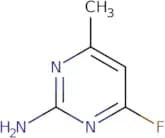
4-Fluoro-6-methylpyrimidin-2-amine
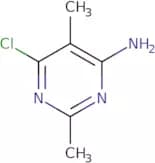
CAS:<p>Versatile small molecule scaffold</p>Fórmula:C5H6FN3Pureza:Min. 95%Peso molecular:127.12 g/mol6-chloro-2,5-dimethylpyrimidin-4-amine
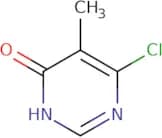
CAS:Versatile small molecule scaffoldFórmula:C6H8ClN3Pureza:Min. 95%Peso molecular:157.6 g/mol6-Chloro-5-methylpyrimidin-4-ol
CAS:<p>Versatile small molecule scaffold</p>Fórmula:C5H5ClN2OPureza:Min. 95%Peso molecular:144.56 g/mol2-[(Chloromethyl)sulfanyl]propane
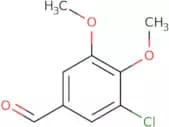
CAS:Versatile small molecule scaffoldFórmula:C4H9ClSPureza:Min. 95%Peso molecular:124.63 g/mol3-Chloro-4,5-dimethoxybenzaldehyde
CAS:<p>3-Chloro-4,5-dimethoxybenzaldehyde is a coniferous organic compound that has been shown to have antibacterial activity. 3-Chloro-4,5-dimethoxybenzaldehyde is an analog of the etoposide drug, which is used in the treatment of cancer. It binds to the bacterial cell membrane and prevents replication of DNA. 3-Chloro-4,5-dimethoxybenzaldehyde also inhibits the growth of cancer cells by disrupting their protein synthesis. This agent also has a gaseous form and can be used as an insecticide.</p>Fórmula:C9H9ClO3Pureza:Min. 95%Peso molecular:200.62 g/mol2-Chloro-4-hydroxy-5-methoxy-benzaldehyde
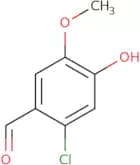
CAS:<p>2-Chloro-4-hydroxy-5-methoxybenzaldehyde is an organic compound with the chemical formula C6H3ClO2. It is a member of the aldehyde family and has an oxidation potential of 1.8 V. The compound is soluble in water and alcohols but insoluble in ethers. 2-Chloro-4-hydroxy-5-methoxybenzaldehyde can be prepared by reduction of o,p′-dichlorobenzaldehyde with lithium aluminum hydride or sodium borohydride at 0°C. The compound can also be synthesized by heating o,p′-dichlorobenzaldehyde to 170°C in the presence of sulfuric acid and then treating the reaction product with potassium hydroxide at room temperature to yield 2,4,5,6,-tetrachloroquinone which then undergoes demethylation to form 2,4,</p>Fórmula:C8H7ClO3Pureza:Min. 95%Forma y color:PowderPeso molecular:186.59 g/molN-(Naphthalen-2-yl)benzamide
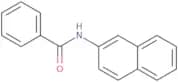
CAS:<p>N-(Naphthalen-2-yl)benzamide is an organic compound with a molecular formula of C14H11NO and a molecular weight of 218.27 g/mol. It belongs to the heterocyclic compounds, benzamides class, and has two functional groups: alkylation and diaryliodonium. The compound is synthesized by the reaction of 8-aminoquinoline with naphthalene-2-carboxaldehyde in presence of catalysts such as sodium methoxide or potassium tert-butoxide. The synthesis requires unactivated aromatic rings, which are halides or methylene groups. N-(Naphthalen-2-yl)benzamide can be used as a starting material for other synthetic reactions, such as aliphatic or arylation reactions.</p>Fórmula:C17H13NOPureza:Min. 95%Peso molecular:247.29 g/mol2,2-Dimethyl-2,3-dihydro-1H-inden-5-ol
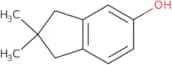
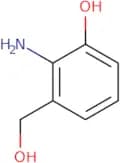
CAS:<p>Versatile small molecule scaffold</p>Fórmula:C11H14OPureza:Min. 95%Peso molecular:162.2 g/mol2-Amino-3-(hydroxymethyl)phenol
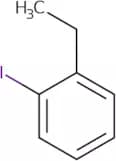
CAS:<p>Versatile small molecule scaffold</p>Fórmula:C7H9NO2Pureza:Min. 95%Peso molecular:139.15 g/mol2-Ethyliodobenzene
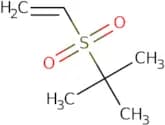
CAS:<p>2-Ethyliodobenzene is a versatile reagent that can be used to synthesize a wide range of complex organic molecules. It is an iodinated aromatic compound with two ethyl groups. 2-Ethyliodobenzene is easily prepared by the reaction of iodine and acetylene in the presence of aluminium chloride or copper chloride.</p>Fórmula:C8H9IPureza:Min. 95%Peso molecular:232.06 g/mol2-(Ethenesulfonyl)-2-methylpropane
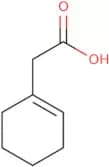
CAS:<p>Versatile small molecule scaffold</p>Fórmula:C6H12O2SPureza:Min. 95%Peso molecular:148.23 g/mol1-Cyclohexene-1-acetic acid
CAS:1-Cyclohexene-1-acetic acid belongs to the class of nitrogenous compounds and is an antibacterial agent. It has been shown to inhibit the growth of a variety of bacteria, including strains resistant to other antibiotics. The enzyme that produces 1-Cyclohexene-1-acetic acid in bacteria is not known, but it is possible that the gene sequence for this enzyme will be determined in the future. In the meantime, it is possible to synthesize 1-Cyclohexene-1-acetic acid from phenylacetonitrile and trifluoroacetic acid. This compound can also be synthesized from 5-membered heteroaryl compounds as a starting material. 1-Cyclohexene-1-acetic acid may also be made from potassium ion and enantiomeric organic solvents such as acetonitrile or propionitrile.Fórmula:C8H12O2Pureza:Min. 95%Peso molecular:140.18 g/mol2-Methyl-2-[(trimethylsilyl)oxy]propanenitrile
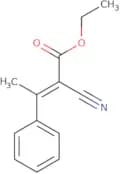
CAS:2-Methyl-2-[(trimethylsilyl)oxy]propanenitrile is a molecule that belongs to the family of dicyanomethylenedihydrofuran. It is used as an emission source for chemiluminescence, fluorescence, and phosphorescence. The quantum yield of this molecule is up to 0.8 and it has a solvatochromism in the visible region. 2-Methyl-2-[(trimethylsilyl)oxy]propanenitrile emits light when excited by photons with a wavelength of 400 nm or less, which are produced by an electron beam or other light sources. This substance is also an acceptor in many organic light emitting diodes (OLEDs). Photophysical properties include photoinduced charge transfer and fluorescence quenching.Fórmula:C7H15NOSiPureza:Min. 95%Peso molecular:157.29 g/mol(E)-2-Cyano-3-phenyl-but-2-enoic acid ethyl ester
CAS:<p>(E)-2-Cyano-3-phenyl-but-2-enoic acid ethyl ester is a condensation product of ethyl cyanoacetate and dihydropyridone. It is an acid ethyl ester that has a cyanoacetate moiety and an acid ethyl ester. This compound can be used in the synthesis of ketones.</p>Fórmula:C13H13NO2Pureza:Min. 95%Peso molecular:215.25 g/molrac-(1R,2S,6R,7S)-2-Methyl-4-oxatricyclo[5.2.1.0,2,6]dec-8-ene-3,5-dione
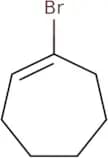
CAS:<p>Rac-2,2'-Methylenebis(4-oxatricyclo[5.2.1.0,2,6]dec-8-ene)-3,5-dione is a polyvalent anhydride that has been used as a crosslinking agent in epoxy resin systems and as a viscosity modifier in polymerizable systems. It is also used as an additive to improve the properties of powder coatings and to produce polycarboxylic acid dispersions for use in alkyd resins and oil field chemical additives. The material is supplied as a colloidal suspension in water with a particle size of less than 1 micron. Racemic 2,2'-Methylenebis(4-oxatricyclo[5.2.1.0,2,6]dec-8-ene)-3,5-dione (rac-(1R,2S,6R,7S)-</p>Fórmula:C10H10O3Pureza:Min. 95%Peso molecular:178.18 g/mol1-Bromocyclohept-1-ene
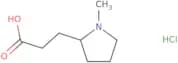
CAS:<p>1-Bromocyclohept-1-ene is a solvent that is used in pharmaceutical preparations and as a diluent. It can be used to introduce fluorine, chlorine, or triflates into organic compounds. 1-Bromocyclohept-1-ene is also an intermediate for the production of nonsteroidal anti-inflammatory drugs. The stereoisomers of this compound are called 1,2,3,4-cyclobutane tetrahydrofuran and 1,2,3,4-cyclohexane tetrahydrofuran.<br>1-Bromocyclohept-1-ene can be obtained through the reaction of cyclopentadiene with bromine in the presence of magnesium chloride or by heating cyclooctane with magnesium and chlorine.</p>Fórmula:C7H11BrPureza:Min. 95%Peso molecular:175.66 g/mol3-(1-Methylpyrrolidin-2-yl)propanoic acid hydrochloride
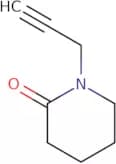
CAS:Versatile small molecule scaffoldFórmula:C8H16ClNO2Pureza:Min. 95%Peso molecular:193.67 g/mol1-(Prop-2-yn-1-yl)piperidin-2-one
CAS:<p>Versatile small molecule scaffold</p>Fórmula:C8H11NOPureza:Min. 95%Peso molecular:137.18 g/mol2-[2,4-Di(tert-butyl)phenoxy]acetic acid
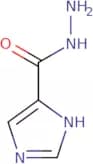
CAS:<p>Versatile small molecule scaffold</p>Fórmula:C16H24O3Pureza:Min. 95%Peso molecular:264.37 g/mol1H-Imidazole-5-carbohydrazide
CAS:Versatile small molecule scaffoldFórmula:C4H6N4OPureza:Min. 95%Peso molecular:126.12 g/mol

![2-[(Chloromethyl)sulfanyl]propane](/_next/image/?url=https%3A%2Fstatic.cymitquimica.com%2Fproducts%2F3D%2Fthumb-webp%2FTAA26719.webp&w=3840&q=75)
![2-Methyl-2-[(trimethylsilyl)oxy]propanenitrile](/_next/image/?url=https%3A%2Fstatic.cymitquimica.com%2Fproducts%2F3D%2Fthumb-webp%2FTAA29611.webp&w=3840&q=75)
![rac-(1R,2S,6R,7S)-2-Methyl-4-oxatricyclo[5.2.1.0,2,6]dec-8-ene-3,5-dione](/_next/image/?url=https%3A%2Fstatic.cymitquimica.com%2Fproducts%2F3D%2Fthumb-webp%2FTAA31060.webp&w=3840&q=75)
![2-[2,4-Di(tert-butyl)phenoxy]acetic acid](/_next/image/?url=https%3A%2Fstatic.cymitquimica.com%2Fproducts%2F3D%2Fthumb-webp%2FTAA32779.webp&w=3840&q=75)