Building Blocks
Esta sección contiene productos fundamentales para la síntesis de compuestos orgánicos y biológicos. Building blocks son los materiales de partida esenciales utilizados para construir moléculas complejas a través de diversas reacciones químicas. Desempeñan un papel crítico en el descubrimiento de fármacos, la ciencia de materiales y la investigación química. En CymitQuimica, ofrecemos una gama diversa de building blocks de alta calidad para apoyar sus investigaciones innovadoras y proyectos industriales, asegurando que tenga los componentes esenciales para una síntesis exitosa.
Subcategorías de "Building Blocks"
- Ácidos borónicos y derivados del ácido borónico(5.778 productos)
- Building Blocks quirales(1.242 productos)
- Building Blocks de hidrocarburos(6.098 productos)
- Building Blocks orgánicos(61.059 productos)
Se han encontrado 199580 productos de "Building Blocks"
Ordenar por
Pureza (%)
0
100
|
0
|
50
|
90
|
95
|
100
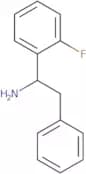
1-(2-Fluorophenyl)-2-phenylethan-1-amine
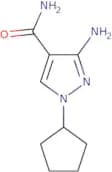
CAS:<p>Versatile small molecule scaffold</p>Fórmula:C14H14FNPureza:Min. 95%Peso molecular:215.27 g/mol3-Amino-1-cyclopentyl-1H-pyrazole-4-carboxamide
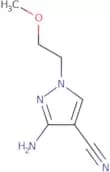
CAS:Versatile small molecule scaffoldFórmula:C9H14N4OPureza:Min. 95%Peso molecular:194.23 g/mol3-Amino-1-(2-methoxyethyl)-1H-pyrazole-4-carbonitrile
CAS:Versatile small molecule scaffoldFórmula:C7H10N4OPureza:Min. 95%Peso molecular:166.18 g/mol4,6-dichloro-2-methyl-2H-pyrazolo[3,4-d]pyrimidine
CAS:Versatile small molecule scaffoldFórmula:C6H4Cl2N4Pureza:Min. 95%Peso molecular:203 g/molNIH-12848
CAS:NIH-12848 is a monoclonal antibody that binds to the factor receptor, leading to the inhibition of growth factors. It has been shown to inhibit the proliferation of chronic lymphocytic leukemia cells by preventing their growth and survival. NIH-12848 also inhibits the tyrosine kinase, reversibly inhibiting lipid kinases and leukemia cells. NIH-12848 may be used for cancer therapy or as an aid in diagnosing cancer.Fórmula:C20H14F3N3SPureza:Min. 95%Peso molecular:385.41 g/mol4-Bromo-2,7-naphthyridin-1(2H)-one
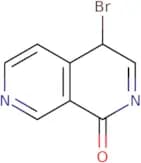
CAS:<p>Versatile small molecule scaffold</p>Fórmula:C8H5N2OBrPureza:Min. 95%Peso molecular:225.04 g/mol4-(2,3-Dihydrobenzo[b][1,4]dioxin-6-yl)-4H-1,2,4-triazole-3-thiol
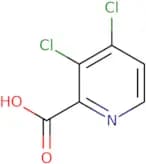
CAS:Versatile small molecule scaffoldFórmula:C10H9N3O2SPureza:Min. 95%Peso molecular:235.26 g/mol3,4-Dichloropicolinic acid
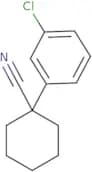
CAS:<p>3,4-Dichloropicolinic acid is an organic nitro compound that is used in the preparation of organic solvents. It is also used as a starting material for the synthesis of pyridine and picolinic acid. 3,4-Dichloropicolinic acid can be synthesized by the reaction of butyric acid with hydrochloric acid in the presence of a nitrite salt and dimethylamine. The resulting product may be purified by crystallization from water or ethanol. Symptoms associated with exposure to 3,4-dichloropicolinic acid may include headache, dizziness, blurred vision, nausea, vomiting and convulsions. Proton magnetic resonance spectroscopy has been used to detect 3,4-dichloropicolinic acid in urine samples from patients with hepatitis B.br><br>3,4-Dichloropicolinic acid was first isolated in 1887 by Suzuki coupling reaction between picolinic</p>Fórmula:C6H3Cl2NO2Pureza:Min. 95%Peso molecular:192 g/mol1-(3-Chlorophenyl)cyclohexane-1-carbonitrile
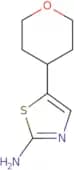
CAS:<p>Versatile small molecule scaffold</p>Fórmula:C13H14ClNPureza:Min. 95%Peso molecular:219.71 g/mol5-(Oxan-4-yl)-1,3-thiazol-2-amine
CAS:Versatile small molecule scaffoldFórmula:C8H12N2OSPureza:Min. 95%Peso molecular:184.26 g/mol1,4-Dimethyl-7-oxabicyclo[2.2.1]heptane-2-carboxylic acid
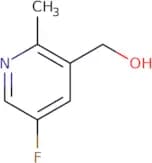
CAS:Versatile small molecule scaffoldFórmula:C9H14O3Pureza:Min. 95%Peso molecular:170.2 g/mol(5-Fluoro-2-methylpyridin-3-yl)methanol
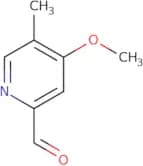
CAS:Versatile small molecule scaffoldFórmula:C7H8FNOPureza:Min. 95%Peso molecular:141.14 g/mol4-Methoxy-5-methylpyridine-2-carbaldehyde
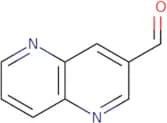
CAS:Versatile small molecule scaffoldFórmula:C8H9NO2Pureza:Min. 95%Peso molecular:151.16 g/mol1,5-Naphthyridine-3-carbaldehyde
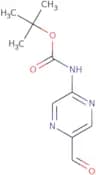
CAS:<p>Versatile small molecule scaffold</p>Fórmula:C9H6N2OPureza:Min. 95%Peso molecular:158.16 g/moltert-Butyl (5-formylpyrazin-2-yl)carbamate
CAS:Versatile small molecule scaffoldFórmula:C10H13N3O3Pureza:Min. 95%Peso molecular:223.23 g/mol2H-[1,3]Dioxolo[4,5-c]pyridine-6-carbaldehyde
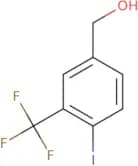
CAS:<p>Versatile small molecule scaffold</p>Fórmula:C7H5NO3Pureza:Min. 95%Peso molecular:151.12 g/mol4-Iodo-3-(trifluoromethyl)benzyl alcohol
CAS:Versatile small molecule scaffoldFórmula:C8H6OF3IPureza:Min. 95%Peso molecular:302.03 g/mol2,3-Diazabicyclo[2.2.1]heptane dihydrochloride
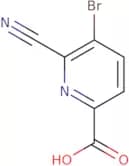
CAS:Versatile small molecule scaffoldFórmula:C5H12Cl2N2Pureza:Min. 95%Peso molecular:171.07 g/mol5-Bromo-6-cyanopyridine-2-carboxylic acid
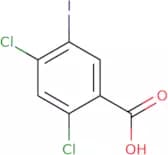
CAS:<p>Versatile small molecule scaffold</p>Fórmula:C7H3BrN2O2Pureza:Min. 95%Peso molecular:227.01 g/mol2,4-Dichloro-5-iodobenzoic acid
CAS:<p>Versatile small molecule scaffold</p>Fórmula:C7H3Cl2IO2Pureza:Min. 95%Peso molecular:316.9 g/mol

![4,6-dichloro-2-methyl-2H-pyrazolo[3,4-d]pyrimidine](/_next/image/?url=https%3A%2Fstatic.cymitquimica.com%2Fproducts%2F3D%2Fthumb-webp%2FJNB43277.webp&w=3840&q=75)

![4-(2,3-Dihydrobenzo[b][1,4]dioxin-6-yl)-4H-1,2,4-triazole-3-thiol](/_next/image/?url=https%3A%2Fstatic.cymitquimica.com%2Fproducts%2F3D%2Fthumb-webp%2FJNB57558.webp&w=3840&q=75)
![1,4-Dimethyl-7-oxabicyclo[2.2.1]heptane-2-carboxylic acid](/_next/image/?url=https%3A%2Fstatic.cymitquimica.com%2Fproducts%2F3D%2Fthumb-webp%2FJNB60114.webp&w=3840&q=75)
![2H-[1,3]Dioxolo[4,5-c]pyridine-6-carbaldehyde](/_next/image/?url=https%3A%2Fstatic.cymitquimica.com%2Fproducts%2F3D%2Fthumb-webp%2FJNB61789.webp&w=3840&q=75)
![2,3-Diazabicyclo[2.2.1]heptane dihydrochloride](/_next/image/?url=https%3A%2Fstatic.cymitquimica.com%2Fproducts%2F3D%2Fthumb-webp%2FJNB68036.webp&w=3840&q=75)