Building Blocks
Esta sección contiene productos fundamentales para la síntesis de compuestos orgánicos y biológicos. Building blocks son los materiales de partida esenciales utilizados para construir moléculas complejas a través de diversas reacciones químicas. Desempeñan un papel crítico en el descubrimiento de fármacos, la ciencia de materiales y la investigación química. En CymitQuimica, ofrecemos una gama diversa de building blocks de alta calidad para apoyar sus investigaciones innovadoras y proyectos industriales, asegurando que tenga los componentes esenciales para una síntesis exitosa.
Subcategorías de "Building Blocks"
- Ácidos borónicos y derivados del ácido borónico(5.778 productos)
- Building Blocks quirales(1.242 productos)
- Building Blocks de hidrocarburos(6.098 productos)
- Building Blocks orgánicos(61.063 productos)
Se han encontrado 197855 productos de "Building Blocks"
Ordenar por
Pureza (%)
0
100
|
0
|
50
|
90
|
95
|
100
N-Benzyl-N-methylpyrrolidin-3-amine
CAS:<p>Versatile small molecule scaffold</p>Fórmula:C12H18N2Pureza:Min. 95%Peso molecular:190.28 g/molMethyl 6-bromoquinoline-3-carboxylate
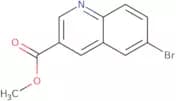
CAS:<p>Versatile small molecule scaffold</p>Fórmula:C11H8BrNO2Pureza:Min. 95%Peso molecular:266.09 g/molN-Phenylpyrrolidine-2-carboxamide hydrochloride
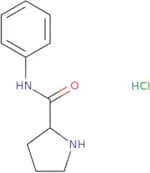
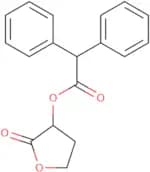
CAS:<p>Versatile small molecule scaffold</p>Fórmula:C11H15ClN2OPureza:Min. 95%Peso molecular:226.7 g/mol2-Oxooxolan-3-yl 2,2-diphenylacetate
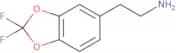
CAS:<p>Versatile small molecule scaffold</p>Fórmula:C18H16O4Pureza:Min. 95%Peso molecular:296.3 g/mol2-(2,2-Difluoro-1,3-dioxaindan-5-yl)ethan-1-amine
CAS:<p>Versatile small molecule scaffold</p>Fórmula:C9H9F2NO2Pureza:Min. 95%Peso molecular:201.17 g/mol3-Morpholin-4-ylmethyl-2,3-dihydro-1H-indole
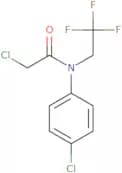
CAS:<p>Versatile small molecule scaffold</p>Fórmula:C13H18N2OPureza:Min. 95%Peso molecular:218.29 g/mol2-Chloro-N-(4-chlorophenyl)-N-(2,2,2-trifluoroethyl)acetamide
CAS:<p>Versatile small molecule scaffold</p>Fórmula:C10H8Cl2F3NOPureza:Min. 95%Peso molecular:286.07 g/mol[5-(2-Methyl-1,3-thiazol-4-yl)furan-2-yl]methanamine
CAS:<p>Versatile small molecule scaffold</p>Fórmula:C9H10N2OSPureza:Min. 95%Peso molecular:194.26 g/mol2-Chloro-N-{[5-(2-chlorophenyl)-1,3,4-oxadiazol-2-yl]methyl}-N-cyclopropylacetamide
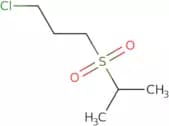
CAS:Versatile small molecule scaffoldFórmula:C14H13Cl2N3O2Pureza:Min. 95%Peso molecular:326.2 g/mol1-Chloro-3-(propane-2-sulfonyl)propane
CAS:<p>Versatile small molecule scaffold</p>Fórmula:C6H13ClO2SPureza:Min. 95%Peso molecular:184.69 g/mol[4-(tert-Butoxycarbonylamino-methyl)-piperidin-1-yl]-acetic acid
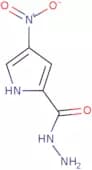
CAS:<p>Versatile small molecule scaffold</p>Fórmula:C13H24N2O4Pureza:Min. 95%Peso molecular:272.34 g/mol4-Nitro-1H-pyrrole-2-carbohydrazide
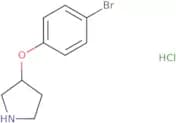
CAS:<p>Versatile small molecule scaffold</p>Fórmula:C5H6N4O3Pureza:Min. 95%Peso molecular:170.13 g/mol3-(4-Bromophenoxy)pyrrolidine hydrochloride
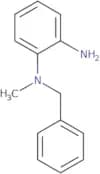
CAS:<p>Versatile small molecule scaffold</p>Fórmula:C10H13BrClNOPureza:Min. 95%Peso molecular:278.57 g/mol1-N-benzyl-1-N-methylbenzene-1,2-diamine
CAS:<p>Versatile small molecule scaffold</p>Fórmula:C14H16N2Pureza:90%MinPeso molecular:212.3 g/mol6-Bromo-5-methyl-1H-imidazo[4,5-b]pyridine
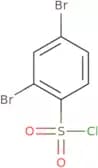
CAS:<p>6-Bromo-5-methyl-1H-imidazo[4,5-b]pyridine is a stabilizer that is used to protect polymers from degradation by light or heat. It can also be used to give plastics a yellow color.</p>Fórmula:C7H6BrN3Pureza:Min. 95%Peso molecular:212.05 g/mol2,4-Dibromobenzenesulphonyl chloride
CAS:<p>Versatile small molecule scaffold</p>Fórmula:C6H3Br2ClO2SPureza:Min. 95%Peso molecular:334.41 g/mol6-Cyanospiro[3.3]heptane-2-carboxylic acid
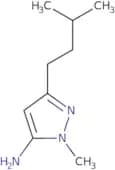
CAS:<p>Versatile small molecule scaffold</p>Fórmula:C9H11NO2Pureza:Min. 95%Peso molecular:165.19 g/mol1-Methyl-3-(3-methylbutyl)-1H-pyrazol-5-amine
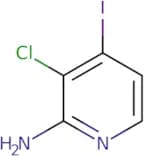
CAS:<p>Versatile small molecule scaffold</p>Fórmula:C9H17N3Pureza:Min. 95%Peso molecular:167.25 g/mol3-Chloro-4-iodopyridin-2-amine
CAS:<p>3-Chloro-4-iodopyridin-2-amine is a chemical compound with the formula CHI. It is a white solid that can be used in evaluating cross-coupling reactions, such as the coupling of an alkyne with a chlorine atom. This chemical has been shown to react well with chlorination reagents and to form substituted cyanides. The nature of the substituent on the chlorine atom determines its regioselectivity and reactivity, making this compound useful for regiocontrolled synthesis.</p>Fórmula:C5H4ClIN2Pureza:Min. 95%Peso molecular:254.46 g/mol1-(1,3-Dioxaindan-5-yl)cyclohexane-1-carboxylic acid
CAS:<p>Versatile small molecule scaffold</p>Fórmula:C14H16O4Pureza:Min. 95%Peso molecular:248.27 g/mol



![[5-(2-Methyl-1,3-thiazol-4-yl)furan-2-yl]methanamine](/_next/image/?url=https%3A%2Fstatic.cymitquimica.com%2Fproducts%2F3D%2Fthumb-webp%2FDKB46591.webp&w=3840&q=75)
![2-Chloro-N-{[5-(2-chlorophenyl)-1,3,4-oxadiazol-2-yl]methyl}-N-cyclopropylacetamide](/_next/image/?url=https%3A%2Fstatic.cymitquimica.com%2Fproducts%2F3D%2Fthumb-webp%2FDKB46528.webp&w=3840&q=75)
![[4-(tert-Butoxycarbonylamino-methyl)-piperidin-1-yl]-acetic acid](/_next/image/?url=https%3A%2Fstatic.cymitquimica.com%2Fproducts%2F3D%2Fthumb-webp%2FDEC98441.webp&w=3840&q=75)
![6-Bromo-5-methyl-1H-imidazo[4,5-b]pyridine](/_next/image/?url=https%3A%2Fstatic.cymitquimica.com%2Fproducts%2F3D%2Fthumb-webp%2FDBA27941.webp&w=3840&q=75)
![6-Cyanospiro[3.3]heptane-2-carboxylic acid](/_next/image/?url=https%3A%2Fstatic.cymitquimica.com%2Fproducts%2F3D%2Fthumb-webp%2FDBA11489.webp&w=3840&q=75)