


Building Blocks
Esta sección contiene productos fundamentales para la síntesis de compuestos orgánicos y biológicos. Building blocks son los materiales de partida esenciales utilizados para construir moléculas complejas a través de diversas reacciones químicas. Desempeñan un papel crítico en el descubrimiento de fármacos, la ciencia de materiales y la investigación química. En CymitQuimica, ofrecemos una gama diversa de building blocks de alta calidad para apoyar sus investigaciones innovadoras y proyectos industriales, asegurando que tenga los componentes esenciales para una síntesis exitosa.
Subcategorías de "Building Blocks"
- Ácidos borónicos y derivados del ácido borónico(5.778 productos)
- Building Blocks quirales(1.242 productos)
- Building Blocks de hidrocarburos(6.098 productos)
- Building Blocks orgánicos(61.069 productos)
Se han encontrado 197521 productos de "Building Blocks"
Ordenar por
Pureza (%)
0
100
|
0
|
50
|
90
|
95
|
100
2-Chloro-4-[2-(trimethylsilyl)ethynyl]pyridine
CAS:<p>Versatile small molecule scaffold</p>Fórmula:C10H12ClNSiPureza:Min. 95%Peso molecular:209.75 g/mol2-(N,N-Dimethylsulfamoylamino)acetic acid
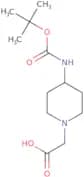
CAS:<p>Versatile small molecule scaffold</p>Fórmula:C4H10N2O4SPureza:Min. 95%Peso molecular:182.2 g/molBoc-4-amino-(1-carboxymethyl) piperidine
CAS:<p>Versatile small molecule scaffold</p>Fórmula:C12H22N2O4Pureza:Min. 95%Peso molecular:258.31 g/mol(Pyridazin-3-yl)methanamine dihydrochloride
CAS:<p>Versatile small molecule scaffold</p>Fórmula:C5H9Cl2N3Pureza:Min. 95%Peso molecular:182.05 g/mol1H-1,2,3,4-Tetrazole-5-carbohydrazide
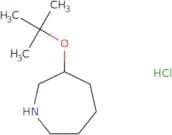
CAS:<p>Versatile small molecule scaffold</p>Fórmula:C2H4N6OPureza:Min. 95%Peso molecular:128.09 g/mol3-(tert-Butoxy)azepane hydrochloride
CAS:<p>Versatile small molecule scaffold</p>Fórmula:C10H22ClNOPureza:Min. 95%Peso molecular:207.7 g/moltert-Butyl N-[1-(thietan-3-yl)azetidin-3-yl]carbamate
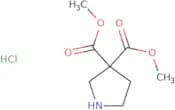
CAS:<p>Versatile small molecule scaffold</p>Fórmula:C11H20N2O2SPureza:Min. 95%Peso molecular:244.4 g/mol3,3-Dimethyl pyrrolidine-3,3-dicarboxylate hydrochloride
CAS:<p>Versatile small molecule scaffold</p>Fórmula:C8H14ClNO4Pureza:Min. 95%Peso molecular:223.7 g/molEthyl 5-[(pyridin-3-yl)amino]-1,3-thiazole-4-carboxylate
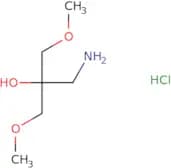
CAS:<p>Versatile small molecule scaffold</p>Fórmula:C11H11N3O2SPureza:Min. 95%Peso molecular:249.29 g/mol1-Amino-3-methoxy-2-(methoxymethyl)propan-2-ol hydrochloride
CAS:<p>Versatile small molecule scaffold</p>Fórmula:C6H16ClNO3Pureza:Min. 95%Peso molecular:185.6 g/moltert-Butyl N-[1-(1-imino-1-oxo-1λ⁶-thian-4-yl)cyclopropyl]carbamate
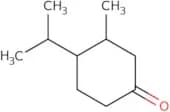
CAS:<p>Versatile small molecule scaffold</p>Fórmula:C13H24N2O3SPureza:Min. 95%Peso molecular:288.4 g/mol3-Methyl-4-(propan-2-yl)cyclohexan-1-one
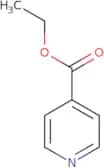
CAS:<p>Versatile small molecule scaffold</p>Fórmula:C10H18OPureza:Min. 95%Peso molecular:154.25 g/mol4-Pyridinecarboxylic Acid Ethyl Ester
CAS:<p>4-Pyridinecarboxylic Acid Ethyl Ester is a compound that belongs to the group of pyridinecarboxylic acids. It is a metabolite of nicotinamide, which is converted to 4-pyridinecarboxylic acid ethyl ester by esterases in the intestine. Nicotinamide is an important component of the vitamin B3 and has been shown to be effective for treating autoimmune diseases such as rheumatoid arthritis. 4-Pyridinecarboxylic Acid Ethyl Ester may have similar effects on inflammatory bowel disease and alopecia areata. The reaction mechanism of this compound has not been elucidated, but it has been shown to inhibit amyloid protein production in rat intestines. Hydroxyl groups on the side chain likely play a role in hydrogen bonding interactions with receptors in inflammatory bowel disease and alopecia areata.</p>Fórmula:C8H9NO2Pureza:Min. 95%Peso molecular:151.16 g/mol2-Bromo-6-(phenylformamido)hexanoic acid
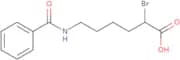
CAS:<p>Versatile small molecule scaffold</p>Fórmula:C13H16BrNO3Pureza:Min. 95%Peso molecular:314.17 g/mol6-Bromo-2-oxo-2,3-dihydro-1H-indole-3-carbaldehyde
CAS:<p>Versatile small molecule scaffold</p>Fórmula:C9H6BrNO2Pureza:Min. 95%Peso molecular:240.05 g/molEthyl 5-formyl-3-methyl-1H-pyrrole-2-carboxylate
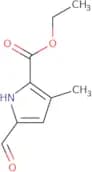
CAS:<p>Versatile small molecule scaffold</p>Fórmula:C9H11NO3Pureza:Min. 95%Peso molecular:181.19 g/molRef: 3D-BBA01830
Producto descatalogado6-Methyl-2,3-dihydro-1-benzothiophene-2-carboxylic acid
CAS:<p>Versatile small molecule scaffold</p>Fórmula:C10H10O2SPureza:Min. 95%Peso molecular:194.25 g/mol2-{2-Oxa-6-azaspiro[3.3]heptan-6-yl}ethan-1-ol
CAS:<p>Versatile small molecule scaffold</p>Fórmula:C7H13NO2Pureza:Min. 95%Peso molecular:143.18 g/mol(2R)-3-[(Carboxymethyl)sulfanyl]-2-acetamidopropanoic acid
CAS:<p>(2R)-3-[(Carboxymethyl)sulfanyl]-2-acetamidopropanoic acid is a metabolite of the drug sulfapyridine. It is formed by conjugation with glutathione in the liver to form 3-glutathione-2-sulfapyridine, and then excreted into bile. (2R)-3-[(Carboxymethyl)sulfanyl]-2-acetamidopropanoic acid has been found to be genotoxic in mice, which may be due to its ability to form reactive metabolites that bind to DNA. This compound also possesses cytotoxic properties, which may be due to its ability to inhibit protein synthesis.</p>Fórmula:C7H11NO5SPureza:Min. 95%Peso molecular:221.23 g/molRef: 3D-BBA17754
Producto descatalogadoN-[(4-Aminophenyl)methyl]acetamide
CAS:<p>Versatile small molecule scaffold</p>Fórmula:C9H12N2OPureza:Min. 95%Peso molecular:164.2 g/mol
![2-Chloro-4-[2-(trimethylsilyl)ethynyl]pyridine](/_next/image/?url=https%3A%2Fstatic.cymitquimica.com%2Fproducts%2F3D%2Fthumb-webp%2FZUA19357.webp&w=3840&q=75)


![tert-Butyl N-[1-(thietan-3-yl)azetidin-3-yl]carbamate](/_next/image/?url=https%3A%2Fstatic.cymitquimica.com%2Fproducts%2F3D%2Fthumb-webp%2FAVD27394.webp&w=3840&q=75)
![Ethyl 5-[(pyridin-3-yl)amino]-1,3-thiazole-4-carboxylate](/_next/image/?url=https%3A%2Fstatic.cymitquimica.com%2Fproducts%2F3D%2Fthumb-webp%2FZKB89600.webp&w=3840&q=75)
![tert-Butyl N-[1-(1-imino-1-oxo-1λ⁶-thian-4-yl)cyclopropyl]carbamate](/_next/image/?url=https%3A%2Fstatic.cymitquimica.com%2Fproducts%2F3D%2Fthumb-webp%2FAVD27462.webp&w=3840&q=75)


![2-{2-Oxa-6-azaspiro[3.3]heptan-6-yl}ethan-1-ol](/_next/image/?url=https%3A%2Fstatic.cymitquimica.com%2Fproducts%2F3D%2Fthumb-webp%2FBBA09635.webp&w=3840&q=75)
![(2R)-3-[(Carboxymethyl)sulfanyl]-2-acetamidopropanoic acid](/_next/image/?url=https%3A%2Fstatic.cymitquimica.com%2Fproducts%2F3D%2Fthumb-webp%2FBBA17754.webp&w=3840&q=75)
![N-[(4-Aminophenyl)methyl]acetamide](/_next/image/?url=https%3A%2Fstatic.cymitquimica.com%2Fproducts%2F3D%2Fthumb-webp%2FZDA36210.webp&w=3840&q=75)