Alcoholes
Subcategorías de "Alcoholes"
Se han encontrado 5814 productos de "Alcoholes"
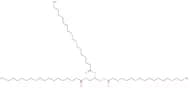
Glycerol tristearate
CAS:Glycerol tristearate is a triglyceride, which is derived from the esterification of glycerol with stearic acid, a saturated fatty acid. This compound is typically sourced from natural fats and oils through a process involving the hydrogenation of vegetable oils, which facilitates its pure and controlled production.The mode of action of glycerol tristearate involves its function as an effective emulsifier. It stabilizes mixtures of water and oil by reducing interfacial tension, thus enabling the formation of stable emulsions. Its solid form at room temperature also contributes to its ability to enhance texture and stability in various formulations.Glycerol tristearate is widely used in diverse applications including the food industry, where it acts as a texturizer and stabilizer in products like margarine, chocolate, and confectionery. Additionally, it plays a significant role in the cosmetics and personal care sectors, where it improves the texture and stability of creams and lotions. Its properties make it a valuable ingredient for controlling crystallization and improving consistency across multiple industry settings.
Fórmula:C57H110O6Pureza:Min. 95%Peso molecular:891.48 g/molMethallyl alcohol
CAS:Methallyl alcohol is a reactive hydroxide solution that is used as an intermediate in the industrial synthesis of polycarboxylic acids, glycol ethers, and other compounds. It reacts with hydrogen chloride to form methallyl chloride, which can be used to produce polymers. Methallyl alcohol can also be used as a reagent for the synthesis of various esters, amides, and other organic compounds. The enzyme inhibitors it produces inhibit reactions involving fatty acid and aliphatic hydrocarbon oxidation. Methallyl alcohol is produced by the reaction of methanol with allyl chloride. This reaction occurs in vivo under acidic conditions.
Fórmula:C4H8OPureza:Min. 98 Area-%Forma y color:Colorless Clear LiquidPeso molecular:72.11 g/mol2,3,6-Trimethylphenol
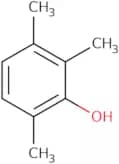
CAS:2,3,6-Trimethylphenol is an industrial chemical that is produced by the acylation of 2,6-dimethylaniline with formaldehyde. The optimal reaction conditions for this process are at a temperature of 100°C and a pressure of 10 bar. This chemical has been shown to be an effective catalyst for the chlorination of hydrocarbons. Trimethylphenol is also used as a reagent in the preparation of other chemicals and is found in many products due to its low energy requirements. The logistic regression model has been used to assess the relationship between population growth and industrial preparation. It has been shown that there is a positive correlation between these two variables. 2,3,6-Trimethylphenol can also be found in polluted environments where it reacts with chloride ions to produce hydrogen chloride gas or methyl chloride gas. Redox potential values have been measured for this compound and it was found that the reduction potential is -0.07
Fórmula:C9H12OPureza:Min. 95%Peso molecular:136.19 g/mol3-Bromophenol
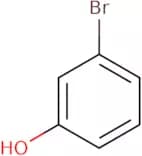
CAS:3-Bromophenol is an organic compound that is a bromophenol. It is used as a fluorometric probe in wastewater treatment and as a tracer for metabolic pathways in the proximal tubules of the kidney. 3-Bromophenol has a molecular weight of 184.16 g/mol and has been shown to be metabolized by bacteria into 2,4-dihydroxyphenylacetic acid (2,4-DPA). 3-Bromophenol can also be synthesized from 2,4-dihydroxyphenylacetic acid using sodium hydroxide solution and carbon source in a synthetic process. This synthetic process can be carried out at room temperature and atmospheric pressure.Fórmula:C6H5BrOPureza:Min. 98 Area-%Forma y color:Clear LiquidPeso molecular:173.01 g/mol2-Thiopheneethanol tosylate
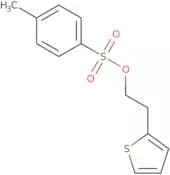
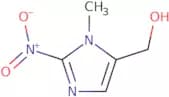
CAS:2-Thiopheneethanol tosylate (2TEtOS) is an antitubercular agent that belongs to the class of thiopheneethanol esters. It is a potent inhibitor of Mycobacterium tuberculosis and other bacteria by blocking the transfer reactions that are required for bacterial growth. The molecular structure of 2TEtOS consists of a thiophene ring with an allyl group attached to it and a chiral sulfur atom in the center. This molecule can be derivatized with various ligands, which enables the control experiments to be performed. 2TEtOS has been shown to have redox potentials and diffraction properties that are similar to those of borohydride reduction agents, suggesting that 2TEtOS may also act as a reducing agent.Fórmula:C13H14O3S2Pureza:Min. 95%Peso molecular:282.38 g/mol(3-Methyl-2-nitro-3H-imidazol-4-yl)methanol
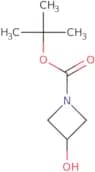
CAS:3-Methyl-2-nitro-3H-imidazol-4-yl)methanol is a fluorescent probe that can be used to detect hypoxic tumor cells. It has been shown to selectively react with the methylethyl group in Trichomonas vaginalis. 3-Methyl-2-nitro-3H-imidazol-4-yl)methanol is bioreductive and can be activated by nitro groups in proteins, which are found in the active site of enzymes such as bacterial dna gyrase. This probe has been shown to bind to the sn38 position of bacterial DNA, but not mammalian DNA.Fórmula:C5H7N3O3Pureza:Min. 95%Peso molecular:157.13 g/molN-Boc-3-Azetidinol
CAS:This linker is chemically stable and not cleavable under standard intracellular or extracellular conditions. N-Boc-3-Azetidinol is also a versatile organic intermediate used primarily in the pharmaceutical industry for synthesizing a wide range of drugs, including antibacterials, immunosuppressants, and cancer therapies.Fórmula:C8H15NO3Pureza:Min. 95%Peso molecular:173.21 g/mol6-Bromoisoquinoline
CAS:6-Bromoisoquinoline is a tetradentate ligand that can be used as a molecular model to study the binding of metal ions and organic molecules. 6-Bromoisoquinoline has been shown to bind covalently and noncovalently with phosphate groups on the surface of Caco-2 cells and to induce surface-enhanced Raman spectroscopy. This ligand has a high nucleophilicity and reacts readily with chloride, which is an acidic functional group. The reaction products are hydrochloric acid, trifluoroacetic acid, or both. 6-Bromoisoquinoline can also act as an allosteric modulator in some enzymes, such as phosphofructokinase in glycolysis.
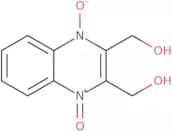
Fórmula:C9H6BrNPureza:Min. 95%Peso molecular:208.05 g/mol(1,4-Dioxidoquinoxaline-2,3-diyl)dimethanol
CAS:Polymyxin B is a cationic peptide antibiotic that is effective in the treatment of infectious diseases. It has been shown to inhibit growth of Gram-negative bacteria by binding to the outer membrane and disrupting osmotic balance. Polymyxin B has been shown to be toxic to liver cells, but it can be used as an antimicrobial agent in combination with ethylene diamine and clastogenic agents such as hydrochloric acid and hydrogen peroxide. This drug also has genotoxic effects. Polymyxin B has high resistance to hydrolysis by hydroxyl group-containing enzymes, making it a broad-spectrum antimicrobial agent that is active against Gram-positive bacteria, Gram-negative bacteria, and mycobacteria.Fórmula:C10H10N2O4Pureza:Min. 95%Forma y color:PowderPeso molecular:222.2 g/mol14-Azido-3,6,9,12-tetraoxatetradecanol
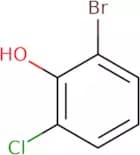
CAS:Please enquire for more information about 14-Azido-3,6,9,12-tetraoxatetradecanol including the price, delivery time and more detailed product information at the technical inquiry form on this pageFórmula:C10H21N3O5Pureza:Min. 95%Peso molecular:263.29 g/mol2-Bromo-6-chlorophenol
CAS:2-Bromo-6-chlorophenol is a reactive, thiourea-containing compound that undergoes catalytic reactions. 2-Bromo-6-chlorophenol reacts with sulfate in water to form chlorine radicals, which react with other organic compounds to produce chlorinated organic compounds. This reaction can be used for the oxidation of phenols and alcohols to yield chlorinated products. The yields of this process depend on the concentration of acetonitrile used in the reaction. Acetonitrile is also required for the conversion of dichlorinated benzenes to brominated products.Fórmula:C6H4BrClOPureza:Min. 95%Peso molecular:207.45 g/mol4-Alkoxybenzyl alcohol resin (100-200 mesh)
CAS:4-Alkoxybenzyl alcohol resin is a fine chemical that has been shown to be useful as a scaffold for the synthesis of complex compounds. It is soluble in common organic solvents, such as ethanol and acetone, and can be used as a reaction component for the synthesis of speciality chemicals. This product is also an intermediate for research chemicals, which can be synthesized by reacting 4-alkoxybenzyl alcohol with different reagents. The high quality of this product makes it ideal for use in the synthesis of other compounds and reactions.Forma y color:Powder(Ala6,D-Trp8,L-alaninol15)-Galanin (1-15)
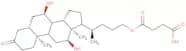
CAS:Please enquire for more information about (Ala6,D-Trp8,L-alaninol15)-Galanin (1-15) including the price, delivery time and more detailed product information at the technical inquiry form on this pageFórmula:C81H114N20O18Pureza:Min. 95%Peso molecular:1,655.9 g/mol3-Keto petromyzonol-24-hemisuccinate
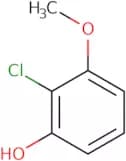
CAS:Producto controladoPlease enquire for more information about 3-Keto petromyzonol-24-hemisuccinate including the price, delivery time and more detailed product information at the technical inquiry form on this pageFórmula:C28H44O7Pureza:Min. 95%Forma y color:PowderPeso molecular:492.65 g/mol2-Chloro-3-methoxyphenol
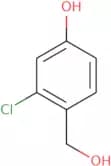
CAS:Please enquire for more information about 2-Chloro-3-methoxyphenol including the price, delivery time and more detailed product information at the technical inquiry form on this pageFórmula:C7H7ClO2Pureza:Min. 95%Peso molecular:158.58 g/mol2-Chloro-4-Hydroxybenzyl alcohol
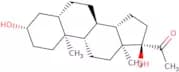
CAS:2-Chloro-4-hydroxybenzyl alcohol is an organic compound that has been shown to be soluble in aqueous alkali metal solutions, but insoluble in water. It is also insoluble in polymer solvents such as acetone and ethyl ether. 2-Chloro-4-hydroxybenzyl alcohol is a sugar alcohol with 3 hydroxyl groups. The molecule has a molecular weight of 150.17 g/mol, melting point of -123°C (-198°F), boiling point of 179°C (354°F), and refractive index of 1.5774 at 20°C (68°F). This chemical can be used in the synthesis of polyhydric alcohols such as glycerol or hexanol. 2-Chloro-4-hydroxybenzyl alcohol is not soluble in hydrochloric acid, benzene or chloroform, and does not react to form any esFórmula:C7H7ClO2Pureza:Min. 95%Peso molecular:158.58 g/mol5alpha-Pregnan-3beta,17alpha-diol-20-one
CAS:Producto controlado5alpha-Pregnan-3beta,17alpha-diol-20-one is a versatile building block that can be used in the synthesis of a wide range of chemical compounds. It has CAS number 570-54-7 and is useful as a reagent in organic chemistry. This compound is also an intermediate for the synthesis of other chemicals, such as steroids and hormones. 5alpha-Pregnan-3beta,17alpha-diol-20-one can be used to produce high quality products with diverse biological activities and molecular structures. The compound is also useful in the production of pharmaceuticals, pesticides, and herbicides.Fórmula:C21H34O3Pureza:Min. 95%Forma y color:PowderPeso molecular:334.49 g/mol6-Chloro-1,7-naphthyridin-4-ol
CAS:Please enquire for more information about 6-Chloro-1,7-naphthyridin-4-ol including the price, delivery time and more detailed product information at the technical inquiry form on this page
Pureza:Min. 95%4-Chloro-6-methoxyquinoline
CAS:4-Chloro-6-methoxyquinoline is an inhibitor of bacterial DNA gyrase. It has antibacterial activity against Gram-positive and Gram-negative bacteria, including Staphylococcus aureus, Enterococcus faecalis, and Pseudomonas aeruginosa. 4-Chloro-6-methoxyquinoline is a synthetic compound that was reinvestigated for its antibacterial activity. It has been shown to be effective in the treatment of Staphylococcal infections. The mechanism of action may involve inhibition of topoisomerase II or interference with the synthesis of DNA by binding to the enzyme bacterial DNA gyrase. Quinidine and cinchonidine are quinine derivatives that have been found to inhibit bacterial DNA gyrase. These compounds are found in the bark of Cinchona species, which includes Cinchona ledgeriana, Cinchona officinalis, and Cinchona succirubFórmula:C10H8ClNOPureza:Min. 95%Peso molecular:193.63 g/mol1-O-Octadecyl-2-O-benzyl-sn-glycerol
CAS:1-O-Octadecyl-2-O-benzyl-sn-glycerol (ODBG) is a novel antiviral drug that is being developed for the treatment of HIV. ODBG inhibits HIV by binding to the virus and preventing it from entering cells, which prevents the virus from replicating. ODBG has been shown to be effective against other viruses as well, such as herpes simplex virus and respiratory syncytial virus. ODBG is a lipid molecule that can cross cell membranes and has been shown to have low toxicity in animal studies. This drug also has potential to be used as an oral medication for patients with HIV.Fórmula:C28H50O3Pureza:Min. 95%Peso molecular:434.69 g/mol