Alcoholes
Subcategorías de "Alcoholes"
Se han encontrado 5831 productos de "Alcoholes"
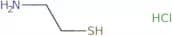
2-Aminoethanethiol HCl
CAS:2-Aminoethanethiol HCl is an organosulfur compound used in the treatment of cystinosis. Cystinosis is a rare autosomal recessive metabolic disorder that leads to the accumulation of cysteine and other amino acids in the lysosomes of cells. 2-Aminoethanethiol HCl is also used for the treatment of enteritidis, a disease caused by infection with bacteria such as Salmonella typhi, Shigella dysenteriae, or Escherichia coli. It has been shown to inhibit protein synthesis in vitro and in experimental models. The mechanism of 2-aminoethanethiol HCl's inhibition may be due to its ability to reduce mitochondrial membrane potential, thereby inhibiting ATP production and inhibiting cellular respiration.
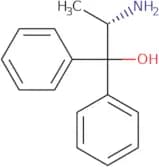
2-Aminoethanethiol HCl has been found to be effective against many strains of bacteria that are resistant to standard antibiotics (eFórmula:C2H7NS·HClPureza:Min. 95%Forma y color:White PowderPeso molecular:113.61 g/mol(S)-(-)-2-Amino-1,1-diphenyl-1-propanol
CAS:L-2-Amino-1,1-diphenyl-1-propanol is a chiral, catalytic reagent that is used in organic chemistry for the asymmetric synthesis of alcohols and other molecules. The L form of this compound can be prepared from phenylacetic acid by an alkylation reaction with propanolamine in the presence of palladium catalyst. This substance has been shown to have anthelminthic properties. It has also been shown to have a strong interaction with aminoalcohols. L-2-Amino-1,1-diphenyl-1-propanol can alkylate aromatic ketones and vicinal diols by utilizing its catalytic activity. Elemental analysis indicates that this substance contains only carbon, hydrogen, nitrogen and oxygen.
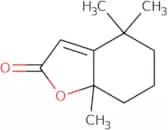
Fórmula:C15H17NOPureza:Min. 95%Forma y color:White PowderPeso molecular:227.3 g/mol(±)-Dihydroactinidiolide
CAS:Dihydroactinidiolide is a naturally occurring carotenoid that is found in the plant genus Dactylis. It has been shown to have neuroprotective effects and anticarcinogenic properties. However, it also has genotoxic effects. Dihydroactinidiolide increases the activity of two enzymes, polymerase chain reaction (PCR) and ethyl decanoate, which are involved in DNA replication and lipid synthesis. The first enzyme is important for DNA synthesis, while the second enzyme is important for cell membrane formation. In addition to these cellular processes, dihydroactinidiolide also inhibits cell death in neuronal cells by inhibiting apoptosis-inducing factor (AIF) and caspase 3 activities. Primary cells were used to measure the effects of dihydroactinidiolide on AIF activity.
Fórmula:C11H16O2Pureza:Min. 95%Forma y color:White PowderPeso molecular:180.24 g/mol8-Methoxycarbonyloctanol
CAS:8-Methoxycarbonyloctanol (8MCO) is a fatty acid molecule that has been shown to have significant inhibitory activities against Streptococcus pneumoniae in human serum. 8MCO is a synthetic molecule that can be synthesized from galactose and chloride. It has been found to have a molecular weight of 190.08 g/mol, melting point of -2°C, and boiling point of 217°C at 1 mmHg. 8MCO is soluble in water, methanol, and ethanol. This molecule can be used as an analytical tool for the detection of fatty acids by gas chromatography-mass spectrometry (GC-MS). It also exhibits enzymatic activity when incorporated into enzyme preparations such as esterases and lipases. 8MCO contains functional groups such as carbonyl (-CO), hydroxyl (-OH), carboxylic acid (-COOH), ether (-O-) and alcohol (-
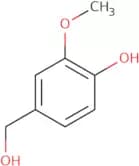
Fórmula:C10H20O3Pureza:Min. 95%Forma y color:Clear LiquidPeso molecular:188.26 g/molVanillyl alcohol
CAS:Vanillyl alcohol is a vanillin derivative that exhibits strong antibacterial activity. It can be used in the food industry as a natural preservative, and it has synergic effects with eugenol. Vanillyl alcohol shows antimicrobial properties against Gram-positive and Gram-negative bacteria, including Staphylococcus aureus, Pseudomonas aeruginosa, Escherichia coli, and Enterococcus faecalis. Vanillyl alcohol exhibits synergic effects with eugenol. In vivo models show that vanillyl alcohol is not toxic to humans, but it may be toxic to wild-type strains of bacteria.Fórmula:C8H10O3Pureza:Min. 98 Area-%Forma y color:White PowderPeso molecular:154.16 g/mol2-(4-Bromophenyl)ethanol
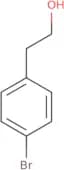
CAS:2-(4-Bromophenyl)ethanol is an analog of histone lysine and histone H3. It is a synthetic substrate for the acylation reaction on the carboxyl group of fatty acids. 2-(4-Bromophenyl)ethanol has been shown to have optical properties similar to those of natural fatty acids and has been used as a polymer film for cell line A549.Fórmula:C8H9BrOPureza:Min. 95%Forma y color:Slightly Yellow Clear LiquidPeso molecular:201.06 g/mol2,3-Butanediol
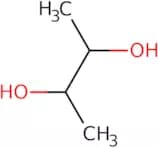
CAS:2,3-Butanediol is a glycol that is produced by the fermentation of sugars or carbohydrates. It is used in the synthesis of acetoin, which is an important flavor compound in various foods and beverages. The production of 2,3-butanediol from glucose was achieved through the use of a novel asymmetric synthesis reaction with inorganic acid as catalyst. 2,3-Butanediol can also be synthesized from adipic acid using aerobacter aerogenes as catalyst. This process has been shown to be efficient with wild-type strains and provides high yields under mild conditions. 2,3-Butanediol has been shown to have antibiotic activity against tetracycline resistant bacteria and may inhibit bacterial growth by binding to DNA gyrase and topoisomerase IV enzymes. The hydroxyl group on the molecule makes it more reactive than other glycols because it can form hydrogen bonds with water molecules.Fórmula:C4H10O2Pureza:Min. 95%Forma y color:Colorless Clear LiquidPeso molecular:90.12 g/mol2-Bromo-5-fluorobenzyl alcohol
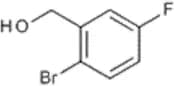
CAS:2-Bromo-5-fluorobenzyl alcohol is a synthetic organoboron compound that can be used in the synthesis of other compounds. It has been shown to have a thermal expansion coefficient of 0.038 x 10^-6 K, which is an intermediate value for organic materials. The two polymorphic forms are monoclinic (space group P2/c) and hexagonal (P63). When 2-bromo-5-fluorobenzyl alcohol is irradiated with microwaves and magnetic fields, it undergoes anisotropic expansion, which suggests that intermolecular interactions are important in this phenomenon. This material has been shown to exhibit antifungal properties.
Fórmula:C7H6BrFOPureza:Min. 95%Forma y color:PowderPeso molecular:205.02 g/mol3-Aminoquinoline
CAS:3-Aminoquinoline is a chemical compound that inhibits the activity of the epidermal growth factor receptor (EGFR). It is a potent inhibitor of cell proliferation and has been shown to have antitumour activity. 3-Aminoquinoline has been shown to inhibit the proliferation of carcinoma cell lines. This drug binds to the EGFR receptor, preventing it from activating downstream signalling pathways that control cell growth. 3-Aminoquinoline also has biological properties, including matrix-assisted laser desorption/ionization time-of-flight mass spectrometry, analytical chemistry, sample preparation, and Suzuki coupling reaction. The molecule is structurally analyzed using chemical structures and structural analysis techniques such as thermodynamic data or proton NMR spectroscopy. 3-Aminoquinoline also interacts with sugars through hydrogen bonding and oligosaccharides. These interactions are found to be high in value in some cases.
Fórmula:C9H8N2Pureza:Min. 95%Forma y color:White PowderPeso molecular:144.17 g/mol3-Chloroisoquinoline
CAS:3-Chloroisoquinoline is a thiolate, which is a reactive chemical group. 3-Chloroisoquinoline has been shown to react with trifluoromethanesulfonic acid to form a compound with biological properties. The amide and palladium complexes of 3-chloroisoquinoline have been prepared in the past. Additionally, the two isomers of 3-chloroisoquinoline are known as the halides and magnetic resonance spectroscopy of this compound has been studied. Structural isomers and functional groups of 3-chloroisoquinoline have also been studied in detail. Tautomers and lactams are structural isomers of 3-chloroisoquinoline that have also been researched extensively. Finally, trifluoroacetic acid reacts with 3-chloroisoquinoline to form an ester product.Fórmula:C9H6ClNPureza:Min. 95%Peso molecular:163.6 g/mol8-Hydroxy-5-nitroquinoline-2-carbaldehyde
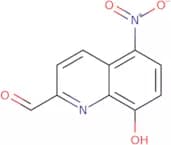
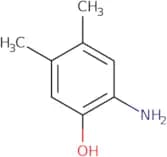
CAS:8-Hydroxy-5-nitroquinoline-2-carbaldehyde is a high quality, versatile building block that can be used as a reaction intermediate or to synthesize heterocycles. It is also a useful scaffold for the synthesis of complex compounds. The CAS number of this chemical is 884497-63-6.Fórmula:C10H6N2O4Pureza:Min. 95%Forma y color:PowderPeso molecular:218.17 g/mol2-Amino-4,5-dimethylphenol
CAS:2-Amino-4,5-dimethylphenol is a compound that exhibits anticancer activity. It is an arylimine that has been shown to inhibit the proliferation of cancer cells in vitro and in vivo. The mechanism of action is not fully understood, but it is believed that 2-amino-4,5-dimethylphenol may act as a nucleophile in reverse Michael addition reactions with electrophiles. This compound also has been shown to be potent against some cancer cell lines and to induce apoptosis through caspase activation. 2-Amino-4,5-dimethylphenol interacts with aminophenols in vitro, forming supramolecular complexes that are cytotoxic to cancer cells.
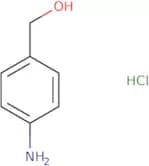
Fórmula:C8H11NOPureza:Min. 95%Forma y color:Brown SolidPeso molecular:137.18 g/mol4-Aminobenzyl alcohol hydrochloride
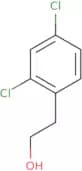
CAS:4-Aminobenzyl alcohol hydrochloride is a fine chemical that is used as a building block for research chemicals, reagents, and specialty chemicals. It can be used as a versatile building block in the synthesis of many complex compounds. 4-Aminobenzyl alcohol hydrochloride is also an intermediate for the synthesis of pharmaceuticals and other useful compounds. CAS No. 170926-25-7Fórmula:C7H10ClNOPureza:Min. 95%Forma y color:PowderPeso molecular:159.61 g/mol2-(2,4-Dichlorophenyl)ethanol
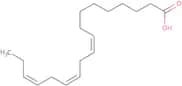
CAS:2-(2,4-Dichlorophenyl)ethanol is an organic compound that can be synthesized by reacting 2,4-dichlorobenzoic acid with trifluoroacetic acid in the presence of a base. The reaction scheme is:Fórmula:C8H8Cl2OPureza:Min. 95%Peso molecular:191.05 g/molLinolenic acid, 98.5%
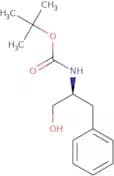
CAS:Linolenic acid is a polyunsaturated fatty acid that is an essential component of human nutrition. Linolenic acid has apoptosis-inducing properties and has been shown to induce the mitochondrial membrane potential in neuronal cells and induce neuronal death by decreasing the levels of pge2. Linolenic acid also participates in energy metabolism, as it can be converted into arachidonic acid, which is a precursor for prostaglandins. Linolenic acid has been shown to have physiological effects on humans, such as improving eye disorders and congestive heart failure. It does not seem to be linked with any toxicity or adverse effects.Fórmula:C18H30O2Pureza:Min. 95%Forma y color:Colorless Clear LiquidPeso molecular:278.43 g/molN-Boc-L-phenylalaninol
CAS:N-Boc-L-phenylalaninol is a monomer that has been shown to inhibit the activity of proteinases. It binds to the active site of the enzymes and inhibits their catalytic activity, thereby preventing them from cleaving peptide bonds. N-Boc-L-phenylalaninol also has hydroxyl groups that can be used for further derivatization to produce derivatives with different functional groups, such as sulfonic acids or isosteres. The carbonyl group in this compound can be used for conjugation reactions with other molecules, such as proteins or nucleic acids.
Fórmula:C14H21NO3Pureza:Min. 95%Forma y color:White PowderPeso molecular:251.32 g/mol5-Bromo-2-nitrophenol
CAS:5-Bromo-2-nitrophenol is an organic compound that is used in the industrial production of drugs and dyes. It is soluble in ethanol, but insoluble in water. 5-Bromo-2-nitrophenol can be obtained by extracting it from the filtrate of a solution of potassium tert-butyl ether with aqueous ethanol. The extraction process involves adding morpholine to the solution, which is then heated and refluxed. This process yields high yields of 5-bromo-2-nitrophenol.Fórmula:C6H4BrNO3Pureza:Min. 95%Forma y color:Yellow solid.Peso molecular:218 g/mol2-Bromo-4-methylphenol
CAS:2-Bromo-4-methylphenol is an organic compound that has interactive effects with hydrochloric acid, molybdenum, and trifluoromethanesulfonic acid. It is soluble in water vapor, but insoluble in polyvinyl. 2-Bromo-4-methylphenol reacts with sodium hydroxide solution to form a hydroxide solution and sodium carbonate. The reaction product of 2-bromo-4-methylphenol with triterpenoid saponin produces fatty acids. This reaction occurs because the hydroxide ion from the sodium hydroxide solution attacks the ester group of the saponin, forming an alcohol group on one end and a carboxylic acid group on the other end. The benzyl groups are removed by hydrogenation to produce phenol.
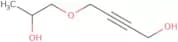
Fórmula:C7H7BrOPureza:Min. 95%Peso molecular:187.03 g/mol5-Oxa-2-octyne-1,7-diol
CAS:5-Oxa-2-octyne-1,7-diol is a monomer that belongs to the class of heterocyclic compounds. It has been used in research studies to coat metal surfaces with silicone. This compound is also a surfactant, which can be used for cleaning and degreasing dishes, pots and pans. 5-Oxa-2-octyne-1,7-diol is resistant to degradation by sulfate ester or carboxylate ester solvents. It has shown activity as a monomer with methyl esters and alkenyls for use in polymers.Fórmula:C7H12O3Pureza:Min. 95%Forma y color:PowderPeso molecular:144.17 g/mol4-Chlorophenol
CAS:4-Chlorophenol is a chemical compound that is found as a byproduct in the manufacturing process of phenol and acetone. It has been found to be stable in the presence of nitrogen atoms, which are present in wastewater treatment plants. The optimum concentration for 4-chlorophenol is 0.2 ppm, but it can be reduced to 0.1 ppm with the addition of malonic acid or surfactant sodium dodecyl sulfate. The reaction mechanism for 4-chlorophenol is an oxidation-reduction reaction with oxygen nucleophiles as electron acceptors and surface methodology through electrochemical impedance spectroscopy.Fórmula:C6H5ClOPureza:Min. 98%Forma y color:Clear LiquidPeso molecular:128.56 g/mol