Aminas
Subcategorías de "Aminas"
- Nitrosaminas(2.646 productos)
- Aminas primarias(30.947 productos)
- Cationes y sales de amonio cuaternario(1.102 productos)
- Aminas secundarias(20.887 productos)
- Aminas terciarias(17.195 productos)
Se han encontrado 8790 productos de "Aminas"
2-Aminoindane HCl
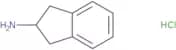
CAS:Producto controlado2-Aminoindane HCl is a betalamic acid derivative that inhibits the activity of the dopamine receptor. It has been shown to inhibit the binding of dopamine in both rat and human liver, as well as in a model system. 2-Aminoindane HCl is formed by intramolecular hydrogenation of betalamic acid and hydrolysis of the resulting 2-aminoindane acetic acid chloride. The carbonic ester group on the indane ring forms an alkoxy radical with hydrogen chloride in water, which then reacts with a hydroxy group on the indane ring to form 2-aminoindane HCl. This process can be modeled using molecular modeling techniques.Pureza:Min. 95%Peso molecular:169.65 g/mol2-(2-Methyl-1H-indol-3-yl)ethanamine oxalate
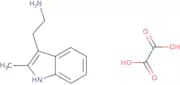
CAS:Producto controladoPlease enquire for more information about 2-(2-Methyl-1H-indol-3-yl)ethanamine oxalate including the price, delivery time and more detailed product information at the technical inquiry form on this pageFórmula:C13H16N2O4Pureza:Min. 95%Peso molecular:264.28 g/molN-alpha-Trityl-Nbeta-Fmoc-L-2,3-diaminopropionic acid
CAS:Please enquire for more information about N-alpha-Trityl-Nbeta-Fmoc-L-2,3-diaminopropionic acid including the price, delivery time and more detailed product information at the technical inquiry form on this pageFórmula:C37H32N2O4Pureza:Min. 95%Peso molecular:568.66 g/mol4-Methylcyclohexylamine
CAS:4-Methylcyclohexylamine is a compound that is used as an inhibitor of the enzyme ornithine decarboxylase. It also has been shown to have anti-inflammatory properties in cell culture and in animal models of inflammatory bowel disease. 4-Methylcyclohexylamine binds to the active site of the enzyme, preventing it from converting ornithine into putrescine. Ornithine decarboxylase inhibitors are a new class of drugs for the treatment of inflammatory bowel disease, which are effective against both ulcerative colitis and Crohn's disease.Fórmula:C7H15NPureza:Min. 95%Peso molecular:113.2 g/molAmmonium benzenesulfonate
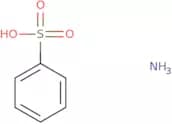
CAS:Ammonium benzenesulfonate is a glycol ester that belongs to the class of ammonium salts. It is used as a synergist for the synthesis of sodium salts, which are used in analytical methods. Ammonium benzenesulfonate has been shown to have an effect on autoimmune diseases by inhibiting the production of inflammatory cytokines, such as TNF-α and IL-6, in human serum. This compound also has been shown to have a synergistic effect when combined with monoethyl ethers and sodium salts. The mechanism of this reaction is not well understood but it may be due to intramolecular hydrogen transfer or air entrainment.
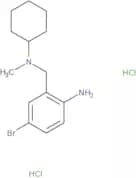
Fórmula:C6H9NO3SPureza:Min. 95%Peso molecular:175.21 g/mol2-Amino-5-bromo-N-cyclohexyl-N-methylbenzylamine dihydrochloride
CAS:Please enquire for more information about 2-Amino-5-bromo-N-cyclohexyl-N-methylbenzylamine dihydrochloride including the price, delivery time and more detailed product information at the technical inquiry form on this pageFórmula:C14H23BrCl2N2Pureza:Min. 95%Forma y color:PowderPeso molecular:370.16 g/molHistamine
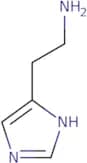
CAS:Endogenous ligand for histamine receptors; neurotransmitterA toxic biogenic amine produced in spoiled and fermented foodFórmula:C5H9N3Pureza:Min. 95%Forma y color:Yellow PowderPeso molecular:111.15 g/mol1,5-Bis(4-allyldimethylammoniumphenyl)pentan-3-one, dibromide
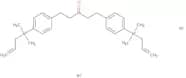
CAS:1,5-Bis(4-allyldimethylammoniumphenyl)pentan-3-one, dibromide is a reversible inhibitor of acetylcholinesterase. It has been shown to inhibit the enzyme activity in vitro and in vivo. 1,5-Bis(4-allyldimethylammoniumphenyl)pentan-3-one, dibromide has been shown to be an effective inhibitor of nicotinic acetylcholine receptors in model organisms such as Xenopus oocytes and Acetylcholine esterase activated rat pheochromocytoma cells. The molecule also inhibits the phosphorylation of pnitrophenyl phosphate by choline kinase. This inhibiting effect on choline kinase leads to a decrease in the concentration of choline available for neurotransmitter synthesis. Monoclonal antibodies against acetylcholinesterase are used to detect thisFórmula:C27H38Br2N2OPureza:Min. 95%Peso molecular:566.41 g/mol1-(2-Amino-5-nitrophenyl)ethanone
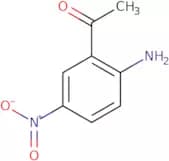
CAS:Please enquire for more information about 1-(2-Amino-5-nitrophenyl)ethanone including the price, delivery time and more detailed product information at the technical inquiry form on this pageFórmula:C8H8N2O3Pureza:Min. 95%Peso molecular:180.16 g/mol(7S)-7-Amino-1,2,3,10-tetramethoxy-6,7-dihydro-5H-benzo[g]heptalen-9-one
CAS:(7S)-7-Amino-1,2,3,10-tetramethoxy-6,7-dihydro-5H-benzo[g]heptalen-9-one is a hydroxylated analog of demecolcine. It has been shown to be an effective antimicrobial agent with proteolytic and hypoglycemic effects in mice. 7SATM is able to inhibit the activity of human macrophages. This drug has also been shown to have diagnostic potential by binding to a monoclonal antibody that recognizes the myeloperoxidase enzyme on the surface of neutrophils.Fórmula:C20H23NO5Pureza:Min. 95 Area-%Forma y color:Slightly Yellow PowderPeso molecular:357.4 g/mol2-(Diethylamino)-N-(2,4-dimethylphenyl ) acetamide HCl
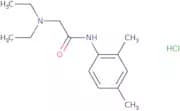
CAS:Please enquire for more information about 2-(Diethylamino)-N-(2,4-dimethylphenyl ) acetamide HCl including the price, delivery time and more detailed product information at the technical inquiry form on this page
Fórmula:C14H22N2O·HClPureza:Min. 95 Area-%Peso molecular:270.8 g/mol4-Nitro-4'-aminodiphenyl sulfone
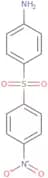
CAS:4-Nitro-4'-aminodiphenyl sulfone is a surfactant that is used in a variety of industries, including wastewater treatment and the manufacture of plastics. It has been shown to inhibit the synthesis of fatty acids and other molecules in cells. 4-Nitro-4'-aminodiphenyl sulfone also inhibits the synthesis of regulatory pathways involved in antimicrobial resistance in bacteria such as chlorobium and solanum tuberosum. The inhibition of fatty acid biosynthesis by 4-nitro-4'-aminodiphenyl sulfone may be due to its ability to bind to catalytic sites on enzymes responsible for this process. This binding prevents them from functioning properly, resulting in an accumulation of fatty acid precursors.Fórmula:C12H10N2O4SPureza:Min. 95%Peso molecular:278.28 g/molDemethyl benzydamine hydrochloride
CAS:Producto controladoPlease enquire for more information about Demethyl benzydamine hydrochloride including the price, delivery time and more detailed product information at the technical inquiry form on this pageFórmula:C18H22ClN3OPureza:Min. 95%Peso molecular:331.84 g/mol4-Chlorobenzylamine
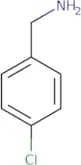
CAS:4-Chlorobenzylamine is a chemical that is used as an intermediate in the synthesis of other compounds. It has low bioavailability, which may be due to its reactive site. The chemical can be characterized using nmr spectra and potent inhibitory activity. 4-Chlorobenzylamine has been found to react with nitrogen atoms, and this reaction is highly acidic. FT-IR spectroscopy can also be used to characterize this compound. Intermolecular hydrogen bonding and hydroxyl group are two of the major interactions of 4-chlorobenzylamine with other molecules. This chemical reacts with serine protease, glyoxal, and other substances in a manner that depends on the molecule's structure.Fórmula:C7H8ClNPureza:Min. 95%Peso molecular:141.6 g/mol2-(2-Aminothiazol-4-yl)acetic acid HCl
CAS:2-(2-Aminothiazol-4-yl)acetic acid HCl is a white to off-white crystalline solid that is soluble in organic solvents. It is an intermediate used in the synthesis of thiourea derivatives, which are used as pharmaceuticals and agrochemicals. 2-(2-Aminothiazol-4-yl)acetic acid HCl is synthesized by the reaction of 2-aminothiazole with acetic anhydride. The purity can be determined using GC or NMR spectroscopy. Impurities may be removed by recrystallization with a solvent such as chloroform or dichloromethane. The melting point of 2-(2-aminothiazol-4-yl)acetic acid HCl is 147°C (298K). 2-(2-Aminothiazol-4-yl)acetic acid HCl can be purified by distillation atFórmula:C5H7ClN2O2SPureza:Min. 95%Peso molecular:194.64 g/molDesipramine HCl
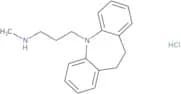
CAS:Producto controladoDesipramine hydrochloride is a tricyclic antidepressant drug that has been used to treat depression. It is an ester of N-methyl-D-aspartate and inhibits the 5-HT2 receptors. Desipramine HCl has been shown to have anti-cancer properties in both animal models and human cell lines, inhibiting carcinoma cells’ growth. The drug also has an effect on locomotor activity in mice and its use may cause drug interactions with nonsteroidal anti-inflammatory drugs.
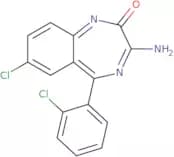
Fórmula:C18H23ClN2Pureza:Min. 95%Forma y color:White PowderPeso molecular:302.84 g/molZ-(R,S)-3-amino-7-chloro-5-(2-chlorophenyl)-2-oxo-1,4-benzodiazepine
CAS:Producto controladoPlease enquire for more information about Z-(R,S)-3-amino-7-chloro-5-(2-chlorophenyl)-2-oxo-1,4-benzodiazepine including the price, delivery time and more detailed product information at the technical inquiry form on this pageFórmula:C23H17N3O3Cl2Pureza:Min. 95%Peso molecular:454.3 g/molCysteamine 2-chlorotrityl resin
Cysteamine 2-chlorotrityl resin is a synthetic polymer that is used in peptidomimetic synthesis. It has been shown to inhibit the growth of cancer cells, and has been studied as a potential therapeutic agent for cancer treatment. Cysteamine 2-chlorotrityl resin has also been studied as an adjuvant for immunotherapy strategies against cancers. Cysteamine 2-chlorotrityl resin interacts with the cell membrane, highlighting its diagnostic and therapeutic potentials.Forma y color:Powder4-Fluorophenethylamine
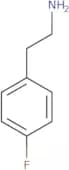
CAS:Producto controlado4-Fluorophenethylamine is a fluorinated amine with the chemical formula C8H11FO. It is a 5-HT agonist and has been shown to have affinity constants for the CB2 receptor. 4-Fluorophenethylamine has been shown to be an uptake inhibitor of amines, as well as being a hydrogen bond donor.Fórmula:C8H10FNPureza:Min. 95%Forma y color:Clear LiquidPeso molecular:139.17 g/mol3-Amino-2-methylquinazolin-4(3H)-one
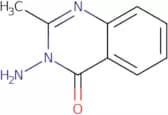
CAS:Producto controlado3-Amino-2-methylquinazolin-4(3H)-one is a bidentate ligand that has been shown to have antibacterial and anticancer activity. The functional theory of the compound is based on its ability to form an imine nitrogen with metal ions such as Fe(II) or Cu(II). 3-Amino-2-methylquinazolin-4(3H)-one is not active against Staphylococcus aureus, but inhibits the growth of other bacteria by binding to their ribosomes and inhibiting protein synthesis. 3-Amino-2-methylquinazolin-4(3H)-one also has in vitro anticancer activity, which may be due to its ability to inhibit DNA synthesis and cell division.Fórmula:C9H9N3OPureza:Min. 95%Peso molecular:175.19 g/mol


![(7S)-7-Amino-1,2,3,10-tetramethoxy-6,7-dihydro-5H-benzo[g]heptalen-9-one](/_next/image/?url=https%3A%2Fstatic.cymitquimica.com%2Fproducts%2F3D%2Fthumb-webp%2FFA20821.webp&w=3840&q=75)