


Éteres
Se han encontrado 40904 productos de "Éteres"
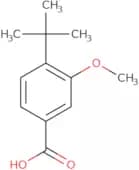
3-Methoxy-4-t-Butyl-Benzoic acid
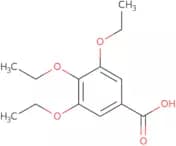
CAS:3-Methoxy-4-t-Butyl-Benzoic acid is a building block that can be used in the synthesis of a variety of organic compounds. This chemical has been used as a reagent, as well as in research and development. It is also used to synthesize complex compounds and may be used as a versatile building block or intermediate for reactions.Fórmula:C12H16O3Pureza:Min. 95%Peso molecular:208.25 g/mol3,4,5-Triethoxybenzoic acid
CAS:3,4,5-Triethoxybenzoic acid is a synthetic compound that has been shown to have neurotoxic effects in animal studies. It has been shown to inhibit the dephosphorylation of amyloid fibrils and activation energy for polymerization. 3,4,5-Triethoxybenzoic acid also causes teratogenic effects in animals at high doses. This compound is used as a reagent for the synthesis of amyloid fibrils and has been shown to have an effect on the inhibition of phosphodiesterase activity.
Fórmula:C13H18O5Pureza:Min. 95%Forma y color:PowderPeso molecular:254.28 g/mol2,3-Dihydroxy-4-methoxycinnamic acid ethyl ester
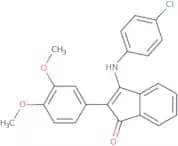
Please enquire for more information about 2,3-Dihydroxy-4-methoxycinnamic acid ethyl ester including the price, delivery time and more detailed product information at the technical inquiry form on this pagePureza:Min. 95%2-(3,4-dimethoxyphenyl)-3-((4-chlorophenyl)amino)inden-1-one
CAS:Please enquire for more information about 2-(3,4-dimethoxyphenyl)-3-((4-chlorophenyl)amino)inden-1-one including the price, delivery time and more detailed product information at the technical inquiry form on this pagePureza:Min. 95%N-(2-(3,4-dimethoxyphenyl)ethyl)(2-(4-chlorophenoxy)(3-pyridyl))formamide
CAS:Please enquire for more information about N-(2-(3,4-dimethoxyphenyl)ethyl)(2-(4-chlorophenoxy)(3-pyridyl))formamide including the price, delivery time and more detailed product information at the technical inquiry form on this page
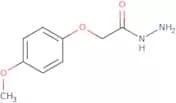
Pureza:Min. 95%2-(4-Methoxyphenoxy)acetohydrazide
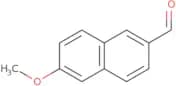
CAS:2-(4-Methoxyphenoxy)acetohydrazide is a coumarin derivative that has been synthesized for use in the detection of salicylaldehyde in air. The emissions are detected by means of luminescence and fluorescence spectroscopy, with the emission intensity measured by a dihedral angle detector. The compound also produces europium ions, which can be used to detect and quantify it. The elemental analysis gives the yields as 0.25 grams per mole, while the spectral data show 2-(4-methoxyphenoxy)acetohydrazide to have a fluorescence maximum at 489 nm and an excitation maximum at 320 nm. 2-(4-Methoxyphenoxy)acetohydrazide is fluorescent and luminescent, with a wavelength maximum of 489 nm and an excitation maximum of 320 nm. It reacts with benzene to produce nitro compounds, which can be detected using an electron spin resonanceFórmula:C9H12N2O3Pureza:Min. 95%Peso molecular:196.2 g/mol6-Methoxy-2-naphthaldehyde
CAS:6-Methoxy-2-naphthaldehyde is a nonsteroidal antiinflammatory drug that belongs to the class of naphthalenes. It inhibits the formation of inflammatory prostaglandins, which are mediators of pain and inflammation. 6-Methoxy-2-naphthaldehyde has been shown to have cytotoxic effects on cancer cells and in vitro studies have shown that it can induce cell lysis. It has also been shown to be a potent fluorescence probe for use in biological applications. This compound binds to human serum proteins by hydrogen bonding interactions, which may affect its pharmacokinetic properties. In addition, this compound has been shown to inhibit the activity of detoxification enzymes such as CYP 2C9 and 2D6 at high concentrations, which may lead to unwanted side effects such as nausea or vomiting. The molecular docking analysis of 6-Methoxy-2-naphthaldehyde with the active site of human liver alcohol dehydrogenFórmula:C12H10O2Pureza:Min. 98 Area-%Forma y color:PowderPeso molecular:186.21 g/mol(3,5-Dimethoxyphenyl)acetone
CAS:(3,5-Dimethoxyphenyl)acetone is a plant phenolic compound that has been found in many plants. It is an intermediate in the biosynthesis of lignans and a wide range of other natural products. The production of (3,5-dimethoxyphenyl)acetone by plants is induced by the presence of nitrate, chloride and/or tyrosol. This compound also represses the expression of genes involved in dextrose metabolism and carbon fixation pathways. Furthermore, it can be quantified using isotopic labelling techniques and has been detected at low levels in human urine samples.
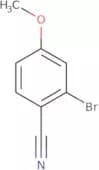
Fórmula:C11H14O3Pureza:Min. 95%Forma y color:Yellow Clear LiquidPeso molecular:194.23 g/mol2-Bromo-4-methoxybenzonitrile
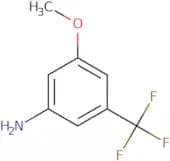
CAS:2-Bromo-4-methoxybenzonitrile is a high quality reagent that is used as a versatile building block in the synthesis of complex organic compounds. It is a useful intermediate and can be used to form 2,4-dimethoxybenzaldehyde. This compound has been used as a reaction component in the production of pharmaceuticals, pesticides, and other fine chemicals. The chemical formula for 2-bromo-4-methoxybenzonitrile is C6H5BrO2.Fórmula:C8H6BrNOPureza:Min. 95%Peso molecular:212.04 g/mol3-Methoxy-5-(trifluoromethyl)aniline
CAS:3-Methoxy-5-(trifluoromethyl)aniline is a chemical building block that is used in the preparation of pharmaceuticals, agrochemicals, dyes, and other chemicals. 3-Methoxy-5-(trifluoromethyl)aniline is also a versatile intermediate that can be used to produce heterocyclic compounds. 3-Methoxy-5-(trifluoromethyl)aniline has been found to be high quality and useful for many reactions. It is an important compound for research use because it can be used as a reagent or scaffold for complex compounds.
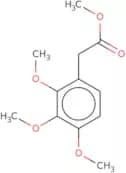
Fórmula:C8H8F3NOPureza:Min. 95%Forma y color:PowderPeso molecular:191.15 g/molMethyl 2,3,4-trimethoxyphenyl acetate
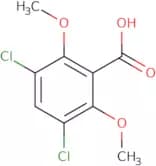
CAS:Methyl 2,3,4-trimethoxyphenyl acetate is a high quality reagent that can be used to synthesize complex compounds. This compound is also useful as an intermediate in the synthesis of fine chemicals and useful scaffolds for chemical research. CAS No. 22480-88-2 Methyl 2,3,4-trimethoxyphenyl acetate is a versatile building block that can be used to synthesize other compounds with a wide range of applications.Fórmula:C12H16O5Pureza:Min. 95%Forma y color:PowderPeso molecular:240.25 g/mol3,5-Dichloro-2,6-dimethoxybenzoic acid
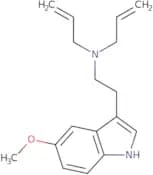
CAS:3,5-Dichloro-2,6-dimethoxybenzoic acid (3,5-DCMB) is a drug that binds to the dopamine transporter. It is used as a radioligand in studies of the pharmacological and biochemical properties of the dopamine transporter. 3,5-DCMB has also been shown to bind to plasma proteins and membranes with an affinity that depends on its physicochemical properties. The drug has been used clinically in the treatment of Parkinson's disease, but it is not active against other diseases such as depression or schizophrenia. 3,5-DCMB is one of two enantiomers of dichloroethylbenzoic acid; it is an ethylene transport inhibitor and can be converted into ethylene oxide via reduction by alcohol dehydrogenase.Fórmula:C9H8Cl2O4Pureza:Min. 95%Forma y color:PowderPeso molecular:251.06 g/molN,N-Diallyl-5-methoxytryptamine
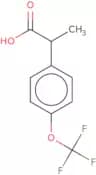
CAS:Producto controladoN,N-Diallyl-5-methoxytryptamine (DMAT) is a synthetic cannabinoid that has been shown to produce effects similar to those of tetrahydrocannabinol. It has been used in clinical studies to study the effects of cannabinoids on the central nervous system. DMAT binds with high affinity to 5-HT2A receptors and low affinity to histamine H1 receptors. DMAT also binds moderately with 5-HT1A receptors, which are serotonin receptors found in the cerebral cortex and hippocampus regions of the brain. DMAT is a potent monoamine neurotransmitter reuptake inhibitor, which means it prevents the reuptake of monoamines such as dopamine, norepinephrine, and serotonin by blocking their transporters. This results in an increase in extracellular concentrations of these monoamines. DMAT is structurally similar to other drugs that have been shown to cause seizures, such as meprobamate, benzodiazepines,Fórmula:C17H22N2OPureza:Min. 95%Peso molecular:270.37 g/mol2-(4-Trifluoromethoxyphenyl)propionic acid
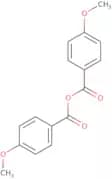
CAS:Please enquire for more information about 2-(4-Trifluoromethoxyphenyl)propionic acid including the price, delivery time and more detailed product information at the technical inquiry form on this pageFórmula:C10H9F3O3Pureza:Min. 95%Peso molecular:234.17 g/mol4-Methoxybenzoic anhydride
CAS:4-Methoxybenzoic anhydride is a nonsteroidal anti-inflammatory drug (NSAID) that has a hydroxy group, which makes it susceptible to nucleophilic attack. The reaction mechanism of 4-methoxybenzoic anhydride involves hydroxyl group and phosphorus pentachloride. Kinetic data for the reaction was obtained from kinetic studies. The kinetic study found that the rate of the reaction increased with increasing concentration of amines and amides in the reaction mixture. 4-Methoxybenzoic anhydride has been shown to have antiinflammatory activity in various tests on animals, including rats, guinea pigs, and rabbits. The mechanism of this activity may be due to its ability to inhibit prostaglandin synthesis by blocking cyclooxygenase enzyme activity.
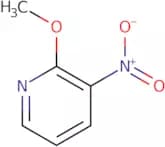
Fórmula:C16H14O5Pureza:Min. 95%Forma y color:PowderPeso molecular:286.28 g/mol2-Methoxy-3-nitropyridine
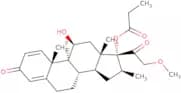
CAS:2-Methoxy-3-nitropyridine is a chemical compound with the molecular formula CHNO. It is classified as an amine and has a molecular weight of 140.24 g/mol. 2-Methoxy-3-nitropyridine is a colorless liquid that can be used to make other compounds, such as nitroarenes, boronic acids, and dyes. The molecule consists of a central carbon atom with four nitrogen atoms at the corners of a tetrahedron. The electron configuration for this molecule is 1s22s22p4. This means that the outer shell electrons are in orbitals with principal quantum numbers s=1 and p=2. These orbitals are located near the middle of the molecule rather than on the periphery as in ethane (CH3CH2). This orientation provides more space for other atoms to attach to the central carbon atom, which increases its affinity for nucleophilic attack. 2-MFórmula:C6H6N2O3Pureza:Min. 95%Forma y color:PowderPeso molecular:154.12 g/mol[(8S,9R,10S,11S,13S,14S,16S,17R)-9-Fluoro-11-Hydroxy-17-(2-Methoxyacetyl)-10,13,16-Trimethyl-3-Oxo-6,7,8,11,12,14,15,16-Octahydrocyc lopenta[a]Phenanthren-17-Yl] Propanoate
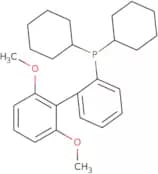
CAS:Producto controladoBetamethasone is a corticosteroid that is used to treat inflammation, ankylosing spondylitis, and rheumatoid arthritis. It has been shown to have efficacy in the treatment of pediatric patients with asthma, as well as animal models of cardiac arrest and stroke. Betamethasone has also been shown to be effective in the treatment of potassium ion-associated death due to cardiac arrhythmia or repolarization abnormalities. This drug can be administered orally or topically; it binds to the glucocorticoid receptor on cells and modulates gene transcription. The primary mechanism of action for betamethasone is not fully understood but may involve inhibition of protein synthesis and suppression of inflammatory cells.Fórmula:C26H35FO6Pureza:Min. 95%Peso molecular:462.55 g/mol2-Dicyclohexylphosphino-2',6'-dimethoxybiphenyl
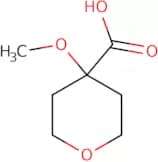
CAS:2-Dicyclohexylphosphino-2',6'-dimethoxybiphenyl is a fluorescent chemical that has been used to study interactions of fatty acids and halides. It is also used in the synthesis of palladium complexes, which have been shown to be effective for hydrogenation reactions. 2-Dicyclohexylphosphino-2',6'-dimethoxybiphenyl can be synthesized from 2,6-dichlorobenzaldehyde and dicyclohexylphosphine by the addition of trifluoroacetic acid. The synthesis proceeds via a substitution reaction with methoxy groups on the aromatic ring. This product fluoresces under ultraviolet light at 351 nm.Fórmula:C26H35O2PPureza:Min. 95%Forma y color:PowderPeso molecular:410.53 g/mol4-Methoxy-tetrahydro-2h-pyran-4-carboxylic acid
CAS:4-Methoxy-tetrahydro-2h-pyran-4-carboxylic acid is a fine chemical that belongs to the group of research chemicals. It is a versatile building block and useful intermediate in organic synthesis. 4-Methoxy-tetrahydro-2h-pyran-4-carboxylic acid has been used as a reagent for the preparation of the compound 5,5'-dithiobis(4,4'-dimethylvaleronitrile) (CAS No. 1010836-49). This compound has been shown to be an effective antiviral agent against HIV.Fórmula:C7H12O4Pureza:Min. 95 Area-%Forma y color:PowderPeso molecular:160.17 g/mol2-[2-[2-(2-Hydroxyethoxy)ethoxy]ethoxy]-1-(p-toluenesulfonyl)-ethanol
CAS:2-[2-[2-(2-Hydroxyethoxy)ethoxy]ethoxy]-1-(p-toluenesulfonyl)-ethanol is a PEG polymer categorised as monofunctional (OH-PEG-X). Used as a linker, 2-[2-[2-(2-hydroxyethoxy)ethoxy]ethoxy]-1-(p-toluenesulfonyl)-ethanol is used to attached PEG to proteins, peptides, oligonucleotides, nanoparticles and small molecules via pegylation, a bioconjugation technique.Fórmula:C13H20O6SPureza:Min. 95%Forma y color:PowderPeso molecular:304.36 g/mol



![2-[2-[2-(2-Hydroxyethoxy)ethoxy]ethoxy]-1-(p-toluenesulfonyl)-ethanol](/_next/image/?url=https%3A%2Fstatic.cymitquimica.com%2Fproducts%2F3D%2Fthumb-webp%2FFH07578.webp&w=3840&q=75)