Nitro
Los compuestos nitro son moléculas orgánicas que contienen uno o más grupos nitro (NO2). Estos compuestos se utilizan ampliamente en la síntesis de explosivos, productos farmacéuticos y colorantes. En CymitQuimica, ofrecemos una amplia gama de compuestos nitro de alta calidad para apoyar sus aplicaciones de investigación e industriales, asegurando resultados seguros y efectivos. Nuestra selección incluye una variedad de compuestos nitro adecuados para diferentes síntesis químicas y aplicaciones.
Se han encontrado 2516 productos de "Nitro"
Ordenar por
Pureza (%)
0
100
|
0
|
50
|
90
|
95
|
100
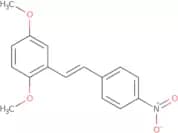
trans-2,5-Dimethoxy-4'-nitrostilbene
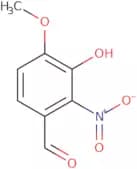
CAS:<p>Trans-2,5-dimethoxy-4'-nitrostilbene is a molecule that belongs to the class of polycyclic aromatic compounds. It is used as a versatile building block in organic synthesis, and is also an intermediate for the production of other compounds. Trans-2,5-dimethoxy-4'-nitrostilbene has been shown to be effective in the preparation of various pharmaceuticals such as diazepam and chloramphenicol. It is also used in research chemicals and speciality chemicals. The structure of trans-2,5-dimethoxy-4'-nitrostilbene can be described as a bicyclic compound with two phenyl rings joined by an oxygen bridge. Trans-2,5-dimethoxy-4'-nitrostilbene has CAS No. 552938 4 and molecular weight of 268.81 g/mol.</p>Fórmula:C16H15NO4Pureza:Min. 95%Forma y color:PowderPeso molecular:285.29 g/mol3-Hydroxy-4-methoxy-2-nitrobenzaldehyde
CAS:<p>3-Hydroxy-4-methoxy-2-nitrobenzaldehyde is a ternary complex that has been adsorbed onto the surface of an ion exchange resin. The adsorption process occurs through the formation of hydrogen bonds between the hydroxyl groups on the resin and the hydroxyl groups on the molecule. This complex is also soluble in chloroform, which may be due to its ability to form hydrogen bonds with itself and other molecules. The 3-hydroxy group on this molecule has been shown to react reductively with nitrophenol, forming a nitroso derivative. 3-Hydroxy-4-methoxy-2-nitrobenzaldehyde has been used as a template for the microbiological assay of azides and quinones.</p>Fórmula:C8H7NO5Pureza:Min. 95%Peso molecular:197.14 g/mol4-isoPropylphenylnitroethene
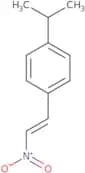
CAS:<p>4-IsoPropylphenylnitroethene is a fine chemical that is used as a versatile building block in the synthesis of complex compounds. 4-IsoPropylphenylnitroethene is an intermediate that can be used to synthesize other chemicals, such as research chemicals and reaction components. It can also be used as a reagent or speciality chemical. This compound has high quality, making it useful for research purposes.</p>Fórmula:C11H13NO2Pureza:Min. 95%Peso molecular:191.23 g/mol7-Nitroindole-2-carboxylic acid
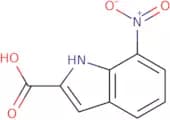
CAS:<p>7-Nitroindole-2-carboxylic acid is a molecule that has been shown to inhibit the activity of cytidine deaminase, an enzyme involved in the synthesis of DNA. This drug also inhibits the replication of dna and can be used for the treatment of cancer. 7-Nitroindole-2-carboxylic acid binds to basic proteins and has a helical structure. The affinity constants for this compound have not been reported, but it is thought that hydrogen bonding interactions are involved in its binding.</p>Fórmula:C9H6N2O4Pureza:Min. 95%Forma y color:PowderPeso molecular:206.16 g/mol4'-Benzyloxy-3'-nitroacetophenone
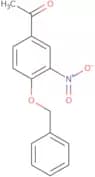
CAS:<p>4'-Benzyloxy-3'-nitroacetophenone is a nitro-substituted aromatic compound that has been studied as an inhibitor of xanthine oxidase. It is also known to inhibit cytochrome P450 and nitric oxide synthase. The molecular modeling study showed that 4'-benzyloxy-3'-nitroacetophenone binds to the active site of xanthine oxidase and blocks the binding site for xanthine, which stops the conversion of xanthine to uric acid. This inhibition leads to a decrease in urate production, which can help prevent gout attacks.</p>Fórmula:C15H13NO4Pureza:Min. 95%Peso molecular:271.27 g/mol2-Chloro-N-(2-nitrophenyl)acetamide
CAS:<p>2-Chloro-N-(2-nitrophenyl)acetamide is an antimicrobial agent that is a ligand for thionyl chloride. It has efficient methods of production and can be used as a bioactive molecule in the synthesis of aminosulfonyl chlorides, amide chlorides, or transfer chlorides. This compound reacts with gram-negative bacteria by hydrolyzing chloride ions to produce nitrosyl chloride and releasing hydrogen gas. The reaction time and functional groups are determined by the parameters chosen for the reaction. 2-Chloro-N-(2-nitrophenyl)acetamide has luminescence properties that can be exploited to detect the presence of chloride ions at low concentrations.</p>Fórmula:C8H7ClN2O3Pureza:Min. 95%Peso molecular:214.61 g/mol4'-Isopropyl-β-methyl-β-nitrostyrene
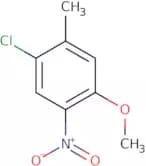
CAS:4'-Isopropyl-beta-methyl-beta-nitrostyrene is a versatile building block that can be used in the synthesis of complex compounds. It has been used as a reagent or speciality chemical in research and development, and as an intermediate for the synthesis of high quality, useful scaffolds. It is also a useful building block for the preparation of high quality, useful compounds.Fórmula:C12H15NO2Pureza:Min. 95%Forma y color:Clear LiquidPeso molecular:205.25 g/mol5-Chloro-2-methoxy-4-methylnitrobenzene
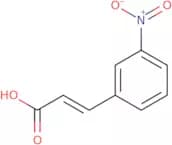
CAS:<p>5-Chloro-2-methoxy-4-methylnitrobenzene is a high quality chemical that can be used as a research chemical, reagent, or a useful scaffold. It is also an intermediate in the synthesis of organic compounds. 5-Chloro-2-methoxy-4-methylnitrobenzene is a versatile building block for the synthesis of other chemicals and has many uses in the pharmaceutical industry. The CAS number for this chemical is 101080-03-9.</p>Fórmula:C8H8ClNO3Pureza:Min. 95%Forma y color:PowderPeso molecular:201.61 g/moltrans-3-Nitrocinnamic acid
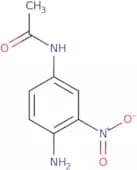
CAS:<p>Trans-3-Nitrocinnamic acid is a white solid that can be obtained by the nitration of cinnamic acid. Trans-3-Nitrocinnamic acid is an isoenzyme as it has different chemical properties than cis-3-nitrocinnamic acid. The intermolecular hydrogen bonding and vibrational frequencies are different in trans-3-nitrocinnamic acid, which causes the dipole to change and increases the solubility in water. The genotoxic activity of trans-3-nitrocinnamic acid was evaluated using the Ames test, which showed that it is not mutagenic. However, there were some genotoxic effects observed in rats after applying trans-3-nitrocinnamic acid on skin.</p>Fórmula:C9H7NO4Pureza:Min. 95%Forma y color:PowderPeso molecular:193.16 g/mol1-N-Acetyl-3-nitro-p-phenylenediamine
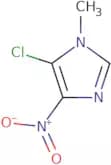
CAS:<p>1-N-Acetyl-3-nitro-p-phenylenediamine is a hydrolytic product of 1,4-diaminobenzene. It is an intermediate in the preparation of naphthalene diamine and has been shown to hydrolyze in acidic solutions.</p>Fórmula:C8H9N3O3Pureza:Min. 95%Forma y color:PowderPeso molecular:195.18 g/mol5-Chloro-1-methyl-4-nitroimidazole
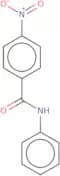
CAS:<p>5-Chloro-1-methyl-4-nitroimidazole (5C1MI) is a fatty acid that is synthesized by the reaction of phosphorus pentachloride and an aliphatic hydrocarbon. It has been shown to be effective in treating women with breast cancer. 5C1MI blocks the activity of a protein called HER2, which promotes tumor growth. The drug has been shown to cause an increase in the number of circulating lymphocytes and natural killer cells, as well as an increase in the production of antibodies in mice. These effects are likely caused by 5C1MI's ability to inhibit the proliferation of T cells and B cells. 5C1MI has also been shown to have a high solubility in water and low solubility in lipids, which makes it suitable for administration via intravenous injection.</p>Fórmula:C4H4ClN3O2Pureza:Min. 95%Forma y color:PowderPeso molecular:161.55 g/mol4-Nitrobenzanilide
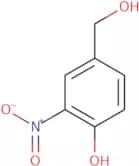
CAS:<p>4-Nitrobenzanilide is a synthetic dyestuff that is used to produce a variety of dyes. It is also an inhibitor that has been shown to have amoebicidal activity in vivo and in vitro. 4-Nitrobenzanilide inhibits organisms by reacting with the chloride ion, which is essential for the synthesis of DNA and RNA. The demethylation reaction leads to the formation of hydrogen chloride, which may be responsible for its cytotoxic effects on living cells.</p>Fórmula:C13H10N2O3Pureza:Min. 95%Forma y color:Yellow PowderPeso molecular:242.23 g/mol4-Hydroxy-3-nitrobenzyl alcohol
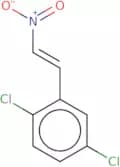
CAS:<p>4-Hydroxy-3-nitrophenylacetic acid (4ONPA) is an organic compound that is the product of the reaction between hydroxylamine and nitrobenzaldehyde. It has been shown to have cytotoxicity in breast cancer cells and has been used as a probe for optical imaging studies. 4ONPA has also been shown to be able to inhibit the activity of enzymes such as catalase, peroxidase, and lipoxygenase. The uptake of 4ONPA into cells is dependent on its concentration and the cell type. This drug can be useful for treating degenerative diseases because it inhibits microglia activation by blocking the enzyme phospholipase A2. Clinical trials are currently being conducted for 4ONPA’s potential use in treating herpes simplex virus infections and cancerous lesions associated with Alzheimer's disease.</p>Fórmula:C7H7NO4Pureza:Min. 95%Forma y color:PowderPeso molecular:169.13 g/mol1-(2,5-Dichlorophenyl)-2-nitroethene
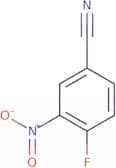
CAS:<p>1-(2,5-Dichlorophenyl)-2-nitroethene is a chemical compound that is used as a research chemical. It's an aromatic organic compound that can be used as a versatile building block for the synthesis of complex compounds. It's also a good intermediate for many fine chemicals. 1-(2,5-Dichlorophenyl)-2-nitroethene has CAS number 1056473-63-2 and is classified as an "Aromatic Organic Chemical".</p>Fórmula:C8H5Cl2NO2Pureza:Min. 95%Forma y color:PowderPeso molecular:218.04 g/mol4-Fluoro-3-nitrobenzonitrile
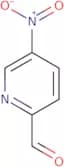
CAS:<p>4-Fluoro-3-nitrobenzonitrile is a potent inhibitor of tyrosine kinase. It binds to the ATP binding site of the enzyme and prevents it from phosphorylating tyrosine residues on other proteins. 4-Fluoro-3-nitrobenzonitrile has been used as a tool in analytical chemistry, where it was shown to be able to detect trace amounts of benzene. This compound has also been shown to have toxicological effects, such as lowered body weight, increased liver weight, and decreased spleen weight. These effects were observed in mice exposed to 4-fluoro-3 nitrobenzonitrile at doses that were well below those needed for lethal toxicity.</p>Fórmula:C7H3FN2O2Pureza:Min. 95%Forma y color:PowderPeso molecular:166.11 g/mol3-Nitro-6-pyridinecarboxaldehyde
CAS:<p>3-Nitro-6-pyridinecarboxaldehyde is a colorless liquid that is soluble in water. It has a boiling point of 155 degrees Celsius, and it has a density of 1.03 grams per milliliter. This chemical reacts with metal ions to form nitro compounds. 3-Nitro-6-pyridinecarboxaldehyde has been used as an analytical reagent for the determination of benzenes and pyridines in organic solvents and gas chromatography calibration. The reactivity of this chemical is due to its pyridine ring, which can be used as a ligand or reagent.</p>Fórmula:C6H4N2O3Pureza:Min. 98%Forma y color:PowderPeso molecular:152.11 g/mol2'-Ethoxy-4'-nitroacetanilide
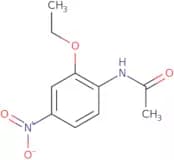
CAS:<p>2'-Ethoxy-4'-nitroacetanilide is a chemical compound that is used as a building block in the synthesis of other chemicals. It is a versatile building block and can be used to synthesize many different types of compounds, including drugs, pesticides, and dyes. 2'-Ethoxy-4'-nitroacetanilide has been classified as a speciality chemical and is not for human consumption.</p>Fórmula:C10H12N2O4Pureza:Min. 95%Forma y color:PowderPeso molecular:224.21 g/molL-Methionine 4-nitroanilide
CAS:<p>L-Methionine 4-nitroanilide is a polymerase chain reaction (PCR) substrate. It has been shown to bind to DNA with calcium and to have protease activity. L-Methionine 4-nitroanilide is a synthetic substrate used in the biochemical study of serine proteases. L-Methionine 4-nitroanilide has been found to be active against P. aeruginosa and thermococcus, but not against mosquitoes. The optimum pH for this compound is 7 and it can be found at a concentration of 10mM in the range of pH 5 - 8.</p>Fórmula:C11H15N3O3SPureza:Min. 95%Forma y color:White To Light (Or Pale) Yellow SolidPeso molecular:269.32 g/mol2-Fluoro-3-nitrobenzoic acid ethyl ester
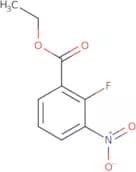
CAS:<p>2-Fluoro-3-nitrobenzoic acid ethyl ester is a versatile, high quality building block with a number of uses in research and industry. It is an intermediate in the synthesis of a range of compounds, including pharmaceuticals and other fine chemicals. 2-Fluoro-3-nitrobenzoic acid ethyl ester is also used as a reagent for the synthesis of complex compounds, such as pharmaceuticals. This compound can be synthesized from readily available starting materials and has been shown to be useful for the preparation of scaffolds for organic synthesis. 2-Fluoro-3-nitrobenzoic acid ethyl ester is not listed on the Chemical Abstract Service (CAS) registry, but it does have an IUPAC name (2-(2,6-difluorophenyl)-5-(1,1,2,2 tetrafluoropropoxy)-3H-[1]py</p>Fórmula:C9H8FNO4Pureza:Min. 95%Forma y color:Off-White PowderPeso molecular:213.16 g/mol3-Nitrotyramine
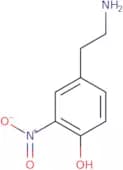
CAS:<p>3-Nitrotyramine is a compound that has catabolic properties. It is the product of tyrosine, which is an amino acid found in most proteins. 3-Nitrotyramine has been shown to be metabolized by humans through the liver and kidneys. The metabolic pathway for this compound starts with the conversion of L-methionine into dl-methionine. This reaction generates a molecule called S-adenosyl methionine, or SAMe, which is involved in many biological processes such as neurotransmitter synthesis and gene expression regulation. 3-Nitrotyramine can also be converted into dopamine by way of the enzyme catecholamine methyltransferase. Dopamine has been shown to have a variety of effects on human physiology, including being involved in mood disorders and motor control. 3-Nitrotyramine can also be converted into gold nanoparticles by means of an acid analysis test.</p>Fórmula:C8H10N2O3Pureza:Min. 95%Forma y color:PowderPeso molecular:182.18 g/mol2,2'-Dinitrobiphenyl
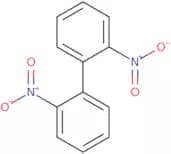
CAS:<p>2,2'-Dinitrobiphenyl is an organic chemical compound that belongs to the class of diazo compounds. It is a white crystalline solid that is soluble in organic solvents such as benzene, ether and chloroform. 2,2'-Dinitrobiphenyl has been used in analytical chemistry as a reducing agent for phosphite and other anion radicals. The reduction products can be analyzed using various techniques such as infrared spectroscopy or electron paramagnetic resonance spectroscopy. It also reacts with amide ions to form nitro or chloride compounds.</p>Fórmula:C12H8N2O4Pureza:Min. 96.5%Forma y color:PowderPeso molecular:244.2 g/mol2-Fluoro-3-nitrobenzoic acid
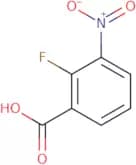
CAS:<p>2-Fluoro-3-nitrobenzoic acid is a fine chemical that has been used as a building block for research chemicals, reagents, and speciality chemicals. It is also a versatile building block for the synthesis of complex compounds and useful scaffolds. 2-Fluoro-3-nitrobenzoic acid can be used as an intermediate in organic reactions or as a reaction component in the synthesis of pharmaceuticals. This compound has been shown to have high purity and good quality with CAS No. 317-46-4.</p>Fórmula:C7H4O4NFPureza:Min. 95%Forma y color:PowderPeso molecular:185.11 g/molPhenyl 4-nitrobenzoate
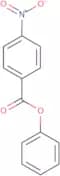
CAS:<p>Phenyl 4-nitrobenzoate is a polymerized ester with hydroxy groups and phosphorus oxychloride as the raw material. It is synthesized by heating ethyl esters in trifluoroacetic acid, which reacts with nitric acid and phosphorus oxychloride. The compound is an amide with a bond cleavage activation energy of 109 kJ/mol. The kinetic of the reaction was determined by measuring the time it took for the reaction to reach certain levels. Phenyl 4-nitrobenzoate has been shown to be able to activate supramolecular assemblies, leading to new catalytic processes such as hydrogenation, oxidation and reduction reactions.</p>Fórmula:C13H9NO4Pureza:Min. 95%Forma y color:PowderPeso molecular:243.21 g/mol3-(tert-butyl)-2-methyl-6-nitroindeno[3,2-c]pyrazol-4-one
CAS:Please enquire for more information about 3-(tert-butyl)-2-methyl-6-nitroindeno[3,2-c]pyrazol-4-one including the price, delivery time and more detailed product information at the technical inquiry form on this pagePureza:Min. 95%(5-Methyl-2-oxo-1,3-dioxol-4-yl)methyl 4-nitrophenyl carbonate
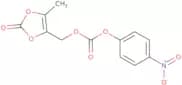
CAS:<p>(5-Methyl-2-oxo-1,3-dioxol-4-yl)methyl 4-nitrophenyl carbonate is a fine chemical that is used as a building block for the synthesis of complex compounds. It is an intermediate in the synthesis of 3,4-Dihydroquinazolinone. This compound has been reported to have useful pharmacological activity and has been used as a research chemical and in the synthesis of pharmaceuticals. (5-Methyl-2-oxo-1,3-dioxol-4-yl)methyl 4 nitrophenyl carbonate also has potential as a reagent and can be used in organic synthesis.</p>Fórmula:C12H9NO8Pureza:Min. 95%Forma y color:White PowderPeso molecular:295.2 g/mol(2-methoxyethyl)((2-nitrophenyl)sulfonyl)amine
CAS:<p>Please enquire for more information about (2-methoxyethyl)((2-nitrophenyl)sulfonyl)amine including the price, delivery time and more detailed product information at the technical inquiry form on this page</p>Pureza:Min. 95%3-Methoxy-4-nitroacetophenone
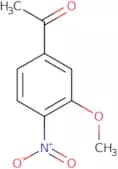
CAS:<p>3-Methoxy-4-nitroacetophenone is an enamine that can be used in the synthesis of a variety of organic compounds. It is a good reducing agent and can be used to synthesize nitrophenols and nitrosamines. Catalytic hydrogenation, transfer hydrogenation, and reductive condensation reactions all use 3-methoxy-4-nitroacetophenone as a starting material. It has been shown to react with a range of alcohols to form acetals, which are stable compounds with a protective group on the alcohol. Cyclization reactions using 3-methoxy-4-nitroacetophenone have also been reported. This compound has been crystallized in pure form.</p>Fórmula:C9H9NO4Pureza:Min. 95%Forma y color:PowderPeso molecular:195.17 g/mol1-(4-Acetoxyphenyl)-2-nitropropene
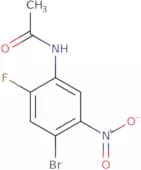
<p>Please enquire for more information about 1-(4-Acetoxyphenyl)-2-nitropropene including the price, delivery time and more detailed product information at the technical inquiry form on this page</p>Fórmula:C11H11NO4Pureza:Min. 95%Peso molecular:221.21 g/mol4-Bromo-2-fluoro-5-nitroacetanilide
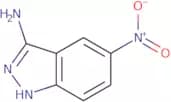
CAS:<p>4-Bromo-2-fluoro-5-nitroacetanilide is a versatile building block that has been used in the synthesis of complex compounds. It is a reagent which can be used in the research and development of pharmaceuticals, agricultural chemicals, and other specialty chemicals. 4-Bromo-2-fluoro-5-nitroacetanilide is also a useful building block for synthesis of other chemical compounds. This compound has been shown to have high quality for use in organic synthesis and as a reaction component for the preparation of useful scaffolds. This compound is also useful as an intermediate in organic reactions. CAS No. 95635-46-4</p>Fórmula:C8H6BrFN2O3Pureza:Min. 95%Forma y color:PowderPeso molecular:277.05 g/mol3-Amino-5-nitroindazole
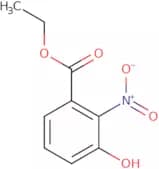
CAS:<p>3-Amino-5-nitroindazole is an anticancer drug that inhibits the growth of cancer cells. It has been shown to inhibit the growth of cancer cells by blocking the synthesis and repair of DNA, leading to cell death. 3-Amino-5-nitroindazole also blocks the production of new proteins, which are needed for cell division. This drug also acts on pathways that are important for tumor development and progression, such as signaling pathways and transcription factors. This compound has been shown to be selective against human squamous cell carcinoma cells and has been studied in combination with other anticancer drugs in clinical trials.</p>Fórmula:C7H6N4O2Pureza:Min. 95%Forma y color:SolidPeso molecular:178.15 g/molEthyl 3-hydroxy-2-nitrobenzoate
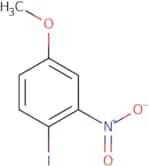
CAS:<p>Ethyl 3-hydroxy-2-nitrobenzoate is a versatile building block in organic synthesis. It is a useful intermediate that can be used for the synthesis of complex compounds, research chemicals and reagents. It is also a useful scaffold for the synthesis of fine chemicals, and has been used as a reaction component in high quality chemical reactions.</p>Fórmula:C9H9NO5Pureza:Min. 95%Forma y color:PowderPeso molecular:211.17 g/mol4-Iodo-3-nitroanisol
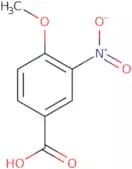
CAS:<p>4-Iodo-3-nitroanisole is an intermediate in the synthesis of 4-methoxy-2-nitroaniline. It is obtained by a cross coupling reaction between 2,4,6-trinitrophenylacetonitrile and 4-iodoaniline. The reductive radical species are generated by the addition of sodium borohydride to the nitro group on the ring. The sequential process entails the formation of the chiral ligand with copper(II) chloride and its adduct with ethyl acetate. This product can be used in cyclic voltammetry experiments as a substrate for cyclic voltammetric studies.</p>Fórmula:C7H6INO3Pureza:Min. 95%Forma y color:PowderPeso molecular:279.03 g/mol4-Methoxy-3-nitrobenzoic acid
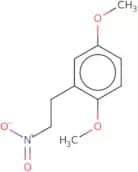
CAS:<p>4-Methoxy-3-nitrobenzoic acid is a hydroxybenzoic acid, and belongs to the group of heterocyclic compounds. It is a preactivated hydroxybenzoate that can be used in the synthesis of griseoluteic acid with chloride as an electron donor. Griseoluteic acid has inhibitory activities on isolated yield. This compound also has potent antitumor activity, which may be due to its ability to inhibit DNA synthesis and protein synthesis by binding to DNA polymerase and ribosomes respectively. Preparative high performance liquid chromatography (HPLC) using this compound is possible with marine microorganisms as the stationary phase. The x-ray absorption spectrum shows that 4-methoxy-3-nitrobenzoic acid has potential for use as a contrast agent for x-rays in imaging tissues.</p>Fórmula:C8H7NO5Pureza:Min. 98 Area-%Forma y color:PowderPeso molecular:197.14 g/mol1-(2,5-Dimethoxyphenyl)-2-nitroethane
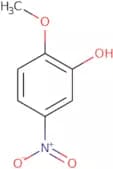
CAS:<p>1-(2,5-Dimethoxyphenyl)-2-nitroethane is a versatile building block that can be used as a reagent in organic synthesis or as an intermediate in the manufacturing of other chemicals. It is soluble in most common solvents and has a greenish yellow color. This chemical is also useful for the manufacture of pharmaceuticals, insecticides, and pesticides.</p>Fórmula:C10H13NO4Pureza:Min. 95%Peso molecular:211.21 g/mol2-Methoxy-5-nitrophenol
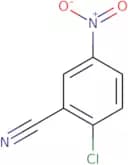
CAS:<p>2-Methoxy-5-nitrophenol (2MNOP) is a compound that has been shown to inhibit the growth of bacteria in nutrient solutions by reducing the activity of glutamate pyruvate transaminase and pyridoxine hydrochloride. 2MNOP is a potent inhibitor of bacterial enzyme activities, such as neutral ph, hydrochloric acid, nitro, and toxicity studies. It is not active against eukaryotic cells or plants. The uptake of 2MNOP is enhanced by the presence of diamine tetraacetic acid and ethylene diamine. 2MNOP has also been shown to be effective against multi-walled carbon nanotubes.</p>Fórmula:C7H7NO4Pureza:Min. 95%Forma y color:PowderPeso molecular:169.13 g/mol2-Chloro-5-nitrobenzonitrile
CAS:<p>2-Chloro-5-nitrobenzonitrile (2C5N) is a chemical compound that is used in the synthesis of other chemicals. 2C5N has been shown to inhibit the replication of poliovirus, but does not affect the replication of rhinovirus or adenovirus. This compound inhibits the production of pro-inflammatory cytokines and interferon gamma in human macrophages by interfering with the diazonium salt reaction. 2C5N also has a high affinity for aromatic hydrocarbons, which may be due to its ability to act as a monoclonal antibody in affinity chromatography. The molecule's vibrational spectrum consists of stretching bands at 1725 cm-1 and 1375 cm-1, which are typical for an aromatic hydrocarbon. 2C5N can be administered orally, although it is more commonly used as an intermediate in organic synthesis reactions involving aromatic hydrocarbons.</p>Fórmula:C7H3ClN2O2Pureza:Min. 95%Forma y color:PowderPeso molecular:182.56 g/mol2-Chloro-3-nitrobenzoic acid methyl ester
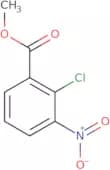
CAS:<p>2-Chloro-3-nitrobenzoic acid methyl ester is a chemical compound that has been shown to inhibit the activity of serotonin. The compound binds to the 5-HT3 receptor on the enteric neurons and inhibits the release of serotonin in the bowel, which is one of the two major sites of action for this drug. This inhibition leads to reduced motility and decreased secretion in the bowel, which helps relieve symptoms in patients with irritable bowel syndrome (IBS). It has also been shown that 2-chloro-3-nitrobenzoic acid methyl ester is able to inhibit the production of serotonin from tryptophan by inhibiting an enzyme called aromatic amino acid decarboxylase.<br>2-Chloro-3-nitrobenzoic acid methyl ester has a high affinity for both rat and human 5ht3 receptors. The kinetics and thermodynamics of this reaction have been studied using methanol as a</p>Fórmula:C8H6ClNO4Pureza:Min. 95%Forma y color:PowderPeso molecular:215.59 g/mol3,5-Dinitrobenzoic acid
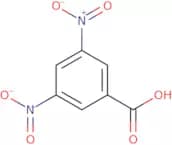
CAS:<p>3,5-Dinitrobenzoic acid is a chemical substance that is used to treat bowel disease. It has been shown to have a good effect on the treatment of diseases caused by bacteria, such as Clostridium difficile and Escherichia coli. 3,5-Dinitrobenzoic acid is an organic compound that belongs to the group of p2 compounds. The mechanism for its antibacterial activity is currently unknown. It has been found to be soluble in water at a concentration of 0.1 M and can be detected in wastewater samples. 3,5-Dinitrobenzoic acid has been shown to react with 2,4-dichlorobenzoic acid to form 2-nitrobenzyl alcohol and 4-chlorophenylhydrazine. This reaction also produces hydrogen gas that can cause explosions when mixed with air or other combustible materials. The structure consists of two benzene rings attached to nitro groups</p>Fórmula:C7H4N2O6Pureza:Min. 98 Area-%Forma y color:PowderPeso molecular:212.12 g/mol4-Fluoro-2-nitrobenzoic acid ethyl ester
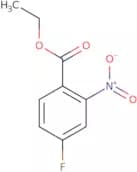
CAS:<p>4-Fluoro-2-nitrobenzoic acid ethyl ester is a fine chemical that can be used as a reagent, intermediate compound, building block, scaffold and building block for speciality chemicals. It has been shown to be an effective chemical in the synthesis of 4-fluoro-2-nitrobenzoic acid, which is a versatile building block with many potential applications. 4-Fluoro-2-nitrobenzoic acid ethyl ester is also useful in reactions involving amines and alcohols as well as metal catalyzed reactions. This product has CAS No. 1072207-10-3.</p>Fórmula:C9H8FNO4Pureza:(%) Min. 85%Forma y color:Clear LiquidPeso molecular:213.16 g/mol3,5-Dinitro-4-hydroxyphenylacetic acid
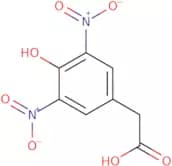
CAS:3,5-Dinitro-4-hydroxyphenylacetic acid is a conjugate that consists of an antigen and a carrier molecule. It is used to enhance the immune response by stimulating T cells which are responsible for the production of antibodies. The conjugate is also known to have cytotoxic effects on the surface of cancer cells in vitro. 3,5-Dinitro-4-hydroxyphenylacetic acid has been shown to be effective in immunizing mice against the antigen ovalbumin, which is often used as a model antigen in immunology research. This conjugate has been shown to promote mitogenesis, or cell division, in spleen cells isolated from immunized mice.Fórmula:C8H6N2O7Pureza:Min. 95%Peso molecular:242.14 g/mol5-Hydroxy-2-nitrobenzaldehyde
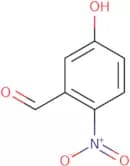
CAS:<p>5-Hydroxy-2-nitrobenzaldehyde is an acidic chemical with a pKa of 1.8. It is used as a starting material in the synthesis of quinoline derivatives, which are used in the production of monoclonal antibodies for use in medical research and diagnosis. The chemical reacts with hydrochloric acid to form hydrogen chloride and 5-hydroxy-2-nitrobenzoic acid. 5-Hydroxy-2-nitrobenzaldehyde has an anticholinesterase activity that is inhibited by sodium carbonate. This product is also reactive to an acidic environment and polymer film, which may result in the formation of new compounds through a chemical reaction.</p>Fórmula:C7H5NO4Pureza:Min. 95%Forma y color:Off-White PowderPeso molecular:167.12 g/mol2-Bromo-5-nitrotoluene
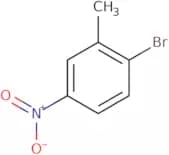
CAS:<p>2-Bromo-5-nitrotoluene is a monosubstituted aromatic compound with a pKa of -2.5. The hydroxyl group on the ring makes this compound acidic, and it will readily react with an electrophile to form an addition product. 2-Bromo-5-nitrotoluene undergoes reductive elimination to form 2-aminoethanol, which is more stable than the nitroso group. The mechanism of this reaction involves labile intermediates that are sensitive to light and heat. The frequency data for 2-bromo-5-nitrotoluene can be found in the table below: 2H NMR (400 MHz, CDCl) δ 7.60 (d, J=8 Hz, 1H), 7.50 (dd, J=8 Hz, 1H), 3.80 (s, 3H). 1H N</p>Fórmula:C7H6BrNO2Pureza:Min. 95%Forma y color:PowderPeso molecular:216.03 g/molEthyl 4-amino-3-nitrobenzoate
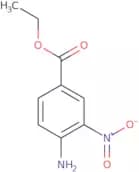
CAS:<p>Ethyl 4-amino-3-nitrobenzoate is a molecule that is used as an inhibitor of butyrylcholinesterase. It has been shown to have inhibitory effects on enzymes such as cholinesterase, which are involved in the breakdown of acetylcholine and other neurotransmitters. Ethyl 4-amino-3-nitrobenzoate is a dihydrate and it has been found to be an efficient inhibitor of butyrylcholinesterase with a KI value of 0.2 mM. Single crystal x-ray diffraction analysis showed that the compound was centrosymmetric with hydrogen bonding interactions. The parameters were rationalized by this analysis, which led to the discovery of a more efficient method for synthesizing this molecule.</p>Fórmula:C9H10N2O4Pureza:Min. 95%Forma y color:PowderPeso molecular:210.19 g/mol3-(4-Morpholinyl)-1-(4-nitrophenyl)-5,6-dihydro-2(1H)-pyridinone
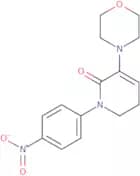
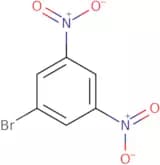
CAS:<p>3-(4-Morpholinyl)-1-(4-nitrophenyl)-5,6-dihydro-2(1H)-pyridinone is a synthetic coagulation factor that has been shown to be cost-effective and to have a high yield. It is an inhibitor of blood coagulation, which is detectable by x-ray powder diffraction. 3-(4-Morpholinyl)-1-(4-nitrophenyl)-5,6-dihydro-2(1H)-pyridinone has been synthetically prepared from 3,5,6,7,8,9,10,-hexahydro-[2]benzo[e][1]pyridinone and 4-morpholinecarboxylic acid.</p>Fórmula:C15H17N3O4Pureza:Min. 98 Area-%Forma y color:Yellow PowderPeso molecular:303.31 g/mol1-Bromo-3,5-dinitrobenzene
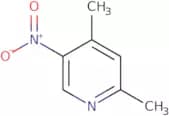
CAS:<p>1-Bromo-3,5-dinitrobenzene is an optical probe that has been used in reaction systems to study the reactivity of nucleophiles. The fluorescence of 1-bromo-3,5-dinitrobenzene changes with the nature of the nucleophile and its concentration. This molecule is unreactive with other molecules and can be used as a drug development tool. The centroid of 1-bromo-3,5-dinitrobenzene is constant at 298 K. Crystals for 1-bromo-3,5-dinitrobenzene have been analyzed by XRD and FTIR.</p>Fórmula:C6H3BrN2O4Pureza:Min. 95%Forma y color:White PowderPeso molecular:247 g/mol2,4-Dimethyl-5-nitropyridine
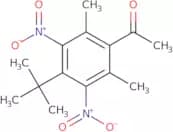
CAS:<p>2,4-Dimethyl-5-nitropyridine is a hydroxyurea analog that inhibits the synthesis of ribonucleotides by competitively binding to the enzyme ribonucleotide reductase. This inhibition leads to the accumulation of diphosphate and deoxyribonucleotides, which are necessary for DNA synthesis. 2,4-Dimethyl-5-nitropyridine was found to be more potent than hydroxyurea as an inhibitor of cellular growth in vitro and cancer cell lines in vivo. The potency of 2,4-dimethyl-5-nitropyridine can be attributed to its ability to bind very tightly with ribonucleotide reductase and form a stable complex.</p>Fórmula:C7H8N2O2Pureza:Min. 95%Forma y color:Yellow Clear LiquidPeso molecular:152.15 g/mol4'-tert-Butyl-2',6'-dimethyl-3',5'-dinitroacetophenone
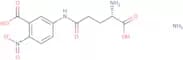
CAS:4'-tert-Butyl-2',6'-dimethyl-3',5'-dinitroacetophenone is a ketone that is used in the synthesis of new chemical substances. It has been shown to have toxicological properties and can be used for the treatment of bacterial infections. 4'-tert-Butyl-2',6'-dimethyl-3',5'-dinitroacetophenone has been shown to produce a high degree of solubility in water, which is an advantageous property for wastewater treatment because it allows for easy removal of this compound from contaminated water.Fórmula:C14H18N2O5Pureza:Min. 95%Forma y color:PowderPeso molecular:294.3 g/molL-Glutamic acid gamma-(3-carboxy-4-nitroanilide) ammonium salt
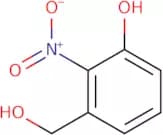
CAS:<p>L-Glutamic acid gamma-(3-carboxy-4-nitroanilide) ammonium salt has been used as a synthetic substrate for gamma-glutamyltransferase (GGT) to determine GGT activity.</p>Fórmula:C12H16N4O7Pureza:Min. 99 Area-%Forma y color:White PowderPeso molecular:328.28 g/mol3-Hydroxy-2-nitrobenzyl alcohol
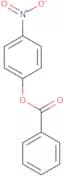
CAS:<p>3-Hydoxy-2-nitrobenzyl alcohol is a high quality reagent that can be used as a complex building block, useful scaffold, and versatile building block for the synthesis of speciality chemicals. It is also used as a reaction component in the preparation of 3-hydroxy-2-nitrobenzyl chloride, which is an intermediate for the production of various pharmaceuticals. This chemical has a CAS number of 34112-74-8 and is classified as a research chemical.</p>Fórmula:C7H7NO4Pureza:Min. 95%Forma y color:PowderPeso molecular:169.13 g/mol4-Nitrophenyl benzoate
CAS:<p>4-Nitrophenyl benzoate is a reactive molecule that can react with oxygen nucleophiles and hydroxyl groups. 4-Nitrophenyl benzoate is formed by the acylation reaction between an amine and a phenol, which is catalyzed by acid, base, or heat. This reaction mechanism can be explained by the formation of a hydrogen bond between the amine and the phenol. The kinetic data for this reaction have been measured using fluorescence measurements, and it has been shown that the reaction rate increases as temperature increases.</p>Fórmula:C13H9NO4Pureza:Min. 96 Area-%Forma y color:PowderPeso molecular:243.21 g/mol


![3-(tert-butyl)-2-methyl-6-nitroindeno[3,2-c]pyrazol-4-one](/_next/image/?url=https%3A%2Fstatic.cymitquimica.com%2Fproducts%2F3D%2Fthumb-webp%2FFB169678.webp&w=3840&q=75)