Cetonas
Se han encontrado 18873 productos de "Cetonas"
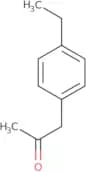
4-Ethylphenylacetone
CAS:Producto controlado4-Ethylphenylacetone is a high quality reagent and useful building block for the production of more complex compounds. It is an intermediate for the production of fine chemicals, speciality chemicals, and research chemicals. 4-Ethylphenylacetone can be used as a versatile building block in organic synthesis, providing a scaffold to form new structures with different functional groups. This product has been shown to react with nucleophiles such as amines and alcohols to form new compounds.
Fórmula:C11H14OPureza:90%Forma y color:Clear LiquidPeso molecular:162.23 g/mol3-((4,5-dichloroimidazolyl)methyl)-4-bromo-2-methyl-1-phenyl-3-pyrazolin-5-one
CAS:Please enquire for more information about 3-((4,5-dichloroimidazolyl)methyl)-4-bromo-2-methyl-1-phenyl-3-pyrazolin-5-one including the price, delivery time and more detailed product information at the technical inquiry form on this page
Pureza:Min. 95%Ref: 3D-FD169753
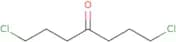
Producto descatalogado1,7-Dichloroheptan-4-one
CAS:1,7-Dichloroheptan-4-one is a synthetic organic compound that has been used as a pharmaceutical intermediate. It is an H2 receptor antagonist and reactive with mammalian cells. 1,7-Dichloroheptan-4-one has been shown to inhibit the production of inflammatory mediators in the lung, which may be due to its ability to reduce chloride levels. This compound has also been shown to have antipsychotic effects in animals and is currently being studied for use in treating cardiovascular disorders such as hypertension.
Fórmula:C7H12Cl2OPureza:Min. 95 Area-%Peso molecular:183.07 g/molRef: 3D-FD140252
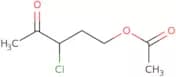
Producto descatalogado5-Acetoxy-3-chloro-2-pentanone
CAS:5-Acetoxy-3-chloro-2-pentanone is a thioformamide that is used as an intermediate in the synthesis of vitamin B1. It is also a precursor to formic acid and formaldehyde, which are used in the production of dyes and other chemical products. 5-Acetoxy-3-chloro-2-pentanone is synthesized by reacting hydroxylamine with acetyl chloride. The reaction proceeds via a nucleophilic substitution reaction. This product has a high yield and can be produced with various alkyl groups, such as 1-4C, 2C, 3C, 4C, 5C, 6C, 7C, 8C or 9C. 5-Acetoxy-3-chloro-2-pentanone can be used to produce formic acid or formaldehyde by reacting it with sodium hydroxide or potassium hydroxide respectively.
Fórmula:C7H11ClO3Pureza:Min. 95%Peso molecular:178.61 g/molRef: 3D-FA16981
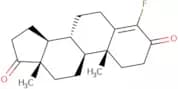
Producto descatalogado4-Fluoroandrostenedione
CAS:Producto controlado4-Fluoroandrostenedione is a synthetic, nonsteroidal compound that has been shown to be an effective androgen ablation agent. It binds to the androgen receptor, which prevents conversion of testosterone into dihydrotestosterone (DHT). 4-Fluoroandrostenedione has been used in clinical trials for the treatment of prostate cancer. This drug has also been shown to inhibit the production of estrogens by binding to the aromatase enzyme, which converts androgens into estrogens. Substitutions on the a-ring have been shown to increase its activity as an anti-cancer agent. 4-Fluoroandrostenedione can be synthesized from androstenedione by substituting a fluorine atom on one of the carbons in the a-ring.
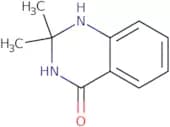
Fórmula:C19H25FO2Pureza:Min. 95%Peso molecular:304.4 g/mol2,2-dimethyl-1,2,3-trihydroquinazolin-4-one
CAS:2,2-dimethyl-1,2,3-trihydroquinazolin-4-one is a natural product that belongs to the family of quinazolinones. It is found in a variety of microorganisms and plants. It has been isolated from the fungus Penicillium notatum, where it acts as an inhibitor of glycerol dehydratase. This compound also inhibits dereplication by inhibiting the synthesis of anthranilic acid. 2,2-dimethyl-1,2,3-trihydroquinazolin-4-one has been shown to inhibit the biosynthesis of anthranilamide and other bioactive natural products. It is a potent antibacterial agent against Gram positive bacteria such as Staphylococcus aureus and Bacillus subtilis.Pureza:Min. 95%Ref: 3D-FD169046
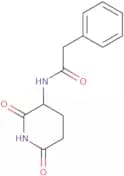
Producto descatalogado3-Phenylacetylamino-2,6-piperidinedione
CAS:3-Phenylacetylamino-2,6-piperidinedione is a trifluoroacetate analog of the amino acid phenylalanine. It has been shown to be effective against cancer cells. 3-Phenylacetylamino-2,6-piperidinedione inhibits protein synthesis in tumor cells and is used as an antiestrogen in clinical studies. The hydroxyl group on the 3rd carbon atom makes this compound more acidic than its parent compound, 2,6-piperidinedione. This analog also has a high affinity for cancer tissues and urine samples. Treatment with this drug inhibits the growth of carcinoma cell lines MCT7 and MCF7.
Fórmula:C13H14N2O3Pureza:Min. 95%Forma y color:PowderPeso molecular:246.26 g/molRef: 3D-FP148021
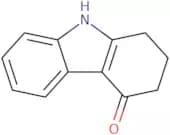
Producto descatalogado1,2,3,9-Tetrahydro-4H-carbazol-4-one
CAS:1,2,3,9-Tetrahydro-4H-carbazol-4-one is a cyclic ketone compound, which can be synthesized through various organic reactions involving appropriate precursors. It is often derived from indole-based substrates through catalytic hydrogenation, allowing the formation of its stable tetrahydro structure with a retained core carbazole skeleton.
Fórmula:C12H11NOPureza:Min. 95%Forma y color:PowderPeso molecular:185.23 g/molRef: 3D-FT02555
Producto descatalogado(5a)-Androst-2-en-17-one
CAS:Producto controlado(5a)-Androst-2-en-17-one is a synthetic substance that has been used as a supplement. It is an androgenic steroid, which means it stimulates the development of male sex organs and secondary sex characteristics in boys. The use of (5a)-androst-2-en-17-one has been associated with the development of liver tumors in laboratory animals. There are no studies to date on the effects of (5a)-androst-2-en-17-one on human liver function. Androgens may also affect the kidneys, bladder, prostate gland, or brain. In addition, these substances can have pharmacological effects such as increasing blood pressure or heart rate or suppressing the production of certain hormones by the pituitary gland. Androgens can also cause other adverse side effects including acne, hair loss or hair growth in unwanted places, shrinking of the testicles in men, enlargement of breasts in men and women, fluid retention and high
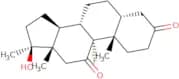
Fórmula:C19H28OPureza:Min. 95%Forma y color:White PowderPeso molecular:272.43 g/mol9-Fluoro-17β-Hydroxy-17-Methyl-5β-Androstane-3,11-Dione
CAS:Producto controlado9-Fluoro-17beta-Hydroxy-17-Methyl-5β-Androstane-3,11-Dione is a chemical compound that has oxidizing properties. It is a white or light yellow crystalline powder that can be prepared from potassium and 9-fluoroandrostenedione. The compound is insoluble in water, but soluble in organic solvents. It has a melting point of about 138°C, and does not react with alkali metals or bases. 9FAD has been shown to have thermal treatment applications for the fields of pulverulent materials and input introduction. Thermally applied, it can be used to increase the surface area of input materials such as coal and ore, as well as being able to convert them into more reactive forms.
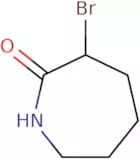
Fórmula:C20H29FO3Pureza:Min. 95%Peso molecular:336.44 g/mol2-Aza-7-bromocycloheptanone
CAS:2-Aza-7-bromocycloheptanone is a heterocyclic system that can be synthesized from the condensation of ethyl 2-bromocaproate and triethyloxonium chloride. This compound has been shown to have lactam ring opening activity, as well as the ability to form azepine rings with amines. The synthesis of this compound is limited by its instability, which may be due to the presence of an azepine group. The ethylation of this heterocycle leads to a more stable product with increased lactam ring opening activity.
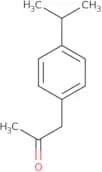
Fórmula:C6H10BrNOPureza:Min. 80 Area-%Forma y color:PowderPeso molecular:192.05 g/mol4'-Isopropylphenylacetone
CAS:4'-Isopropylphenylacetone is a chemical compound that is used in tobacco products. It is a nitrogen-containing aromatic compound that can be synthesized by the scission of phenylethyl, styrene, and styryl acetones with an alkali such as sodium hydroxide. 4'-Isopropylphenylacetone can also be produced from phenylethyl alcohol and acetic acid in the presence of sulfuric acid. The molecular structure of 4'-isopropylphenylacetone consists of three rings: two benzene rings connected to each other through a methyl group occupying the position between the two rings. 4'-Isopropylphenylacetone has been found in tobacco products, such as cigarettes and chewing tobacco.
Fórmula:C12H16OPureza:80%Forma y color:PowderPeso molecular:176.25 g/molRef: 3D-FI68024
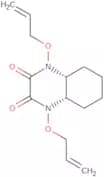
Producto descatalogadocis-5,6-Tetramethylen-1,4-diallyloxypiperazine-2,3-dione
CAS:cis-5,6-Tetramethylen-1,4-diallyloxypiperazine-2,3-dione is a versatile building block and useful scaffold for the synthesis of pharmaceuticals. It has been shown to be an excellent reaction component in organic synthesis and as a speciality chemical. cis-5,6-Tetramethylen-1,4-diallyloxypiperazine-2,3-dione is a high quality reagent that can be used in research work.Fórmula:C14H20N2O4Pureza:Min. 95%Peso molecular:280.32 g/mol6-Fluoro-5-Methyl-2-[(5-Methyl-1H-Imidazol-4-Yl)Methyl]-2,3,4,5-Tetrahydro-1H-Pyrido[4,3-b]Indol-1-One
CAS:Producto controlado6-Fluoro-5-Methyl-2-[(5-Methyl-1H-Imidazol-4-Yl)Methyl]-2,3,4,5-Tetrahydro-1H-Pyrido[4,3-b]Indol-1-One is a drug that belongs to the class of fatty acid esters. It has been shown to be effective in clinical trials for the treatment of symptoms of dry eye syndrome. 6FMETI has a low safety profile and does not cause any adverse effects in humans. The drug can be administered by intravenous injection or oral administration and has a long elimination half life of 36 hours. 6FMETI is metabolized by hydrolysis to its active form, 5FMTI, which is then conjugated with glucuronic acid or methyl glutaryl coenzyme A to form an inactive metabolite. This drug also has good pharmacokinetic properties
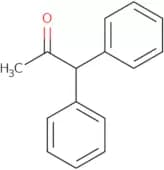
Fórmula:C17H17FN4OPureza:Min. 95%Peso molecular:312.34 g/mol1,1-Diphenylacetone
CAS:1,1-Diphenylacetone is a molecule that belongs to the group of aromatic hydrocarbons. It has two functional groups, a carbonyl group and a diphenyl ether. 1,1-Diphenylacetone can be synthesized by reacting benzene with acetone in the presence of sodium hydroxide. The molecule fluoresces with a short lifetime and has been used as a corrosion inhibitor for metals such as copper and aluminum. 1,1-Diphenylacetone has also been used to synthesize polymers via free radical polymerization or copolymerization reactions. X-ray structures have shown that 1,1-diphenylacetone binds to metal ions such as copper or silver ions. This binding causes light emission when the metal ion is excited by an external source such as x-rays or visible light.
Fórmula:C15H14OPureza:Min. 95%Peso molecular:210.27 g/molRef: 3D-FD45824
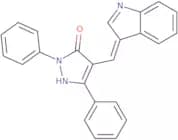
Producto descatalogado4-(Indol-3-ylmethylene)-1,3-diphenyl-2-pyrazolin-5-one
CAS:Please enquire for more information about 4-(Indol-3-ylmethylene)-1,3-diphenyl-2-pyrazolin-5-one including the price, delivery time and more detailed product information at the technical inquiry form on this page
Fórmula:C24H17N3OPureza:Min. 95%Forma y color:PowderPeso molecular:363.41 g/molRef: 3D-FI169601
Producto descatalogado2-[[(4-Acetylphenyl)amino]methylene]-5,5-dimethyl-1,3-cyclohexanedione
CAS:Please enquire for more information about 2-[[(4-Acetylphenyl)amino]methylene]-5,5-dimethyl-1,3-cyclohexanedione including the price, delivery time and more detailed product information at the technical inquiry form on this page
Fórmula:C17H19NO3Pureza:Min. 95%Forma y color:PowderPeso molecular:285.34 g/molRef: 3D-FA169010
Producto descatalogado3,4-diaza-5-(tert-butyl)-2-hydroxy-3-((4-methylphenyl)sulfonyl)tricyclo[6.4.0.0<2,6>]dodeca-1(8),4,9,11-tetraen-7-one
CAS:Please enquire for more information about 3,4-diaza-5-(tert-butyl)-2-hydroxy-3-((4-methylphenyl)sulfonyl)tricyclo[6.4.0.0<2,6>]dodeca-1(8),4,9,11-tetraen-7-one including the price, delivery time and more detailed product information at the technical inquiry form on this pagePureza:Min. 95%Ref: 3D-FD169677
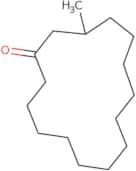
Producto descatalogado3-Methyl-1-cyclopentadecanone
CAS:3-Methyl-1-cyclopentadecanone is a chemical compound with the molecular formula C10H18O. It has an optimum concentration of 0.08% and phase transition temperature of -83 degrees Celsius. The pro-apoptotic protein, Bax, is activated by 3-methyl-1-cyclopentadecanone in mammalian cells, inducing apoptosis. This compound also inhibits the activity of enzymes such as lipoxygenase and cyclooxygenase, which are involved in inflammation. 3-Methyl-1-cyclopentadecanone has been shown to be effective against cancer tissues and neuronal death in rats. 3MCTD has been shown to inhibit polymerase chain reaction (PCR) amplification of DNA from rhizoma gastrodiae, a traditional Chinese herbal medicine for the treatment of myocardial infarcts.
Fórmula:C16H30OPureza:Min. 95%Forma y color:Clear LiquidPeso molecular:238.41 g/molRef: 3D-FM55293
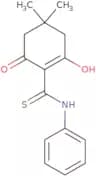
Producto descatalogado5,5-dimethyl-2-((phenylamino)sulfanylmethylene)cyclohexane-1,3-dione
CAS:Please enquire for more information about 5,5-dimethyl-2-((phenylamino)sulfanylmethylene)cyclohexane-1,3-dione including the price, delivery time and more detailed product information at the technical inquiry form on this pageFórmula:C15H17NO2SPureza:Min. 95%Forma y color:PowderPeso molecular:275.37 g/molRef: 3D-FD169866
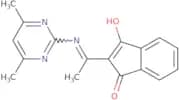
Producto descatalogado2-(((4,6-dimethylpyrimidin-2-yl)amino)ethylidene)indane-1,3-dione
CAS:Please enquire for more information about 2-(((4,6-dimethylpyrimidin-2-yl)amino)ethylidene)indane-1,3-dione including the price, delivery time and more detailed product information at the technical inquiry form on this page
Pureza:Min. 95%Ref: 3D-FD169904
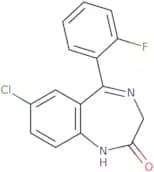
Producto descatalogado7-Chloro-5-(2-fluorophenyl)-1,3-dihydro-2H-1,4-benzodiazepin-2-one
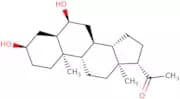
CAS:Producto controlado7-Chloro-5-(2-fluorophenyl)-1,3-dihydro-2H-1,4-benzodiazepin-2-one is a GABA receptor antagonist that is used in the treatment of anxiety. It is an analogue of cinolazepam, which has been shown to inhibit the binding of gamma aminobutyric acid (GABA) to its receptors in human serum and urine samples. Cinolazepam was found to be more potent than 7-chloro-5-(2-fluorophenyl)-1,3-dihydro-2H-1,4 benzodiazepin 2 one in blocking the binding of GABA to its receptor. This drug has also been tested on geriatric patients with high levels of anxiety and found to be well tolerated.Fórmula:C15H10ClFN2OPureza:Min. 98 Area-%Forma y color:White PowderPeso molecular:288.7 g/mol5β-Pregnan-3α,6α-diol-20-one
CAS:Producto controlado5β-Pregnan-3α,6α-diol-20-one is an anticoagulant that inhibits the action of thrombin. It has been shown to inhibit the inflammatory response in a number of autoimmune diseases and inflammatory disorders. This drug also has a nitro group, which can be reduced to an hydroxyl group by reaction with sodium nitrite or other reducing agents. The antimicrobial properties of 5β-pregnan-3α,6α-diol-20-one are thought to be due to its ability to form particle aggregates with magnetic particles. These aggregates have an inhibitory effect on bacterial growth.Fórmula:C21H34O3Pureza:Min. 95%Forma y color:PowderPeso molecular:334.49 g/molRef: 3D-FP67238
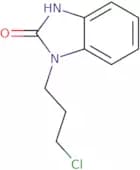
Producto descatalogado1-(3-Chloropropyl)-1,3-dihydro-2H-benzimidazole-2-one
CAS:Phenylmethyl (PM) is a drug that belongs to the class of phenylmethanesulfonamides. It is used in the treatment of diarrhea, specifically in cases where there are no other suitable anti-diarrheal drugs available. The active form of PM is 1-(3-chloropropyl)-1,3-dihydro-2H-benzimidazole-2-one (PCP). This drug inhibits bacterial growth by binding to the 50S ribosomal subunit and inhibiting protein synthesis. PCP has been shown to have a narrow spectrum of activity against most enteric bacteria and some protozoa. The drug is poorly absorbed from the gastrointestinal tract and does not cross the blood–brain barrier, which limits its use for systemic infections.
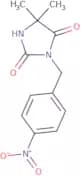
Fórmula:C10H11ClN2OPureza:Min. 95%Forma y color:PowderPeso molecular:210.66 g/mol5,5-Dimethyl-3-(4-nitrobenzyl)imidazolidine-2,4-dione
CAS:5,5-Dimethyl-3-(4-nitrobenzyl)imidazolidine-2,4-dione is a versatile chemical that can be used as a building block in the synthesis of complex compounds. It is an intermediate in the production of research chemicals and is also used as a reaction component in the synthesis of speciality chemicals. 5,5-Dimethyl-3-(4-nitrobenzyl)imidazolidine-2,4-dione has been shown to have high quality properties when synthesized using high purity reagents.Fórmula:C12H13N3O4Pureza:Min. 95%Forma y color:White PowderPeso molecular:263.25 g/molRef: 3D-FD131838
Producto descatalogado4-Oxahomoadamantan-5-one
CAS:4-Oxahomoadamantan-5-one is a synthetic molecule with a labile peroxide group. It has biological functions, including the ability to bind to and activate the benzodiazepine receptor. The molecule forms an ethyl ester and an acid solution. The compound's nmr spectra have been obtained in both acetonitrile and formamide solutions, in which the stereoisomers are visible. It reacts with oxygen to form a peroxide group, which is easily oxidized to create a reactive intermediate that can be used for chemical reactions such as oxidation of alcohols or alkyl halides. 4-Oxahomoadamantan-5-one can be synthesized from benzonitrile and acetone using two different methods: by reacting with sodium methoxide in methanol or by reacting with potassium formate in methanol.
Fórmula:C10H14O2Pureza:Min. 95%Forma y color:White PowderPeso molecular:166.22 g/molRef: 3D-FO67037
Producto descatalogado(1S,4S)-1,7,7-Trimethyl-3-(Trifluoroacetyl)Bicyclo[2.2.1]Heptan-2-One
CAS:(1S,4S)-1,7,7-Trimethyl-3-(Trifluoroacetyl)Bicyclo[2.2.1]Heptan-2-One is a white solid with a melting point of -76.8°C and a boiling point of 265°C at 10 mm Hg. It has the following functional groups: particle, luminescent, lanthanide, stabilizer, ligand, voltammetry, thermally stable and has nmr spectra that show light emission and coordination chemistry. This compound is a sulfoxide but can also be considered to be a phosphine or an amine depending on its structural features. The compound's nature is dependent on the temperature and pressure as well as the solvent it is being dissolved in.>>END>>
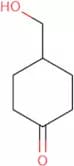
Fórmula:C12H15F3O2Pureza:Min. 95%Forma y color:Clear LiquidPeso molecular:248.24 g/mol4-(Hydroxymethyl)cyclohexanone
CAS:4-(Hydroxymethyl)cyclohexanone is a dicarboxylic acid methyl ester. It is synthesized by reacting formic acid with hexamethylene diamine. 4-(Hydroxymethyl)cyclohexanone can be used in the production of a variety of products, including pharmaceuticals, cosmetics, and perfumes. This compound is produced from renewable resources and does not contribute to global warming or ozone depletion.
Fórmula:C7H12O2Pureza:Min. 95%Forma y color:PowderPeso molecular:128.17 g/molRef: 3D-FH54426
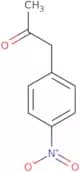
Producto descatalogado(4-Nitrophenyl)acetone
CAS:4-Nitrophenylacetone is a hypoglycemic agent that is used for the treatment of diabetes mellitus. It has been shown to be effective in vivo and in vitro studies at low concentrations. The mechanism of action is not well understood, but it may have effects on insulin sensitivity and the release of insulin from pancreatic beta cells, as well as an effect on the liver. 4-Nitrophenylacetone has been shown to have organocatalytic properties that allow it to catalyze acylation reactions with acetanilides or amides. This reaction produces iminium ion intermediates that can be hydrolyzed by water to form a variety of products, including carboxylic acids, amides, and nitriles.
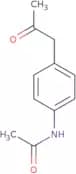
Fórmula:C9H9NO3Pureza:Min. 95%Forma y color:PowderPeso molecular:179.17 g/mol(4-Acetamidophenyl)acetone
CAS:(4-Acetamidophenyl)acetone is a chemical compound that belongs to the class of complex compounds. It is an intermediate in the synthesis of other chemicals and can be used as a building block for more complicated molecules. (4-Acetamidophenyl)acetone has been used as a reagent in organic synthesis, and it has shown high reactivity. This chemical is also used in research, such as the development of new pharmaceutical drugs, and it can be used to synthesize speciality chemicals. The versatility of this chemical makes it useful in many different reactions.
Fórmula:C11H13NO2Pureza:Min. 95%Forma y color:Brown Beige PowderPeso molecular:191.23 g/mol2,2,5,5-Tetramethyldihydrofuran-3(2H)-one
CAS:2,2,5,5-Tetramethyldihydrofuran-3(2H)-one is an organic compound that is classified as a heterocyclic compound. This substance has been shown to be a good mercurial reagent and can be used for the synthesis of polycyclic compounds. 2,2,5,5-Tetramethyldihydrofuran-3(2H)-one has been shown to form a dimer with sulfuric acid in the presence of polyphosphoric acid. It also reacts with ethers to form sulfates and furans.
Fórmula:C8H14O2Pureza:Min. 95%Forma y color:Clear LiquidPeso molecular:142.2 g/mol7-Chloro-2H-pyrido[3,2-B]-1,4-oxazin-3(4H)-one
CAS:7-Chloro-2H-pyrido[3,2-B]-1,4-oxazin-3(4H)-one is a chemical which is used as a reagent and building block in the synthesis of more complex compounds. It has been reported to be an intermediate for the production of pharmaceuticals and agrochemicals. The compound can also be used as an intermediate for the synthesis of other valuable chemicals such as pesticides and dyes. 7-Chloro-2H-pyrido[3,2-B]-1,4-oxazin-3(4H)-one has a CAS number of 205748-05-6.
Fórmula:C7H5ClN2O2Pureza:Min. 96 Area-%Forma y color:PowderPeso molecular:184.58 g/molRef: 3D-FC66462
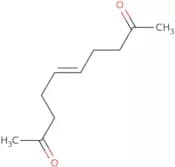
Producto descatalogadoE-Dec-5-ene-2,9-dione
CAS:E-Dec-5-ene-2,9-dione is a deodorant that is used in combination with other deodorants or antiperspirants to reduce body odor. E-Dec-5-ene-2,9-dione is a synthetic product that does not contain aluminum salts. It works by blocking the sweat glands and preventing perspiration.
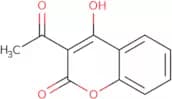
Fórmula:C10H16O2Pureza:Min. 95%Forma y color:PowderPeso molecular:168.23 g/mol3-Acetyl-4-hydroxy-2H-chromen-2-one
CAS:3-Acetyl-4-hydroxy-2H-chromen-2-one is a potent inhibitor of human lipoxygenase and soybean lipoxygenase. This compound has been shown to inhibit the growth of cancer cells in culture, with IC50 values ranging from 1.5 to 8.0 μM. 3-Acetyl-4-hydroxy-2H-chromen-2-one inhibits the activation of hydrogen peroxide by inhibiting the activity of enzymes such as amine oxidases and coumarin hydroxylases that are involved in the production of hydrogen peroxide. 3-(3'-acetylphenyl)acrylic acid (3APAA), which is structurally related to 3-(3'-acetylphenethyl)acrylic acid, was identified as an additional metabolite for this compound. The molecular docking analysis of these two compounds revealed that they have similar binding modes with regard to their binding affinity for the enzyme active
Fórmula:C11H8O4Pureza:Min. 95%Forma y color:PowderPeso molecular:204.18 g/molRef: 3D-FA121787
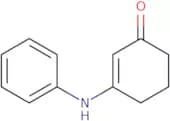
Producto descatalogado3-Anilinocyclohex-2-en-1-one
CAS:3-Anilinocyclohex-2-en-1-one is an organic compound that has been modified with groups of atoms to give it a particular function. The functional theory states that the molecule will have a different shape, depending on the modifications made to it. 3-Anilinocyclohex-2-en-1-one is a fluorescing molecule with a low energy transfer rate. It is macroscopic and photophysical in nature, which means that it can be analysed by techniques such as polarimetry and FTIR spectroscopy. The modification of 3-Anilinocyclohex-2-en-1-one alters its frequency and may also stabilize the molecule.
Fórmula:C12H13NOPureza:Min. 95%Forma y color:PowderPeso molecular:187.24 g/molRef: 3D-FA169191
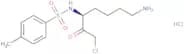
Producto descatalogadoN-alpha-Tosyl-L-lysine chloromethyl ketone HCl
CAS:N-alpha-Tosyl-L-lysine chloromethyl ketone HCl is a chemical compound that binds to DNA. It has been shown to induce neuronal death and caspase-independent cell death in HL60 cells. The compound can also be used as a biochemical probe to study the apoptosis pathway. N-alpha-Tosyl-L-lysine chloromethyl ketone HCl is currently being investigated as an antiinflammatory agent for chronic coughs due to its ability to inhibit proteases.Fórmula:C14H21ClN2O3S·HClPureza:Min. 95%Forma y color:PowderPeso molecular:369.31 g/molRef: 3D-FT28926
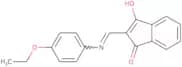
Producto descatalogado2-(((4-ethoxyphenyl)amino)methylene)indane-1,3-dione
CAS:Please enquire for more information about 2-(((4-ethoxyphenyl)amino)methylene)indane-1,3-dione including the price, delivery time and more detailed product information at the technical inquiry form on this page
Pureza:Min. 95%Ref: 3D-FE169667
Producto descatalogado1,2,3,4-Tetrahydrophenanthren-4-one
CAS:1,2,3,4-Tetrahydrophenanthren-4-one is a synthetic quinone that is used as an intermediate in the Diels–Alder reaction. The compound has been shown to react with benzyne and amine molecules to form semicarbazones. 1,2,3,4-Tetrahydrophenanthren-4-one can be used as a reactive probe for studying intramolecular interactions. It can also be used to synthesize polycyclic compounds such as tetrafluoroborates. 1,2,3,4-Tetrahydrophenanthren-4-one can also serve as a reagent for the synthesis of frameworks such as zeolites.
Fórmula:C14H12OPureza:Min. 95%Forma y color:PowderPeso molecular:196.24 g/molRef: 3D-FT28131
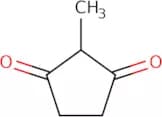
Producto descatalogado2-Methylcyclopentane-1,3-dione
CAS:2-Methylcyclopentane-1,3-dione is an organic compound that contains a benzofuran derivative. The skeleton of this molecule can be derived from the hydrogenation of cyclopentanol. 2-Methylcyclopentane-1,3-dione is a reaction intermediate in the synthesis of cardiotonic steroids. It reacts with metal chlorides to form methylene chloride and hydrogen chloride. 2-Methylcyclopentane-1,3-dione is also used as a reagent for borohydride reduction and as an enolate in the aldol cyclization reaction. This molecule also has acidic properties due to its carbonyl group and can form hydrogen bonds with other molecules, such as β-unsaturated ketones.
Fórmula:C6H8O2Pureza:Min. 98%Forma y color:PowderPeso molecular:112.13 g/molRef: 3D-FM07825
Producto descatalogadoBenzo[1,2-b:4,5-b']dithiophene-4,8-dione
CAS:Benzo[1,2-b:4,5-b']dithiophene-4,8-dione is a heterocyclic compound that has been studied for its potential use in electronic devices. The molecule is composed of two aromatic rings and one heterocyclic ring. It is an important building block in the synthesis of many five-membered heterocycles such as benzothiophene and benzofuran. Benzo[1,2-b:4,5-b']dithiophene-4,8-dione can be used as a photoactive material for solar cells due to its ability to absorb light from the visible spectrum and emit it in the near infrared region.
Fórmula:C10H4O2S2Pureza:Min. 95%Forma y color:White PowderPeso molecular:220.27 g/molRef: 3D-FB42139
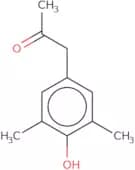
Producto descatalogado(3,5-Dimethyl-4-hydroxyphenyl)acetone
CAS:(3,5-Dimethyl-4-hydroxyphenyl)acetone is a compound with versatile uses and applications. It is a reagent for the synthesis of organic compounds, such as pharmaceuticals. This product can also be used to synthesize new compounds that are difficult to prepare by other methods. The compound is a useful building block in organic chemistry and has been shown to be a good ligand for palladium catalysts.
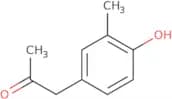
Fórmula:C11H14O2Pureza:Min. 95%Peso molecular:178.23 g/mol(4-Hydroxy-3-methylphenyl)acetone
CAS:(4-Hydroxy-3-methylphenyl)acetone is a high quality, reagent that has been used in the synthesis of complex compounds. It is also a useful intermediate for the production of fine chemicals, useful scaffolds, and useful building blocks. The compound can be used as a speciality chemical in research and is versatile as a building block for reactions. (4-Hydroxy-3-methylphenyl)acetone has been shown to react with various organic compounds, such as alcohols, amines, and carboxylic acids.
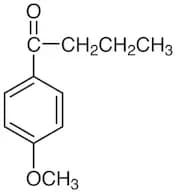
Fórmula:C10H12O2Pureza:Min. 98 Area-%Forma y color:PowderPeso molecular:164.2 g/mol4'-Methoxybutyrophenone
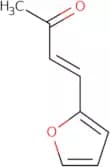
CAS:Fórmula:C11H14O2Pureza:>98.0%(GC)Forma y color:White or Colorless to Light yellow powder to lump to clear liquidPeso molecular:178.232-Furfurylideneacetone
CAS:2-Furfurylideneacetone is a reactive chemical that reacts with furfuryl acetate to form cross-links. It is used as a cross-linking agent in the production of polyvinyl alcohol, polyvinyl chloride, and polyurethane elastomers. This compound has been shown to be genotoxic in the Ames test and may have mutagenic potential due to its ability to induce DNA strand breaks in bacterial cells. 2-Furfurylideneacetone is produced by reacting an unsaturated ketone with an aldehyde or other electrophiles. The reaction mechanism for this process has been determined using a flow system and viscosity measurements. The activation energy for this reaction was found to be approximately
30 kJ/mol at 25 °C.Fórmula:C8H8O2Pureza:Min. 95%Peso molecular:136.15 g/molRef: 3D-FF01125
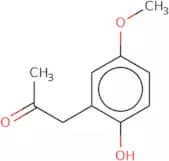
Producto descatalogado(2-Hydroxy-5-methoxyphenyl)acetone
CAS:(2-Hydroxy-5-methoxyphenyl)acetone is a fine chemical that belongs to the group of complex compounds. It can be used as an intermediate for research chemicals, as well as a useful scaffold or building block. This compound can be converted into other useful compounds through reactions with alcohols, amines, or ketones. (2-Hydroxy-5-methoxyphenyl)acetone is also used in the synthesis of speciality chemicals and reaction components for pharmaceuticals.
Fórmula:C10H12O3Pureza:Min. 95%Peso molecular:180.2 g/mol3-[2-(1,3-Dioxolan-2-yl)ethyl]-7,8-dimethoxy-1,3,4,5-tetrahydro-2H-3-benzazepin-2-one
CAS:Please enquire for more information about 3-[2-(1,3-Dioxolan-2-yl)ethyl]-7,8-dimethoxy-1,3,4,5-tetrahydro-2H-3-benzazepin-2-one including the price, delivery time and more detailed product information at the technical inquiry form on this page
Fórmula:C17H23NO5Pureza:Min. 95%Forma y color:PowderPeso molecular:321.37 g/molRef: 3D-FD149999
Producto descatalogado1-Phenyl-3-oxabicyclo[3.1.0]hexan-2-one
CAS:1-Phenyl-3-oxabicyclo[3.1.0]hexan-2-one (1POX) is a monomer that belongs to the class of cyclopropane compounds and can be used in the synthesis of polymers. It has been shown to react with benzene, irradiation, monoxide, oxiranyl, acetonitrile and trimeric dyes to form reactive intermediates such as ketones and carboxylic acids. These intermediates can undergo photolysis to produce products such as ketones and carboxylic acids. The wavelength of the light used for photolysis can influence the product formation. 1POX is also a substrate for cyclopropane ring formation reactions, which are known for their high reactivity due to the stability of this ring system. The carbonyl group on 1POX is electron withdrawing and stabilizes the planar geometry of 1POX.
Fórmula:C11H10O2Pureza:Min. 95%Forma y color:PowderPeso molecular:174.2 g/molRef: 3D-FP16068
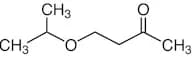
Producto descatalogado4-Isopropoxy-2-butanone
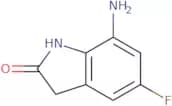
CAS:Fórmula:C7H14O2Pureza:>98.0%(GC)Forma y color:Colorless to Almost colorless clear liquidPeso molecular:130.197-Amino-5-fluoro-1,3-dihydroindol-2-one
CAS:7-Amino-5-fluoro-1,3-dihydroindol-2-one is a compound that can be used as a research chemical. It has been shown to react with various other compounds in the laboratory and may have potential uses as a versatile building block or useful intermediate. 7-Amino-5-fluoro-1,3-dihydroindol-2-one is also known for its high quality and speciality chemical status.
Fórmula:C8H7FN2OPureza:Min. 95%Forma y color:PowderPeso molecular:166.15 g/molRef: 3D-FA104789
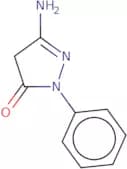
Producto descatalogado1-Phenyl-3-aminopyrazol-5-one
CAS:1-Phenyl-3-aminopyrazol-5-one is a solvent that can be used in elemental analysis. It has a molecular weight of 137.12 and is soluble in water, methanol, ethanol, acetone, ether, benzene and chloroform. 1-Phenyl-3-aminopyrazol-5-one has been shown to react with amines and form tautomers with different chemical properties. The spectral data for this compound are presented as the absorption spectra of substituted 1-phenyl-3-aminopyrazol-5-ones with acetyl groups at C2 and C4 (1), the nuclear magnetic resonance spectrum of 1-(dimethylamino)ethyl 3-[2-(N,N'-dimethylamino)ethyl]pyrazole (2), the NMR spectrum of 2-(dimethylamino)ethyl 3-[2-(N,N'-dimethylamino)ethyl]Fórmula:C9H9N3OPureza:Min. 95%Peso molecular:175.19 g/molRef: 3D-FP67038
Producto descatalogado



![6-Fluoro-5-Methyl-2-[(5-Methyl-1H-Imidazol-4-Yl)Methyl]-2,3,4,5-Tetrahydro-1H-Pyrido[4,3-b]Indol-1…](/_next/image/?url=https%3A%2Fstatic.cymitquimica.com%2Fproducts%2F3D%2Fthumb-webp%2FFF102588.webp&w=3840&q=75)
![2-[[(4-Acetylphenyl)amino]methylene]-5,5-dimethyl-1,3-cyclohexanedione](/_next/image/?url=https%3A%2Fstatic.cymitquimica.com%2Fproducts%2F3D%2Fthumb-webp%2FFA169010.webp&w=3840&q=75)
![3,4-diaza-5-(tert-butyl)-2-hydroxy-3-((4-methylphenyl)sulfonyl)tricyclo[6.4.0.0<2,6>]dodeca-1(8),4…](/_next/image/?url=https%3A%2Fstatic.cymitquimica.com%2Fproducts%2F3D%2Fthumb-webp%2FFD169677.webp&w=3840&q=75)

![(1S,4S)-1,7,7-Trimethyl-3-(Trifluoroacetyl)Bicyclo[2.2.1]Heptan-2-One](/_next/image/?url=https%3A%2Fstatic.cymitquimica.com%2Fproducts%2F3D%2Fthumb-webp%2FFT98786.webp&w=3840&q=75)

![7-Chloro-2H-pyrido[3,2-B]-1,4-oxazin-3(4H)-one](/_next/image/?url=https%3A%2Fstatic.cymitquimica.com%2Fproducts%2F3D%2Fthumb-webp%2FFC66462.webp&w=3840&q=75)

![Benzo[1,2-b:4,5-b']dithiophene-4,8-dione](/_next/image/?url=https%3A%2Fstatic.cymitquimica.com%2Fproducts%2F3D%2Fthumb-webp%2FFB42139.webp&w=3840&q=75)

![3-[2-(1,3-Dioxolan-2-yl)ethyl]-7,8-dimethoxy-1,3,4,5-tetrahydro-2H-3-benzazepin-2-one](/_next/image/?url=https%3A%2Fstatic.cymitquimica.com%2Fproducts%2F3D%2Fthumb-webp%2FFD149999.webp&w=3840&q=75)
![1-Phenyl-3-oxabicyclo[3.1.0]hexan-2-one](/_next/image/?url=https%3A%2Fstatic.cymitquimica.com%2Fproducts%2F3D%2Fthumb-webp%2FFP16068.webp&w=3840&q=75)