Ácidos carboxílicos
Se han encontrado 12457 productos de "Ácidos carboxílicos"
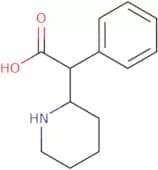
2-Phenyl-2-(2-piperidy)acetic acid
CAS:Producto controladoMethylphenidate is a psychostimulant drug used to treat attention deficit hyperactivity disorder (ADHD) and narcolepsy. It is a prodrug of the active compound, 2-phenyl-2-(2-piperidin)acetic acid (Ritalinic acid), which inhibits the reuptake of dopamine and norepinephrine into the presynaptic neuron. Methylphenidate can be detected by LC-MS/MS in wastewater, providing an analytical method for predicting the presence of this substance in wastewater treatment plants. This drug has minimal toxicity in model organisms and can be metabolized by methylation to form a glucuronide conjugate. Methylphenidate has been shown to increase locomotor activity when administered at low doses, but not at high doses. At high doses, it increases locomotor activity up to 3 hours after administration and decreases locomotor activity 1 hour after administration.
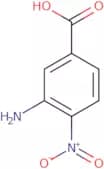
Fórmula:C13H17NO2Pureza:Min 98%Forma y color:White PowderPeso molecular:219.28 g/mol3-Amino-4-nitrobenzoic acid
CAS:3-Amino-4-nitrobenzoic acid is a synthetic compound, which has been shown to inhibit the activity of trypanothione reductase. This inhibition of the enzyme causes an increase in the level of intracellular trypanothione, which is then acetylated by ATP sulfurylase and converted to trypanothione. 3-Amino-4-nitrobenzoic acid is also a potent inhibitor of fxa, which is a coagulation factor necessary for blood clotting. The active site of 3-amino-4-nitrobenzoic acid contains two nitroarenes that are responsible for its antithrombotic properties.
Fórmula:C7H6N2O4Pureza:Min. 95%Forma y color:PowderPeso molecular:182.13 g/molRef: 3D-FA05743
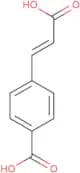
Producto descatalogado4-Carboxycinnamic acid
CAS:4-Carboxycinnamic acid is an organic compound that is a derivative of cinnamic acid. It is a colorless solid that is soluble in organic solvents and has high resistance to environmental pollution. 4-Carboxycinnamic acid has been shown to have photocatalytic activity in the presence of UV radiation, with a quantum yield of 0.2% at 365 nm. It also exhibits fluorescence properties, but these are not as strong as the parent compound, cinnamic acid. 4-Carboxycinnamic acid has functional groups that can be activated by hydrogen bonding interactions and uptake into cells. This compound also reacts with sulfonic acids to form sulfinic acids and hydrochloric acid to form chlorocinnamic acids. Chronic pulmonary effects were observed in animals after inhalation of this substance for 30 minutes per day for 10 days. X-ray crystal structures have been determined for 4-carboxycinnamic acid and its
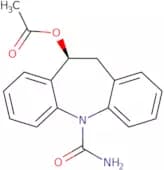
Fórmula:C10H8O4Pureza:Min. 95%Forma y color:PowderPeso molecular:192.17 g/molEslicarbazepine acetate
CAS:Eslicarbazepine acetate is an anticonvulsant drug that has been shown to be effective in reducing the frequency of seizures. It is a prodrug and is metabolized by esterases to form the active form, eslicarbazepin acetate. Eslicarbazepine acetate inhibits glutamate release by acting on the glutamate transporter, which prevents depolarization of the mitochondrial membrane potential, leading to inhibition of epileptic activity. Eslicarbazepine acetate also decreases brain levels of GABA and increases levels of polyamines such as spermidine and spermine, which are neuroprotective. There are some reports of hepatic impairment when eslicarbazepine acetate is used with other drugs that are metabolized through this organ (e.g., valproic acid).
Eslicarbazepine acetate can cause chemical stability issues when exposed to light or air due to oxidation reactions. It may also reactFórmula:C17H16N2O3Pureza:Min. 95%Forma y color:PowderPeso molecular:296.32 g/molRef: 3D-FE22807
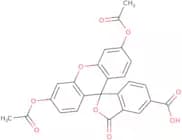
Producto descatalogado5-Carboxyfluorescein diacetate
CAS:5-Carboxyfluorescein diacetate is a reactive dye that can be used as a model system to study the effects of reactive species on biological molecules. It has been shown to inhibit mitochondrial membrane potential and activate detoxification enzymes in rats. 5-Carboxyfluorescein diacetate also induces apoptosis in human leukemia cells and inhibits the proliferation of human breast cancer cells. The effect of 5-carboxyfluorescein diacetate on collagen synthesis in a rat wound healing model has been investigated, with an increase in collagen found after treatment. This drug can also cause immunomodulatory effects by inhibiting macrophage activity and increasing T lymphocytes.
Fórmula:C25H16O9Pureza:Min. 95 Area-%Forma y color:White PowderPeso molecular:460.39 g/molRef: 3D-FC19776
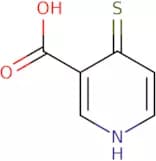
Producto descatalogado4-Mercaptonicotinic acid
CAS:Please enquire for more information about 4-Mercaptonicotinic acid including the price, delivery time and more detailed product information at the technical inquiry form on this page
Fórmula:C6H5NO2SPureza:Min. 95%Forma y color:PowderPeso molecular:155.18 g/molRef: 3D-FM11944
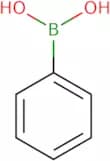
Producto descatalogadoPhenylboronic acid
CAS:Phenylboronic acid is a natural compound that has been shown to inhibit the growth of squamous carcinoma cells. The optical sensor can be used to measure the amount of phenylboronic acid in a solution. The sensor is made from a thin film of colloidal gold, which changes color in response to phenylboronic acid. This method of detection is not as accurate as other methods and can only be used with low concentrations. Phenylboronic acid has been shown to have anti-inflammatory properties, which may be due to its ability to inhibit toll-like receptor 4 and toll-like receptor 6 signaling pathways.
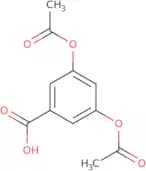
Fórmula:C6H7BO2Pureza:Min. 95%Forma y color:White PowderPeso molecular:121.93 g/mol3,5-Diacetoxybenzoic acid
CAS:3,5-Diacetoxybenzoic Acid is a monomer that belongs to the group of amides. It has been shown to have an inhibitory effect on the cross-linking reaction of amide bonds with UV irradiation. This monomer copolymerizes with acrylic acid and acrylamide to form stable emulsions with good surface properties. 3,5-Diacetoxybenzoic Acid is used as a co-monomer for trifunctional chloroformates in order to synthesize polymers with diameters of less than 100 nm. The polymerization temperature and morphology are dependent on the concentration of 3,5-Diacetoxybenzoic Acid. Matrix-assisted laser desorption/ionization (MALDI) has been used to characterize the polymerized 3,5-Diacetoxybenzoic Acid.
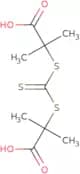
Fórmula:C11H10O6Pureza:Min. 95%Peso molecular:238.19 g/molS,S'-Bis(a,a'-dimethyl-a''-acetic acid)trithiocarbonate
CAS:Bis(trithiocarbonate)s are a group of compounds that are used as reagents, intermediates and building blocks in organic synthesis. They are also used for the preparation of certain pharmaceuticals. Bis(trithiocarbonate)s can be used as a versatile building block for chemical synthesis. It is also an intermediate in the synthesis of various pharmaceuticals, including but not limited to piroxicam and penicillin.
Fórmula:C9H14O4S3Pureza:Min. 95 Area-%Forma y color:Yellow PowderPeso molecular:282.4 g/molRef: 3D-FS146439
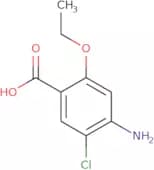
Producto descatalogado4-Amino-5-chloro-2-ethoxybenzoic acid
CAS:4-Amino-5-chloro-2-ethoxybenzoic acid is a phenoxy compound that is synthesized in the laboratory. The chemical structure of this compound has been studied using high performance liquid chromatography and it was found to have pharmacokinetic properties that are consistent with those of other drugs in its class. This drug is being developed as an anti-depressant, targeting the 5HT4 receptor. The bioactive metabolite of 4-amino-5-chloro-2-ethoxybenzoic acid is 4-(4′ hydroxybutyl)phenol, which has been shown to be a potent inhibitor of phosphodiesterase activity.
Fórmula:C9H10ClNO3Pureza:Min. 95%Forma y color:White Off-White PowderPeso molecular:215.63 g/molRef: 3D-FA71234
Producto descatalogado(Des-Gly10,D-Tyr5,D-Trp6,Pro-NHEt 9)-LHRH trifluoroacetate salt
CAS:Please enquire for more information about (Des-Gly10,D-Tyr5,D-Trp6,Pro-NHEt 9)-LHRH trifluoroacetate salt including the price, delivery time and more detailed product information at the technical inquiry form on this page
Fórmula:C64H83N17O12Pureza:Min. 95%Forma y color:PowderPeso molecular:1,282.45 g/molRef: 3D-FD109428
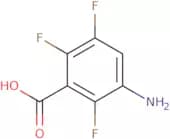
Producto descatalogado3-Amino-2,5,6-trifluorobenzoic acid
CAS:3-Amino-2,5,6-trifluorobenzoic acid is a pharmaceutical agent that can be used in the synthesis of dyestuffs and as a matrix for laser desorption/ionization (LDI) mass spectrometry. 3-Amino-2,5,6-trifluorobenzoic acid has been shown to form crystals that are insoluble in water or organic solvents. The crystal morphology was determined by using XRD and FTIR. 3-Amino-2,5,6-trifluorobenzoic acid also has high concentrations of impurities such as 2,4,6-trichloroaniline and 2-(3,4 dichlorophenyl) ethyl amine.
Fórmula:C7H4F3NO2Pureza:Min. 95%Forma y color:PowderPeso molecular:191.11 g/molRef: 3D-FA67405
Producto descatalogadoLipoic acid, reduced
CAS:Lipoic acid, reduced (LAR) is a naturally occurring compound that is found in many living organisms. It has been used to study the mechanisms of DNA binding and protein oxidation. Lipoic acid, reduced has been shown to have anti-inflammatory properties by inhibiting the production of prostaglandins. The rate constant for LAR is 10-3 M-1s-1 at 25°C and pH 7.0, which can be measured using a polymer composition method. This compound also has an optical sensor and chemiluminescence method that are able to measure the rate constant and determine its concentration.
Fórmula:C8H16O2S2Pureza:Min. 95%Forma y color:PowderPeso molecular:208.34 g/molRef: 3D-FL29290
Producto descatalogado2,2-Difluoro-2-[1,1,2,2-tetrafluoro-2-(trifluoromethoxy)ethoxy]acetic acid
CAS:2,2-Difluoro-2-[1,1,2,2-tetrafluoro-2-(trifluoromethoxy)ethoxy]-acetic acid is a fluorinated compound that can be used as an adsorbent for organic compounds. It is a highly selective material and has high adsorption capacity. The adsorption equilibrium data for 2,2-difluoro-2-[1,1,2,2-tetrafluoro-2-(trifluoromethoxy)ethoxy]-acetic acid are given in the table below. Table: Adsorption Equilibrium Data Temperature (°C) Pressure (kPa) Vapor Pressure (Pa) Equilibrium Vapor Pressure (Pa) Adsorption Capacity (%) 0 0.001 0.0008 0.0012 100
Fórmula:C5HF9O4Pureza:Min. 95%Forma y color:Clear LiquidPeso molecular:296.04 g/molRef: 3D-FD99821
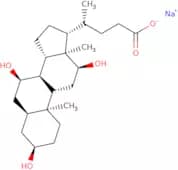
Producto descatalogadoCholic acid sodium salt
CAS:Producto controladoCholic acid sodium salt is a bile acid sodium salt, which is primarily derived from the bile of mammals. It functions as a surfactant that facilitates the emulsification of fats and lipids, enhancing their subsequent absorption and digestion. This compound plays a critical role in the synthesis and regulation of cholesterol in the body.
Fórmula:C24H39NaO5Pureza:Min. 95%Forma y color:PowderPeso molecular:430.55 g/molRef: 3D-FC14775
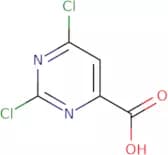
Producto descatalogado2,6-Dichloropyrimidine-4-carboxylic acid
CAS:2,6-Dichloropyrimidine-4-carboxylic acid is a pyrimidine that can be used as a starting material for the synthesis of other compounds. It is an intermediate in the manufacture of anilines and pyrimidines. 2,6-Dichloropyrimidine-4-carboxylic acid is also used in the production of dyes and agrochemicals.Fórmula:C5H2Cl2N2O2Pureza:Min. 95%Forma y color:White PowderPeso molecular:192.99 g/molRef: 3D-FD147587
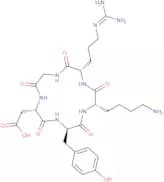
Producto descatalogadoCyclo(-Arg-Gly-Asp-D-Tyr-Lys) trifluoroacetate salt
CAS:Cyclo(-Arg-Gly-Asp-D-Tyr-Lys) trifluoroacetate salt is a reagent that is used in organic synthesis as a building block to create complex compounds. It is also useful for research purposes, as it can be used to produce high quality products. Cyclo(-Arg-Gly-Asp-D-Tyr-Lys) trifluoroacetate salt is a chemical with CAS No. 217099-14-4 and has the chemical formula C17H21N3O2F3.Fórmula:C27H41N9O8Pureza:Min. 95%Forma y color:White SolidPeso molecular:619.67 g/molRef: 3D-FC110223
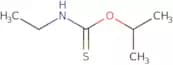
Producto descatalogadoO-Isopropyl ethylthiocarbamate
CAS:O-Isopropyl ethylthiocarbamate (IPET) is a reactive oxygen species that is used as a substrate film in electrophotographic printing. IPET is also used to inhibit the growth of cancer cells, which may be due to its ability to inhibit the activity of lp-pla2. The target cell for IPET is the receptor subtype P2X7 and it has been shown to be synergistic with sodium sulfide and polarizers. IPET binds to divalent hydrocarbons that are found in pyrite, which can cause an increase in oxidative stress and apoptosis by activating p38 mitogen-activated protein kinase. This chemical has been shown to have anti-inflammatory effects.
Fórmula:C6H13NOSPureza:Min. 95%Forma y color:Yellow To Dark Brown LiquidPeso molecular:147.24 g/molRef: 3D-FI166199
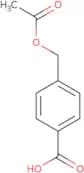
Producto descatalogado4-Acetoxymethylbenzoic acid
CAS:4-Acetoxymethylbenzoic acid is a chemical compound with the formula CH3CO2C6H4O2. It is a white solid that reacts with butyric acid to form 4-acetoxybutanoic acid. The reaction may be carried out in a sealed tube at room temperature, and the product precipitates as the reaction proceeds. This chemical can also be used in the synthesis of polystyrene through the nitration process. Nitrate, butanoic acid, terephthalic acid, and solvents are some of the reactants required for this process.
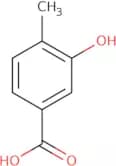
The following is an example of one possible product description:Fórmula:C10H10O4Pureza:Min. 95%Forma y color:White/Off-White SolidPeso molecular:194.18 g/mol3-Hydroxy-4-methylbenzoic acid
CAS:3-Hydroxy-4-methylbenzoic acid is a cardiotonic glycoside that has been used in the treatment of cardiac arrhythmia. It has been shown to inhibit the enzyme persulfate, which is involved in the activation of hydrogen peroxide and may be responsible for the therapeutic effect of 3-hydroxy-4-methylbenzoic acid. The inhibition of persulfate by 3-hydroxy-4-methylbenzoic acid may be due to an intramolecular hydrogen bond that is formed between the sulfonate group on 3-hydroxy-4 methyl benzoic acid and the hydroxyl group on 4-tert butylbenzoic acid. Animal studies have shown that this drug inhibits sodium urate crystal formation and excretion in urine samples. This drug also inhibits renal ammoniagenesis, which is a metabolic pathway where ammonia is converted to urea, thereby lowering blood levels of ammonia. The metabolism of
Fórmula:C8H8O3Pureza:Min. 95%Forma y color:PowderPeso molecular:152.15 g/molRef: 3D-FH14549
Producto descatalogado



![2,2-Difluoro-2-[1,1,2,2-tetrafluoro-2-(trifluoromethoxy)ethoxy]acetic acid](/_next/image/?url=https%3A%2Fstatic.cymitquimica.com%2Fproducts%2F3D%2Fthumb-webp%2FFD99821.webp&w=3840&q=75)