Ácidos carboxílicos
Se han encontrado 12457 productos de "Ácidos carboxílicos"
11-Azido-3,6,9-trioxaundecanoic acid
CAS:11-Azido-3,6,9-trioxaundecanoic acid is a glycan that is expressed by cancer cells. Cancer cells are able to produce 11-azido-3,6,9-trioxaundecanoic acid in response to a variety of stimuli. The compound has been shown to be an immunogenic antigen for the generation of antibodies against cancer cells. Lectins can be used to detect glycosylated proteins and glycoconjugates on cell surfaces and can also be used to immobilize them. Immobilized lectins have been used as an alternative method of detecting glycolipids and glycoconjugates on cell surfaces with high sensitivity and specificity. This glycan has been conjugated with cetuximab to target colon cancer cells. Cetuximab is a monoclonal antibody that binds specifically to the epidermal growth factor receptor (EGFR) found on the surface of many colorectal
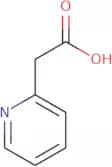
Fórmula:C8H15N3O5Pureza:(¹H-Nmr) Min. 95 Area-%Forma y color:Clear LiquidPeso molecular:233.22 g/mol2-Pyridylacetic acid
CAS:2-Pyridylacetic acid is an organic compound that is found in the urine of patients with inflammatory bowel disease. It is associated with a high risk of colorectal cancer and has been shown to inhibit tumor cell proliferation in a number of studies. 2-Pyridylacetic acid inhibits the reaction of picolinic acid with lactic acid, which is a mechanism for the synthesis of nicotinamide adenine dinucleotide (NAD). This compound also has inhibitory properties against the activity of phosphofructokinase. 2-Pyridylacetic acid can be quantified using liquid chromatography tandem mass spectrometry (LC-MS/MS) methods that are based on chemical ionization or electron impact ionization. It can also be detected by gas chromatography mass spectrometry. The sample preparation involves hydrochloric acid extraction followed by concentration and derivatization.
Fórmula:C7H7NO2Pureza:Min. 95 Area-%Forma y color:White PowderPeso molecular:137.14 g/molRef: 3D-FP45243
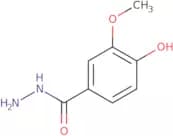
Producto descatalogadoVanillic acid hydrazide
CAS:Vanillic acid hydrazide is a multinuclear compound with condensation products. It has been shown to have antibacterial, anticancer and skeleton-related properties. Vanillic acid hydrazide is able to bind to the 4-hydroxybenzoic acid and introduce it into the cell in order to inhibit the synthesis of fatty acids. This compound also inhibits the growth of cancer cells by preventing their proliferation and proliferation by binding to DNA. Vanillic acid hydrazide may also bind to fatty acids on cell membranes, which would lead to a decrease in membrane fluidity and increase in membrane permeability, leading to cell death.
Fórmula:C8H10N2O3Pureza:Min. 95%Forma y color:PowderPeso molecular:182.18 g/molRef: 3D-FV67106
Producto descatalogado2-[4-(4-Chloro-a-phenylbenzyl)-1-piperazinyl]-ethoxyacetic acid hydrochloride
CAS:2-[4-(4-Chloro-a-phenylbenzyl)-1-piperazinyl]-ethoxyacetic acid hydrochloride is a chemical compound that has been used to investigate the possible neuroprotective effects of cetirizine, an antihistamine. This drug was developed as a prodrug of cetirizine, which is converted in vivo to its active form. The main mechanism of action for this drug is inhibition of histamine release from mast cells and basophils by blocking H1 receptors. 2-[4-(4-Chloro-a-phenylbenzyl)-1-piperazinyl]-ethoxyacetic acid hydrochloride has also been shown to have beneficial effects on allergic symptoms and bowel disease in experimental models and clinical properties.Fórmula:C21H25ClN2O3·HClPureza:Min. 95%Forma y color:PowderPeso molecular:425.35 g/molRef: 3D-FC33467
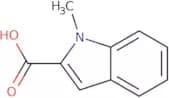
Producto descatalogado1-Methylindole-2-Carboxylic Acid
CAS:1-Methylindole-2-Carboxylic Acid is a chemical that belongs to the group of phenylacetic acid compounds. It has been shown to inhibit lymphocyte activation and t-cell proliferation in vitro, which may be due to its ability to interfere with the production of interleukin. 1-Methylindole-2-Carboxylic Acid also has an antitumor effect on animals and can reduce the tumor burden by inhibiting DNA synthesis, protein synthesis, and mineralization. The molecular modeling studies have shown that 1-Methylindole-2-Carboxylic Acid binds in the active site of protein kinase C as a competitive inhibitor and prevents ATP from binding to the enzyme.
Fórmula:C10H9NO2Pureza:Min. 95%Forma y color:PowderPeso molecular:175.18 g/mol2-Chloro-5-(4-chloro-5-difluoromethoxy-1-methylpyrazol-3-yl)-4-fluorophenoxyacetic acid monohydrate
CAS:2-Chloro-5-(4-chloro-5-difluoromethoxy-1-methylpyrazol-3-yl)-4-fluorophenoxyacetic acid monohydrate (2,4,5P) is a phenoxy herbicide that has been shown to be an effective broadleaf and grass weed control agent. 2,4,5P is a granule formulation that can be applied by helicopter or ground equipment. It has synergistic effects with glyphosate when applied together to soybean plants and can be used in combination with other herbicides for more effective weed control.
Fórmula:C13H9Cl2F3N2O·H2OPureza:Min. 95%Forma y color:White PowderPeso molecular:355.14 g/molRef: 3D-FC156954
Producto descatalogado4-(Trifluoromethylthio)benzoic acid
CAS:4-(Trifluoromethylthio)benzoic acid is a versatile building block, useful intermediate, and reagent for research and development. 4-(Trifluoromethylthio)benzoic acid has been shown to be a high quality chemical with high purity. The CAS number for 4-(Trifluoromethylthio)benzoic acid is 330-17-6.
Fórmula:C8H5F3O2SPureza:Min. 98 Area-%Forma y color:PowderPeso molecular:222.19 g/molRef: 3D-FT38830
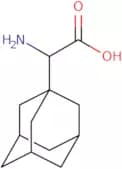
Producto descatalogado1-Adamantyl(amino)acetic acid hydrochloride
CAS:1-Adamantyl(amino)acetic acid hydrochloride is an organic compound that is used as a versatile building block and intermediate in the synthesis of complex compounds. It reacts with nitric acid to form 1-Adamantyl nitrate, which is a useful reagent for organic synthesis. This compound has CAS number 16091-96-6 and can be found on the list of speciality chemicals. It is a fine chemical with high quality and is useful for research purposes.
Fórmula:C12H19NO2·HClPureza:Min. 95%Forma y color:PowderPeso molecular:245.75 g/molRef: 3D-FA118142
Producto descatalogadoNb[n-N-butyl-N-acetyl]aminopropionic acid ethyl ester
CAS:Nb[n-N-butyl-N-acetyl]aminopropionic acid ethyl ester is a nitro compound that can be used as a repellent. It is often used in pharmaceutical preparations, such as topical and oral medications. The Nb[n-N-butyl-N-acetyl]aminopropionic acid ethyl ester molecule has nitrogen atoms with two hydrogens each, which are separated by an oxygen atom. This makes it a polar molecule because the hydrogen atoms are not on the same side of the molecule. The Nb[n-N-butyl-N-acetyl]aminopropionic acid ethyl ester also contains two carboxylic acids, which are fatty acids with one carbon atom and two hydrogens each. This makes it an organic compound that can be analyzed using gas chromatography or high performance liquid chromatography.
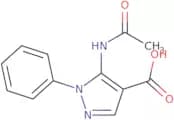
Fórmula:C11H21NO3Pureza:Min. 95%Forma y color:Clear LiquidPeso molecular:215.29 g/mol5-(Acetylamino)-1-phenyl-1H-pyrazole-4-carboxylic acid
CAS:5-(Acetylamino)-1-phenyl-1H-pyrazole-4-carboxylic acid is a useful building block for the synthesis of complex organic compounds. It is a versatile intermediate that can be used in the synthesis of pharmaceuticals, agrochemicals, and other fine chemicals. 5-(Acetylamino)-1-phenyl-1H-pyrazole-4-carboxylic acid can be used to produce high quality research chemicals and speciality chemicals. The CAS number for this compound is 51649-69-5.
Fórmula:C12H11N3O3Pureza:Min. 95%Forma y color:White to pale yellow solid.Peso molecular:245.23 g/molADA
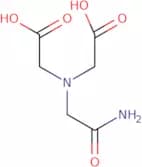
CAS:ADA, also known as N-(2-Acetamido)iminodiacetic acid, is an acetamido buffer that coordinates to metal ions. It has an optimal pH range of 6.0-7.2 and a pKa of 6.59.
Fórmula:C6H10N2O5Forma y color:White PowderPeso molecular:190.15 g/molRef: 3D-FA15758
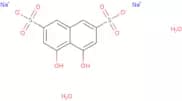
Producto descatalogadoChromotropic acid disodium salt dihydrate - ACS reagent
CAS:Chromotropic acid is a reactive compound that has been shown to be adsorbed on the surface of activated carbon. The adsorption mechanism and the kinetic constants for this reaction have been studied in detail. Chromotropic acid decomposes at high temperatures, releasing hydrogen chloride gas and water vapor. This chemical is also used in pharmaceutical preparations as an additive to inhibit oxidation reactions. It may also serve as a photoreceptor, reacting with tyramine hydrochloride and other compounds to produce a color change.Fórmula:C10H6O8S2Na2·2H2OForma y color:PowderPeso molecular:400.29 g/molRef: 3D-FC168034
Producto descatalogadoUndecenoic acid
CAS:Undecenoic acid is an antimicrobial agent that is used in the treatment of infectious diseases. This compound has been shown to have significant cytotoxicity against C. glabrata, a yeast that causes vaginal yeast infections, and also inhibits the growth of other human pathogens such as Listeria monocytogenes and Salmonella typhimurium. Undecenoic acid has a broad spectrum of activity against bacteria and fungi and is effective when used at low concentrations. It is not active against viruses or protozoa. The reaction mechanism for undecenoic acid is unknown but it may be due to its ability to react with water vapor in the air to form undecenal, which then reacts with malonic acid to form malonaldehyde. Undecenoic acid binds to proteins through hydrogen bonding and hydrophobic interactions, forming complexes that inhibit bacterial growth by interfering with DNA replication, protein synthesis, and enzyme activity.
Fórmula:C11H20O2Pureza:Min. 95%Forma y color:PowderPeso molecular:184.28 g/molRef: 3D-FU12136
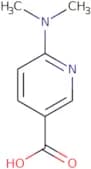
Producto descatalogado6-(Dimethylamino)nicotinic acid
CAS:6-(Dimethylamino)nicotinic acid is a fine chemical and research chemical that is useful as a building block for complex compounds. It is also used as a reagent in the synthesis of other chemicals, or as an intermediate or scaffold molecule in organic chemistry. This chemical has been shown to be useful in the synthesis of many drugs, including penicillin and erythromycin. 6-(Dimethylamino)nicotinic acid has CAS number 82846-28-4.
Fórmula:C8H10N2O2Pureza:Min. 95%Forma y color:White PowderPeso molecular:166.18 g/molRef: 3D-FD122894
Producto descatalogado6-Fluoroindole-3-acetic acid
CAS:6-Fluoroindole-3-acetic acid is a molecule that has been synthesized by the reaction of 6-fluoroindole with acetic anhydride. When mixed with acetonitrile, the fluorescence of 6-fluoroindole-3-acetic acid can be seen in the solution. The fluorescence intensity is proportional to the concentration of this molecule. 6-Fluoroindole-3-acetic acid is used as a template molecule for fluorescence labeling experiments. It interacts with hormones and can be used to identify their conformations and interactions. This compound has been shown to have anticancer properties in mice, and it may also be effective against cancer cells in humans. It has also been shown to inhibit the growth of pisum sativum (pea).
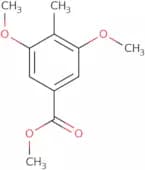
Fórmula:C10H8FNO2Pureza:Min. 95%Forma y color:PowderPeso molecular:193.17 g/mol3,5-Dimethoxy-4-methylbenzoic acid methyl ester
CAS:3,5-Dimethoxy-4-methylbenzoic acid methyl ester (DMMBME) is a synthetic compound that is used as an immunogen to generate antibodies against fungal proteins. DMMBME is specifically used to identify the presence of bryoria and australian fungi in plants. The chemical structure of DMMBME can be oxidized by depsidones, which leads to the production of reactive oxygen species that are believed to be responsible for the oxidative coupling of target proteins. This reaction can be catalyzed by a number of enzymes such as nidulin, which is found in plant roots.
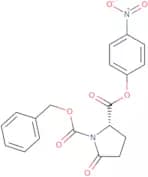
Fórmula:C11H14O4Pureza:Min. 95%Forma y color:PowderPeso molecular:210.23 g/molZ-L-pyroglutamic acid 4-nitrophenyl ester
CAS:Please enquire for more information about Z-L-pyroglutamic acid 4-nitrophenyl ester including the price, delivery time and more detailed product information at the technical inquiry form on this pageFórmula:C19H16N2O7Pureza:Min. 95%Peso molecular:384.34 g/molRef: 3D-FP47311
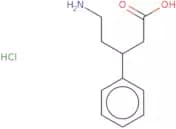
Producto descatalogado4-(Aminomethyl)-3-phenylbutyric acid hydrochloride
CAS:4-(Aminomethyl)-3-phenylbutyric acid hydrochloride is a reagent that can be used as a building block in synthesizing new chemical compounds. It is also an intermediate for the synthesis of 4-(aminomethyl)benzoic acid, which is useful for producing pharmaceuticals, pesticides, and other agrochemicals. 4-(Aminomethyl)-3-phenylbutyric acid hydrochloride has a CAS number of 860252-34-2 and can be used in reactions with a variety of reagents to produce fine chemicals, research chemicals, and speciality chemicals.
Fórmula:C11H16ClNO2Pureza:Min. 95%Peso molecular:229.7 g/mol1-(2-Chlorophenyl)-5-phenyl-1-H-pyrazole-3-carboxylic acid
CAS:Producto controlado1-(2-Chlorophenyl)-5-phenyl-1H-pyrazole-3-carboxylic acid is a high quality, reagent, complex compound that has been shown to be useful as an intermediate in the synthesis of a number of different compounds. It has been shown to be useful as a speciality chemical and research chemicals with versatile building blocks that can be used for the synthesis of other compounds. The CAS number for 1-(2-chlorophenyl)-5-phenyl-1H-pyrazole-3-carboxylic acid is 116572-69-1.
Fórmula:C16H11ClN2O2Pureza:Min. 95%Peso molecular:298.72 g/molRef: 3D-FC66208
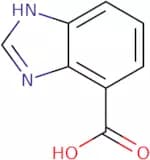
Producto descatalogadoBenzimidazole-4-carboxylic acid
CAS:Benzimidazole-4-carboxylic acid (BICA) is a chemical compound that belongs to the group of serotonergic drugs. It is used in the treatment of hypertension, although it has not been approved by the FDA for this indication. BICA binds to the 5-HT1A receptor and 5-HT4 receptor and acts as an agonist at these sites. It has also been shown to inhibit nitric oxide production. The antihypertensive effects of BICA are thought to be due to its ability to increase cardiac contractility, decrease peripheral vascular resistance, and improve renal function.
Fórmula:C8H6N2O2Pureza:Min. 95%Forma y color:White To Light Brown SolidPeso molecular:162.15 g/molRef: 3D-FB05897
Producto descatalogado


![2-[4-(4-Chloro-a-phenylbenzyl)-1-piperazinyl]-ethoxyacetic acid hydrochloride](/_next/image/?url=https%3A%2Fstatic.cymitquimica.com%2Fproducts%2F3D%2Fthumb-webp%2FFC33467.webp&w=3840&q=75)


![Nb[n-N-butyl-N-acetyl]aminopropionic acid ethyl ester](/_next/image/?url=https%3A%2Fstatic.cymitquimica.com%2Fproducts%2F3D%2Fthumb-webp%2FFN149896.webp&w=3840&q=75)