Ácidos carboxílicos
Se han encontrado 12457 productos de "Ácidos carboxílicos"
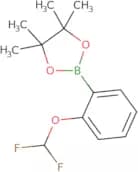
2-Difluoromethoxyphenylboronic acid pinacol ester
CAS:2-Difluoromethoxyphenylboronic acid pinacol ester is a high quality reagent that can be used as a useful intermediate, fine chemical, or speciality chemical in reactions. This compound is an important building block for synthesizing other chemicals and can also be used to make novel compounds with pharmaceutical properties. 2-Difluoromethoxyphenylboronic acid pinacol ester is versatile and can be used in many different reactions. It has been reported to react with various other molecules to form new scaffolds and building blocks for use in organic synthesis.
Fórmula:C13H17BF2O3Pureza:Min. 95%Forma y color:PowderPeso molecular:270.08 g/molRef: 3D-FD103354
Producto descatalogado3-Oxodecanoic acid ethyl ester
CAS:3-Oxodecanoic acid ethyl ester is a selenium compound that can be catalytic. It has been shown to produce lactones by the cyclization of an anthranilic acid. Selenium compounds are often used as research catalysts in organic synthesis, specifically for the elimination and cyclization reactions. 3-Oxodecanoic acid ethyl ester is also a natural product that can be found in various plants and animals. It has been found to have an active role in many natural products, such as benzyne and heterocycles.
Fórmula:C12H22O3Pureza:Min. 95%Forma y color:PowderPeso molecular:214.3 g/molRef: 3D-FO15283
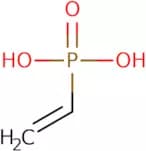
Producto descatalogadoVinylphosphonic acid
CAS:Vinylphosphonic acid is a white, crystalline solid that is soluble in water. It has a molecular weight of 114.08 and a melting point of 40-41°C. Vinylphosphonic acid can be used for the production of polyvinylidene fluoride (PVDF) films, as well as in acylation reactions to produce carboxylic acids. This compound has been shown to have a dispersive solid-phase extraction ability and binds to calcium ions. It also has electrochemical impedance spectroscopy properties, which are related to its acidic nature. Furthermore, vinylphosphonic acid has been found to form hydrogen bonds with human serum proteins and other polar molecules.
Fórmula:C2H5O3PPureza:Min. 95%Forma y color:Clear LiquidPeso molecular:108.03 g/molRef: 3D-FV59614
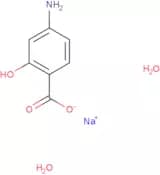
Producto descatalogado4-Aminosalicylic acid sodium salt dihydrate
CAS:4-Aminosalicylic acid sodium salt dihydrate is a molecule that has been shown to be useful for the diagnosis of viral, autoimmune, and cancerous diseases. It is a diagnostic agent that can be used in both the diagnosis and treatment of bowel disease. 4-Aminosalicylic acid sodium salt dihydrate can also be used to treat cavity formation in teeth. It binds to fatty acids in the target tissue, which leads to cell death by apoptosis. This drug has been shown to be effective against inflammatory bowel disease (IBD) as well as other types of bowel disease. This drug has been shown to have no adverse effects on healthy cells or tissues, but it may cause kidney toxicity when taken orally or injected intravenously.
Fórmula:C7H6NNaO3·2H2OPureza:Min. 95%Forma y color:White PowderPeso molecular:211.15 g/molRef: 3D-FA32507
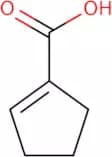
Producto descatalogado1-Cyclopentene-1-carboxylic acid
CAS:1-Cyclopentene-1-carboxylic acid is a natural product with antimicrobial and anti-inflammatory properties. It has been shown to inhibit the production of proinflammatory cytokines, such as tumor necrosis factor (TNF), and prostaglandins, which are important in the pathogenesis of inflammatory diseases. 1-Cyclopentene-1-carboxylic acid also inhibits the activity of Cox-2 and has been shown to have cancer regulatory activities. This compound binds to β-amino acid receptors and can be used as an oxidation catalyst for trifluoroacetic acid.
Fórmula:C6H8O2Pureza:Min. 95%Forma y color:White/Off-White SolidPeso molecular:112.13 g/molRef: 3D-FC70146
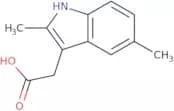
Producto descatalogado(2,5-Dimethyl-1H-indol-3-yl)acetic acid
CAS:(2,5-Dimethyl-1H-indol-3-yl)acetic acid is a fine chemical that is used as a building block in research chemicals and as a reagent in the synthesis of more complex compounds. It has been used as a versatile building block for the synthesis of numerous biologically active compounds and has also been shown to have antiviral activity. This compound is also useful as an intermediate or scaffold in the synthesis of pharmaceuticals. (2,5-Dimethyl-1H-indol-3-yl)acetic acid has CAS number 5435-40-5 and can be found on PubChem CID 6078.
Fórmula:C12H13NO2Pureza:Min. 95%Forma y color:Red PowderPeso molecular:203.24 g/molRef: 3D-FD118293
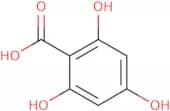
Producto descatalogado2,4,6-Trihydroxybenzoic acid
CAS:2,4,6-Trihydroxybenzoic acid is the sodium salt of 2,4,6-trihydroxybenzoic acid. It is a white to off-white crystalline powder with a molecular weight of 198.2 and a melting point of 197°C. The chemical formula for this compound is C7H5O5Na. This product has been shown to exhibit antimicrobial activity against Gram-positive and Gram-negative bacteria, including methicillin resistant Staphylococcus aureus (MRSA). In addition, 2,4,6-trihydroxybenzoic acid has been shown to inhibit the production of proteins that are necessary for bacterial growth.
Fórmula:C7H6O5Pureza:Min. 95%Forma y color:PowderPeso molecular:170.12 g/molRef: 3D-FT71833
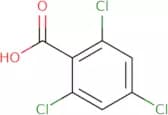
Producto descatalogado2,4,6-Trichlorobenzoic acid
CAS:2,4,6-Trichlorobenzoic acid is a trifluoroacetic acid that has been used as a solvent in vitro assays and as a carbon source for kinetic studies. It has also been shown to be an effective inhibitor of bacterial growth when tested with dextrans. 2,4,6-Trichlorobenzoic acid is toxic to cells in culture and can inhibit fatty acid synthesis by inhibiting the activity of fatty acid synthase.
2,4,6-Trichlorobenzoic acid has also been found to have anti-inflammatory properties and may be useful for the treatment of asthma.Fórmula:C7H3Cl3O2Pureza:Min. 95%Forma y color:PowderPeso molecular:225.46 g/molRef: 3D-FT45080
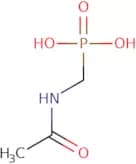
Producto descatalogadoN-Acetylaminomethylphosphonic acid
CAS:N-Acetylaminomethylphosphonic acid is a benzylcompound with an amide group on the nitrogen atom. It has three resonance structures, two of which are shown below.
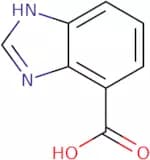
Fórmula:C3H8NO4PPureza:Min. 95%Forma y color:White PowderPeso molecular:153.07 g/molBenzimidazole-4-carboxylic acid
CAS:Benzimidazole-4-carboxylic acid (BICA) is a chemical compound that belongs to the group of serotonergic drugs. It is used in the treatment of hypertension, although it has not been approved by the FDA for this indication. BICA binds to the 5-HT1A receptor and 5-HT4 receptor and acts as an agonist at these sites. It has also been shown to inhibit nitric oxide production. The antihypertensive effects of BICA are thought to be due to its ability to increase cardiac contractility, decrease peripheral vascular resistance, and improve renal function.
Fórmula:C8H6N2O2Pureza:Min. 95%Forma y color:White To Light Brown SolidPeso molecular:162.15 g/molRef: 3D-FB05897
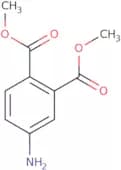
Producto descatalogado4-Aminophthalic acid dimethyl ester
CAS:4-Aminophthalic acid dimethyl ester is a product of the reaction between p-hydroxybenzoic acid and phosphorus pentachloride. It is used in analytical methods to determine the amount of 4-aminophthalic acid in an unknown sample. This product reacts with polyclonal antibodies against 4-aminophthalic acid, which are attached to a solid support, forming an antigen-antibody complex. The amount of 4-aminophthalic acid present can be determined by measuring the extent of the colour change that occurs when hydrochloric acid is added to the mixture.
Fórmula:C10H11NO4Pureza:Min. 95%Forma y color:SolidPeso molecular:209.2 g/molRef: 3D-FA66157
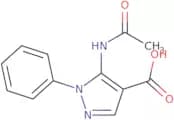
Producto descatalogado5-(Acetylamino)-1-phenyl-1H-pyrazole-4-carboxylic acid
CAS:5-(Acetylamino)-1-phenyl-1H-pyrazole-4-carboxylic acid is a useful building block for the synthesis of complex organic compounds. It is a versatile intermediate that can be used in the synthesis of pharmaceuticals, agrochemicals, and other fine chemicals. 5-(Acetylamino)-1-phenyl-1H-pyrazole-4-carboxylic acid can be used to produce high quality research chemicals and speciality chemicals. The CAS number for this compound is 51649-69-5.
Fórmula:C12H11N3O3Pureza:Min. 95%Forma y color:White to pale yellow solid.Peso molecular:245.23 g/molUndecenoic acid
CAS:Undecenoic acid is an antimicrobial agent that is used in the treatment of infectious diseases. This compound has been shown to have significant cytotoxicity against C. glabrata, a yeast that causes vaginal yeast infections, and also inhibits the growth of other human pathogens such as Listeria monocytogenes and Salmonella typhimurium. Undecenoic acid has a broad spectrum of activity against bacteria and fungi and is effective when used at low concentrations. It is not active against viruses or protozoa. The reaction mechanism for undecenoic acid is unknown but it may be due to its ability to react with water vapor in the air to form undecenal, which then reacts with malonic acid to form malonaldehyde. Undecenoic acid binds to proteins through hydrogen bonding and hydrophobic interactions, forming complexes that inhibit bacterial growth by interfering with DNA replication, protein synthesis, and enzyme activity.
Fórmula:C11H20O2Pureza:Min. 95%Forma y color:PowderPeso molecular:184.28 g/molRef: 3D-FU12136
Producto descatalogado1-(2-Chlorophenyl)-5-phenyl-1-H-pyrazole-3-carboxylic acid
CAS:Producto controlado1-(2-Chlorophenyl)-5-phenyl-1H-pyrazole-3-carboxylic acid is a high quality, reagent, complex compound that has been shown to be useful as an intermediate in the synthesis of a number of different compounds. It has been shown to be useful as a speciality chemical and research chemicals with versatile building blocks that can be used for the synthesis of other compounds. The CAS number for 1-(2-chlorophenyl)-5-phenyl-1H-pyrazole-3-carboxylic acid is 116572-69-1.
Fórmula:C16H11ClN2O2Pureza:Min. 95%Peso molecular:298.72 g/molRef: 3D-FC66208
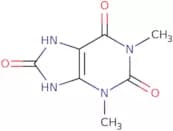
Producto descatalogado1,3-Dimethyluric acid
CAS:Producto controlado1,3-Dimethyluric acid is a metabolite of caffeine. It is formed by the oxidative deamination of 1,3-dimethylxanthine in the liver. The concentrations of 1,3-dimethyluric acid are elevated in patients with chronic renal failure and those who are taking theophylline. The concentration–time curve for 1,3-dimethyluric acid was found to be linear and predictable after intravenous administration of caffeine at a dose of 10 mg/kg body weight in rats. This suggests that it is possible to estimate the rate of elimination from plasma after intravenous dosing with caffeine based on measurements of plasma concentrations and time. The metabolism of caffeine involves two pathways: oxidative deamination (1,3-dimethyluric acid) and demethylation (paraxanthine). It has been shown that the metabolites 1,3-dimethyluric acid and paraxanthine are formed by different metabolic pathways. The
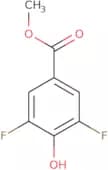
Fórmula:C7H8N4O3Pureza:Min. 98 Area-%Forma y color:White PowderPeso molecular:196.16 g/mol3,5-Difluoro-4-hydroxybenzoic acid methyl ester
CAS:3,5-Difluoro-4-hydroxybenzoic acid methyl ester (DFHBME) is a chemical compound that belongs to the class of useful building blocks. It is used in research as a reagent and in the synthesis of various complex compounds. DFHBME reacts with nucleophiles such as amines or alcohols to produce useful intermediates or scaffolds for organic synthesis. This compound is also useful as a speciality chemical due to its high quality and versatility.
Fórmula:C8H6F2O3Pureza:Min. 95%Forma y color:PowderPeso molecular:188.13 g/molRef: 3D-FD66549
Producto descatalogado2-Chloro-5-(4-chloro-5-difluoromethoxy-1-methylpyrazol-3-yl)-4-fluorophenoxyacetic acid monohydrate
CAS:2-Chloro-5-(4-chloro-5-difluoromethoxy-1-methylpyrazol-3-yl)-4-fluorophenoxyacetic acid monohydrate (2,4,5P) is a phenoxy herbicide that has been shown to be an effective broadleaf and grass weed control agent. 2,4,5P is a granule formulation that can be applied by helicopter or ground equipment. It has synergistic effects with glyphosate when applied together to soybean plants and can be used in combination with other herbicides for more effective weed control.
Fórmula:C13H9Cl2F3N2O·H2OPureza:Min. 95%Forma y color:White PowderPeso molecular:355.14 g/molRef: 3D-FC156954
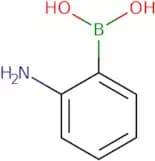
Producto descatalogado2-Aminophenylboronic acid
CAS:2-Aminophenylboronic acid is an organic compound that can be used as a cross-coupling agent in the Suzuki coupling reaction. It has been used to synthesize amides and β-unsaturated ketones. It has also been used to prepare fluorescent molecules for use in clinical diagnostics. The phase transition temperature of 2-aminophenylboronic acid is approximately -6°C, which makes it useful for the synthesis of amides and β-unsaturated ketones at low temperatures. This compound is not reactive towards nucleophiles due to its acidic character, but it can undergo a nucleophilic attack when protonated. Its fluorescence assay can be used to detect the presence of low concentrations of hydrogen sulfide gas in natural gas pipelines.
Fórmula:C6H8BNO2Pureza:Min. 95%Forma y color:PowderPeso molecular:136.94 g/molRef: 3D-FA10483
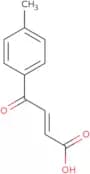
Producto descatalogadotrans-3-(4-Methylbenzoyl)acrylic acid
CAS:The compound trans-3-(4-methylbenzoyl)acrylic acid is a potent and selective inhibitor of serine/threonine protein kinase. It has been shown to inhibit the proliferation of eosinophils in vitro, as well as to suppress the release of leukotrienes from human mast cells. The mechanism of action is by inhibiting phosphatidylcholine-specific phospholipase C, which leads to the inhibition of protein kinase C. This inhibition prevents the phosphorylation of various proteins, including cytoskeletal proteins that are required for cell division.
Fórmula:C11H10O3Pureza:Min. 95%Peso molecular:190.2 g/molRef: 3D-FM54337
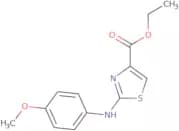
Producto descatalogadoEthyl 4-((4-methoxyphenyl)amino)-3,5-thiazolecarboxylate
CAS:Please enquire for more information about Ethyl 4-((4-methoxyphenyl)amino)-3,5-thiazolecarboxylate including the price, delivery time and more detailed product information at the technical inquiry form on this page
Fórmula:C13H14N2O3SPureza:Min. 95%Forma y color:PowderPeso molecular:278.33 g/molRef: 3D-FE169188
Producto descatalogado