Ácidos carboxílicos
Se han encontrado 12457 productos de "Ácidos carboxílicos"
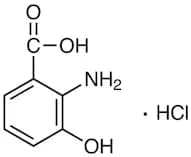
2-Amino-3-hydroxybenzoic Acid Hydrochloride
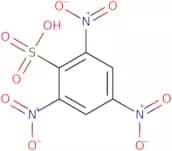
CAS:Fórmula:C7H7NO3·HClPureza:>98.0%(T)(HPLC)Forma y color:White to Light yellow to Purple powder to crystalPeso molecular:189.602,4,6-Trinitrobenzenesulfonic acid, 1% DMF solution
CAS:2,4,6-Trinitrobenzenesulfonic acid, also known as TNBS, TNSBA orâ¯picrylsulfonicâ¯acid, is a strongly oxidising organic acid that has long been used as a reagent to determine the presence of free primary amine groups. TNBS reacts rapidly with primary amines to form highly colouredâ¯N-trinitrophenylâ¯products which can thenâ¯beâ¯analysed by colorimetry.â¯Competing hydrolysis of the TNBS reagentâ¯mayâ¯influence the assay result. The amine can be regenerated by treatment with hydrazine. This analytical technique can also be applied to thiols and hydrazides.
As is common with nitrated aromatic compounds, there is a risk of explosion and TNBS is typically commercially available as a solution. We also supply the 5% aqueous solution.Fórmula:C6H3N3O9SPureza:Min. 95%Forma y color:Clear LiquidPeso molecular:293.17 g/molRef: 3D-FT158294
Producto descatalogadoPhenoxyacetic acid N-hydroxysuccinimide ester
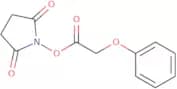
CAS:Phenoxyacetic acid N-hydroxysuccinimide ester is a nucleic acid research reagent. It is an uncharged molecule that can be used to inhibit the activity of ribonucleic acid or transfer RNA. Phenoxyacetic acid N-hydroxysuccinimide ester has been shown to have antibacterial activity against gram-positive bacteria and gram-negative bacteria, including methicillin resistant Staphylococcus aureus. This compound has also been shown to bind to the anticodon stem region of tRNA molecules and inhibit protein synthesis by preventing the binding of aminoacyl tRNA synthetases to their cognate mRNA codons.Fórmula:C12H11NO5Pureza:Min. 95%Forma y color:PowderPeso molecular:249.22 g/mol2-[2-[4-[Bis(4-fluorophenyl)methyl]piperazin-1-yl]ethoxy]acetic acid HCl
CAS:2-[2-[4-[Bis(4-fluorophenyl)methyl]piperazin-1-yl]ethoxy]acetic acid HCl (BAY-85788) is a drug which acts as a histamine receptor antagonist. It has been shown to be effective in the treatment of idiopathic urticaria. BAY-85788 has also been found to have less potential for drug interactions than other histamine receptor antagonists, and does not cause an increase in blood pressure, unlike other compounds with this activity. This compound is metabolized by cytochrome P450 enzymes and does not contain nitrogen atoms or heterocyclic rings. Experimental studies have shown that orally administered BAY-85788 is absorbed from the GI tract and eliminated unchanged in urine. Studies have also shown that BAY-85788 is active against inflammatory diseases such as atopic dermatitis, asthma, and chronic obstructive pulmonary disease (COPDFórmula:C21H24F2N2O3·xHClPureza:Min. 95%Forma y color:PowderPeso molecular:390.42 g/molRef: 3D-FB98570
Producto descatalogado4-(Trifluoromethylthio)benzoic acid
CAS:4-(Trifluoromethylthio)benzoic acid is a versatile building block, useful intermediate, and reagent for research and development. 4-(Trifluoromethylthio)benzoic acid has been shown to be a high quality chemical with high purity. The CAS number for 4-(Trifluoromethylthio)benzoic acid is 330-17-6.
Fórmula:C8H5F3O2SPureza:Min. 98 Area-%Forma y color:PowderPeso molecular:222.19 g/molRef: 3D-FT38830
Producto descatalogado6-Fluoroindole-3-acetic acid
CAS:6-Fluoroindole-3-acetic acid is a molecule that has been synthesized by the reaction of 6-fluoroindole with acetic anhydride. When mixed with acetonitrile, the fluorescence of 6-fluoroindole-3-acetic acid can be seen in the solution. The fluorescence intensity is proportional to the concentration of this molecule. 6-Fluoroindole-3-acetic acid is used as a template molecule for fluorescence labeling experiments. It interacts with hormones and can be used to identify their conformations and interactions. This compound has been shown to have anticancer properties in mice, and it may also be effective against cancer cells in humans. It has also been shown to inhibit the growth of pisum sativum (pea).
Fórmula:C10H8FNO2Pureza:Min. 95%Forma y color:PowderPeso molecular:193.17 g/mol2-Chloro-5-methoxybenzoic acid
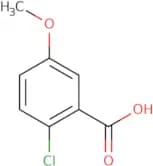
CAS:2-Chloro-5-methoxybenzoic acid (2CMB) is a copper chelator that has been shown to have antagonistic properties against microglia cells. 2CMB is synthesized from 2,5-dichlorobenzoic acid and methoxylamine. It has been shown to inhibit the synthesis of inflammatory mediators in rat spinal cord microglia cells by inhibiting the activity of polyphosphoric acid, anions and additives. 2CMB also has a high affinity for chloride ions and can be used as a tracer to measure chloride profiles. 2CMB reacts with copper ions at a slow rate and can be used as an indicator for the presence of microglia cells.
Fórmula:C8H7ClO3Pureza:Min. 95%Peso molecular:186.59 g/molDeoxy corticosterone acetate
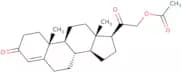
CAS:Producto controladoDeoxy corticosterone acetate is a synthetic analogue of the natural compound corticosterone. It has been shown to cause liver lesions, cardiac effects, and hypertension in laboratory animals. Deoxy corticosterone acetate binds to dinucleotide phosphate and prevents its conversion into cytosolic calcium. This interaction inhibits the phosphorylation of myocardial proteins and reduces the production of ATP in heart muscle cells. The binding of deoxycorticosterone acetate to DNA is also an important factor in its toxicity.
Fórmula:C23H32O4Pureza:Min. 97 Area-%Forma y color:White Off-White PowderPeso molecular:372.5 g/mol2,4,6-Trichlorobenzoic acid
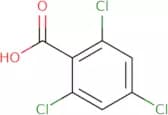
CAS:2,4,6-Trichlorobenzoic acid is a trifluoroacetic acid that has been used as a solvent in vitro assays and as a carbon source for kinetic studies. It has also been shown to be an effective inhibitor of bacterial growth when tested with dextrans. 2,4,6-Trichlorobenzoic acid is toxic to cells in culture and can inhibit fatty acid synthesis by inhibiting the activity of fatty acid synthase.
2,4,6-Trichlorobenzoic acid has also been found to have anti-inflammatory properties and may be useful for the treatment of asthma.Fórmula:C7H3Cl3O2Pureza:Min. 95%Forma y color:PowderPeso molecular:225.46 g/molRef: 3D-FT45080
Producto descatalogadoZinc diethyldithiocarbamate
CAS:Zinc diethyldithiocarbamate is an inorganic compound that has been shown to have potent anti-inflammatory and antipyretic properties. It has been used as a chemical inhibitor of phospholipase A2, which is an enzyme involved in the inflammatory process. Zinc diethyldithiocarbamate also has been shown to be a potent inducer of metallothionein and other proteins that are involved in detoxification processes. This drug has been used as an injection solution for the treatment of infectious diseases such as tuberculosis, leprosy, brucellosis, and malaria. Zinc diethyldithiocarbamate is also used as a pharmacological agent for the treatment of myocardial infarction.
Fórmula:C10H20N2S4ZnPureza:Min. 95%Forma y color:PowderPeso molecular:361.92 g/molRef: 3D-FZ58712
Producto descatalogadoHeptadecanoic acid
CAS:Heptadecanoic acid is a fatty acid that is a major component of the human sebum. It has been shown to be an oxidation catalyst for polyunsaturated fatty acids and can be used in the production of caproic acid and alkanoic acid from their corresponding glycol esters. It has also been shown to have enzyme activities, such as oxidizing phospholipids and hydrolyzing triglycerides. Heptadecanoic acid is a normal constituent of human serum, but its concentration varies among individuals. It can be used as a control analysis to determine if another fatty acid is present in the sample, or it can be used as a biological sample to study energy metabolism or epidermal growth factor.
Fórmula:C17H34O2Pureza:Min. 95%Forma y color:PowderPeso molecular:270.45 g/molRef: 3D-FH63213
Producto descatalogado4-n-Octyloxybenzoic Acid
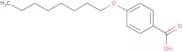
CAS:4-n-Octyloxybenzoic Acid is a chemical compound that is soluble in organic solvents. It has a phase transition temperature of 156 °C and a melting point of 141 °C. 4-n-Octyloxybenzoic Acid is used as an intermediate in the synthesis of other compounds. It can be used as a fluorescence probe to detect intermolecular hydrogen bonding or as an intermediate in the Suzuki coupling reaction, which is used to polymerize styrene. 4-n-Octyloxybenzoic Acid can also be used as a liquid crystal composition for optical microscopy. It has been found to have ternary mixtures with butyric acid and phenol and dipole properties that are sensitive to changes in pH and ion concentration.
4-n-Octyloxybenzoic Acid has been shown to be able to activate the suzuki coupling reaction by donating its lone pair electrons to the carbonyl carbon atomFórmula:C15H22O3Pureza:Min. 95%Forma y color:PowderPeso molecular:250.33 g/molEthyl 4-biphenylacetate
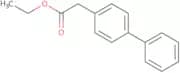
CAS:Ethyl 4-biphenylacetate is a fatty acid that inhibits the oxidation of lipids by inhibiting the synthesis of lipids. It also has an inhibitory effect on lipid metabolism and is used in the treatment of metabolic disorders. Ethyl 4-biphenylacetate has been shown to be effective against hepatitis and zearalenone, which are both metabolic diseases. It also reduces blood pressure in mice and rats, which may be due to its ability to inhibit the synthesis of lipids in blood vessels.
Fórmula:C16H16O2Pureza:Min. 98 Area-%Forma y color:PowderPeso molecular:240.3 g/molRef: 3D-FE71236
Producto descatalogadoNb[n-N-butyl-N-acetyl]aminopropionic acid ethyl ester
CAS:Nb[n-N-butyl-N-acetyl]aminopropionic acid ethyl ester is a nitro compound that can be used as a repellent. It is often used in pharmaceutical preparations, such as topical and oral medications. The Nb[n-N-butyl-N-acetyl]aminopropionic acid ethyl ester molecule has nitrogen atoms with two hydrogens each, which are separated by an oxygen atom. This makes it a polar molecule because the hydrogen atoms are not on the same side of the molecule. The Nb[n-N-butyl-N-acetyl]aminopropionic acid ethyl ester also contains two carboxylic acids, which are fatty acids with one carbon atom and two hydrogens each. This makes it an organic compound that can be analyzed using gas chromatography or high performance liquid chromatography.
Fórmula:C11H21NO3Pureza:Min. 95%Forma y color:Clear LiquidPeso molecular:215.29 g/mol2-Chloro-5-(4-chloro-5-difluoromethoxy-1-methylpyrazol-3-yl)-4-fluorophenoxyacetic acid monohydrate
CAS:2-Chloro-5-(4-chloro-5-difluoromethoxy-1-methylpyrazol-3-yl)-4-fluorophenoxyacetic acid monohydrate (2,4,5P) is a phenoxy herbicide that has been shown to be an effective broadleaf and grass weed control agent. 2,4,5P is a granule formulation that can be applied by helicopter or ground equipment. It has synergistic effects with glyphosate when applied together to soybean plants and can be used in combination with other herbicides for more effective weed control.
Fórmula:C13H9Cl2F3N2O·H2OPureza:Min. 95%Forma y color:White PowderPeso molecular:355.14 g/molRef: 3D-FC156954
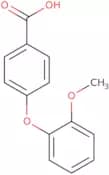
Producto descatalogado4-(2-Methoxyphenoxy)benzoic acid
CAS:4-(2-Methoxyphenoxy)benzoic acid is a white crystalline solid with a melting point of 50°C. It is soluble in water, ethanol, ether, and chloroform. 4-(2-Methoxyphenoxy)benzoic acid has been used as a starting material for the synthesis of pharmaceuticals such as carbamazepine (Tegretol). The compound has two methoxy groups on the phenyl ring that are susceptible to nucleophilic attack by strong bases. This reaction occurs at room temperature and can be reversed by heating the solution to 150°C. The compound also undergoes polycondensation reactions when heated in the presence of an oxidizing agent.
Fórmula:C14H12O4Pureza:Min. 95%Forma y color:White PowderPeso molecular:244.24 g/molRef: 3D-FM52928
Producto descatalogado2-Aminothiazole-5-carboxylic acid
CAS:2-Aminothiazole-5-carboxylic acid is a synthetic compound that is currently being investigated as a potential anticancer agent. 2-Aminothiazole-5-carboxylic acid has shown anticancer activity in clinical studies, with an increase in the number of cancer cells killed and a decrease in the number of cancer cells surviving after treatment. The mechanism of action for this drug is not well understood, but it may be due to its ability to inhibit cellular processes such as DNA synthesis and protein synthesis.
2-Aminothiazole-5-carboxylic acid does not show significant toxicity at therapeutic doses, although it can cause some side effects including nausea, vomiting, constipation, diarrhea, headaches, and fever.Fórmula:C4H4N2O2SPureza:Min. 95%Forma y color:PowderPeso molecular:144.15 g/molRef: 3D-FA36283
Producto descatalogado1-(2-Chlorophenyl)-5-phenyl-1-H-pyrazole-3-carboxylic acid
CAS:Producto controlado1-(2-Chlorophenyl)-5-phenyl-1H-pyrazole-3-carboxylic acid is a high quality, reagent, complex compound that has been shown to be useful as an intermediate in the synthesis of a number of different compounds. It has been shown to be useful as a speciality chemical and research chemicals with versatile building blocks that can be used for the synthesis of other compounds. The CAS number for 1-(2-chlorophenyl)-5-phenyl-1H-pyrazole-3-carboxylic acid is 116572-69-1.
Fórmula:C16H11ClN2O2Pureza:Min. 95%Peso molecular:298.72 g/molRef: 3D-FC66208
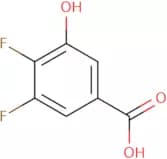
Producto descatalogado4,5-Difluoro-3-hydroxybenzoic acid
CAS:4,5-Difluoro-3-hydroxybenzoic acid is a chemical intermediate that is used in the production of 4,5-difluoro-3-hydroxyphenylacetic acid. The process development of this compound was carried out to produce indian refractories and discontinuity. It has been envisaged that monocrystalline postulated treatments will be required for the ancillary transfer of beneficiation and magnesite advances as well as isoxazolidines.
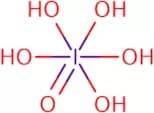
Fórmula:C7H4F2O3Pureza:Min. 95%Forma y color:PowderPeso molecular:174.1 g/molPeriodic acid
CAS:Periodic acid is a natural product that has been used as an antimicrobial agent for more than 100 years. It has been shown to have pro-apoptotic properties in a number of cell systems, including monocyte-like cells, hepatocyte-like cells, and epidermal growth factor receptor-transfected cells. Periodic acid is also effective against inflammatory bowel disease in infants. This drug also has anti-inflammatory effects and may be useful for the treatment of autoimmune diseases. Periodic acid inhibits the metabolic rate in cell cultures by blocking oxidative phosphorylation at complex I and II, leading to increased levels of reactive oxygen species (ROS). This ROS production induces apoptosis through a caspase cascade.
Fórmula:H5IO6Pureza:Min. 95%Forma y color:White Clear LiquidPeso molecular:227.94 g/molRef: 3D-FP16075
Producto descatalogado


![2-[2-[4-[Bis(4-fluorophenyl)methyl]piperazin-1-yl]ethoxy]acetic acid HCl](/_next/image/?url=https%3A%2Fstatic.cymitquimica.com%2Fproducts%2F3D%2Fthumb-webp%2FFB98570.webp&w=3840&q=75)




![Nb[n-N-butyl-N-acetyl]aminopropionic acid ethyl ester](/_next/image/?url=https%3A%2Fstatic.cymitquimica.com%2Fproducts%2F3D%2Fthumb-webp%2FFN149896.webp&w=3840&q=75)