Ácidos carboxílicos
Se han encontrado 12458 productos de "Ácidos carboxílicos"
Ferroceneacetic acid
CAS:Producto controladoFerroceneacetic acid is a compound that has been shown to have chemiluminescent properties. It is a potent reductant and oxidant, which means that it can reduce or oxidize other compounds. Ferroceneacetic acid is also an active enzyme, and its redox potential changes depending on the concentration of ferrocene in the solution. Ferroceneacetic acid can be used as a model system for analytical chemistry and electrochemistry.
Fórmula:C12H12FeO2Pureza:Min. 95%Forma y color:PowderPeso molecular:244.07 g/molRef: 3D-FF149259
Producto descatalogado(-)-trans-1,2-Cyclohexanedicarboxylic Anhydride
CAS:Producto controlado(-)-trans-1,2-Cyclohexanedicarboxylic Anhydride is a macrocyclic molecule that can be used to synthesize glutaric anhydride. This compound is an analogue of the succinic anhydride and 1,2-cyclohexanedicarboxylic anhydride. (-)-trans-1,2-Cyclohexanedicarboxylic Anhydride has been shown to catalyze the hydrogenation of epoxides. It also has been shown to be a potential precursor for the synthesis of pyrrolizidine alkaloids.
Fórmula:C8H10O3Pureza:Min. 95%Peso molecular:154.16 g/molRef: 3D-FC61022
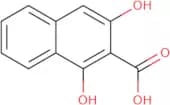
Producto descatalogado1,3-Dihydroxy-2-naphthoic acid
CAS:1,3-Dihydroxy-2-naphthoic acid is an organic compound that belongs to the binaphthyls. It is a white solid that can be obtained by reacting naphthalene with inorganic phosphite in the presence of acidic potassium carbonate. This reaction system produces 1,3-dihydroxy-2-naphthoic acid and potassium biphosphite as byproducts. The reaction time depends on the concentration of reactants. 1,3-Dihydroxy-2-naphthoic acid has acidic properties and can be used as a catalyst for chemical reactions involving carboxylic compounds. This compound has been shown to be effective at treating abdominal pain caused by intestinal inflammation or infection with a carbon source such as carbohydrates (e.g., glucose) or fats (e.g., oleic acid).
Fórmula:C11H8O4Pureza:Min. 95%Peso molecular:204.18 g/molRef: 3D-FD154238
Producto descatalogado4-Amino-3-(trifluoromethoxy)benzoic acid
CAS:Please enquire for more information about 4-Amino-3-(trifluoromethoxy)benzoic acid including the price, delivery time and more detailed product information at the technical inquiry form on this pageFórmula:C8H6F3NO3Pureza:Min. 95%Peso molecular:221.13 g/molRef: 3D-FA64179
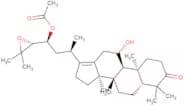
Producto descatalogadoAlisol B 23-acetate
CAS:Alisol B is a natural compound that has been shown to have significant cytotoxicity in vitro. Alisol B also inhibits the mitochondrial membrane potential, which is vital for cell survival. Alisol B is found to be active against several human cancer cell lines, including leukemia and breast cancer cells. It has also been shown to inhibit autophagy, the process by which cells degrade their own components and organelles in response to starvation or other stresses. This inhibition of autophagy leads to increased cell death. The anti-cancer effects of Alisol B are mediated through a number of different mechanisms, including the inhibition of protein synthesis and the induction of apoptosis. Alisol B has also been shown to have hepatoprotective properties in animal models.
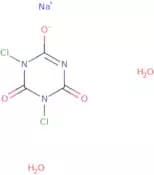
Fórmula:C32H50O5Pureza:Min. 95%Peso molecular:514.74 g/molDichloroisocyanuric acid sodium dihydrate
CAS:Dichloroisocyanduric acid sodium salt (DCD) is a disinfectant that is used to control bacteria, fungi, and algae in wastewater treatment plants. DCD has been shown to be an effective antimicrobial agent against bacterial spores and the fungal plant pathogen "Botrytis cinerea" when used at concentrations of 0.1-0.3%. DCD also has a low toxicity for mammals, with LD50 values of 3.5g/kg for rats and 2g/kg for mice. The chemical stability of DCD can be increased by adding sodium carbonate or other alkaline substances in a neutral pH environment.
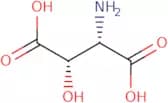
Fórmula:C3HCl2N3O3•(H2O)2•NaPureza:Min. 95%Forma y color:PowderPeso molecular:256.98 g/molD,L-Threo-b-hydroxy aspartic acid
CAS:D,L-Threo-b-hydroxy aspartic acid is a stereoselective synthetic amino acid that has been used to study the uptake and hydrolysis of D,L-threo-b-hydroxy aspartic acid by rat brain synaptosomes. It has also been used in the synthesis of an L-alanine analogue with the same stereochemistry at the chiral center. The stereoselective synthesis of this compound is achieved by epimerization reaction using d-alanine as a starting material. Threo bhda has been shown to inhibit glutamate release from neurons and stimulate GABA release in synaptosomes, which may be due to its ability to bind to ion channels. Threo bhda has also been found to inhibit the binding of radioactive thymidine to calf thymus DNA with a high degree of stereoselectivity.
Fórmula:C4H7NO5Pureza:Min. 95%Peso molecular:149.1 g/molRef: 3D-FT28259
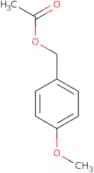
Producto descatalogadoAnisyl acetate
CAS:Anisyl acetate is a chemical compound that is used in the preparation of samples. It is an ester derived from anisic acid and acetic acid. Anisyl acetate has a fruity, sweet odor which it owes to its methyl anthranilate content. This ester can be used as a solvent for other compounds or as an intermediate in the synthesis of other compounds with similar characteristics. Anisyl acetate can be prepared by reacting malic acid with trifluoroacetic acid at room temperature and isolated using vacuum distillation. The yield of this reaction is about 60%.
Pureza:Min. 95%Peso molecular:180.2 g/molRef: 3D-FA01894
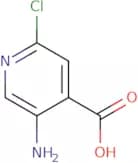
Producto descatalogado5-Amino-2-chloropyridine-4-carboxylic acid
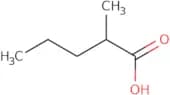
CAS:5-Amino-2-chloropyridine-4-carboxylic acid is a potent tyrosine kinase inhibitor. It inhibits the activation of EGFR, which may be due to its binding to the ATP-binding pocket in EGFR. 5-Amino-2-chloropyridine-4-carboxylic acid has been shown to inhibit cancer cell growth and induce apoptosis in vitro. This drug has also been shown to have potent anticancer activity in vivo, as well as inhibitory effect on tumor growth in xenograft models of human cancer cells. In addition, it inhibits the production of formamidine acetate, a precursor for histamine synthesis. 5-Amino-2-chloropyridine-4-carboxylic acid binds to formamide and formamidine acetate with high affinity and therefore inhibits histamine synthesis.Fórmula:C6H5ClN2O2Pureza:Min. 95%Forma y color:White PowderPeso molecular:172.57 g/mol2-Methyl pentanoic acid
CAS:2-Methyl pentanoic acid is a coordination complex that is synthesized by the condensation of propionyl chloride and 2-methylpentanoyl chloride. It has been shown to have anticancer activity against human cervical cancer cells, inhibiting the growth of cells in culture. The mechanism of action may be due to its ability to inhibit the production of mitochondrial proteins, leading to cell death. 2-Methyl pentanoic acid also has a strong affinity for fatty acids and can be used as an inhibitor of fatty acid synthase, which is an enzyme that catalyzes the synthesis of long chain fatty acids in mitochondria. 2-Methyl pentanoic acid can also be used as a treatment for seizures caused by divalproex sodium and isovaleric acid. It inhibits the production of 3-hydroxyisovaleric acid, which is responsible for these seizures, through competitive inhibition with valine at the 3 position on the enzyme's active site.
Fórmula:C6H12O2Pureza:Min. 95%Forma y color:Clear LiquidPeso molecular:116.16 g/molRef: 3D-FM01022
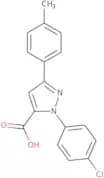
Producto descatalogado1-(4-Chlorophenyl)-3-(4-methylphenyl)-1H-pyrazole-5-carboxylic acid
CAS:Producto controladoPlease enquire for more information about 1-(4-Chlorophenyl)-3-(4-methylphenyl)-1H-pyrazole-5-carboxylic acid including the price, delivery time and more detailed product information at the technical inquiry form on this pageFórmula:C17H13ClN2O2Pureza:Min. 95%Peso molecular:312.75 g/molRef: 3D-FC57113
Producto descatalogado4,6-Diaminobenzene-1,3-dicarboxylic acid
CAS:4,6-Diaminobenzene-1,3-dicarboxylic acid is an inorganic copper compound that is used as a copper salt. It has been shown to be effective as a chelating agent for the treatment of copper toxicity. 4,6-Diaminobenzene-1,3-dicarboxylic acid binds to metal ions and forms a complex with them. This complex can then be excreted from the body through urine or bile.Fórmula:C8H8N2O4Pureza:Min. 95%Peso molecular:196.16 g/molCyclopiazonic acid
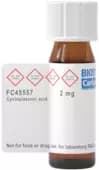
CAS:Cyclopiazonic acid is a sesquiterpene lactone that inhibits the transcription activator-binding site in the promoter region of c-myc and c-jun. Cyclopiazonic acid also inhibits protein synthesis by preventing phosphorylation of dinucleotide phosphate, which leads to an increase in intracellular calcium levels. This compound also has a cytotoxic effect on HL60 cells, which may be due to its ability to inhibit the production of secretases. Cyclopiazonic acid's effects on pluripotent cells have not been well studied, but it is known to have pharmacological properties that are similar to other compounds that are being studied for their potential anti-cancer effects.
Fórmula:C20H20N2O3Pureza:Min. 95%Forma y color:PowderPeso molecular:336.39 g/molRef: 3D-FC45557
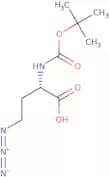
Producto descatalogadoN-alpha-Boc-Ngamma-Azido-L-2,4-diaminobutyric acid cyclohexylamine salt
CAS:Please enquire for more information about N-alpha-Boc-Ngamma-Azido-L-2,4-diaminobutyric acid cyclohexylamine salt including the price, delivery time and more detailed product information at the technical inquiry form on this page
Fórmula:C9H16N4O4·C6H13NPureza:Min. 95%Peso molecular:343.42 g/molRef: 3D-FB57246
Producto descatalogado(3-Acetyl-1H-indol-1-yl)acetic acid
CAS:Producto controladoPlease enquire for more information about (3-Acetyl-1H-indol-1-yl)acetic acid including the price, delivery time and more detailed product information at the technical inquiry form on this page
Fórmula:C12H11NO3Pureza:Min. 95%Peso molecular:217.22 g/molRef: 3D-FA124443
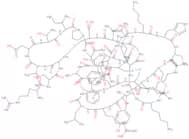
Producto descatalogadoStichodactyla helianthus Neurotoxin (ShK) trifluoroacetate salt
CAS:ShK is an amide toxin that is found in the skin of the tropical marine organism Stichodactyla helianthus. It has been shown to have antimicrobial activity against E. coli and other bacteria, as well as a protective effect on inflammatory bowel disease. ShK has been shown to act by inhibiting protein synthesis, which may be due to its ability to bind to signal peptides and change their conformation.Fórmula:C169H274N54O48S7Pureza:Min. 95%Peso molecular:4,054.78 g/molRef: 3D-FS108658
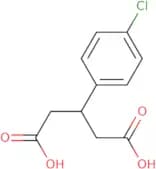
Producto descatalogado3-(4-Chlorophenyl)glutaric acid
CAS:3-(4-Chlorophenyl)glutaric acid is a subunit of lanthanide complexes. It has been synthesized from cinchona alkaloids and single-crystal x-ray diffraction data obtained in the absence of ligands. 3-(4-Chlorophenyl)glutaric acid is a desymmetrization reagent and has been shown to be an effective ligand for lanthanide complexes. This compound has the potential to form impurities during the synthesis process, which can lead to morphological changes, luminescence, or high-performance liquid chromatography interference.
Fórmula:C11H11ClO4Pureza:Min. 95%Peso molecular:242.66 g/molRef: 3D-FC20344
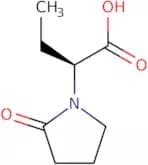
Producto descatalogadoLevetiracetam carboxylic acid
CAS:Synaptic vesicle protein 2A ligand; anti-seizure drug
Fórmula:C8H13NO3Pureza:Min. 95%Peso molecular:171.19 g/molRef: 3D-FL24880
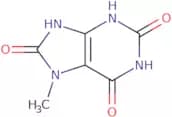
Producto descatalogado7-Methyluric acid
CAS:Producto controlado7-Methyluric acid is a purine derivative that is excreted in the urine. This compound can be used to measure the metabolic rate of an individual. 7-Methyluric acid reacts with caffeine to produce methylxanthines and uric acid, which are then measured by chromatographic methods. In order to measure the metabolic rate, a known amount of caffeine is given orally to Sprague-Dawley rats for a period of time, followed by measurement of 7-methyluric acid in their urine samples. The results show that the metabolic rate increases linearly with time.
Fórmula:C6H6N4O3Pureza:Min. 95%Forma y color:PowderPeso molecular:182.14 g/molRef: 3D-FM25977
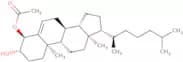
Producto descatalogado4β-Hydroxy cholesterol 4-acetate
CAS:Producto controlado4b-Hydoxy cholesterol 4-acetate is a pleiotropic drug with a wide range of pharmacological activities. It is an inhibitor of the sirtuin family of proteins and may have anti-cancer effects. It has also been shown to be effective in the treatment of depression and myelodysplastic syndrome. The mechanism of action for this agent is not well understood, but it may be due to its ability to inhibit DNA methyltransferases, which would lead to a change in DNA methylation patterns. 4b-Hydroxy cholesterol 4-acetate has also been shown to decrease lipid levels in the blood and increase the activity of liver enzymes that metabolize fatty acids. This drug can also modify lamellar bodies and short-chain fatty acids by inhibiting the enzyme ATP citrate lyase, which catalyzes citrate cleavage into acetyl CoA and oxaloacetate.
Fórmula:C29H48O3Pureza:Min. 95%Peso molecular:444.69 g/mol