Ácidos carboxílicos
Los ácidos carboxílicos son moléculas orgánicas caracterizadas por tener un grupo funcional de tipo carboxilo (-COOH). Estos ácidos son fundamentales en varias reacciones químicas, incluyendo esterificación, amidación y descarboxilación. Los ácidos carboxílicos se utilizan ampliamente en la producción de productos farmacéuticos, polímeros y agroquímicos. En esta sección, puede encontrar una gran cantidad de ácidos carboxílicos listos para ser utilizados. En CymitQuimica, ofrecemos una amplia gama de ácidos carboxílicos de alta calidad para apoyar sus aplicaciones de investigación e industriales.
Se han encontrado 12454 productos de "Ácidos carboxílicos"
Ordenar por
Pureza (%)
0
100
|
0
|
50
|
90
|
95
|
100
(+/-)-2-Propyl-4-pentenoic acid
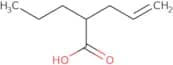
CAS:<p>(+/-)-2-Propyl-4-pentenoic acid is a reactive chemical that is used in the synthesis of sodium salts. This compound has been shown to produce a matrix effect and to be pharmacologically active. (+/-)-2-Propyl-4-pentenoic acid is also used in the preparation of monoclonal antibodies and can be used as an analytical method for determining the concentration–time curve. The use of this compound has been shown to be clinically relevant, with irreversible inhibition observed in rat liver microsomes and fatty acids. In addition, it has been shown to inhibit fatty acid synthase in vitro and can be used as a marker for measuring oxidative stress.</p>Fórmula:C8H14O2Pureza:Min. 95%Forma y color:PowderPeso molecular:142.2 g/mol1,3-Phenylenediacetic acid
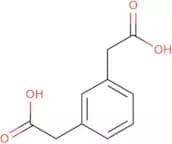
CAS:<p>1,3-Phenylenediacetic acid is a molecule that contains an aromatic ring and two carboxylate groups. It has been shown to react with collagen and water molecules by forming hydrogen bonds. 1,3-Phenylenediacetic acid also reacts with the hydroxyl group in the cell culture media to form a crosslink between two molecules. This reaction was found to be responsible for the observed increase in stiffness of collagen gels. The vibrational and macroscopic analysis of 1,3-phenylenediacetic acid has also revealed that it adopts a tetranuclear structure at room temperature.</p>Fórmula:C10H10O4Pureza:Min. 95%Peso molecular:194.18 g/molIsobarbituric acid
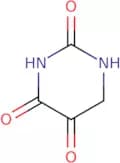
CAS:<p>Isobarbituric acid is a glycosylase that cleaves the bond between the amino group and the hydroxyl group of uridine in DNA. It has been shown to react with nucleophilic groups at neutral pH, such as an amine or hydroxyl group. Isobarbituric acid can be used to measure oxidative damage to DNA. This compound is reactive and sensitive to UV light, which makes it useful for detecting damaged DNA. Isobarbituric acid has been shown to induce neuronal death in rodents by interfering with dendritic spine formation.</p>Fórmula:C4H4N2O3Pureza:Min. 95%Forma y color:White PowderPeso molecular:128.09 g/molRef: 3D-FI24655
Producto descatalogadoTrichloroacetic acid
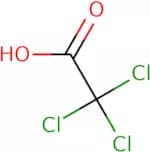
CAS:<p>Trichloroacetic acid is a chemical compound that is commonly used as an analytical reagent. It is a white solid that can be dissolved in water and has a faint odor of chlorine. Trichloroacetic acid is used to measure the concentration of sodium trifluoroacetate in biological samples or as an analytical reagent in various chemical reactions. Trichloroacetic acid has been shown to cause oxidative injury to cells, which may be due to its ability to inhibit growth factor-β1 synthesis and glycol ether metabolism. Trichloroacetic acid also causes cancer cells to die by inducing apoptosis, which may be due to its ability to inhibit basic protein synthesis.</p>Fórmula:C2HCl3O2Pureza:Min. 95%Forma y color:White/Off-White SolidPeso molecular:163.39 g/molRef: 3D-FT33532
Producto descatalogadomethyl 5-(((4-bromophenyl)sulfonyl)methyl)furan-2-carboxylate
CAS:<p>Please enquire for more information about methyl 5-(((4-bromophenyl)sulfonyl)methyl)furan-2-carboxylate including the price, delivery time and more detailed product information at the technical inquiry form on this page</p>Pureza:Min. 95%Ref: 3D-FM169416
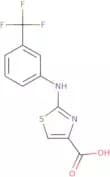
Producto descatalogado2-((3-(Trifluoromethyl)phenyl)amino)-1,3-thiazole-4-carboxylic acid
CAS:<p>Please enquire for more information about 2-((3-(Trifluoromethyl)phenyl)amino)-1,3-thiazole-4-carboxylic acid including the price, delivery time and more detailed product information at the technical inquiry form on this page</p>Pureza:Min. 95%Ref: 3D-FT169369
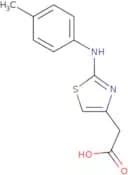
Producto descatalogado2-(4-Tolylamino-3,5-thiazolyl)acetic acid
CAS:<p>Please enquire for more information about 2-(4-Tolylamino-3,5-thiazolyl)acetic acid including the price, delivery time and more detailed product information at the technical inquiry form on this page</p>Pureza:Min. 95%Ref: 3D-FT169270
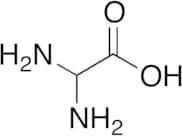
Producto descatalogado2,2-Diaminoacetic Acid
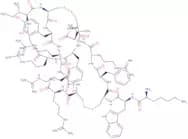
CAS:Producto controladoFórmula:C2H6N2O2Forma y color:NeatPeso molecular:90.081Tachyplesin I trifluoroacetate
CAS:<p>Tachyplesin I trifluoroacetate is an antimicrobial peptide with action on bacterial and fungal membranes by disrupting their integrity and is used for research on antimicrobial properties and potential therapeutic applications.</p>Fórmula:C99H151N35O19S4•(C2HF3O2)xPureza:Min. 95%Forma y color:PowderPeso molecular:2,263.75 g/molValeric acid
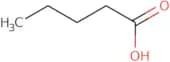
CAS:<p>Valeric acid is a fatty acid that is used in the manufacture of polymers. Valeric acid can be synthesized from caproic acid, which is found in palm oil and coconut oil. Valeric acid has been shown to inhibit the activity of nicotinic acetylcholine receptors at low concentrations and to have an inhibitory effect on the ryanodine receptor at high concentrations. Valeric acid also has a matrix effect on analytical methods such as gas-liquid chromatography, which has been modeled using polymer compositions.</p>Fórmula:C5H10O2Pureza:Min. 95%Peso molecular:102.13 g/molRef: 3D-FV34914
Producto descatalogadoRuthenium(III) nitrosyl nitrate, soluble in 10% dilute nitric acid
CAS:<p>Please enquire for more information about Ruthenium(III) nitrosyl nitrate, soluble in 10% dilute nitric acid including the price, delivery time and more detailed product information at the technical inquiry form on this page</p>Fórmula:RuN4O10Pureza:Min. 95%Forma y color:Clear LiquidPeso molecular:317.09 g/molRef: 3D-FR57258
Producto descatalogado4-Piperazinylphenylboronic acid, pinacol ester
CAS:<p>Please enquire for more information about 4-Piperazinylphenylboronic acid, pinacol ester including the price, delivery time and more detailed product information at the technical inquiry form on this page</p>Fórmula:C16H25BN2O2Pureza:Min. 95%Forma y color:PowderPeso molecular:288.19 g/molRef: 3D-FP160911
Producto descatalogadoTetrahydro-a-(1-naphthalenylmethyl)-2-furanpropanoic Acid 2-(Diethylamino)ethyl Ester
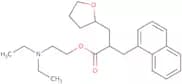
CAS:Producto controlado<p>Tetrahydro-a-(1-naphthalenylmethyl)-2-furanpropanoic Acid 2-(Diethylamino)ethyl Ester is a fatty acid analog that has antimicrobial properties. It is used in the treatment of bone cancer, and can be used to diagnose and treat other diseases such as glomerular filtration rate, receptor binding, and malonic acid. Tetrahydro-a-(1-naphthalenylmethyl)-2-furanpropanoic Acid 2-(Diethylamino)ethyl Ester binds to receptors on cells, which leads to an increase in the amount of monoamine neurotransmitters released by the cells.</p>Fórmula:C24H33NO3Pureza:Min. 95%Peso molecular:383.52 g/molRef: 3D-FT26121
Producto descatalogadoPeptide YY (canine, mouse, porcine, rat)
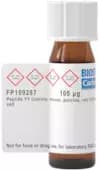
CAS:<p>Peptide YY (PYY) is a peptide hormone that inhibits gastric emptying and increases intestinal transit time. This peptide can be given as an intubation, perfusion, or intravenous infusion to increase the absorption of nutrients. It also has the potential to reduce body weight in obese people. PYY is a potent activator of protein synthesis and it has been shown to stimulate lipolysis in adipocytes. PYY is found in the ileum and colon, where it may have its effects on appetite suppression and regulation of gastrointestinal motility.</p>Fórmula:C190H288N54O57Pureza:Min. 95%Forma y color:PowderPeso molecular:4,240.65 g/molRef: 3D-FP109287
Producto descatalogadoMesitylboronic acid
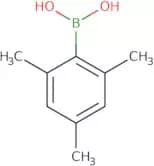
CAS:<p>Mesitylboronic acid is a divalent organoboron compound with the molecular formula CHB(O)OH. It is a white solid that is soluble in organic solvents, but not water. Mesitylboronic acid has been used for the palladium-catalyzed cross-coupling of aryl halides and vinylogous esters, yielding substituted pyridines. Mesitylboronic acid also catalyzes the Suzuki coupling reaction of aryl boronic acids and alkenes, producing substituted indoles. This compound has diagnostic applications due to its ability to form a fluorescent complex with certain metal ions. It also plays an important role in insulin resistance due to its ability to form cross-couplings with unsymmetrical boron compounds.</p>Fórmula:C9H13BO2Pureza:Min. 95%Peso molecular:164.01 g/molRef: 3D-FM123642
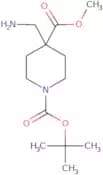
Producto descatalogadoMethyl4-aminomethyl-1-boc-piperidine-4-carboxylate
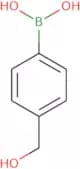
CAS:<p>Please enquire for more information about Methyl4-aminomethyl-1-boc-piperidine-4-carboxylate including the price, delivery time and more detailed product information at the technical inquiry form on this page</p>Fórmula:C13H24N2O4Pureza:Min. 95%Peso molecular:272.34 g/mol4-(Hydroxymethyl)phenylboronic acid
CAS:<p>4-(Hydroxymethyl)phenylboronic acid is an organic compound that has been identified as a reactive, fatty acid. It has shown antibacterial efficacy against gram-positive and gram-negative bacteria in the presence of nanogels. 4-(Hydroxymethyl)phenylboronic acid is also a cross-linking agent that can be used to form hydrogels for tissue engineering applications. This chemical is being studied as a potential treatment for inflammatory bowel disease and diabetes mellitus. 4-(Hydroxymethyl)phenylboronic acid has been shown to have anti-cancer properties by inhibiting the proliferation of cancer cells and inducing apoptosis. The molecule also undergoes structural analysis using confocal microscopy.</p>Fórmula:C7H9BO3Peso molecular:151.96 g/molRef: 3D-FH50587
Producto descatalogado1,2,3,4-Tetrahydro-1-naphthoic acid
CAS:<p>Tetrahydro-1-naphthoic acid is a toxic chemical that is used in the synthesis of various organic compounds. It is an organic acid that has a pungent odor and can cause irritation of the nose and throat. When heated, it evolves toxic fumes of hydrogen chloride gas and phosgene. Tetrahydro-1-naphthoic acid reacts with metal hydroxides to form metal tetrahydro-1-naphthoates, which have useful properties as catalysts in organic reactions. Tetrahydro-1-naphthoic acid has been used as a growth regulator in plants and animals. It binds to DNA at the C–H site, preventing protein synthesis and cell division by inhibiting RNA synthesis.</p>Fórmula:C11H12O2Pureza:Min. 95%Peso molecular:176.21 g/mol4-Phenoxyphenylboronic acid
CAS:<p>4-Phenoxyphenylboronic acid is a chemical inhibitor of protein kinase. It binds to the ATP binding site of the enzyme and prevents ATP from binding, thereby inhibiting the phosphorylation of proteins. This inhibition blocks the activation of downstream pathways that are involved in cell proliferation, leading to apoptotic cell death. 4-Phenoxyphenylboronic acid has been shown to inhibit growth of human cancer cells in vitro. This molecule also inhibits root formation and plant growth, which may be due to its ability to selectively inhibit protein kinases found in plant cells.</p>Fórmula:C12H11BO3Pureza:Min. 95%Peso molecular:214.02 g/molRef: 3D-FP33889
Producto descatalogado1,2-Benzenedicarboxylic acid 1-(4-hydroxybutyl) ester
CAS:Producto controlado<p>Benzoic acid 1-(4-hydroxybutyl) ester is a metabolite of benzenedicarboxylic acid, which is the active ingredient in some insecticides. Benzoic acid 1-(4-hydroxybutyl) ester is found in amniotic fluid and maternal urine. It is a toxicant to the fetus and can cause severe neurological damage if ingested by a pregnant woman. The toxicological effects are due to its ability to inhibit the synthesis of proteins necessary for cell division and growth, as well as its ability to induce oxidative stress.</p>Fórmula:C12H14O5Pureza:Min. 95%Peso molecular:238.24 g/molRef: 3D-FB18183
Producto descatalogado