Ácidos carboxílicos
Los ácidos carboxílicos son moléculas orgánicas caracterizadas por tener un grupo funcional de tipo carboxilo (-COOH). Estos ácidos son fundamentales en varias reacciones químicas, incluyendo esterificación, amidación y descarboxilación. Los ácidos carboxílicos se utilizan ampliamente en la producción de productos farmacéuticos, polímeros y agroquímicos. En esta sección, puede encontrar una gran cantidad de ácidos carboxílicos listos para ser utilizados. En CymitQuimica, ofrecemos una amplia gama de ácidos carboxílicos de alta calidad para apoyar sus aplicaciones de investigación e industriales.
Se han encontrado 12454 productos de "Ácidos carboxílicos"
Ordenar por
Pureza (%)
0
100
|
0
|
50
|
90
|
95
|
100
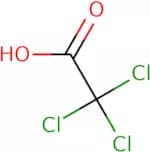
Trichloroacetic acid
CAS:<p>Trichloroacetic acid is a chemical compound that is commonly used as an analytical reagent. It is a white solid that can be dissolved in water and has a faint odor of chlorine. Trichloroacetic acid is used to measure the concentration of sodium trifluoroacetate in biological samples or as an analytical reagent in various chemical reactions. Trichloroacetic acid has been shown to cause oxidative injury to cells, which may be due to its ability to inhibit growth factor-β1 synthesis and glycol ether metabolism. Trichloroacetic acid also causes cancer cells to die by inducing apoptosis, which may be due to its ability to inhibit basic protein synthesis.</p>Fórmula:C2HCl3O2Pureza:Min. 95%Forma y color:White/Off-White SolidPeso molecular:163.39 g/molRef: 3D-FT33532
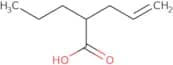
Producto descatalogado(+/-)-2-Propyl-4-pentenoic acid
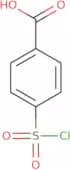
CAS:<p>(+/-)-2-Propyl-4-pentenoic acid is a reactive chemical that is used in the synthesis of sodium salts. This compound has been shown to produce a matrix effect and to be pharmacologically active. (+/-)-2-Propyl-4-pentenoic acid is also used in the preparation of monoclonal antibodies and can be used as an analytical method for determining the concentration–time curve. The use of this compound has been shown to be clinically relevant, with irreversible inhibition observed in rat liver microsomes and fatty acids. In addition, it has been shown to inhibit fatty acid synthase in vitro and can be used as a marker for measuring oxidative stress.</p>Fórmula:C8H14O2Pureza:Min. 95%Forma y color:PowderPeso molecular:142.2 g/mol4-(Chlorosulfonyl)benzoic acid
CAS:<p>4-(Chlorosulfonyl)benzoic acid is a growth factor that has been shown to stimulate epidermal growth. It is used in the treatment of glaucoma, carbonic anhydrase inhibitor therapy, and immobilization. 4-(Chlorosulfonyl)benzoic acid may also be useful in the treatment of viral infections, as it inhibits viral replication by binding to the virus's envelope protein. This drug has been shown to act as an adrenergic receptor agonist and has molecular modeling properties. 4-(Chlorosulfonyl)benzoic acid inhibits matrix metalloproteinase activity and increases the expression of matrix metalloproteinase inhibitors. The drug was not found to inhibit collagenase and elastase activities in vitro.</p>Fórmula:C7H5ClO4SPureza:Min. 95%Forma y color:SolidPeso molecular:220.63 g/molmethyl 5-(((4-bromophenyl)sulfonyl)methyl)furan-2-carboxylate
CAS:<p>Please enquire for more information about methyl 5-(((4-bromophenyl)sulfonyl)methyl)furan-2-carboxylate including the price, delivery time and more detailed product information at the technical inquiry form on this page</p>Pureza:Min. 95%Ref: 3D-FM169416
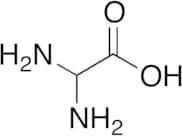
Producto descatalogado2,2-Diaminoacetic Acid
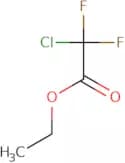
CAS:Producto controladoFórmula:C2H6N2O2Forma y color:NeatPeso molecular:90.081Ethyl 2-chloro-2,2-difluoroacetate
CAS:<p>Ethyl 2-chloro-2,2-difluoroacetate is an organic compound that is used in the synthesis of benzofuran derivatives. It reacts with chlorine to generate a reactive intermediate and then undergoes a nucleophilic substitution reaction to produce the desired compound. The kinetic studies of this reaction have been conducted using isolated yields of the reactants. The active methylene group can undergo a variety of reactions because it has a reactive chlorine atom attached to it. This active substance inhibits the NS5B polymerase, which is responsible for converting RNA into DNA. Ethyl 2-chloro-2,2-difluoroacetate may be used as a potential treatment for inflammatory diseases such as asthma and arthritis because it prevents acetylcholine from binding to its receptor α.</p>Fórmula:C4H5ClF2O2Pureza:Min. 95%Forma y color:Clear LiquidPeso molecular:158.53 g/molRef: 3D-FE104674
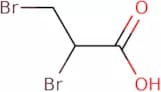
Producto descatalogado2,3-Dibromopropanoic acid
CAS:<p>2,3-Dibromopropanoic acid is a carcinogenic chemical that has been shown to cause liver tumors in rats. It is a nucleophile that reacts with amide groups to form an amide bond. The analytical method for 2,3-dibromopropanoic acid is gas chromatography with flame ionization detection. Its structural formula is CHBrCHBrCOH. It has a carbonyl group and acidic properties, as well as a chloride ion present on the molecule. 2,3-Dibromopropanoic acid is an anxiolytic drug that has been shown to have health effects such as drowsiness and headache.</p>Fórmula:C3H4Br2O2Pureza:Min. 95%Forma y color:PowderPeso molecular:231.87 g/molRef: 3D-FD37217
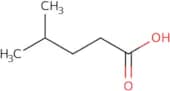
Producto descatalogado4-Methylpentanoic acid
CAS:<p>4-Methylpentanoic acid is a fatty acid that is the product of anaerobic fermentation in the colon and can be found as an end product in the body. It can be used as a substrate in film tests for detecting bacteria, such as Escherichia coli, which are associated with bowel diseases. 4-Methylpentanoic acid has been shown to have inhibitory effects against nuclear dna replication, mitochondrial membrane potential, and energy metabolism. 4-Methylpentanoic acid also has antiinflammatory properties and has been shown to decrease body mass index. The 6-Fluoro-3-indoxyl-beta-D-galactopyranoside is an antituberculosis drug that belongs to the class of rifamycins. It is the most active of the rifamycins for the treatment of tuberculosis. Rifapentine inhibits bacterial growth by binding to DNA-dependent RNA polymerase, thereby preventing transcription</p>Fórmula:C6H12O2Pureza:Min. 95%Peso molecular:116.16 g/molRef: 3D-FM35595
Producto descatalogado4-Piperazinylphenylboronic acid, pinacol ester
CAS:<p>Please enquire for more information about 4-Piperazinylphenylboronic acid, pinacol ester including the price, delivery time and more detailed product information at the technical inquiry form on this page</p>Fórmula:C16H25BN2O2Pureza:Min. 95%Forma y color:PowderPeso molecular:288.19 g/molRef: 3D-FP160911
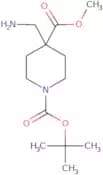
Producto descatalogadoMethyl4-aminomethyl-1-boc-piperidine-4-carboxylate
CAS:<p>Please enquire for more information about Methyl4-aminomethyl-1-boc-piperidine-4-carboxylate including the price, delivery time and more detailed product information at the technical inquiry form on this page</p>Fórmula:C13H24N2O4Pureza:Min. 95%Peso molecular:272.34 g/molIsobutyric acid
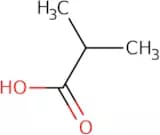
CAS:<p>Isobutyric acid is a short-chain carboxylic acid that has been shown to be a potent inhibitor of congestive heart failure. Isobutyric acid binds to the dinucleotide phosphate and is then hydrolyzed by glycol ethers to release isobutyric acid, which can induce vasodilation. The surface methodology used in this study revealed that Isobutyric acid inhibits the polymerase chain reaction activity of human DNA. This inhibition may be due to its structural similarity with mycobacterial sesquiterpene lactones, which have been shown to inhibit protein synthesis in human cells. Isobutyric acid also has antibacterial properties, and has been shown to have an activity index of 0.5 against methicillin-resistant Staphylococcus aureus (MRSA) isolates and erythromycin-resistant Mycobacterium avium complex isolates.</p>Fórmula:C4H8O2Pureza:Min. 95%Forma y color:Colorless Clear LiquidPeso molecular:88.11 g/molRef: 3D-FI46255
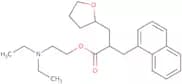
Producto descatalogadoTetrahydro-a-(1-naphthalenylmethyl)-2-furanpropanoic Acid 2-(Diethylamino)ethyl Ester
CAS:Producto controlado<p>Tetrahydro-a-(1-naphthalenylmethyl)-2-furanpropanoic Acid 2-(Diethylamino)ethyl Ester is a fatty acid analog that has antimicrobial properties. It is used in the treatment of bone cancer, and can be used to diagnose and treat other diseases such as glomerular filtration rate, receptor binding, and malonic acid. Tetrahydro-a-(1-naphthalenylmethyl)-2-furanpropanoic Acid 2-(Diethylamino)ethyl Ester binds to receptors on cells, which leads to an increase in the amount of monoamine neurotransmitters released by the cells.</p>Fórmula:C24H33NO3Pureza:Min. 95%Peso molecular:383.52 g/molRef: 3D-FT26121
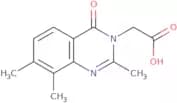
Producto descatalogado(2,7,8-Trimethyl-4-oxoquinazolin-3(4H)-yl)acetic acid
CAS:Producto controlado<p>Please enquire for more information about (2,7,8-Trimethyl-4-oxoquinazolin-3(4H)-yl)acetic acid including the price, delivery time and more detailed product information at the technical inquiry form on this page</p>Fórmula:C13H14N2O3Pureza:Min. 95%Peso molecular:246.26 g/molRef: 3D-FT135574
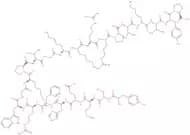
Producto descatalogadoACTH (2-24) (human, bovine, rat) trifluoroacetate salt
CAS:<p>Please enquire for more information about ACTH (2-24) (human, bovine, rat) trifluoroacetate salt including the price, delivery time and more detailed product information at the technical inquiry form on this page</p>Fórmula:C133H205N39O29SPureza:Min. 95%Peso molecular:2,846.36 g/molButyric acid
CAS:<p>Butyric acid is a short-chain fatty acid that is produced by the fermentation of carbohydrates in the colon and it is an important energy source for cells in the colon. It can be found in sodium salts, such as sodium butyrate, or as a free acid. Butyric acid has been shown to have physiological effects on the bowel disease, including improving symptoms of diarrhea and constipation. It also helps to maintain a healthy gut by preventing the growth of unwanted bacteria. Butyric acid inhibits certain enzymes, such as glutamine synthetase, which is important for energy metabolism. The chemical pesticide DDT has been shown to inhibit butyric acid production in cells.</p>Fórmula:C4H8O2Pureza:Min. 95%Forma y color:Clear Colourless LiquidPeso molecular:88.11 g/molRef: 3D-FB159569
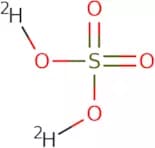
Producto descatalogadoDideuterosulfuric acid
CAS:Producto controlado<p>Dideuterosulfuric acid is a protonated molecule that is found in the tropone class of organic compounds. It has been shown to have optical properties similar to those of ferrocene, which is why it is often used as a replacement for this compound. Dideuterosulfuric acid has been studied extensively using a kinetic method with the goal of determining its mechanism and rate constants. Hydroxyl groups are found on the molecule's trifluoroacetic acid side chains, which may contribute to its reactivity with chloride ions and nitrogen atoms. Electrophotographic measurements show that hydrogen bonding occurs between molecules in dilute solutions.</p>Fórmula:D2SO4Pureza:Min. 95%Peso molecular:100.09 g/molRef: 3D-FD167508
Producto descatalogadoRuthenium(III) nitrosyl nitrate, soluble in 10% dilute nitric acid
CAS:<p>Please enquire for more information about Ruthenium(III) nitrosyl nitrate, soluble in 10% dilute nitric acid including the price, delivery time and more detailed product information at the technical inquiry form on this page</p>Fórmula:RuN4O10Pureza:Min. 95%Forma y color:Clear LiquidPeso molecular:317.09 g/molRef: 3D-FR57258
Producto descatalogadoPeptide YY (canine, mouse, porcine, rat)
CAS:<p>Peptide YY (PYY) is a peptide hormone that inhibits gastric emptying and increases intestinal transit time. This peptide can be given as an intubation, perfusion, or intravenous infusion to increase the absorption of nutrients. It also has the potential to reduce body weight in obese people. PYY is a potent activator of protein synthesis and it has been shown to stimulate lipolysis in adipocytes. PYY is found in the ileum and colon, where it may have its effects on appetite suppression and regulation of gastrointestinal motility.</p>Fórmula:C190H288N54O57Pureza:Min. 95%Forma y color:PowderPeso molecular:4,240.65 g/molRef: 3D-FP109287
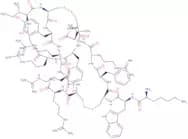
Producto descatalogadoTachyplesin I trifluoroacetate
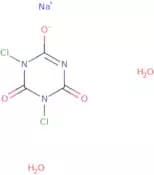
CAS:<p>Tachyplesin I trifluoroacetate is an antimicrobial peptide with action on bacterial and fungal membranes by disrupting their integrity and is used for research on antimicrobial properties and potential therapeutic applications.</p>Fórmula:C99H151N35O19S4•(C2HF3O2)xPureza:Min. 95%Forma y color:PowderPeso molecular:2,263.75 g/molDichloroisocyanuric acid sodium dihydrate
CAS:<p>Dichloroisocyanduric acid sodium salt (DCD) is a disinfectant that is used to control bacteria, fungi, and algae in wastewater treatment plants. DCD has been shown to be an effective antimicrobial agent against bacterial spores and the fungal plant pathogen "Botrytis cinerea" when used at concentrations of 0.1-0.3%. DCD also has a low toxicity for mammals, with LD50 values of 3.5g/kg for rats and 2g/kg for mice. The chemical stability of DCD can be increased by adding sodium carbonate or other alkaline substances in a neutral pH environment.</p>Fórmula:C3HCl2N3O3•(H2O)2•NaPureza:Min. 95%Forma y color:PowderPeso molecular:256.98 g/mol