Aldehídos
Se han encontrado 8574 productos de "Aldehídos"
4-Chloropyridine-3-carboxaldehyde
CAS:4-Chloropyridine-3-carboxaldehyde (4CPCA) is a potent inhibitor of the enzyme, formylation. 4CPCA is synthesized in an experimental method involving reaction of 4-chloropyridine and 3-bromoformaldehyde with a base, followed by hydrolysis to produce the desired product. This compound has been shown to inhibit formylation in vitro with inhibition potentials as high as 5000 μM. The IC 50 value for 4CPCA was found to be 0.6 mM. Formylation activity was inhibited in cell free systems and in cells from rat liver and human erythrocytes. The pharmacokinetic profile of 4CPCA is dose dependent and it is metabolized into inactive compounds by oxidation or conjugation with glucuronic acid.
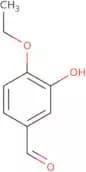
Fórmula:C6H4ClNOPureza:Min. 95%Forma y color:Yellow SolidPeso molecular:141.55 g/mol4-Ethoxy-3-hydroxybenzaldehyde
CAS:4-Ethoxy-3-hydroxybenzaldehyde (4EHB) is a thioacetal that has been shown to be an effective precursor for the synthesis of many other molecules, such as combretastatin a-4. It is prepared by reaction of ethylmagnesium bromide and acetone. 4EHB has been shown to have antifungal properties in vitro, and can be used in the treatment of cancer cells. This compound is volatile and can be easily detected with headspace techniques. The functional group of this molecule is an alcohol group, which is found on the ring structure. Spectroscopic analysis shows that it has a carbonyl group with an OH group attached to it.
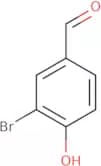
Fórmula:C9H10O3Pureza:Min. 95%Forma y color:Colorless PowderPeso molecular:166.17 g/mol3-Bromo-4-hydroxybenzaldehyde
CAS:3-Bromo-4-hydroxybenzaldehyde is a fluorescence probe that can be used to identify the presence of hydroxyl groups in organic solutions. It reacts with hydrochloric acid to form a green solution and a gas. 3-Bromo-4-hydroxybenzaldehyde has been used to study hydroxyl groups in human serum, plant physiology, and surfactant sodium dodecyl (SDS). This compound has shown potent inhibition against an enzyme called benzoyl peroxide reductase. 3-Bromo-4-hydroxybenzaldehyde is soluble in water, but not in ether. The molecular weight of this compound is 176.3 g/mol.
Fórmula:C7H5BrO2Pureza:Min. 95%Forma y color:PowderPeso molecular:201.02 g/molRef: 3D-FB30014
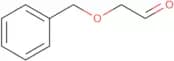
Producto descatalogado2-(Benzyloxy)acetaldehyde
CAS:2-(Benzyloxy)acetaldehyde (BA) is an aldol that is used as an oxidation catalyst for chemical stability. It can be synthesized with the use of asymmetric synthesis and coordination geometry. 2-(Benzyloxy)acetaldehyde has been shown to bind to the enzyme aldehyde dehydrogenase and inhibit its activity, which may lead to the treatment of infectious diseases. This compound also has receptor activity in coli K-12 cells, which can be used to detect BA in urine samples. The reaction mechanism of BA is similar to that of benzimidazole compounds, hydroxyl group, and trifluoroacetic acid.
Fórmula:C9H10O2Pureza:Min. 95%Forma y color:Slightly Yellow Clear LiquidPeso molecular:150.17 g/molRef: 3D-FB11544
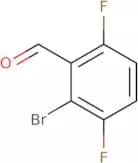
Producto descatalogado2-Bromo-3,6-difluorobenzaldehyde
CAS:2-Bromo-3,6-difluorobenzaldehyde is a versatile building block that is used in the synthesis of many complex compounds. It has been shown to be a useful intermediate and reaction component in organic synthesis. 2-Bromo-3,6-difluorobenzaldehyde can be used as a reagent or speciality chemical for research purposes. This compound has high quality and is a useful scaffold for the preparation of fine chemicals.
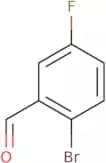
Fórmula:C7H3BrF2OPureza:Min. 95%Forma y color:Off-White PowderPeso molecular:221 g/mol2-Bromo-5-fluorobenzaldehyde
CAS:2-Bromo-5-fluorobenzaldehyde is a chemical compound that has been shown to inhibit the activity of ns3 protease, an enzyme responsible for the cleavage of peptides in HIV. 2-Bromo-5-fluorobenzaldehyde binds to the active site of ns3 protease and prevents it from carrying out its function. This drug has also been shown to bind to the active site of ns5b polymerase and inhibit its activity, which is necessary for viral DNA synthesis. 2-Bromo-5-fluorobenzaldehyde has been used as a fungicide and has shown high potency against Candida albicans, Cryptococcus neoformans, Saccharomyces cerevisiae, and Aspergillus fumigatus.
Fórmula:C7H4BrFOPureza:Min. 95%Forma y color:PowderPeso molecular:203.01 g/molRef: 3D-FB63995
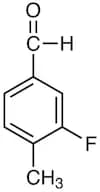
Producto descatalogado3-Fluoro-4-methylbenzaldehyde
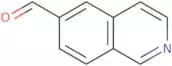
CAS:Fórmula:C8H7FOPureza:>95.0%(GC)Forma y color:Light yellow to Yellow to Orange clear liquidPeso molecular:138.14Isoquinoline-6-carbaldehyde
CAS:Isoquinoline-6-carbaldehyde is a fine chemical that belongs to the group of research chemicals. It can be used as a reagent for organic synthesis, a speciality chemical, or a building block in complex organic molecules. Isoquinoline-6-carbaldehyde is also an intermediate for the synthesis of many pharmaceuticals and other useful compounds. Isoquinoline-6-carbaldehyde has been shown to react with 2-aminoethanol to form (2E)-3-(4-(1,1'-biphenyl)-2-yl)butanal, which is an important reaction component in the synthesis of nitroaromatics. Isoquinoline-6-carbaldehyde is also a versatile scaffold for the synthesis of other fine chemicals.
Fórmula:C10H7NOPureza:Min. 95%Forma y color:SolidPeso molecular:157.17 g/molRef: 3D-FI53537
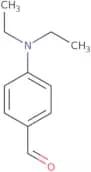
Producto descatalogado4-Diethylaminobenzaldehyde
CAS:4-Diethylaminobenzaldehyde is an organic compound that contains a hydroxyl group. It is a fluorescent probe and can be used to measure the transcriptional regulation of genes. This molecule has been shown to be an effective fluorescence probe for the detection of cb2 receptors in Langmuir adsorption isotherms and LC-MS/MS methods. 4-Diethylaminobenzaldehyde has also been shown to have chemopreventive properties against carcinoma cells.
Fórmula:C11H15NOPureza:Min. 98%Forma y color:PowderPeso molecular:177.24 g/molRef: 3D-FD54843
Producto descatalogado8-Nonenal
CAS:Producto controladoApplications 8-Nonenal is used as a reactant in the preparation of macrocyclic Z-enoates and (E,Z)- or (Z,E)-dienoates through catalytic stereoselective ring-closing metathesis.
References Zhang, H., et al.: JACS., 136, 16493 (2014)Fórmula:C9H16OForma y color:NeatPeso molecular:140.224-Bromobenzaldehyde
CAS:Please enquire for more information about 4-Bromobenzaldehyde including the price, delivery time and more detailed product information at the technical inquiry form on this page
Fórmula:C7H5BrOPeso molecular:185.03 g/molRef: 3D-B-5782
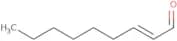
Producto descatalogadoTrans-2-nonenal
CAS:Trans-2-nonenal is a monoclonal antibody that recognizes the physiological function of cardiac and rat liver microsomes. It has been shown to inhibit enzyme activities in both cell lines. Trans-2-nonenal has also been shown to protect against ischemia/reperfusion injury in rats by reducing the release of intracellular Ca2+ and ATP levels. Trans-2-nonenal is genotoxic and induces oxidative injury, which may be due to its ability to react with caproic acid to form reactive oxygen species.
Fórmula:C9H16OPureza:Min. 95%Peso molecular:140.22 g/molRef: 3D-FT35477
Producto descatalogadoFerrocenecarboxaldehyde
CAS:Ferrocenecarboxaldehyde is a fatty acid with a ferrocene carboxylic acid group. It has been shown to have antimicrobial activity against bacteria, fungi, and yeast when it was mixed with nitric acid. Ferrocenecarboxaldehyde can be synthesized by reacting ferrocene with glycerol in the presence of sulfuric acid. The reaction mechanism of this synthesis is as follows: The structural analysis of ferrocenecarboxaldehyde has been studied using FT-IR spectroscopy and NMR spectroscopy. The chemical structure of ferrocenecarboxaldehyde is as follows: The asymmetric synthesis of ferrocenecarboxaldehyde is shown below:
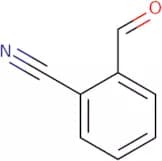
Fórmula:C11H10FeOPureza:Min. 95%Forma y color:PowderPeso molecular:214.04 g/mol2-Cyanobenzaldehyde
CAS:2-Cyanobenzaldehyde is an aldehyde that reacts with nucleophiles such as trifluoromethanesulfonic acid to form a molecule. 2-Cyanobenzaldehyde has potent inhibitory activity against the kinase glycogen synthase kinase 3 (GSK3) and can be used to treat autoimmune diseases. It also reacts with hydrochloric acid in solution to form an intermediate, which is then reacted with glycine and ATP to produce a chiral compound. The product of this reaction has been shown to be active methylene, which was synthesized by asymmetric synthesis.
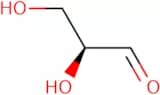
Fórmula:C8H5NOPureza:Min. 95%Forma y color:PowderPeso molecular:131.13 g/molL-(-)-Glyceraldehyde - Technical grade aqueous solution
CAS:Please enquire for more information about L-(-)-Glyceraldehyde - Technical grade aqueous solution including the price, delivery time and more detailed product information at the technical inquiry form on this page
Fórmula:C3H6O3Pureza:Min. 95%Forma y color:Clear Viscous LiquidPeso molecular:90.08 g/molRef: 3D-FG12041
Producto descatalogadoFormaldehyde-d2 solution, 20 wt. % in D2O
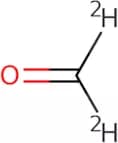
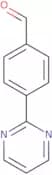
CAS:Producto controladoFormaldehyde-d2 solution is a formaldehyde solution that contains deuterium, which has the same chemical properties as hydrogen but has an additional neutron in its nucleus. Formaldehyde-d2 solution is used to prepare samples for NMR and ESI-MS experiments. The reaction mechanism of formaldehyde is believed to be an acid-catalyzed hydrolysis of the hydrogen bond between formaldehyde and methanol. Deuterium isotopes are generally considered to be non-radioactive and have little or no effect on biological systems. Formaldehyde-d2 solution can inhibit fatty acids from binding to the surface of potatoes, which may make it useful in treating autoimmune diseases.Fórmula:CD2OPureza:Min. 95%Forma y color:Clear LiquidPeso molecular:32.04 g/mol4-(Pyrimidin-2-yl)benzaldehyde
CAS:Please enquire for more information about 4-(Pyrimidin-2-yl)benzaldehyde including the price, delivery time and more detailed product information at the technical inquiry form on this page
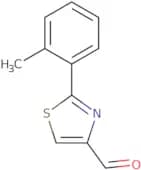
Fórmula:C11H8N2OPureza:Min. 95%Forma y color:PowderPeso molecular:184.19 g/mol2-O-Tolyl-thiazole-4-carbaldehyde
CAS:Please enquire for more information about 2-O-Tolyl-thiazole-4-carbaldehyde including the price, delivery time and more detailed product information at the technical inquiry form on this page
Fórmula:C11H9NOSPureza:Min. 95%Peso molecular:203.26 g/molRef: 3D-FT51479
Producto descatalogadoValiphenal
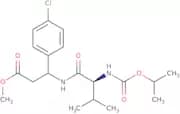
CAS:Valiphenal is a chemical compound that belongs to the amide class. It has been shown to control the growth of various bacterial strains, such as Escherichia coli and Salmonella enterica serovar Typhimurium. Valiphenal inhibits lipid biosynthesis in bacteria by binding to bacterial matrix effect enzymes, which are involved in fatty acid synthesis. This inhibition leads to a decrease in the production of lipids, which are an important component of bacterial cell membranes. Valiphenal also inhibits mitochondrial cytochrome c oxidase and can be used as an analytical tool for determining the presence of this enzyme in cells. Valiphenal is also used as an agrochemical to control pests on vegetables such as aubergines. Valiphenal is extensively metabolized by esterases or glucuronidases, oxidation by cytochrome P450 enzymes, reduction by glutathione reductase, or conjugation with glucuronic acid.
Fórmula:C19H27ClN2O5Pureza:Min. 98 Area-%Forma y color:White Clear LiquidPeso molecular:398.88 g/molBetulinaldehyde
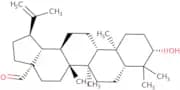
CAS:Producto controladoBetulinaldehyde is a natural compound that belongs to the group of betulinic acid. It has been shown to have antimicrobial activity against oral pathogens and has been shown to inhibit the growth of bacteria by reacting with their cell walls. Betulinaldehyde has also been shown to have an effect on autoimmune diseases such as multiple sclerosis, as well as infectious diseases such as HIV and tuberculosis. Betulinaldehyde can be extracted from the bark of birch trees using acetate, which is then reacted with hydrogen peroxide in a reaction solution. The resulting product is purified using preparative high-performance liquid chromatography (HPLC).
Fórmula:C30H48O2Pureza:Min. 95%Forma y color:PowderPeso molecular:440.7 g/mol5-(2-Bromo-acetyl)-2-hydroxy-benzaldehyde
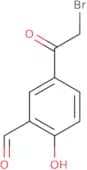
CAS:5-Bromo-2-hydroxybenzaldehyde is an organic compound with a chemical formula of CHBrO. It is a white solid that is soluble in water, ethanol, and acetone. The synthesis of 5-bromo-2-hydroxybenzaldehyde has been achieved by the acylation reaction of benzaldehyde with bromide ion. The selectivity for this reaction can be increased by using sodium borohydride as a reducing agent instead of lithium aluminum hydride. This method can be applied to the synthesis of salmeterol, which is used as a medicine in the treatment of asthma.
Fórmula:C9H7BrO3Pureza:Min. 95%Peso molecular:243.05 g/mol2-Bromo-6-methylpyridine-3-carboxaldehyde
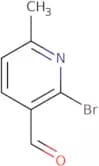
CAS:2-Bromo-6-methylpyridine-3-carboxaldehyde (BMPCA) is a pharmacological agent that belongs to the group of antagonists. It has been shown to be a potent antagonist at the NMDA receptor and may be used for treating neuropathic pain. BMPCA also has been shown to have competitive inhibition at the naphthyridine receptor, which may allow it to act as an antagonist or an agonist depending on its binding site. The regioisomeric analogs of BMPCA are 2-(2,5-dichloropyridyl)-6-methylpyridine-3-carboxaldehyde and 2-(2,5-dimethylpyridyl)-6-methylpyridine-3-carboxaldehyde. These analogs have been shown to inhibit the growth of tumor cells in vitro and in vivo.
Fórmula:C7H6BrNOPureza:Min. 95%Peso molecular:200.03 g/mol3,5-Dimethylbenzaldehyde
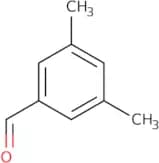
CAS:3,5-Dimethylbenzaldehyde is an organic compound that is a colorless liquid. It has a chemical formula of C9H12O2 and is classified as an aldehyde. 3,5-Dimethylbenzaldehyde can be synthesized by the reaction of isopropyl palmitate with xylene in the presence of carbon as a source. The reaction time required for this synthesis is approximately one day. The major products of this reaction are 3,5-dimethylbenzaldehyde and 2-methylbutanal. This reaction mechanism can also be used to determine the concentration of urinary metabolites in human urine samples. Analysis of these samples requires an organic solvent such as hexane or dichloromethane. Kinetic data was collected from the rate at which zinc powder reacts with 3,5-dimethylbenzaldehyde over time at different concentrations. A kinetic experiment was conducted using c–h bond activation to produce 3,5-dimethoxy
Fórmula:C9H10OPureza:Min. 95%Forma y color:Colorless Clear LiquidPeso molecular:134.18 g/mol2,3,5-Trichlorobenzaldehyde
CAS:2,3,5-Trichlorobenzaldehyde is a chemical compound that has been shown to have anticancer and apoptotic effects. It inhibits the growth of bacteria by chelating iron ions and inhibiting bacterial dna synthesis. 2,3,5-Trichlorobenzaldehyde has also been shown to inhibit the growth of cancer cells in culture in an experimental study. This chemical has been used as a substrate for nmr spectroscopy to study its functional groups and radical scavenging activities. 2,3,5-Trichlorobenzaldehyde can be synthesized from phenacyl chloride and benzaldehyde in the presence of hydrogen chloride gas. The carbonyl group in 2,3,5-trichlorobenzaldehyde may cause metabolic disorders such as diabetes mellitus or hyperglycemia.
Fórmula:C7H3Cl3OPureza:Min. 95%Forma y color:PowderPeso molecular:209.46 g/mol