Aldehídos
Se han encontrado 8574 productos de "Aldehídos"
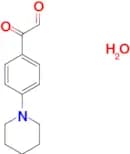
4-Piperidinylphenylglyoxal hydrate
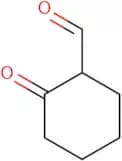
CAS:Pureza:95.0%Forma y color:SolidPeso molecular:235.28300476074222-Oxocyclohexanecarbaldehyde
CAS:2-Oxocyclohexanecarbaldehyde is a bifunctional carbonyl compound that reacts with amines to form carbinols. It can be used as a cheaper and more environmentally friendly alternative to the use of piperidine. 2-Oxocyclohexanecarbaldehyde also reacts with potassium hydride to form the corresponding ketones. The reaction of 2-oxocyclohexanecarbaldehyde with primary amines leads to isomeric products, depending on the position of substitution on the aromatic ring. This compound has been shown to react electrochemically in an asymmetric synthesis and has been used in the synthesis of morpholine, which is an important intermediate for pharmaceuticals, agrochemicals, and other chemical compounds.
Fórmula:C7H10O2Pureza:Min. 90%Forma y color:Clear LiquidPeso molecular:126.15 g/molRef: 3D-FO126646
Producto descatalogado2-Hydroxy-4-morpholinobenzaldehyde
CAS:Please enquire for more information about 2-Hydroxy-4-morpholinobenzaldehyde including the price, delivery time and more detailed product information at the technical inquiry form on this page
Fórmula:C11H13NO3Pureza:Min. 95%Peso molecular:207.23 g/molRef: 3D-FH52889
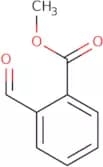
Producto descatalogado2-Carbomethoxybenzaldehyde
CAS:2-Carbomethoxybenzaldehyde (2CMB) is a synthetic chemical compound that has been used as an efficient method for the synthesis of amines. The carbonyl group in 2CMB reacts with nucleophiles, such as amines, to form a tetrahydroisoquinoline derivative. This nucleophilic attack leads to the formation of an unstable intermediate that can be isolated and purified by trifluoroacetic acid (TFA). 2CMB is also used in the synthesis of quinoline derivatives and naphthalene derivatives. The acidic properties of 2CMB allow it to react with carboxylic acids, leading to the formation of esters.
Fórmula:C9H8O3Pureza:Min. 95%Forma y color:Colorless PowderPeso molecular:164.16 g/molRef: 3D-FC70309
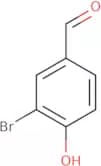
Producto descatalogado3-Bromo-4-hydroxybenzaldehyde
CAS:3-Bromo-4-hydroxybenzaldehyde is a fluorescence probe that can be used to identify the presence of hydroxyl groups in organic solutions. It reacts with hydrochloric acid to form a green solution and a gas. 3-Bromo-4-hydroxybenzaldehyde has been used to study hydroxyl groups in human serum, plant physiology, and surfactant sodium dodecyl (SDS). This compound has shown potent inhibition against an enzyme called benzoyl peroxide reductase. 3-Bromo-4-hydroxybenzaldehyde is soluble in water, but not in ether. The molecular weight of this compound is 176.3 g/mol.
Fórmula:C7H5BrO2Pureza:Min. 95%Forma y color:PowderPeso molecular:201.02 g/molRef: 3D-FB30014
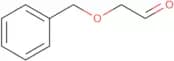
Producto descatalogado2-(Benzyloxy)acetaldehyde
CAS:2-(Benzyloxy)acetaldehyde (BA) is an aldol that is used as an oxidation catalyst for chemical stability. It can be synthesized with the use of asymmetric synthesis and coordination geometry. 2-(Benzyloxy)acetaldehyde has been shown to bind to the enzyme aldehyde dehydrogenase and inhibit its activity, which may lead to the treatment of infectious diseases. This compound also has receptor activity in coli K-12 cells, which can be used to detect BA in urine samples. The reaction mechanism of BA is similar to that of benzimidazole compounds, hydroxyl group, and trifluoroacetic acid.
Fórmula:C9H10O2Pureza:Min. 95%Forma y color:Slightly Yellow Clear LiquidPeso molecular:150.17 g/molRef: 3D-FB11544
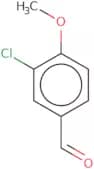
Producto descatalogado3-Chloro-4-methoxybenzaldehyde
CAS:3-Chloro-4-methoxybenzaldehyde is a chemical compound that belongs to the class of aromatic compounds. It is synthesized by reacting 3-chlorobenzaldehyde with methoxyacetone in a hydroxylation reaction. The asymmetric synthesis of 3-chloro-4-methoxybenzaldehyde was achieved by using a chiral auxiliary, which is an organic molecule that can be used to control the stereochemistry of other reactions. This product has high cytotoxicity and is able to cause melanogenesis (production of melanin) when applied to rat striatal membranes.
Fórmula:C8H7ClO2Pureza:Min. 95%Forma y color:PowderPeso molecular:170.59 g/molRef: 3D-FC70306
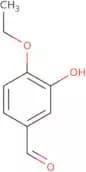
Producto descatalogado4-Ethoxy-3-hydroxybenzaldehyde
CAS:4-Ethoxy-3-hydroxybenzaldehyde (4EHB) is a thioacetal that has been shown to be an effective precursor for the synthesis of many other molecules, such as combretastatin a-4. It is prepared by reaction of ethylmagnesium bromide and acetone. 4EHB has been shown to have antifungal properties in vitro, and can be used in the treatment of cancer cells. This compound is volatile and can be easily detected with headspace techniques. The functional group of this molecule is an alcohol group, which is found on the ring structure. Spectroscopic analysis shows that it has a carbonyl group with an OH group attached to it.
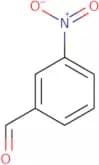
Fórmula:C9H10O3Pureza:Min. 95%Forma y color:Colorless PowderPeso molecular:166.17 g/mol3-Nitrobenzaldehyde
CAS:3-Nitrobenzaldehyde is an organic compound that is used in the synthesis of monoclonal antibodies for use in cancer research. It has been shown to have genotoxic and carcinogenic effects, as it binds to nucleic acids and inhibits DNA replication. 3-Nitrobenzaldehyde has been shown to be effective against a variety of bacteria, including methicillin-resistant Staphylococcus aureus (MRSA) and Clostridium perfringens. This compound also inhibits protein synthesis by binding with amines and hydrogen bonding with the amino acid residues of proteins.
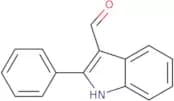
Fórmula:C7H5NO3Pureza:Min. 95%Forma y color:PowderPeso molecular:151.12 g/mol2-Phenylindole-3-carboxaldehyde
CAS:2-Phenylindole-3-carboxaldehyde is an organic compound that belongs to the class of bioactive molecules. It is a nitrogen heterocycle that has been shown to inhibit the growth of cancer cells in culture. 2-Phenylindole-3-carboxaldehyde has also been shown to have anti-inflammatory and antimicrobial properties. This molecule can be used in the treatment of cancer, as it inhibits the growth of tumor cells by inhibiting DNA synthesis, which leads to cell death. The molecular structure can be altered by allylation or replacement with other functional groups. The 2-phenylindole moiety can be modified at its C2 position, altering its pharmacological properties and may lead to new anticancer drugs.
Fórmula:C15H11NOPureza:Min. 95%Forma y color:PowderPeso molecular:221.25 g/molRef: 3D-FP53602
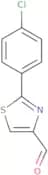
Producto descatalogado2-(4-Chlorophenyl)thiazole-4-carbaldehyde
CAS:Please enquire for more information about 2-(4-Chlorophenyl)thiazole-4-carbaldehyde including the price, delivery time and more detailed product information at the technical inquiry form on this page
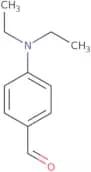
Fórmula:C10H6ClNOSPureza:Min. 95%Forma y color:PowderPeso molecular:223.68 g/mol4-Diethylaminobenzaldehyde
CAS:4-Diethylaminobenzaldehyde is an organic compound that contains a hydroxyl group. It is a fluorescent probe and can be used to measure the transcriptional regulation of genes. This molecule has been shown to be an effective fluorescence probe for the detection of cb2 receptors in Langmuir adsorption isotherms and LC-MS/MS methods. 4-Diethylaminobenzaldehyde has also been shown to have chemopreventive properties against carcinoma cells.
Fórmula:C11H15NOPureza:Min. 98%Forma y color:PowderPeso molecular:177.24 g/molRef: 3D-FD54843
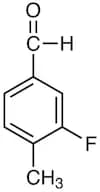
Producto descatalogado3-Fluoro-4-methylbenzaldehyde
CAS:Fórmula:C8H7FOPureza:>95.0%(GC)Forma y color:Light yellow to Yellow to Orange clear liquidPeso molecular:138.148-Nonenal
CAS:Producto controladoApplications 8-Nonenal is used as a reactant in the preparation of macrocyclic Z-enoates and (E,Z)- or (Z,E)-dienoates through catalytic stereoselective ring-closing metathesis.
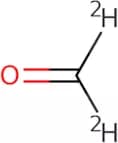
References Zhang, H., et al.: JACS., 136, 16493 (2014)Fórmula:C9H16OForma y color:NeatPeso molecular:140.22Formaldehyde-d2 solution, 20 wt. % in D2O
CAS:Producto controladoFormaldehyde-d2 solution is a formaldehyde solution that contains deuterium, which has the same chemical properties as hydrogen but has an additional neutron in its nucleus. Formaldehyde-d2 solution is used to prepare samples for NMR and ESI-MS experiments. The reaction mechanism of formaldehyde is believed to be an acid-catalyzed hydrolysis of the hydrogen bond between formaldehyde and methanol. Deuterium isotopes are generally considered to be non-radioactive and have little or no effect on biological systems. Formaldehyde-d2 solution can inhibit fatty acids from binding to the surface of potatoes, which may make it useful in treating autoimmune diseases.Fórmula:CD2OPureza:Min. 95%Forma y color:Clear LiquidPeso molecular:32.04 g/mol2-Cyanobenzaldehyde
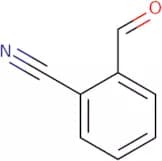
CAS:2-Cyanobenzaldehyde is an aldehyde that reacts with nucleophiles such as trifluoromethanesulfonic acid to form a molecule. 2-Cyanobenzaldehyde has potent inhibitory activity against the kinase glycogen synthase kinase 3 (GSK3) and can be used to treat autoimmune diseases. It also reacts with hydrochloric acid in solution to form an intermediate, which is then reacted with glycine and ATP to produce a chiral compound. The product of this reaction has been shown to be active methylene, which was synthesized by asymmetric synthesis.
Fórmula:C8H5NOPureza:Min. 95%Forma y color:PowderPeso molecular:131.13 g/molTrans-2-nonenal
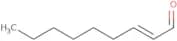
CAS:Trans-2-nonenal is a monoclonal antibody that recognizes the physiological function of cardiac and rat liver microsomes. It has been shown to inhibit enzyme activities in both cell lines. Trans-2-nonenal has also been shown to protect against ischemia/reperfusion injury in rats by reducing the release of intracellular Ca2+ and ATP levels. Trans-2-nonenal is genotoxic and induces oxidative injury, which may be due to its ability to react with caproic acid to form reactive oxygen species.
Fórmula:C9H16OPureza:Min. 95%Peso molecular:140.22 g/molRef: 3D-FT35477
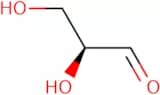
Producto descatalogadoL-(-)-Glyceraldehyde - Technical grade aqueous solution
CAS:Please enquire for more information about L-(-)-Glyceraldehyde - Technical grade aqueous solution including the price, delivery time and more detailed product information at the technical inquiry form on this page
Fórmula:C3H6O3Pureza:Min. 95%Forma y color:Clear Viscous LiquidPeso molecular:90.08 g/molRef: 3D-FG12041
Producto descatalogadoBetulinaldehyde
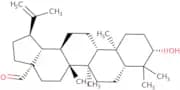
CAS:Producto controladoBetulinaldehyde is a natural compound that belongs to the group of betulinic acid. It has been shown to have antimicrobial activity against oral pathogens and has been shown to inhibit the growth of bacteria by reacting with their cell walls. Betulinaldehyde has also been shown to have an effect on autoimmune diseases such as multiple sclerosis, as well as infectious diseases such as HIV and tuberculosis. Betulinaldehyde can be extracted from the bark of birch trees using acetate, which is then reacted with hydrogen peroxide in a reaction solution. The resulting product is purified using preparative high-performance liquid chromatography (HPLC).
Fórmula:C30H48O2Pureza:Min. 95%Forma y color:PowderPeso molecular:440.7 g/mol2,3,5-Trichlorobenzaldehyde
CAS:2,3,5-Trichlorobenzaldehyde is a chemical compound that has been shown to have anticancer and apoptotic effects. It inhibits the growth of bacteria by chelating iron ions and inhibiting bacterial dna synthesis. 2,3,5-Trichlorobenzaldehyde has also been shown to inhibit the growth of cancer cells in culture in an experimental study. This chemical has been used as a substrate for nmr spectroscopy to study its functional groups and radical scavenging activities. 2,3,5-Trichlorobenzaldehyde can be synthesized from phenacyl chloride and benzaldehyde in the presence of hydrogen chloride gas. The carbonyl group in 2,3,5-trichlorobenzaldehyde may cause metabolic disorders such as diabetes mellitus or hyperglycemia.
Fórmula:C7H3Cl3OPureza:Min. 95%Forma y color:PowderPeso molecular:209.46 g/mol