Lactonas
Las lactonas son una clase de ésteres caracterizados por una estructura cíclica formada a través de la esterificación intramolecular de ácidos hidroxílicos. Estos compuestos son conocidos por sus estructuras anulares distintivas, que pueden variar de tres a siete o más miembros. Las lactonas se utilizan ampliamente en la industria de sabores y fragancias debido a sus agradables aromas, así como en farmacéuticos y agroquímicos por sus diversas actividades biológicas. En CymitQuimica, ofrecemos una selección completa de lactonas de alta calidad para apoyar sus aplicaciones de investigación e industriales, asegurando un rendimiento confiable y efectivo en sus proyectos.
Se han encontrado 490 productos de "Lactonas"
Ordenar por
Pureza (%)
0
100
|
0
|
50
|
90
|
95
|
100
4',5'-Dihydrobergapten
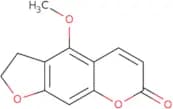
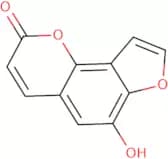
CAS:<p>4',5'-Dihydrobergapten is a naturally occurring furanocoumarin, which is sourced primarily from various plant species, including members of the Rutaceae family. This compound is a derivative of psoralen and structurally categorized as a linear furanocoumarin. Its mode of action primarily involves intercalation into DNA, leading to photoactivation upon UVA exposure, which induces DNA cross-linking and inhibition of nucleic acid synthesis. Such mechanisms are pivotal for its biological properties.</p>Fórmula:C12H10O4Pureza:Min. 95%Peso molecular:218.21 g/molPeuarin
CAS:<p>Please enquire for more information about Peuarin including the price, delivery time and more detailed product information at the technical inquiry form on this page</p>Fórmula:C20H22O6Pureza:Min. 95%Peso molecular:358.39 g/mol7-Ethoxy-4-methylcoumarin
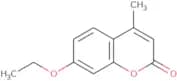
CAS:<p>7-Ethoxy-4-methylcoumarin is a fluorescent probe, which is a synthetic compound commonly sourced from organic chemical synthesis. With its distinct chromophore, this compound becomes highly fluorescent upon enzymatic cleavage, offering a reliable mechanism for the detection of specific enzymatic activities. The mode of action involves the enzymatic cleavage of the ethoxy group, leading to the release of 4-methylumbelliferone, a fluorescent product. This conversion provides a measurable signal that correlates with enzyme activity, making it an invaluable tool in studying enzyme kinetics.</p>Fórmula:C12H12O3Pureza:Min. 95%Forma y color:PowderPeso molecular:204.22 g/molMurralongin
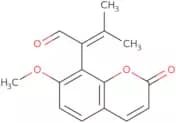
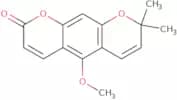
CAS:<p>Murralongin is a natural compound that falls under the category of sesquiterpenes, a class of terpenoids characterized by their three isoprene units. It is derived from the leaves and stems of the plant Eremophila mitchellii, a species known for its rich diversity of bioactive compounds often utilized in traditional medicine. The primary mode of action of Murralongin involves modulation of specific enzymatic pathways, potentially influencing a range of biological processes, including anti-inflammatory and antimicrobial activities.</p>Fórmula:C15H14O4Pureza:Min. 95%Peso molecular:258.27 g/molXanthoxyletin
CAS:<p>Xanthoxyletin is a coumarin, which is a type of natural organic compound commonly found in plants, particularly in the Rutaceae family. It is sourced from various plant species, including Zanthoxylum, known for their ethnobotanical uses. Xanthoxyletin functions primarily through its biochemical activity, including the inhibition of certain enzymes and modulation of cellular pathways that influence its pharmacological effects.</p>Fórmula:C15H14O4Pureza:Min. 95%Forma y color:PowderPeso molecular:258.27 g/molPangelin
CAS:<p>Pangelin is a novel biochemical agent, which is meticulously derived from a unique microbial source with advanced bioconversion techniques. This product functions primarily through a targeted enzymatic mechanism that modulates specific biochemical pathways, ensuring high specificity and efficacy in its action. The enzymatic process engages with targeted substrates to yield predictable and controlled outcomes, making it a potentially valuable tool in biochemical research and applications.</p>Fórmula:C16H14O5Pureza:Min. 95%Peso molecular:286.28 g/molOstruthin
CAS:<p>Ostruthin is a naturally occurring coumarin derivative, which is isolated from plants such as *Peucedanum ostruthium* and other species within the Apiaceae family. It functions as an enzyme inhibitor, acting primarily through its interference with various cellular processes, including the inhibition of specific enzyme pathways that contribute to its bioactivity. Ostruthin exhibits a range of biological activities, making it of significant interest in pharmacological research.</p>Fórmula:C19H22O3Pureza:Min. 95%Peso molecular:298.38 g/mol3-Acetyl-5-hydroxymethyl-7-hydroxycoumarin
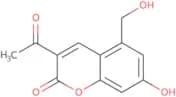
CAS:<p>3-Acetyl-5-hydroxymethyl-7-hydroxycoumarin is a synthetic coumarin derivative, which is a class of organic compounds often found in natural products. These compounds are derived from plant sources and are known for their significant biochemical effects and aromatic properties. The mode of action of 3-Acetyl-5-hydroxymethyl-7-hydroxycoumarin involves interactions at the molecular level, where it can exhibit various biological activities, such as antioxidant and antimicrobial effects. Due to the hydroxyl and acetyl functional groups present, it can participate in redox reactions and binding interactions, affecting biochemical pathways.</p>Fórmula:C12H10O5Pureza:Min. 95%Forma y color:Light (Or Pale) Yellow To Orange Yellow SolidPeso molecular:234.2 g/molOxypeucedanin hydrate
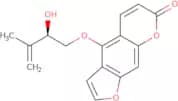
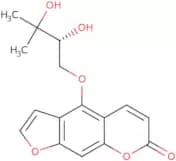
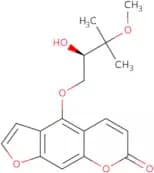
CAS:Oxypeucedanin hydrate is a natural furanocoumarin compound, which is derived from various plant sources, such as citrus fruits and members of the Apiaceae family. As a secondary metabolite, it plays a role in plant defense mechanisms against herbivores and pathogens.Pureza:Min. 95%Oxypeucedanin methanolate
CAS:<p>Oxypeucedanin methanolate is a naturally occurring furanocoumarin, which is a type of organic compound found predominantly in several citrus plants. This compound is derived from the peels and essential oils of these plants, highlighting its botanical source that is rich in phytochemicals.</p>Fórmula:C17H18O6Pureza:Min. 95%Peso molecular:318.32 g/molCichoriin
CAS:<p>Cichoriin is a coumarin glycoside, which is a type of phytochemical compound found in certain plants. It is primarily sourced from plants of the Asteraceae family, particularly chicory (Cichorium intybus). The compound exhibits its biochemical effects by interacting with various cellular pathways, including acting as an antioxidant and displaying potential anti-inflammatory and antimicrobial properties.</p>Fórmula:C15H16O9Pureza:Min. 95%Peso molecular:340.28 g/molSuberosin epoxide
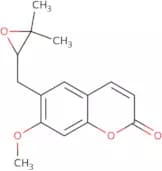
CAS:<p>Suberosin epoxide is a naturally occurring compound, classified as a type of sesquiterpene lactone, which is extracted from certain plant species, particularly those belonging to the Rutaceae family. This compound is of significant interest due to its biologically active properties. Its mode of action typically involves the modulation of enzymatic pathways within biological systems, often interacting with cellular proteins and potentially affecting signal transduction processes.</p>Pureza:Min. 95%7,8-Dihydroxy-4-methylcoumarin
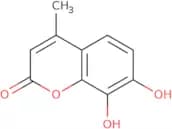
CAS:<p>7,8-Dihydroxy-4-methylcoumarin is a bioactive compound, specifically a derivative of coumarin. This compound is naturally derived from plant sources, where it acts as a metabolite in various biochemical pathways. Its chemical structure is characterized by the presence of two hydroxyl groups at the 7 and 8 positions, along with a methyl group at the 4 position of the coumarin core, contributing to its unique pharmacological profile.</p>Fórmula:C10H8O4Pureza:Min. 95%Peso molecular:192.17 g/molMoluccanin
CAS:<p>Please enquire for more information about Moluccanin including the price, delivery time and more detailed product information at the technical inquiry form on this page</p>Pureza:Min. 95%Selinidin
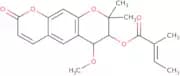
CAS:<p>Selinidin is a phytochemical compound, which is derived from the natural source of the Brunsvigia bosmaniae plant. As a bioactive constituent of this plant, it is characterized by its unique structure and chemical properties, enabling it to interact with a variety of cellular targets, primarily through modulation of inflammatory pathways. The mode of action of Selinidin involves the inhibition of pro-inflammatory cytokines and mediators, thereby reducing inflammation and oxidative stress at the cellular level.</p>Fórmula:C19H20O5Pureza:Min. 95%Peso molecular:328.36 g/molHeratomol
CAS:<p>Please enquire for more information about Heratomol including the price, delivery time and more detailed product information at the technical inquiry form on this page</p>Fórmula:C11H6O4Pureza:Min. 95%Peso molecular:202.16 g/molcis-Khellactone
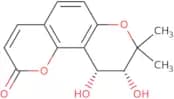
CAS:<p>cis-Khellactone is a naturally occurring organic compound, which is a type of coumarin derivative sourced predominantly from the roots of Peucedanum and Angelica species, plants native to various regions. These botanical sources are known for yielding secondary metabolites with diverse biological properties.</p>Fórmula:C14H14O5Pureza:Min. 95%Peso molecular:262.26 g/mol5,7-Dihydroxycoumarin
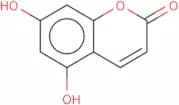
CAS:5,7-Dihydroxycoumarin is a natural product isolated from the dichloromethane extract of the inflorescences of Macaranga triloba.Fórmula:C9H6O4Pureza:98.76%Forma y color:SolidPeso molecular:178.14Peucedanol methyl ether
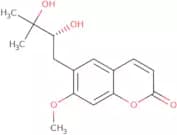
CAS:<p>Peucedanol methyl ether is a bioactive natural compound, which is derived from certain species of the Peucedanum genus, commonly found in various geographic regions. This compound is predominantly obtained from natural extracts through advanced chromatographic techniques. Its molecular structure is characterized by its functional groups, which contribute to its biological activities.</p>Fórmula:C15H18O5Pureza:Min. 95%(+)-Peucedanol
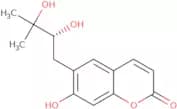
CAS:<p>(+)-Peucedanol is a sesquiterpene compound, which is a type of natural organic compound composed of three isoprene units resulting in a 15-carbon backbone. It is derived from various species within the plant genus Peucedanum, known for their rich content of bioactive compounds. The stereoisomerism indicated by the "(+)" suggests a specific three-dimensional configuration that may influence its biological activity.</p>Fórmula:C14H16O5Pureza:Min. 95%Peso molecular:264.27 g/mol