Heterociclos mixtos
En esta sección, encontrará una colección de compuestos cíclicos que tienen átomos de al menos dos elementos diferentes como miembros de la estructura del anillo. Los heterociclos mixtos son versátiles y ampliamente utilizados en la síntesis de productos farmacéuticos, agroquímicos y materiales debido a sus diversas propiedades químicas y actividades biológicas. Estos compuestos son esenciales en el desarrollo de moléculas complejas y materiales innovadores. En CymitQuimica, ofrecemos una amplia gama de heterociclos mixtos de alta calidad para apoyar sus investigaciones y aplicaciones industriales.
Subcategorías de "Heterociclos mixtos"
- 7H-Purina(1 productos)
- Azaindoles(25 productos)
- Benzofuranos(923 productos)
- Benzotiofenos(690 productos)
- Benzotriazoles(436 productos)
- Benzoxazina(30 productos)
- Benzoxazol(39 productos)
- Carbolines(37 productos)
- Indazoles(2.016 productos)
- Isoquinolina(1.063 productos)
- Morfolina(2.207 productos)
- Oxadiazoles(1.168 productos)
- Oxaziridinas(4 productos)
- Oxazol(152 productos)
- Pirazolo [1,5-a] piridina(232 productos)
- Pirido [2,3-b] pirazina(35 productos)
- Pirrolo [1,2-a] pirazina(11 productos)
- Pirrolo [1,2-b] piridazina(10 productos)
- Pirrolo [2,3-b] piridina(282 productos)
- Pirrolo [2,3-c] piridina(195 productos)
- Quinazolina(1.005 productos)
- Quinolinas(5.365 productos)
- Quinoxalina(436 productos)
- Tiadiazoles(475 productos)
- Tiazinas(124 productos)
- Tiazoles(4.489 productos)
- Tiomorfolina(371 productos)
- [1,2,3] Triazolo [4,5-b] piridina(20 productos)
- [1,2,4] Triazolo [4,3-a] piridina(161 productos)
Mostrar 21 subcategorías más
Se han encontrado 4831 productos de "Heterociclos mixtos"
Ordenar por
Pureza (%)
0
100
|
0
|
50
|
90
|
95
|
100
Ref: 10-F375730
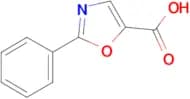
1gA consultar5mgA consultar25mgA consultar50mgA consultar100mgA consultar250mgA consultar2-Phenyloxazole-5-carboxylic acid
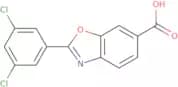
CAS:Fórmula:C10H7NO3Pureza:95%Forma y color:SolidPeso molecular:189.172-(3,5-Dichlorophenyl)-6-benzoxazole carboxylic acid
CAS:<p>2-(3,5-Dichlorophenyl)-6-benzoxazole carboxylic acid (XZP) is a diagnostic agent used in the diagnosis of certain diseases. XZP binds to the matrix metalloproteinases and inhibits their activity, which has been shown to reduce the effects of these enzymes on collagen fibers. This inhibition can be demonstrated using a titration calorimetry technique. The drug is also a potential therapeutic agent for congestive heart failure, as it can stimulate cardiac natriuretic peptide levels and reduce transthyretin levels. XZP has also been shown to be an effective adjunct therapy in vancomycin therapy for treatment of tubulointerstitial injury in rats.</p>Fórmula:C14H7Cl2NO3Pureza:Min. 98 Area-%Forma y color:PowderPeso molecular:308.12 g/mol2-Bromothiazole
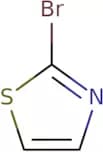
CAS:<p>2-Bromothiazole is an anticancer agent that can be prepared by coupling of 2-bromo-1,2-dithiolane and thiourea. This chemical has been found to be effective against a number of cancers in both animal and human studies. It is also used as a reagent in the industrial preparation of pesticides and dyes. 2-Bromothiazole is highly reactive with nucleophiles such as amines, alcohols, and phenols, which makes it a powerful catalyst for cross-coupling reactions. It can be used to make other organic compounds that have not been available from commercial sources due to its high reactivity. The compound's anti-inflammatory properties may be related to its ability to inhibit prostaglandin synthesis by inhibiting cyclooxygenase activity.</p>Fórmula:C3H2BrNSPureza:Min. 95%Forma y color:PowderPeso molecular:164.02 g/mol5-Fluoro-dUMP sodium
CAS:<p>Please enquire for more information about 5-Fluoro-dUMP sodium including the price, delivery time and more detailed product information at the technical inquiry form on this page</p>Fórmula:C9H12FN2O8P•NaxPureza:Min. 95%Levoglucosenone
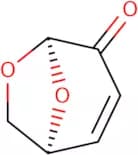
CAS:<p>Levoglucosenone is a molecule that inhibits the reaction mechanism of glycosidic bond formation. It is used in biochemical research to study reactions that involve surface methodology, such as hydroxyl group formation and zirconium oxide deposition. Levoglucosenone can be used to inhibit the acid formation that occurs during the reaction between nitrite ion and a chiral compound. The reactant solution can be activated by adding levoglucosenone to it, which will then inhibit the reaction. Sample preparation for these types of experiments involves dissolving the reactant solution in water and adding ammonium hydroxide to it, followed by adding a small amount of levoglucosenone.</p>Fórmula:C6H6O3Pureza:Min. 95%Forma y color:Clear LiquidPeso molecular:126.11 g/mol2-Thiophenecarboxylic acid hydrazide
CAS:<p>2-Thiophenecarboxylic acid hydrazide is a potent antifungal agent that inhibits the growth of bacteria by binding to the cell membrane. It has been shown to be an effective inhibitor of Candida albicans, as well as other fungi, including Saccharomyces cerevisiae and Aspergillus niger. 2-Thiophenecarboxylic acid hydrazide binds to the cell membrane by forming stable complexes with nitrogen atoms in the bacterial cell wall. This binding prevents the formation of an antibiotic-inhibitor complex with enzymes required for protein synthesis, resulting in inhibition of protein synthesis and cell division. 2-Thiophenecarboxylic acid hydrazide also inhibits epidermal growth factor (EGF) activity in vitro, which may be due to its ability to form amide bonds with α1-acid glycoprotein.</p>Fórmula:C5H6N2OSPureza:Min. 98 Area-%Forma y color:White PowderPeso molecular:142.18 g/mol2,2,4,6-Tetramethyl-1,3-dioxan-5-one
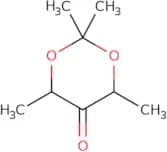
CAS:<p>Please enquire for more information about 2,2,4,6-Tetramethyl-1,3-dioxan-5-one including the price, delivery time and more detailed product information at the technical inquiry form on this page</p>Fórmula:C8H14O3Pureza:Min. 95%Forma y color:PowderPeso molecular:158.2 g/molSuccinylsulfathiazole
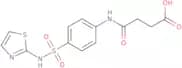
CAS:<p>Succinylsulfathiazole is a sulfa drug that has antimicrobial activity. It is a structural analogue of sulfanilamide, which is an antibiotic used to treat infectious diseases. Sulfa drugs are structurally related to the amino acid pantothenic acid and have been shown to have beneficial effects in animal models for bowel disease, autoimmune diseases, and other conditions. Succinylsulfathiazole has been shown to inhibit the growth of Aerobacter aerogenes and other bacteria by binding to their cell wall and interfering with synthesis of DNA. Succinylsulfathiazole has been shown to inhibit the growth of Aerobacter aerogenes and other bacteria by binding to their cell wall and interfering with synthesis of DNA.</p>Fórmula:C13H13N3O5S2Pureza:Min. 98 Area-%Forma y color:PowderPeso molecular:355.39 g/mol1,5-Anhydro-D-glucitol 6-dihydrogenphosphate disodium
CAS:<p>Please enquire for more information about 1,5-Anhydro-D-glucitol 6-dihydrogenphosphate disodium including the price, delivery time and more detailed product information at the technical inquiry form on this page</p>Fórmula:C6H13O8P•Na2Pureza:Min. 95%Peso molecular:290.12 g/molGemcitabine monophosphate disodium monohydrate
CAS:<p>Please enquire for more information about Gemcitabine monophosphate disodium monohydrate including the price, delivery time and more detailed product information at the technical inquiry form on this page</p>Fórmula:C9H12F2N3O7P•Na2•H2OPureza:90%Min By HplcForma y color:PowderPeso molecular:407.16 g/mol2-Acetylfuran
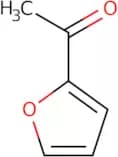
CAS:<p>2-Acetylfuran is a chemical compound that has been shown to have in vitro antifungal activity. It is an aromatic, hydroxylated compound with a 2-acetyl group and two double bonds, one of which is conjugated. 2-Acetylfuran has been used as a model system for the study of biological properties and kinetic data. It also inhibits the reaction by binding to the pyrimidine compound, preventing it from undergoing nucleophilic substitution. This inhibition can be reversed by adding ethyl decanoate to the reaction solution, which may be due to its ability to chelate the metal ion that activates the enzyme.2-Acetylfuran has been tested for its ability to inhibit fungal growth in tissue culture by inhibiting RNA synthesis. The matrix effect can cause variations in results obtained when using different solvents and this should be taken into account when conducting experiments with 2-acetylfuran.</p>Fórmula:C6H6O2Pureza:Min. 95%Forma y color:Yellow Clear LiquidPeso molecular:110.11 g/molFmoc-Lys(5-TAMRA)-OH
CAS:<p>Please enquire for more information about Fmoc-Lys(5-TAMRA)-OH including the price, delivery time and more detailed product information at the technical inquiry form on this page</p>Fórmula:C46H44N4O8Pureza:Min. 95%Peso molecular:780.9 g/mol2-Acetyl-5-bromothiophene
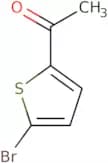
CAS:<p>2-Acetyl-5-bromothiophene is an organosulfur compound that is a reactive intermediate in the Suzuki coupling reaction. It has been used as a substrate for biological studies of toxicity and cancer, and to generate unsymmetrical compounds with multi-walled carbon light emission. 2-Acetyl-5-bromothiophene also has the ability to inhibit glutamate dehydrogenase and hydroxide solution, which are enzymes necessary for the production of energy in cells. 2-Acetyl-5-bromothiophene is toxic to animals and humans because it can cause cancer and other health problems such as neurotoxicity, liver dysfunction, and kidney damage. 2-Acetyl-5-bromothiophene has been shown to cause DNA strand breaks in human breast cancer cells.</p>Fórmula:C6H5BrOSPureza:Min. 98.5 Area-%Forma y color:PowderPeso molecular:205.07 g/mol2-[1-(Oxan-2-yl)-1H-pyrazol-5-yl]benzaldehyde
CAS:<p>Please enquire for more information about 2-[1-(Oxan-2-yl)-1H-pyrazol-5-yl]benzaldehyde including the price, delivery time and more detailed product information at the technical inquiry form on this page</p>Fórmula:C15H16N2O2Pureza:Min. 95%Forma y color:PowderPeso molecular:256.3 g/mol1,6-Anhydrochitobiose hydrochloride
<p>Please enquire for more information about 1,6-Anhydrochitobiose hydrochloride including the price, delivery time and more detailed product information at the technical inquiry form on this page</p>Fórmula:C12H22N2O8•(HCl)xPureza:Min. 95%Forma y color:PowderPeso molecular:322.31 g/mol6-FAM azide
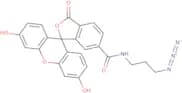
CAS:<p>6-Fluorescein Azide or 6-FAM azide finds application in biomolecules labelling. 6-FAM azide reacts with a terminal alkyne or cyclooctene derivative with a fast click reaction, forming a stable adduct.</p>Fórmula:C24H18N4O6Pureza:Min. 95%Forma y color:PowderPeso molecular:458.43 g/mol
![N-1H-pyrrolo[2,3-c]pyridin-5-ylbenzamide](/_next/image/?url=https%3A%2Fstatic.cymitquimica.com%2Fproducts%2F10%2Fthumb-webp%2FF375730.webp&w=3840&q=75)


![7-Bromo-2-(4-hydroxyphenyl)benzo[d]oxazol-5-ol](/_next/image/?url=https%3A%2Fstatic.cymitquimica.com%2Fproducts%2F10%2Fthumb-webp%2FF540335.webp&w=3840&q=75)





![2-[1-(Oxan-2-yl)-1H-pyrazol-5-yl]benzaldehyde](/_next/image/?url=https%3A%2Fstatic.cymitquimica.com%2Fproducts%2F3D%2Fthumb-webp%2FFO184187.webp&w=3840&q=75)