Ácidos benzoicos
Se han encontrado 5474 productos de "Ácidos benzoicos"
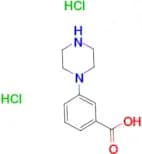
3-Piperazin-1-yl-benzoic acid dihydrochloride
CAS:Fórmula:C11H16Cl2N2O2Pureza:96.0%Forma y color:SolidPeso molecular:279.165'-(3,5-Dicarboxyphenyl)-[1,1':3',1''-terphenyl]-3,3'',5,5''-tetracarboxylic acid
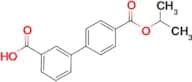
CAS:Pureza:97%Peso molecular:570.4619750976562Biphenyl-3,4′-dicarboxylic acid 4′-isopropyl ester
CAS:Fórmula:C17H16O4Forma y color:SolidPeso molecular:284.3112,3-Difluoro-4-ethoxybenzoic acid
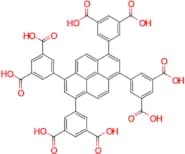
CAS:Fórmula:C9H8F2O3Pureza:95.0%Forma y color:SolidPeso molecular:202.1575,5',5'',5'''-(Pyrene-1,3,6,8-tetrayl)tetraisophthalic acid
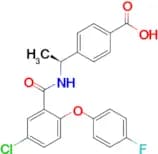
CAS:Pureza:98%Peso molecular:858.7199707031254-((S)-1-(2-(4-Fluorophenoxy)-5-chlorobenzamido) ethyl)benzoic acid
CAS:Pureza:85.0%Peso molecular:413.82998657226564-Methyl-3-(morpholine-4-sulfonyl)benzoic acid
CAS:Fórmula:C12H15NO5SPureza:95%Forma y color:SolidPeso molecular:285.315'-Methyl-[1,1':3',1''-terphenyl]-3,3'',5,5''-tetracarboxylic acid
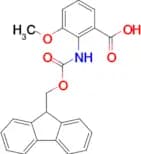
CAS:Pureza:98%Peso molecular:420.372985839843752-((((9h-Fluoren-9-yl)methoxy)carbonyl)amino)-3-methoxybenzoic acid
CAS:Pureza:97%Peso molecular:389.40701293945313-((3-(N-Cyclopropylsulfamoyl)-7-(2,4-dimethoxypyrimidin-5-yl)quinolin-4-yl)amino)-5-(3,5-difluorophenoxy)benzoic acid
CAS:Pureza:98%Peso molecular:649.630004882813Ref: 10-F867169
5mgA consultar10mgA consultar25mgA consultar50mgA consultar100mgA consultar250mgA consultar3-[(4,6-Dimethylpyrimidin-2-yl)amino]benzoic acid
CAS:Fórmula:C13H13N3O2Pureza:95.0%Forma y color:SolidPeso molecular:243.2664-chloro-3-(1H-pyrrol-1-yl)benzoic acid
CAS:Pureza:95.0%Forma y color:SolidPeso molecular:221.63999938964844Ref: 10-F229084
1gA consultar2gA consultar5gA consultar100mgA consultar250mgA consultar500mgA consultar4-(1h-1,3-Benzodiazol-1-yl)benzoic acid hydrochloride
CAS:Pureza:95%Peso molecular:274.70001220703125Methyl 4-amino-2-methyl benzoate
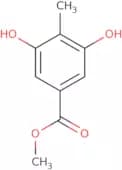
CAS:Methyl 4-amino-2-methyl benzoate is a fine chemical that can be used as a building block for research chemicals, pharmaceuticals, and speciality chemicals. Methyl 4-amino-2-methyl benzoate is a versatile building block in organic synthesis because it can be used as a reaction component and intermediate to synthesize other compounds. This compound is also an excellent scaffold for the synthesis of complex compounds, making it a useful intermediate for organic chemistry. Methyl 4-amino-2-methyl benzoate has CAS No. 6933-47-7 and is soluble in organic solvents such as dichloromethane, chloroform, ether, or acetone.Fórmula:C9H11NO2Pureza:Min. 95%Forma y color:PowderPeso molecular:165.19 g/mol3,5-Dihydroxy-4-methylbenzoic acid methyl ester
CAS:3,5-Dihydroxy-4-methylbenzoic acid methyl ester is a fine chemical that is used as a versatile building block in the synthesis of pharmaceuticals, agrochemicals and other chemicals. It can be used as an intermediate in the synthesis of organic compounds and research chemicals. This compound is also used as a reaction component in organic syntheses and is often found in speciality chemicals. 3,5-Dihydroxy-4-methylbenzoic acid methyl ester is soluble in most solvents and has high purity. It is a complex compound that can be used as a useful building block or reagent for many different reactions.
Fórmula:C9H10O4Pureza:Min. 95%Forma y color:PowderPeso molecular:182.17 g/moln-Heptyl 4-hydroxybenzoate
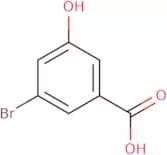
CAS:n-Heptyl 4-hydroxybenzoate is a preservative and antimicrobial agent that is used in cosmetics, pharmaceuticals, and food. It is primarily used to inhibit the growth of bacteria and fungi. The mechanism by which heptyl 4-hydroxybenzoate inhibits the growth of microorganisms is not well understood. It has been shown to be an effective inhibitor of Gram-positive bacteria such as Bacillus subtilis, but not against Gram-negative bacteria such as Escherichia coli. Heptyl 4-hydroxybenzoate has been shown to have no effect on the growth of probiotic bacteria such as Lactobacillus acidophilus. The chemical structure of n-heptyl 4-hydroxybenzoate includes a glycol ether moiety and two parabens that are linked by hydrogen bonds. These bonds can be broken by enzymes found in rat liver microsomes, leading to the release of n-Fórmula:C14H20O3Pureza:Min. 95%Forma y color:White Off-White PowderPeso molecular:236.31 g/mol3-Bromo-5-hydroxybenzoic acid
CAS:3-Bromo-5-hydroxybenzoic acid is a metabolite of 3,5-dihydroxybenzoic acid (DHB) in the metabolism of benzoic acid. It has been shown to be an antibacterial agent and has been used to treat metabolic disorders in hamsters. Symptoms of 3-bromo-5-hydroxybenzoic acid include dyslipidemia, which can lead to metabolic disorders such as diabetes mellitus and atherosclerosis. The compound may also have a role in tuberculosis and cancer due to its ability to induce apoptosis.
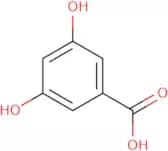
Fórmula:C7H5O3BrPureza:Min. 95%Forma y color:White PowderPeso molecular:217.02 g/mol3,5-Dihydroxybenzoic acid
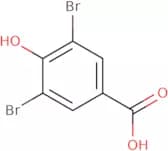
CAS:3,5-Dihydroxybenzoic acid is a phenolic compound that belongs to the class of aromatic compounds. It is an inhibitor of the enzyme 3-hydroxyphenylpyruvate dioxygenase and is used in the treatment of obesity. It has been shown to have a low potency for inhibiting this enzyme, although it does not inhibit other enzymes such as p-hydroxybenzoate hydroxylase. 3,5-Dihydroxybenzoic acid binds to human serum albumin through hydrogen bonding interactions and can inhibit the absorption of dietary phenols by binding to them. This compound also acts as a protocatechuic acid structural analog and has been shown to be hydrated in solution.Fórmula:C7H6O4Pureza:Min. 95%Forma y color:White PowderPeso molecular:154.12 g/mol3,5-Dibromo-4-hydroxybenzoic acid
CAS:3,5-Dibromo-4-hydroxybenzoic acid is a chemical that is used as a herbicide and insecticide. It inhibits the growth of plants by preventing protein synthesis in cells. 3,5-Dibromo-4-hydroxybenzoic acid has been found to be effective against bacteria such as Escherichia coli, Pseudomonas aeruginosa, and Klebsiella pneumoniae. The compound also has an inhibitory effect on the growth of industrial chemicals such as ethylene oxide and acetaldehyde. 3,5-Dibromo-4-hydroxybenzoic acid is produced from p-hydroxybenzoic acid by the action of corrin (a bacterial enzyme).Fórmula:C7H4Br2O3Pureza:Min. 98 Area-%Forma y color:PowderPeso molecular:295.91 g/mol2,5-Difluoro-3-methylbenzoic acid methyl ester
CAS:2,5-Difluoro-3-methylbenzoic acid methyl ester is a high quality, complex compound that can be used as a versatile building block in synthesis. It acts as a reagent and can be used as a research chemical. 2,5-Difluoro-3-methylbenzoic acid methyl ester is an intermediate in the production of other chemicals and can also be used as a reaction component or useful scaffold.
Fórmula:C9H8F2O2Pureza:Min. 95%Forma y color:PowderPeso molecular:186.16 g/mol3-Bromo-4-methoxybenzoic acid
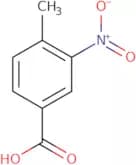
CAS:3-Bromo-4-methoxybenzoic acid is a methyl ester of 3-bromo-4-methoxybenzoic acid. It is used as a reagent in organic synthesis, including the hydrolysis of esters and nitriles to acids and amines respectively. The compound is also used in the synthesis of 3-bromo-4-methoxybenzamide and other bromomethyl benzoates. The trifluoroacetic acid reacts with cuprous cyanide to form ethyl formate and methoxybenzoate, which reacts with thionyl chloride to form the chloride 3-bromo-4-methoxybenzoic acid. This compound can be demethylated by acetaldehyde or alkali metal hydroxides to give methyl formate and methanol. It can also react with acetonitrile to produce 3,3′,3″Fórmula:C8H7BrO3Pureza:Min. 95%Forma y color:PowderPeso molecular:231.04 g/mol4-Methyl-3-nitrobenzoic acid
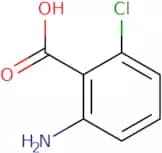
CAS:4-Methyl-3-nitrobenzoic acid is a hydroxide solution that has been shown to be cytotoxic to malignant melanoma cells in vitro. 4-Methyl-3-nitrobenzoic acid also inhibits the growth of normal cells by blocking epidermal growth factor receptor signaling. This molecule is converted to hippuric acid, which may have an anti-cancer effect by inhibiting metal ion uptake and causing DNA damage. There are no known adverse effects or interactions with other drugs.Fórmula:C8H7NO4Pureza:Min. 95%Forma y color:PowderPeso molecular:181.15 g/mol2-Amino-6-chlorobenzoic acid
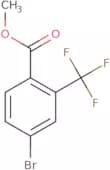
CAS:2-Amino-6-chlorobenzoic acid is a reactive compound that can be used as an antimicrobial agent. It binds to the active site of enzymes and inhibits their function, thereby preventing bacterial growth. 2-Amino-6-chlorobenzoic acid also has acidic properties, which may be due to its ability to hydrolyze esters by acting as a dehydrating agent. This chemical is thermodynamically stable and can be synthesized from malonic acid or other compounds. The chemical reactions of 2-amino-6-chlorobenzoic acid can be followed by NMR spectroscopy, which provides the structural information about the molecule. The reaction mechanism for 2-amino-6-chlorobenzoic acid is similar to that of amides.Fórmula:C7H6ClNO2Pureza:Min. 95%Forma y color:PowderPeso molecular:171.58 g/mol4-Bromo-2-(trifluoromethyl)benzoic acid methyl ester
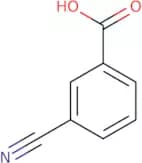
CAS:4-Bromo-2-(trifluoromethyl)benzoic acid methyl ester is a versatile building block that can be used to produce complex compounds. It is also an intermediate and a useful scaffold in organic synthesis. This chemical has been used as a research chemical and as a reagent for the production of other chemicals. The compound has CAS number 957207-58-8 and can be obtained from our supplier in high quality, with purity of 99%.Fórmula:C9H6BrF3O2Pureza:Min. 95%Forma y color:Colorless PowderPeso molecular:283.04 g/mol3-Cyanobenzoic acid
CAS:3-Cyanobenzoic acid is a chemical intermediate that is used to synthesize 3-cyanobenzamide. It is also a byproduct of the synthesis of benzonitrile and can be found in metal surface residues and environmental pollution. The molecule has two functional groups, one electron withdrawing and one electron donating, which are necessary for its stability. This compound can be found in high concentrations when it reacts with metal surfaces or organic solvents. 3-Cyanobenzamide was synthesized from 3-cyanobenzoic acid as an amide, which has been shown to have antimicrobial properties against Gram-positive bacteria such as Staphylococcus aureus, Streptococcus pyogenes and Enterococcus faecalis.Fórmula:C8H5O2NPureza:Min. 95%Forma y color:PowderPeso molecular:147.13 g/mol



![5'-(3,5-Dicarboxyphenyl)-[1,1':3',1''-terphenyl]-3,3'',5,5''-tetracarboxylic acid](/_next/image/?url=https%3A%2Fstatic.cymitquimica.com%2Fproducts%2F10%2Fthumb-webp%2FF617379.webp&w=3840&q=75)



![5'-Methyl-[1,1':3',1''-terphenyl]-3,3'',5,5''-tetracarboxylic acid](/_next/image/?url=https%3A%2Fstatic.cymitquimica.com%2Fproducts%2F10%2Fthumb-webp%2FF606637.webp&w=3840&q=75)


![3-[(4,6-Dimethylpyrimidin-2-yl)amino]benzoic acid](/_next/image/?url=https%3A%2Fstatic.cymitquimica.com%2Fproducts%2F10%2Fthumb-webp%2FF023725.webp&w=3840&q=75)