CAS 149-91-7
:Ácido gálico
Descripción:
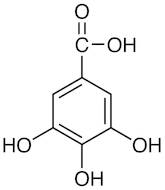
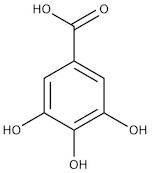
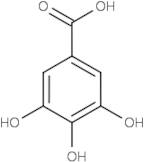
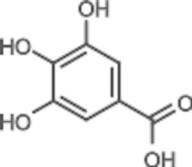
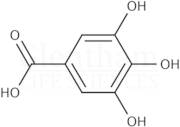
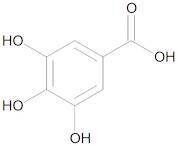
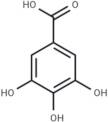
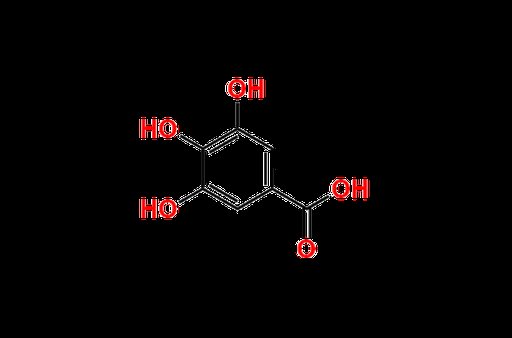
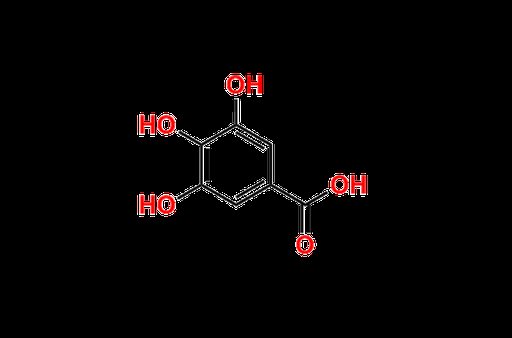
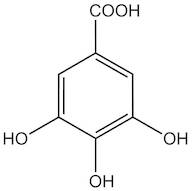
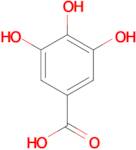
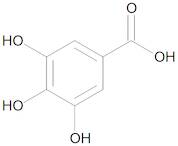
Ácido gálico, con el número CAS 149-91-7, es un compuesto fenólico que se encuentra de forma natural y que está ampliamente distribuido en varias plantas, particularmente en las agallas, hojas de té y ciertos frutos. Aparece como un polvo cristalino blanco a amarillo pálido y es soluble en agua, alcohol y éter. Ácido gálico es conocido por sus propiedades antioxidantes, que le permiten eliminar radicales libres y proteger las células del estrés oxidativo. Tiene una fórmula molecular de C7H6O5 y presenta tres grupos hidroxilo, lo que contribuye a su acidez y reactividad. Además de su papel en la medicina tradicional y los remedios herbales, Ácido gálico se utiliza en la industria alimentaria como conservante y en la producción de tintas y colorantes debido a su capacidad para formar complejos con iones metálicos. Además, tiene aplicaciones potenciales en farmacéuticos, particularmente en el desarrollo de agentes antiinflamatorios y antimicrobianos. En general, Ácido gálico es un compuesto versátil con una relevancia biológica e industrial significativa.
Fórmula:C7H6O5
InChI:InChI=1S/C7H6O5/c8-4-1-3(7(11)12)2-5(9)6(4)10/h1-2,8-10H,(H,11,12)
Clave InChI:InChIKey=LNTHITQWFMADLM-UHFFFAOYSA-N
SMILES:C(O)(=O)C1=CC(O)=C(O)C(O)=C1
Sinónimos:- 3,4,5-Hydroxybenzoic acid
- 3,4,5-Trihydroxybenzoesaure
- 3,4,5-Trihydroxybenzoic acid
- A 1925-04
- Acide 3,4,5-trihydroxybenzoique
- Acido 3,4,5-Trihidroxibenzoico
- Benzoic acid, 3,4,5-trihydroxy-
- Gallic Acid Anhydrous
- Gallussaeure
- Nsc 20103
- Nsc 674319
- Pyrogallol-5-carboxylic acid
- Ver más sinónimos
Ordenar por
Pureza (%)
0
100
|
0
|
50
|
90
|
95
|
100
Gallic Acid
CAS:Fórmula:C7H6O5Pureza:>98.0%(T)(HPLC)Forma y color:White to Light yellow powder to crystalPeso molecular:170.123,4,5-Trihydroxybenzoic acid, 98%
CAS:Organic acid is used as a standard for determining phenols in the Folin-Ciocalteau assay3,4,5-Trihydroxybenzoic acid is used as a cyclooxygease inhibitor substance, which is found in plants. In analytical chemistry, it is used as a standard to determine phenol content in various analytes. It acts aFórmula:C7H6O5Pureza:98%Forma y color:White to cream or pale yellow, PowderPeso molecular:170.12Gallic acid
CAS:Gallic acid analytical standard provided with w/w absolute assay, to be used for quantitative titration.Fórmula:C7H6O5Pureza:(HPLC) ≥99%Forma y color:PowderPeso molecular:170.13Gallic acid
CAS:Gallic acid (Benzoic acid) is found in almost all plants. Plants known for their high gallic acid content include gallnuts,grapes,tea,hops and oak bark.Fórmula:C7H6O5Pureza:99.38% - 99.57%Forma y color:SolidPeso molecular:170.12Ref: IN-DA001LC0
10gA consultar38x25KgA consultar25g23,00€100g23,00€200g37,00€500g51,00€300g52,00€1000g61,00€1kg62,00€10kg254,00€25kg565,00€3,4,5-Trihydroxybenzoic acid, anhydrous
CAS:3,4,5-Trihydroxybenzoic acid, anhydrousFórmula:C7H6O5Pureza:99%Forma y color:White Solid-PowderPeso molecular:170.11954Gallic acid, anhydrous, ACS grade
CAS:Fórmula:C7H6O5Pureza:(Titration) ≥ 98.0%Forma y color:White, off-white or beige powderPeso molecular:170.12Gallic acid, anhydrous
CAS:Fórmula:C7H6O5Pureza:≥ 99.0%Forma y color:White to off-white powderPeso molecular:170.123,4,5-Trihydroxybenzoic-2,6-d2Acid
CAS:Fórmula:(HO)3C6D2COOHPureza:98 atom % DForma y color:White SolidPeso molecular:172.03408Gallic acid
CAS:Gallic acid and curcumin are natural phenolic compounds, both have cytotoxic activity in relation to their radical modulating activity, induce apoptosis by different mechanisms, and gallic acid produces higher amounts of radicals and more efficiently scavenged the superoxide anion radical.Fórmula:C7H6O5Pureza:95%~99%Forma y color:PowderPeso molecular:170.12Gallic acid (Standard)
CAS:Gallic acid (Standard) is a reference standard; gallic acid has antioxidant and anti-inflammatory activity.Fórmula:C7H6O5Forma y color:SolidPeso molecular:170.12Gallic acid
CAS:Carboxylic acid with phenol functionFórmula:C7H6O5Pureza:≥ 98.0 % (HPLC)Forma y color:PowderPeso molecular:170.12Gallic Acid
CAS:Producto controladoApplications Gallic Acid exhibits a number of cellular effects including apoptosis and inhibits the growth of calf pulmonary arterial endothelial cell (CPAEC);Also, it is a polyphenol widely found in numerous fruits and vegetables that has been reported to exert anticancer effects, including apoptosis, against cancer cell lines.
References Park, W. H.: Mol. Med. Rep., 16, 7805-7812 (2017); Yang, C., et al.: RSC Adv., 8, 12449-12458 (2018)Fórmula:C7H6O5Forma y color:NeatPeso molecular:170.12