Alcoholes bencílicos
Se han encontrado 1457 productos de "Alcoholes bencílicos"
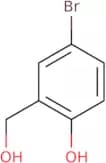
5-Bromo-2-hydroxybenzyl alcohol
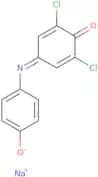
CAS:5-Bromo-2-hydroxybenzyl alcohol (5-BrABA) is a diagnostic agent that is used to detect microbial infections. It has been shown to be useful as an anti-infective agent in the treatment of cancer and inflammatory diseases, such as choroidal neovascularization. 5-BrABA is a cell permeable compound that binds to target tissue and accumulates at the site of infection. It has been shown to inhibit the growth of ophthalmic bacteria, including Acinetobacter baumannii, Pseudomonas aeruginosa, and Staphylococcus epidermidis. 5-BrABA has also been shown to be biocompatible with human retinal pigment epithelial cells and does not induce any detectable toxicity or cytotoxicity in these cells after 24 hours exposure.Fórmula:C7H7BrO2Pureza:Min. 98 Area-%Forma y color:PowderPeso molecular:203.03 g/mol2,6-Dichloroindophenol sodium salt hydrate
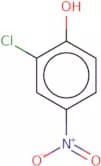
CAS:Blue redox dye; used to quantify vitamin C contentFórmula:C12H7Cl2NNaO2·xH2OForma y color:Green PowderPeso molecular:291.09 g/mol2-Chloro-4-nitrophenol
CAS:2-Chloro-4-nitrophenol (2CP) is a chemical that has been found to be an optical sensor for nitrite ion. It reacts with nitrite ion at a pH of 5 and changes its color from yellow or orange to red. 2CP is also an antimicrobial agent and has shown biological properties against bacteria, including the ability to inhibit bacterial growth and reduce the number of bacteria in human serum. The optimum concentration for the inhibition of bacterial growth was found to be 0.5 mg/mL, which is much lower than the concentration used in other studies. The genus, bacterial strain, and pH were all found to influence the activity of 2CP against bacteria. Process optimization trials have shown that 4-hydroxycinnamic acid can be used as an alternative substrate for 2CP's reaction with nitrite ion. Monoclonal antibodies were also developed that are specific for transfer reactions with nitrate ion and can be used as a detection system for nit
Fórmula:C6H4ClNO3Pureza:Min. 95%Forma y color:PowderPeso molecular:173.55 g/mol4-Cyano-3-fluorophenol
CAS:4-Cyano-3-fluorophenol is a chemical compound that has two phenoxy groups and one fluorine atom. 4-Cyano-3-fluorophenol has been shown to be an effective antagonist of GABA A receptors, which may be due to its ability to interact with the chloride ion site on the receptor, or its hydrogen bonding effects with the receptor. 4-Cyano-3-fluorophenol has been shown to have potent effects in a number of other biological systems. These include inhibition of suzuki coupling reactions (a type of nucleophilic substitution reaction), as well as acylation reactions in which an acid reacts with an alcohol to form an ester, and pharmacokinetic properties. 4-Cyano-3-fluorophenol also has been shown to bind selectively to proteins, including those involved in protein–protein interactions.
Fórmula:C7H4FNOPureza:Min. 95%Forma y color:White PowderPeso molecular:137.11 g/mol3-Methoxyphenol - 98%
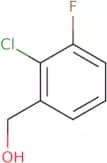
CAS:3-Methoxyphenol is a chemical that is used in the treatment of wastewater. It has been shown to have antibacterial and antiviral properties, as well as the ability to prevent bowel disease. 3-Methoxyphenol can be used to treat metal hydroxides by reacting with them and converting them into metal oxides. The reaction mechanism of 3-methoxyphenol has been best studied using coumarin derivatives, which are structurally similar to 3-methoxyphenol. The ester hydrochloride salt form of 3-methoxyphenol is a prodrug that is metabolized by cytochrome P450 enzymes in the liver via an esterase pathway. This prodrug may be especially useful for patients with bowel disease or low levels of cytochrome P450 enzymes, such as those with chronic kidney failure or AIDS. 3-Methoxyphenol has been shown to inhibit JakFórmula:C7H8O2Pureza:Min. 98 Area-%Forma y color:Clear LiquidPeso molecular:124.14 g/mol2-Chloro-3-fluorobenzyl alcohol
CAS:2-Chloro-3-fluorobenzyl alcohol is a versatile building block for the synthesis of complex compounds. It has been used as a reagent and intermediate in research chemical synthesis. This compound is useful for the preparation of high quality, useful intermediates and reaction components. 2-Chloro-3-fluorobenzyl alcohol can be used as a scaffold to build different organic compounds with different functional groups.Fórmula:C7H6ClFOPureza:Min. 95%Forma y color:PowderPeso molecular:160.57 g/mol4-Chloro-2-nitrophenol
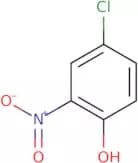
CAS:4-Chloro-2-nitrophenol is a chemical substance that is used as an industrial solvent. It has been shown to be effective in treating wastewater, with a high removal rate of organic compounds. 4-Chloro-2-nitrophenol can also be used as a nitrating agent in the production of explosives and dyes. 4-Chloro-2-nitrophenol reacts with hydrogen to form hydroxybenzoic acid, which can be further transformed into p-hydroxybenzoic acid. The reaction between 4-chloro-2-nitrophenol and hydrogen is catalyzed by metal ions such as iron or copper ions. This reaction has been shown to be kinetically controlled by intramolecular hydrogen bonding at the 2 position on the phenolic ring.Fórmula:C6H4ClNO3Pureza:Min. 95%Forma y color:PowderPeso molecular:173.55 g/mol4-(Trifluoromethoxy)benzyl alcohol
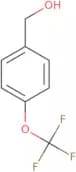
CAS:4-(Trifluoromethoxy)benzyl alcohol is a corrosion inhibitor that inhibits the corrosion of metals. It is able to inhibit uptake of anions, such as chloride ions and nitrate ions, by passive adsorption and by forming an outer layer on the metal surface. 4-(Trifluoromethoxy)benzyl alcohol also acts as a co-solvent for anions in high concentrations, which can be used to remove them from solution. This compound has been shown to reduce the corrosion of ferric iron and copper at high concentrations. 4-(Trifluoromethoxy)benzyl alcohol may also act as a scavenger for hydroxyl radicals, which are known to cause corrosion reactions.
Fórmula:C8H7F3O2Pureza:Min. 95%Forma y color:Colorless Clear LiquidPeso molecular:192.14 g/mol3-Bromo-5-hydroxybenzyl alcohol
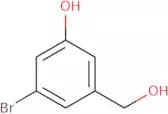
CAS:3-Bromo-5-hydroxybenzyl alcohol is a useful building block that can be used to synthesize more complex compounds. This chemical is a reagent and reaction component for organic synthesis. 3-Bromo-5-hydroxybenzyl alcohol is useful as a high quality research chemical, speciality chemical, or versatile building block. It reacts rapidly with strong oxidants and strong bases to form the corresponding bromohydrins. The CAS number for 3-bromo-5-hydroxybenzyl alcohol is 1020336-51-9.Fórmula:C7H7BrO2Pureza:Min. 95%Forma y color:PowderPeso molecular:203.03 g/mol4-Bromo-2-cyanophenol
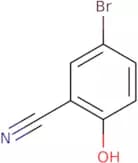
CAS:4-Bromo-2-cyanophenol is a metabotropic glutamate receptor ligand that has been shown to be an agonist of the group II metabotropic glutamate receptors. It binds to this type of glutamate receptor and stimulates the release of the neurotransmitter, glutamate. 4-Bromo-2-cyanophenol is used as a reagent in microscopy experiments to analyze lamellar structures. It has also been used in the synthesis of benzofuran derivatives and formamide. 4-Bromo-2-cyanophenol can be prepared by reacting hydrochloric acid with mesomorphic formamide, followed by desorption with monomers such as hexamethylene diamine or ethylene glycol.
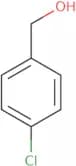
Fórmula:C7H4BrNOPureza:Min. 95%Forma y color:PowderPeso molecular:198.02 g/mol4-Chlorobenzyl alcohol
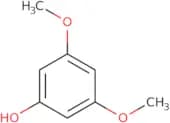
CAS:4-Chlorobenzyl alcohol is a lipase inhibitor that is used in the treatment of pancreatic disorders. It binds to the active site of pancreatic lipase, which prevents the enzyme from hydrolyzing the ester bonds of glycol esters and long chain fatty acids, thereby inhibiting their absorption. This product does not inhibit other enzymes (e.g., amylase) or have an effect on chloride secretion. The reaction with 4-chlorobenzyl alcohol can also be catalyzed by hydrogen bonding between the carboxylic acid group and a hydroxyl group. Miconazole nitrate is a synthetic antifungal agent that inhibits ergosterol synthesis by binding to 14-alpha demethylase, which converts lanosterol into ergosterol. It has been shown to inhibit the growth of fungi such as Candida albicans and Aspergillus niger when combined with 4-chlorobenzyl alcohol. Cleavage productsFórmula:C7H7ClOPureza:Min. 98 Area-%Forma y color:White PowderPeso molecular:142.58 g/mol3,5-Dimethoxyphenol
CAS:3,5-Dimethoxyphenol (3,5-DMP) is a synthetic chemical compound that is used for the preparation of sulfonamides. It is prepared by the reaction of 3,5-dimethoxybenzene and trifluoromethanesulfonic acid in aqueous solution. The reaction yield can be increased by adding trimethylsilyl chloride to the solvent system. 3,5-DMP reacts with sulfite to form 3,5-dihydroxyphenylsulfate. The enzyme preparations are extracted from plant cells and then purified by chromatography on silica gel. This chemical reacts with divalent metal ions such as magnesium and calcium in an acidic environment to form salts. These salts react with hydrogen sulfate in an acidic environment to produce 3,5-dihydroxyphenylsulfate. This product also undergoes a kinetic method where it reacts with oxygen to form hydrogen perFórmula:C8H10O3Pureza:Min. 95%Forma y color:PowderPeso molecular:154.16 g/mol4-Iodophenol
CAS:An enhancer used in chemiluminescent reactions
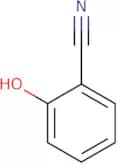
Fórmula:C6H5IOPureza:Min. 98.5 Area-%Forma y color:PowderPeso molecular:220.01 g/mol2-Cyanophenol
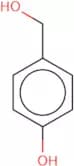
CAS:2-Cyanophenol is a phenolic compound that is used as an intermediate in the synthesis of pharmaceuticals and agrochemicals. It is also a disinfectant used for wastewater treatment and to remove salicylaldoxime from contaminated water. 2-Cyanophenol can be synthesized by reacting phenol with hydrogen peroxide in the presence of sephadex g-100, which provides a high yield of product. It has been shown to have antimicrobial properties against Gram-positive bacteria, such as Staphylococcus aureus, and Gram-negative bacteria, such as Escherichia coli and Pseudomonas aeruginosa. 2-Cyanophenol has been shown to react with metal hydroxides such as ferric chloride or zinc chloride to form precipitates. This reaction can be detected using a UV/VIS spectrophotometer at wavelengths between 200–350 nm.Fórmula:C7H5NOPureza:Min. 95%Forma y color:Off-White PowderPeso molecular:119.12 g/mol4-Hydroxybenzyl alcohol
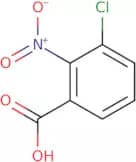
CAS:4-Hydroxybenzyl alcohol is a chemical compound that is found in the rhizoma gastrodiae. It has been shown to have angiogenic properties and may be used as an anti-angiogenic agent. 4-Hydroxybenzyl alcohol is also an inhibitor of matrix metalloproteinases, which are enzymes that degrade the extracellular matrix. This inhibition leads to apoptosis and neuronal death.Fórmula:C7H8O2Pureza:Min. 80%Forma y color:PowderPeso molecular:124.14 g/mol3-Chloro-2-nitrobenzoic acid
CAS:3-Chloro-2-nitrobenzoic acid is a chemical compound that is used in the synthesis of quinoline derivatives. It has been shown to be genotoxic and cytotoxic in cell culture. 3-Chloro-2-nitrobenzoic acid binds to DNA, forming a covalent bond with the nitrogen atoms in the DNA bases. This binding may lead to changes in the structure of DNA, which could potentially be mutagenic. 3-Chloro-2-nitrobenzoic acid also has an optical absorption maximum at around 260 nm, which is indicative of hydrogen bonding between molecules.
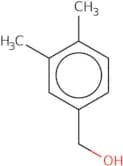
3-Chloro-2-nitrobenzoic acid has been shown to inhibit brain cells and lung cells by interfering with cellular respiration and mitochondrial function.Fórmula:C7H4ClNO4Pureza:Min. 95%Forma y color:White PowderPeso molecular:201.56 g/mol3,4-Dimethylbenzyl alcohol
CAS:3,4-Dimethylbenzyl alcohol is a natural compound that is expressed in the nature and found in various data bases. It is an epoxide with a molecular weight of 152.14 g/mol (C10H16O2). 3,4-Dimethylbenzyl alcohol has been shown to be an inhibitor of serotonin and nitrous oxide, which are neurotransmitters. 3,4-Dimethylbenzyl alcohol also has a high affinity for the ethylene binding site on acetaminophen. This chemical has been shown to reduce dry weight when it is added to cell culture at concentrations of 10 mM or greater. The ethyl group present on 3,4-dimethylbenzyl alcohol may allow for possible interactions with other chemicals such as styrene and acetaminophen.Fórmula:C9H12OPureza:Min. 95%Forma y color:PowderPeso molecular:136.19 g/mol4-Isopropoxybenzyl alcohol
CAS:4-Isopropoxybenzyl alcohol is a reaction component that can be used as a reagent, useful scaffold, and high-quality research chemical. It is also a versatile building block and useful intermediate for the production of complex compounds. This chemical has been assigned CAS No. 82657-71-4. 4-Isopropoxybenzyl alcohol is a fine chemical with uses in the production of polymers, pharmaceuticals, and other chemicals.Fórmula:C10H14O2Pureza:Min. 95%Forma y color:Clear LiquidPeso molecular:166.22 g/molN1,N2-Bis(2,4,6-trimethoxyphenyl)ethanediamide
CAS:Adriamycin is a cytotoxic drug that inhibits the growth of cells by causing cross-linking in DNA. It is an analogue of the naturally occurring molecule bis(2,4,6-trimethoxyphenyl)ethanediamide. Adriamycin has been shown to inhibit cell proliferation in vitro and in vivo by interfering with DNA synthesis. This agent also inhibits the production of proteins and lipids needed for cellular division by binding to the purine base adenine. Adriamycin binds to the enzyme ribonucleotide reductase, which catalyzes the conversion of ribonucleosides into deoxyribonucleosides. Adriamycin has a relatively low activation energy and can be activated thermally or photolytically.
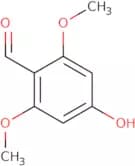
Fórmula:C20H24N2O8Pureza:Min. 95%Forma y color:PowderPeso molecular:420.41 g/mol3,5-Dimethoxy-4-formyl-phenol
CAS:3,5-Dimethoxy-4-formylphenol is a synthetic compound that has been used as an intermediate for the synthesis of various types of amide and oligosaccharide. It also has a mycological effect on fungi and is used in the production of organic solvents. 3,5-Dimethoxy-4-formylphenol can be produced by demethylation of anilines with sodium hypochlorite or potassium carbonate in methanol. It is soluble in organic solvents and exhibits good organoleptic properties. This compound can be synthesized from fungal biomass, which is obtained by solid phase synthesis or preparative chromatography. The linker between the phenolic group and the methyl group is labile to hydrolysis and must be protected during storage.
Fórmula:C9H10O4Pureza:Min. 95%Forma y color:PowderPeso molecular:182.17 g/mol