Estándares farmacéuticos
Subcategorías de "Estándares farmacéuticos"
- APIs para investigación e impurezas(275.018 productos)
- Activadores e inhibidores de enzimas(2.827 productos)
- Nitrosaminas(2.606 productos)
- Compuestos y metabolitos farmacéuticos y veterinarios(2.888 productos)
- Toxicología(13.643 productos)
Se han encontrado 7836 productos de "Estándares farmacéuticos"
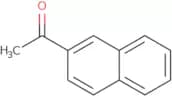
2-Acetylnaphthalene
CAS:2-Acetylnaphthalene is a solid compound that can be produced by the asymmetric synthesis of methyl ketones. It has been shown to have photochemical properties, and absorbs ultraviolet light in the range of 240-280 nm. 2-Acetylnaphthalene also has strong uv absorption and intramolecular hydrogen bonding, which gives it a high binding constant for acylation reactions. This compound may exist as two different forms: a metastable form with an open ring structure and a stable form with a closed ring structure. The two forms are interconvertible by hydrogen bonding or rotation about the double bond in the molecule. 2-Acetylnaphthalene is used as a photoinitiator in wastewater treatment and as an intermediate in the production of diethyl succinate.Fórmula:C12H10OPureza:Min. 95%Peso molecular:170.21 g/mol19-Hydroxy cholesterol
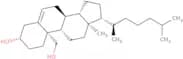
CAS:Producto controlado19-Hydroxy cholesterol is a sterol that is one of the primary products of cholesterol synthesis. It is a secondary bile acid and an oxysterol, which are produced in the liver during cholesterol metabolism. 19-Hydoxycholesterol has been shown to induce apoptosis in leukemia cells, as well as inhibit tumor cell growth. This compound can also inhibit the production of fatty acids by inhibiting β-unsaturated ketones, which are intermediates in the biosynthesis of fatty acids. The inhibition of these ketones leads to an increase in the production of n-3 fatty acids, which have been shown to have beneficial effects on human health. 19-Hydroxycholesterol can be detected using a chemical ionization method with gas chromatography and mass spectroscopy detection.Fórmula:C27H46O2Pureza:Min. 95%Forma y color:White/Off-White SolidPeso molecular:402.65 g/molL-Methionine sulfoxide
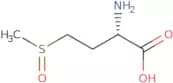
CAS:Methionine sulfoxide is a methionine that has been oxidized to methionine sulfoxide. Methionine sulfoxides are produced through protein oxidation, which is the chemical process of reacting with oxygen in the air or other compounds to form an organic peroxide and superoxide radical. Methionine sulfoxides are found in proteins and are formed as a result of oxidative stress on cells and tissues. The rate constant for the conversion of methionine to methionine sulfoxide is 0.01983 min-1 at pH 7, 25°C. There are two methods of detection: chemiluminescence method and chromatographic analysis. In addition, methionine sulfoxides have natural antioxidant properties that can be used to treat diseases such as Alzheimer's disease and Parkinson's disease, as well as cancer treatments. Methionine sulfoxides have been shown to have a significant effect on wild-type strains of bacteria, reducing their growth rates
Fórmula:C5H11NO3SPureza:Min. 98 Area-%Forma y color:White PowderPeso molecular:165.21 g/mol3-(4-Chlorophenyl)glutaric acid
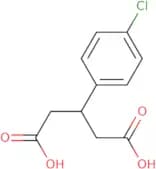
CAS:3-(4-Chlorophenyl)glutaric acid is a subunit of lanthanide complexes. It has been synthesized from cinchona alkaloids and single-crystal x-ray diffraction data obtained in the absence of ligands. 3-(4-Chlorophenyl)glutaric acid is a desymmetrization reagent and has been shown to be an effective ligand for lanthanide complexes. This compound has the potential to form impurities during the synthesis process, which can lead to morphological changes, luminescence, or high-performance liquid chromatography interference.
Fórmula:C11H11ClO4Pureza:Min. 95%Peso molecular:242.66 g/mol2-Amino-2',5-dichlorobenzophenone
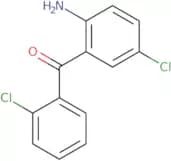
CAS:2-Amino-2',5-dichlorobenzophenone (2,5-DCP) is a molecule with a chromatographic retention time of 23.8 minutes. 2,5-DCP has been detected in human urine samples using the chemical ionization technique as well as the Nova-Pak C18 column and an acetic acid/methanol mobile phase. This compound has been used as a standard for the detection of benzodiazepine drugs such as diazepam and flunitrazepam in urine samples by gas chromatography. 2,5-DCP has also been used in analytical toxicology to detect lormetazepam and lorazepam metabolites in human urine samples.
Fórmula:C13H9Cl2NOPureza:Min. 95%Forma y color:Off-White PowderPeso molecular:266.12 g/mol2,3-Dichloro-5-nitropyridine
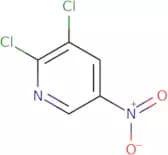
CAS:2,3-Dichloro-5-nitropyridine (2,3-DNP) is an antidiabetic drug that has been shown to improve insulin sensitivity in animals. It is a sample preparation reagent that can be used to validate the use of γ-aminobutyric acid (GABA) as a linker for the immobilization of proteins on solid supports. 2,3-DNP is also used as an adipose tissue marker to study obesity and insulin resistance. This drug has been shown to increase choline levels in the liver by inhibiting its export and increasing its synthesis by phosphorylation of serine hydroxymethyltransferase. 2,3-DNP also increases fatty acid synthesis by activating acetyl coenzyme A carboxylase and inhibiting carnitine palmitoyl transferase I. 2,3-DNP has also been shown to decrease food intake and body weight gain in db/db miceFórmula:C5H2Cl2N2O2Pureza:Min. 95%Forma y color:PowderPeso molecular:192.99 g/mol2,6-Diisopropylnaphthalene
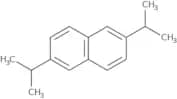
CAS:Epidermal growth factor (EGF) is a polypeptide hormone that stimulates mitosis and cell growth. In some cases, it can act as an autocrine or paracrine hormone. Epidermal growth factor is used to stimulate the renewal of cells in the skin and mucous membranes. It also has been shown to have anti-inflammatory properties, which may be due to its ability to inhibit the release of inflammatory mediators such as prostaglandins and leukotrienes. 2,6-Diisopropylnaphthalene (2,6-DNP) is an antimicrobial agent that binds to the cell nucleus and inhibits transcription and translation of DNA into RNA by binding to RNA polymerase II. This binding prevents formation of transcription complexes with the cell factor necessary for transcription. 2,6-DNP has been shown to reduce disease activity in patients with inflammatory bowel disease in a clinical trial when used alone or in combination with other agents. TheFórmula:C16H20Pureza:Min. 95%Peso molecular:212.33 g/molCholesterol Hexyl Carbonate
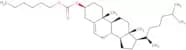
CAS:Producto controladoCholesterol Hexyl Carbonate (C6HC) is a chiral organic compound with a unique conformation that enhances its adsorbing properties. C6HC is synthesized by reacting cholesterol with hexanoyl chloride in the presence of strong base and an inert solvent. The structural formula of this compound is shown in Figure 1.Pureza:Min. 95%7-Methoxy-1,2,3,4-tetrahydronaphthalen-2-ylamine hydrochloride
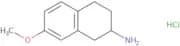
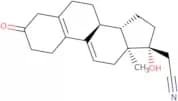
CAS:Producto controladoPlease enquire for more information about 7-Methoxy-1,2,3,4-tetrahydronaphthalen-2-ylamine hydrochloride including the price, delivery time and more detailed product information at the technical inquiry form on this pageFórmula:C11H15NO•HClPureza:Min. 95%Peso molecular:213.7 g/mol(17α)-17-Hydroxy-3-oxo-19-norpregna-5(10),9(11)-diene-21-nitrile
CAS:Producto controladoPlease enquire for more information about (17α)-17-Hydroxy-3-oxo-19-norpregna-5(10),9(11)-diene-21-nitrile including the price, delivery time and more detailed product information at the technical inquiry form on this pageFórmula:C20H25NO2Pureza:Min. 95%Forma y color:PowderPeso molecular:311.42 g/mol5-Nitropyridin-3-ol
CAS:Please enquire for more information about 5-Nitropyridin-3-ol including the price, delivery time and more detailed product information at the technical inquiry form on this pageFórmula:C5H4N2O3Pureza:Min. 95%Peso molecular:140.1 g/molDiethyl[2-(4-nitrophenoxy)ethyl]amine
CAS:Producto controladoPlease enquire for more information about Diethyl[2-(4-nitrophenoxy)ethyl]amine including the price, delivery time and more detailed product information at the technical inquiry form on this pageFórmula:C12H18N2O3Pureza:Min. 95%Peso molecular:238.28 g/molNonafluorovaleric acid
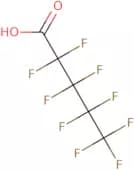
CAS:Nonafluorovaleric acid is a glycol ether that is used as a solvent and in the manufacture of fluoropolymers. Nonafluorovaleric acid is considered to be a potential biomarker for perfluoroalkyl substances, which are toxic chemicals found in many household products. It has been shown to inhibit matrix metalloproteinase activity and can be used to study autoimmune diseases. Nonafluorovaleric acid can also be used as a synchronous fluorescent probe for enzyme-linked immunosorbent assays. The toxicity of this chemical has been studied extensively and it is well known that nonafluorovaleric acid can induce enzyme induction, leading to increased production of enzymes such as cytochrome P450.
Fórmula:C5HF9O2Pureza:Min. 95%Forma y color:Clear LiquidPeso molecular:264.05 g/molBetamethasone valerate related compound A
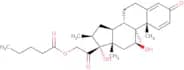
CAS:Producto controladoBetamethasone valerate related compound A is a corticosteroid compound that is used in the treatment of inflammation. It has anti-inflammatory and immunosuppressive properties, which are thought to be due to its inhibition of farnesyltransferase. Betamethasone valerate related compound A can be given as an intranasal solution or by injection. The drug substance is a mixture of betamethasone 17-valerate and betamethasone 17,21-dipropionate, which have different kinetic properties. The chemical stability of the drug substance is maintained by using a reaction mechanism involving chromatography.Fórmula:C27H37FO6Pureza:Min. 95%Peso molecular:476.58 g/molThymosin beta10 (human, rat)
CAS:Please enquire for more information about Thymosin beta10 (human, rat) including the price, delivery time and more detailed product information at the technical inquiry form on this page
Fórmula:C211H353N57O76SPureza:Min. 95%Peso molecular:4,936.47 g/molN-Nitrososarcosine
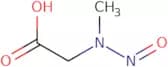
CAS:N-Nitrososarcosine is a nonsteroidal anti-inflammatory drug (NSAID) that belongs to the group of ester hydrochloride. It inhibits the synthesis of prostaglandins, which are chemical mediators of inflammation and pain. N-Nitrososarcosine has been shown to be effective for the treatment of arthritis in animal models. In vitro studies have shown that this drug inhibits polymerase chain reaction and can be used for genotyping bacterial DNA. N-Nitrososarcosine has been found in urine samples from patients with autoimmune diseases, as well as in pharmaceutical preparations. The use of this drug as a model system for studying enzyme hydrolysis has also been studied.
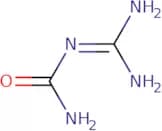
Fórmula:C3H6N2O3Pureza:Min. 95%Forma y color:Off-White PowderPeso molecular:118.09 g/molGuanylurea
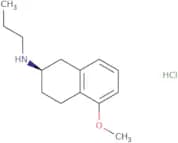
CAS:Guanylurea is a compound that contains nitrogen and intramolecular hydrogen. It has been shown to be effective in the treatment of tissue culture for pharmacological purposes. Guanylurea has also been shown to be an efficient catalyst for the process optimization of sodium salts. It can also be used as a reactant in analytical methods such as vitro assays and activated carbon adsorption.Fórmula:C2H6N4OPureza:Min. 95%Peso molecular:102.1 g/mol(R)-1,2,3,4-Tetrahydro-5-methoxy-N-propyl-2-naphthalenamine hydrochloride
CAS:Producto controladoPlease enquire for more information about (R)-1,2,3,4-Tetrahydro-5-methoxy-N-propyl-2-naphthalenamine hydrochloride including the price, delivery time and more detailed product information at the technical inquiry form on this pageFórmula:C14H22ClNOPureza:Min. 95%Peso molecular:255.78 g/mol2,2'-Bis-(1-adamantyl)-4,4'-dimethoxybiphenyl
CAS:2,2'-Bis-(1-adamantyl)-4,4'-dimethoxybiphenyl is a methyl ester of adapalene. It is used to assess the effects of adapalene on the skin and to determine its marker for topical application.
Fórmula:C34H42O2Pureza:Min. 95%Peso molecular:482.7 g/mol2-Naphthol
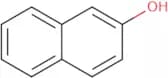
CAS:2-Naphthol is an organic compound with the chemical formula C10H7O. It is a derivative of naphthalene, and is produced by the condensation of two molecules of malonic acid in the presence of a reducing agent such as sodium borohydride. 2-Naphthol is used as a pesticide and as a chemical intermediate in the production of other chemicals. 2-Naphthol has been shown to be toxic to humans and animals; it may cause liver damage, kidney damage, and skin irritation. The acute oral LD50 for rats is 690 mg/kg body weight. 2-Naphthol binds to cell receptors that are involved in a variety of physiological processes including heme transport, phagocytosis, oxidative burst, chemotaxis, and respiratory burst. This binding inhibits these functions leading to cell death.
Fórmula:C10H8OPureza:Min. 95%Forma y color:White To Yellow To Pink To Light Brown SolidPeso molecular:144.17 g/mol


![Diethyl[2-(4-nitrophenoxy)ethyl]amine](/_next/image/?url=https%3A%2Fstatic.cymitquimica.com%2Fproducts%2F3D%2Fthumb-webp%2FFD21808.webp&w=3840&q=75)