Estándares farmacéuticos
Subcategorías de "Estándares farmacéuticos"
- APIs para investigación e impurezas(277.446 productos)
- Activadores e inhibidores de enzimas(2.829 productos)
- Nitrosaminas(2.668 productos)
- Compuestos y metabolitos farmacéuticos y veterinarios(2.891 productos)
- Toxicología(13.339 productos)
Se han encontrado 8162 productos de "Estándares farmacéuticos"
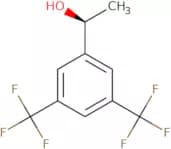
(S)-3',5'-Bis(trifluoromethyl)-1-phenethanol
CAS:(S)-3',5'-Bis(trifluoromethyl)-1-phenethanol is a choline derivative that is used in the treatment of liver cancer. It has been shown to increase the permeability of cell membranes and to suppress the growth of tumor cells by inhibiting protein synthesis. (S)-3',5'-Bis(trifluoromethyl)-1-phenethanol can be used as a surfactant and a hydrophobic solvent for optimization of reaction parameters. This chemical also has been shown to be active against Gram-positive bacteria such as Staphylococcus aureus and Enterococcus faecalis, but not against Gram-negative bacteria such as Escherichia coli or Pseudomonas aeruginosa. The mechanism of this effect is mediated by chloride ions that act as bioreductive agents on cellular membranes, leading to increased permeability and cell death.
Fórmula:C10H8F6OPureza:Min. 95%Peso molecular:258.16 g/molRef: 3D-FB18756
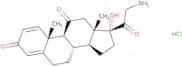
Producto descatalogado21-Amino-17-hydroxypregna-1,4-diene-3,11,20-trioneHydrochloride
CAS:Producto controladoPlease enquire for more information about 21-Amino-17-hydroxypregna-1,4-diene-3,11,20-trioneHydrochloride including the price, delivery time and more detailed product information at the technical inquiry form on this pageFórmula:C21H28ClNO4Pureza:Min. 95%Peso molecular:393.9 g/molRef: 3D-FA150828
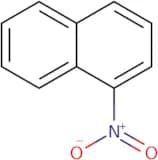
Producto descatalogado1-Nitronaphthalene
CAS:1-Nitronaphthalene is a nitrobenzene derivative that has been used as an intermediate in the synthesis of pharmaceuticals, dyes, and other organic compounds. 1-Nitronaphthalene is classified as a hazardous substance due to its carcinogenicity and toxicity. In particular, it can cause irritation and burns on skin contact and may be fatal if swallowed. The toxicity profile of 1-nitronaphthalene has been studied in rats, mice, guinea pigs, rabbits, hamsters, and dogs. It was found to have moderate acute oral toxicity in rats but no significant acute toxicity in mice or dogs. 1-Nitronaphthalene also had little effect on p450 activity or enzyme activities in rats.
Fórmula:C10H7NO2Pureza:Min. 95%Forma y color:Yellow Clear LiquidPeso molecular:173.17 g/molRef: 3D-FN45627
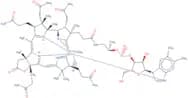
Producto descatalogadoVitamin B12 c-lactone
CAS:Please enquire for more information about Vitamin B12 c-lactone including the price, delivery time and more detailed product information at the technical inquiry form on this page
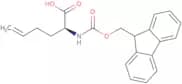
Fórmula:C63H85CoN13O15PPureza:Area-% Min. 95 Area-%Peso molecular:1,354.33 g/mol(S)-N-Fmoc-2-(3'-butenyl)glycine
CAS:Please enquire for more information about (S)-N-Fmoc-2-(3'-butenyl)glycine including the price, delivery time and more detailed product information at the technical inquiry form on this page
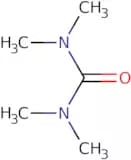
Fórmula:C21H21NO4Pureza:Min. 95%Forma y color:White PowderPeso molecular:351.4 g/molTetramethylurea
CAS:Tetramethylurea is a versatile compound that has various applications in different fields. It is commonly used as a monophosphate donor in biochemical reactions and as a reagent for the synthesis of L-sorbose and histidine. In addition, tetramethylurea is employed in the production of herbicides, as well as in the synthesis of zirconium oxide nanoparticles.
Fórmula:C5H12N2OPureza:Min. 95%Peso molecular:116.16 g/molrec Human Growth Hormone (expressed in E.coli)
Please enquire for more information about rec Human Growth Hormone (expressed in E.coli) including the price, delivery time and more detailed product information at the technical inquiry form on this page
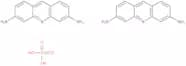
Pureza:Min. 95%Proflavine hemisulfate
CAS:Proflavine hemisulfate is an antibiotic that inhibits bacterial growth by binding to DNA and inhibiting DNA synthesis. It binds to the dinucleotide phosphate of the bacterial ribosome and changes the shape of the nucleotide, preventing attachment of amino acids to form proteins. Proflavine hemisulfate also has a strong affinity for nuclear dna and is bound to it in a form that inhibits replication. The free form of proflavine is converted into enzyme form by phosphorylation, which inhibits protein synthesis and cell division. Proflavine hemisulfate has been shown to inhibit multidrug efflux pumps in bacteria, leading to increased susceptibility of bacteria to antibiotics. In addition, proflavine hemisulfate possesses inhibitory properties against transfer reactions in cells. The method used for measuring proflavine hemisulfate activity is electrochemical impedance spectroscopy (EIS) on cell nuclei suspensions in a model system.
Fórmula:C13H11N3•(H2SO4)0•(H2O)xPureza:Min. 95%Forma y color:PowderPeso molecular:258.29 g/molRef: 3D-FP01535
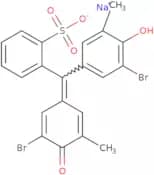
Producto descatalogadoBromocresol purple sodium salt
CAS:Bromocresol purple sodium salt is a dye that emits light when it is irradiated with light of a particular wavelength. It has been used to detect amniotic fluid contamination in the laboratory and as an absorber in polymer films. Bromocresol purple sodium salt absorbs ultraviolet and visible light, which causes it to emit red light. The molecules of bromocresol purple sodium salt are long-chain triazoles, which absorb water vapor and emit infrared radiation. This property can be used to detect the presence of alkali metals. The luminescent property of bromocresol purple sodium salt can be enhanced by adding an alkali metal, such as potassium or lithium chloride, to the solution where it is dissolved.
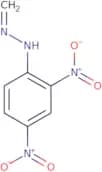
Fórmula:C21H15Br2O5S·NaPureza:Min. 95%Peso molecular:562.2 g/molFormaldehyde-2,4-dinitrophenylhydrazone
CAS:Formaldehyde-2,4-dinitrophenylhydrazone (FDNH) is a chemical compound that inhibits the production of galacturonic acid. It is used as an analytical method to measure the concentration of galacturonic acid in biological samples. FDNH reacts with galacturonic acid to form a diazonium salt and a hydrazone derivative. The diazonium salt can be measured by liquid chromatography, while the hydrazone derivative can be measured by gas chromatography. This test has been used to measure the concentration of galacturonic acid in plants, pharmaceutical drugs, and reaction products.Fórmula:C7H6N4O4Pureza:Min. 95%Peso molecular:210.15 g/molRef: 3D-FF146197
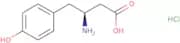
Producto descatalogadoL-b-Homotyrosine hydrochloride
CAS:Please enquire for more information about L-b-Homotyrosine hydrochloride including the price, delivery time and more detailed product information at the technical inquiry form on this page
Fórmula:C10H13NO3·HClPureza:Min. 95%Peso molecular:231.68 g/molRef: 3D-FH50229
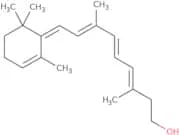
Producto descatalogadoall-trans-Retro retinol
CAS:All-trans-retinol is a form of vitamin A that is found in many animal tissues and some plant oils. It acts as a hormone, binding to the retinoic acid receptors (RARs) in the nucleus and activating gene transcription. All-trans-retinol has been shown to be effective against hyperproliferative diseases such as cancer, both by inducing apoptosis and by inhibiting cell growth. All-trans-retinol may also have therapeutic potential for other diseases, such as intestinal cancers and prostatic hypertrophy. This compound has been shown to induce messenger RNA (mRNA) production in cells that express RARs.
Fórmula:C20H30OPureza:Min. 95%Peso molecular:286.45 g/molRef: 3D-FR59825
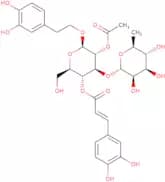
Producto descatalogado2'-Acetylacteoside
CAS:2'-Acetylacteoside is a naturally occurring phenylethanoid glycoside, which is derived from various plant sources. It exhibits antioxidant properties by scavenging reactive oxygen species and inhibiting oxidative stress. This mode of action supports cellular health by protecting cells from oxidative damage and maintaining redox balance.
Pureza:Min. 95%Ref: 3D-FA74397
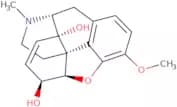
Producto descatalogadoCodeine Impurity F
CAS:Producto controladoCodeine Impurity F is a biochemical that is an impurity of codeine. Codeine Impurity F is a byproduct of the enzymatic reaction with morphine and the bacterial strain Pseudomonas putida. Codeine Impurity F has been shown to inhibit the growth of gram-negative bacteria, including Escherichia coli and Salmonella enterica, by binding to cellular membranes and inhibiting their function. It also binds to RNA in vitro and prevents translation of mRNA from its ribosome complex. The hydroxyl group on Codeine Impurity F binds to aluminium ions, which may interfere with the absorption of other drugs such as ampicillin or tetracycline. This impurity has been shown to have an effect on biological products such as immunoglobulins and albumin.
Fórmula:C18H21NO4Pureza:Min. 95%Peso molecular:315.36 g/molRef: 3D-FC161072
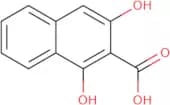
Producto descatalogado1,3-Dihydroxy-2-naphthoic acid
CAS:1,3-Dihydroxy-2-naphthoic acid is an organic compound that belongs to the binaphthyls. It is a white solid that can be obtained by reacting naphthalene with inorganic phosphite in the presence of acidic potassium carbonate. This reaction system produces 1,3-dihydroxy-2-naphthoic acid and potassium biphosphite as byproducts. The reaction time depends on the concentration of reactants. 1,3-Dihydroxy-2-naphthoic acid has acidic properties and can be used as a catalyst for chemical reactions involving carboxylic compounds. This compound has been shown to be effective at treating abdominal pain caused by intestinal inflammation or infection with a carbon source such as carbohydrates (e.g., glucose) or fats (e.g., oleic acid).
Fórmula:C11H8O4Pureza:Min. 95%Peso molecular:204.18 g/molRef: 3D-FD154238
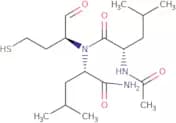
Producto descatalogadoN-Acetyl-L-leucyl-L-leucyl-L-methioninal
CAS:Inhibitor of cathepsinFórmula:C19H35N3O4SPureza:Min. 95%Peso molecular:401.57 g/molRef: 3D-FA137466
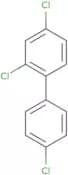
Producto descatalogado2,4,4’-Trichlorobiphenyl
CAS:Producto controlado2,4,4’-Trichlorobiphenyl is a polychlorinated biphenyl congener. It has been shown to have an adverse effect on the central nervous system, causing neurotoxicity. 2,4,4’-Trichlorobiphenyl has been used as a model system for the study of the effects of environmental toxins on mitochondrial membrane potential and lipid peroxidation. 2,4,4’-Trichlorobiphenyl binds to fatty acids in mitochondria and inhibits fatty acid β-oxidation. The inhibition of fatty acid oxidation leads to increased levels of protocatechuic acid in the serum and liver tissue. 2,4,4’-Trichlorobiphenyl has also been found to be toxic to aquatic organisms such as fish and shrimp at low concentrations.
Fórmula:C12H7Cl3Pureza:Min. 95%Peso molecular:257.54 g/molRef: 3D-FT170755
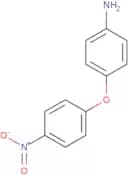
Producto descatalogado4-(4-Nitrophenoxy)aniline
CAS:4-(4-Nitrophenoxy)aniline is a synthetic drug that is used as a substrate for the cytochrome P450 system. It has been shown to be metabolized by the liver in two steps, forming reduction products and interacting with thiourea. This drug also has functional groups which are active in the group p2 of the periodic table, such as diphenyl ethers and aminophenols. 4-(4-Nitrophenoxy)aniline can be used to probe the interaction between an enzyme and its substrate.
Fórmula:C12H10N2O3Pureza:Min. 95%Peso molecular:230.22 g/molRef: 3D-FN147043
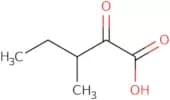
Producto descatalogado(±)-3-Methyl-2-oxovaleric acid
CAS:(±)-3-Methyl-2-oxovaleric acid is a fatty acid that is found in the mitochondria of liver cells and other tissues. It is an intermediate in the citric acid cycle and can be converted into acetyl-CoA, which is used for energy production. (±)-3-Methyl-2-oxovaleric acid has been shown to cause necrotic cell death when it binds to the mitochondrial membrane potential and causes a loss of ATP production. This results in a lack of energy for the cell, leading to cell death. (±)-3-Methyl-2-oxovaleric acid has also been shown to inhibit protein synthesis by decreasing uptake and increasing creatine kinase activity. This inhibition leads to decreased body formation and tissue culture growth in vitro. In vivo, (±)-3-Methyl-2-oxovaleric acid causes primary sclerosing cholangitis, a disease characterized by inflammation of bile ducts that
Fórmula:C6H10O3Pureza:Min. 95%Forma y color:White PowderPeso molecular:130.14 g/mol7-Amino-4-(trifluoromethyl)coumarin
CAS:7-Amino-4-(trifluoromethyl)coumarin is a coumarin derivative that has been used as a fluorescence probe for the study of enzyme activities. It can be used as a potential biomarker for autoimmune diseases, and has also been shown to have tyrosine kinase domain binding activity. 7-Amino-4-(trifluoromethyl)coumarin can bind to the hydroxyl group in tyrosine residues with high affinity, and binds to the nitrogen atoms in protein kinases with low affinity. This compound is able to form intermolecular hydrogen bonds and steric interactions with peptide hormones.
Fórmula:C10H6F3NO2Pureza:Min. 95%Peso molecular:229.16 g/molRef: 3D-FA74300
Producto descatalogado