Glycoscience
Subcategorías de "Glycoscience"
- Aminoazúcares(108 productos)
- Anticuerpos relacionados con azúcares(284 productos)
- Glicolípidos(46 productos)
- Glicosaminoglicanos (GAGs)(55 productos)
- Glucósidos(419 productos)
- Monosacáridos(6.622 productos)
- Oligosacáridos(3.699 productos)
- Polisacáridos(506 productos)
Se han encontrado 11035 productos de "Glycoscience"
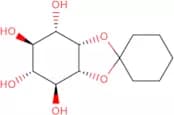
1,2-O-Cyclohexylidene-myo-inositol
CAS:1,2-O-Cyclohexylidene-myo-inositol (CIM) is a fatty acid that has a 6-hydroxyl group. This compound is used in the diagnosis of chemical biology, immunocomplexes and phosphate derivatives. CIM has been shown to bind to iron and form an immunocomplex with it. CIM also binds to phosphate derivatives, which are found in carbohydrate chemistry. The hydroxyl group on CIM can react with chloride ions and form asymmetric synthesis. Growth factors like insulin and other hormones can be synthesized from this compound through the addition of an amine group or phosphate group. CIM also reacts with monoclonal antibodies for use in diagnostic tests for pancreatic lipase.Fórmula:C12H20O6Pureza:Min. 95%Forma y color:PowderPeso molecular:260.28 g/molLS-tetrasaccharide a
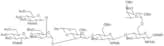
CAS:Sialylated tetrasaccharide found in human milk. Possible health benefits for the neonate, by supporting resistance to pathogens, gut maturation, immune function, and cognitive development.Fórmula:C37H62N2O29Pureza:Min. 95%Forma y color:PowderPeso molecular:998.88 g/mol(1S) -1- [(2S, 3R,4S) - 3- Hydroxy-4-hydroxymethyl- 1- benzyl - 2- azetidinyl] -1, 2- ethanediol
(1S) -1- [(2S, 3R,4S) - 3- Hydroxy-4-hydroxymethyl- 1- benzyl - 2- azetidinyl] -1, 2- ethanediol is a sugar that is made synthetically. It has a CAS number of 76577-11-7 and is available for custom synthesis. The chemical name for this product is (1S)-1-[(2S,3R,4S)-3-[(2E)-3-(hydroxymethyl)oxirane]-4-(hydroxymethyl)-2-(benzyloxy)methyl]-1,2-ethanediol. This product has high purity and can be used for glycosylation or methylation reactions.Pureza:Min. 95%1,3,4,6-Tetra-O-acetyl-N-azidoacetylmannosamine
CAS:1,3,4,6-Tetra-O-acetyl-N-azidoacetylmannosamine, also called ManNAz tetraacetate, 1,3,4,6-tetra-O-acetyl-N-azidoacetyl-D-mannosamine and Ac4ManNAz, is an azide-containing metabolic glycoprotein labelling reagent that can be incorporated into the sialic acid biosynthesis pathway. The azide is able to react with an alkyne in a 1,3-dipolar cycloaddition reaction (click chemistry) to enable linking to a fluorescent probe or a biotin.Fórmula:C16H22N4O10Pureza:Min. 95%Forma y color:PowderPeso molecular:430.37 g/molMethyl α-L-daunosamide hydrochloride
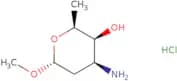
CAS:Methyl α-L-daunosamide hydrochloride is a drug that inhibits the production of DNA. It is used to treat infectious diseases such as malaria, in which it can inhibit the growth of the parasite by preventing DNA replication and transcription. The methyl α-L-daunosamide hydrochloride molecule is a polymerase chain inhibitor that binds to the enzyme adriamycin synthetase, which catalyzes the conversion of daunosamine into adriamycin. This binding prevents the formation of stable complexes with the target enzymes and blocks their activity, leading to inhibition of DNA synthesis and transcription. Methyl α-L-daunosamide hydrochloride has been shown to inhibit glycan biosynthesis in rat liver microsomes and does not have significant interactions with other drugs or with glycan in human serum.Fórmula:C7H15NO3•HClPureza:Min. 85 Area-%Forma y color:PowderPeso molecular:197.66 g/mol1-O-Acetyl-2,3,5-tri-O-benzoyl-b-D-ribofuranose
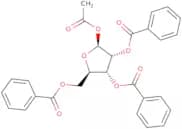
CAS:1-O-Acetyl-2,3,5-tri-O-benzoyl-b-D-ribofuranose is an intermediate used to access a variety of ribonucleoside analogues. The ribosylation of substituted purines and pyrimidines with 1-O-Acetyl-2,3,5-tri-O-benzoyl-b-D-ribofuranose affords ribonucleoside analogues with the potential for biological and medicinal activity. Ribosylation requires the use of a catalyst such as trimethylsilyl trifluoromethane sulfonate and N,O-Bis(trimethylsilyl)trifluoroacetamide.Fórmula:C28H24O9Pureza:Min. 98 Area-%Forma y color:White PowderPeso molecular:504.48 g/molMethyl protodioscin
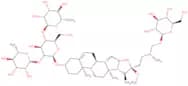
CAS:Methyl protodioscin is a natural compound that has been shown to have a promising therapeutic effect on autoimmune diseases. Methyl protodioscin is derived from soybean extract and it is known to inhibit the translocation of bacteria across the gut wall, which could be due to its ability to regulate mucin gene expression. In vitro assays show that methyl protodioscin has an effect on mitochondrial membrane potential, which may be related to its anti-inflammatory properties. The effects of methyl protodioscin on mitochondrial functions were studied in C. glabrata, and it was shown that this compound can be used as a therapeutic agent for balloon injury. Methyl protodioscin also inhibits the growth of Candida albicans and other fungi in vivo, suggesting that this compound might have antifungal activity.Fórmula:C52H86O22Pureza:Min. 95%Peso molecular:1,063.23 g/molCorn starch
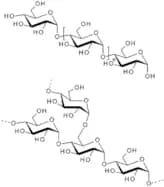
CAS:Starch is a two component polysaccharide mixture of amylose and amylopectin. Amylose is a linear polysaccharide of α (1,4)-linked glucose residues and averages 20 to 30% of the total in most native starches. Amylopectin is a highly branced glucan containing both a (1,4) and a (1,6) linkages. The number of glucose residues in a single starch molecule can vary from five hundred to several hundred thousand, depending on the type of starch. Starch is the major storage form of energy in plants, just as glycogen is the storage form of energy for animals. The plant directs the starch molecules to the amyloplasts, where they are deposited to form granules. Thus, both in plants and in the extracted concentrate, starch exists as granules varying in diameter from 2 to 130 μm.Pureza:Min. 95%Forma y color:PowderLaminaran, from laminaria digitata
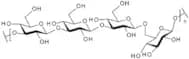
CAS:Laminaran is a polysaccharide that co-occurs with fucoidan and alginate in brown seaweeds such as Laminaria digitata, Laminaria cloustoni, Eisenia bicyclis and Thallus laminariae. It is a β-1,3-linked glucan which it is claimed stimulates the immune system in mammals and fish.
The image was kindly provided by Prof Mike Guiry from Cork who runs ‘The Seaweed Site’.Pureza:Min. 95%Forma y color:Off-White PowderMethyl 4,6-O-benzylidene-β-D-glucopyranoside
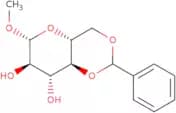
CAS:Methyl 4,6-O-benzylidene-b-D-glucopyranoside is a nitro derivative of methyl b-D-glucopyranoside. The anomeric proton and the nitro group are in the same plane and on opposite sides of the molecule. This compound has been shown to be both a receptor binding agent and a gelation agent. It is used to study biological membranes because it binds to phospholipids in the cell membrane, which alters its physical properties. Methyl 4,6-O-benzylidene-b-D-glucopyranoside is also known for its ability to form hydrogen bonds with water molecules. This is due to its cavity that can accommodate one water molecule per monomer unit. The crystal structure of this compound has been determined by x ray crystallography and shows that it forms dimers through hydrogen bonding between two molecules in each dimer. These interactions are
Fórmula:C14H18O6Pureza:Min. 95%Forma y color:PowderPeso molecular:282.29 g/mol4-Methoxyphenyl 4-O-{4-O-[[2-O-Ac-3-O-[2,4-di-O-(3,4,6-tri-O-Ac-2-PhthN-β-D-Glc)-3,6-di-O-Bn-α-D-Man]-4,6-O-benzylidene-β-D-Man]]-3, 6-di-O-Bn-2-PhthN-β-D-Glc}-3-O-Bn-6-O-(tri-O-Bn-α-L-Fuc)-2-PhthN-β-D-Glc
4-Methoxyphenyl 4-O-{4-O-[[2-O-Ac-3-O-[2,4-di-O-(3,4,6-tri-O-Ac-2-PhthNbDGlc)-3,6--Di--O--Bn--aDMan]-4,6--O--Benzylidene--bDMan]]} -3, 6--Di--Obn2PhthNbDGlc} -2 PhthNbDGlc is a sugar that has been modified by methylation. It also contains saccharide and polysaccharides. This product is CAS No. 899891–14–8 and can be purchased through custom synthesis. The purity of this product is high and the modification is fluorination.
Fórmula:C158H156N4O47Pureza:Min. 95%Peso molecular:2,862.93 g/molL-Arabinose
CAS:The aldopentose L-arabinose (Ara) is, after xylose, the second most abundant pentose in nature. It is found in plant cell walls as a component of polysaccharides, including: hemicelluloses, pectin, arabinogalactan-protein complexes and in exudate plant gums, such as: Gum Arabic (Fehér, 2018). L-arabinose is an important component of the mycobacterial cell wall and is involved in the synthesis of arabinogalactan and lipoarabinomannan, which suggests that it can modulate cell wall permeability and drug resistance. Mycobacterium smegmatis is a useful tool for research into Mycobacteria due to it being a "fast grower" and non-pathogenic (Zhou, 2019).Fórmula:C5H10O5Pureza:Min. 99 Area-%Peso molecular:150.13 g/molRef: 3D-A-8240
1kgA consultar25gA consultar250gA consultar500gA consultar2500gA consultar-Unit-kgkgA consultarLaminaritetraose
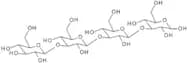
CAS:Ex algal/bacterial polysaccharides-value in b1-3 glucanase assays & diagnosticsFórmula:C24H42O21Pureza:Min. 95 Area-%Forma y color:White PowderPeso molecular:666.6 g/mol1,3,4,6-Tetra-O-acetyl-2-azido-2-deoxy-a-D-galactopyranose
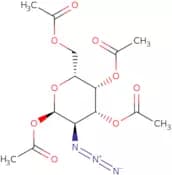
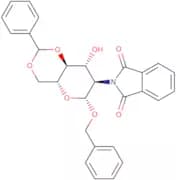
CAS:1,3,4,6-Tetra-O-acetyl-2-azido-2-deoxy-a-D-galactopyranose is an azide sugar that is resistant to the activity of sulfide and can be used as a probe for sulfide in the distal colon. It has been shown that this sugar binds to recombinant human erythrocyte enzymes and inhibits their activities. The hydrolysis of this sugar by pancreatic enzymes has been shown to be dependent on the conformational state of the enzyme. This sugar also inhibits salivary amylase and intestinal sucrase activities.Fórmula:C14H19N3O9Pureza:Min. 95%Forma y color:White PowderPeso molecular:373.32 g/molBenzyl 4,6-O-benzylidene-2-deoxy-2-phthalimido-b-D-glucopyranoside
CAS:Benzyl 4,6-O-benzylidene-2-deoxy-2-phthalimido-b-D-glucopyranoside is a modified glycosylated deoxyhexose. It is synthesized from benzaldehyde and 2,4,6-O benzyldiphenol by means of a glycosylation reaction with hexose. This product has been fluorinated to give it the desired properties. Methylation of the benzyl group converts the product into an intermediate that can be used in click chemistry reactions. Monosaccharides are then added to produce oligosaccharides. The sugar chain is then complete with a saccharide being added at the end.Fórmula:C28H25NO7Pureza:Min. 95%Forma y color:White PowderPeso molecular:487.51 g/molIsosorbide dinitrate - 60% lactose and 40% Isosorbide dinitrate
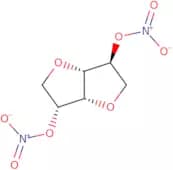
CAS:Isosorbide dinitrate is used to treat chronic bronchitis and congestive heart failure. It dilates blood vessels, allowing more oxygen-rich blood to reach the heart. Isosorbide dinitrate is also used to relieve chest pain (angina) and reduce complications after a heart attack. Isosorbide dinitrate is a prodrug that is converted in vivo to its active form, isosorbide mononitrate, by the enzyme nitric oxide synthase in response to hypoxia. In addition, it has been shown that this drug reduces levels of low-density lipoprotein cholesterol (LDL-C) and may be useful for the treatment of high cholesterol.
The mechanism of action for reducing LDL-C levels is not known but may be due to increased clearance of LDL-C from plasma or decreased production of very low density lipoproteins (VLDL). This medication does not affect triglycerides or high density lipFórmula:C6H8N2O8Pureza:Min. 95%Forma y color:White PowderPeso molecular:236.14 g/mol1,2,3,4-Tetra-O-pivaloyl-6-O-(tert-butyldimethylsilyl)-b-D-glucopyranose
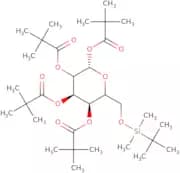
1,2,3,4-Tetra-O-pivaloyl-6-O-(tert-butyldimethylsilyl)-b-D-glucopyranose is a high purity oligosaccharide that can be custom synthesized to your specifications. This modification is an Oligosaccharide and Carbohydrate which is a complex carbohydrate. It has CAS No. and Monosaccharide as well as Methylation and Glycosylation. It is also a Sugar and Fluorination with saccharides.
Fórmula:C32H58O10SiPureza:Min. 95%Peso molecular:630.9 g/mol2-Azidoethyl N-acetyl-D-lactosamine
CAS:2-Azidoethyl N-acetyl-D-lactosamine is a custom synthesis that is a complex carbohydrate. It has been modified to include methylation and glycosylation. The saccharide is composed of several sugar molecules, including glucose and galactose, which are linked by alpha (1→4) or beta (1→3) bonds. The carbohydrate can be fluorinated, which increases its stability in the presence of oxygen. This compound has CAS number 338971-38-3. 2-Azidoethyl N-acetyl-D-lactosamine is a high purity product that can be used in the modification of other carbohydrates with click chemistry.Fórmula:C16H28N4O11Pureza:Min. 95%Forma y color:PowderPeso molecular:452.41 g/mol(2S, 3S, 4R) -3- [[[(2S, 3S, 4R) - 3- Azido- 4- [[[(1, 1- dimethylethyl) dimethylsilyl] oxy] methyl] - 1- (phenylmethyl) - 2- azetid inyl] carbonyl] amino] - 4- [[[(1, 1- dimethylethyl) dimethylsilyl] oxy] methyl] - 1- (phenylmethyl) -2- azetidinecarb
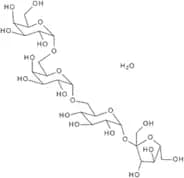
CAS:The product is a custom synthesis of the amino acid azetidine-2-carboxylic acid. It is synthesized from 2-acetamido-3,4-dihydroxybenzoic acid and 1,1'-dimethylethyl dimethylsilyl ether as starting materials. The product is used in glycosylation reactions to form complex carbohydrates with sugars. The product has been shown to be useful in Click chemistry, which is a type of chemical reaction where biotinylated molecules are used to attach other molecules in lab experiments. The CAS number for the product is 1992035-15-0.Fórmula:C37H58N6O5Si2Pureza:Min. 95%Peso molecular:723.06 g/molStachyose hydrate - 98%
CAS:Non-reducing storage and transport sugar in woody plants; used as a sweetener
Fórmula:C24H42O21·xH2OPureza:Min. 98 Area-%Forma y color:White Off-White PowderPeso molecular:666.58 g/mol

![(1S) -1- [(2S, 3R,4S) - 3- Hydroxy-4-hydroxymethyl- 1- benzyl - 2- azetidinyl] -1, 2- ethanediol](/_next/image/?url=https%3A%2Fstatic.cymitquimica.com%2Fproducts%2F3D%2Fthumb-webp%2FMH163532.webp&w=3840&q=75)


![(2S, 3S, 4R) -3- [[[(2S, 3S, 4R) - 3- Azido- 4- [[[(1, 1- dimethylethyl) dimethylsilyl] oxy] methy…](/_next/image/?url=https%3A%2Fstatic.cymitquimica.com%2Fproducts%2F3D%2Fthumb-webp%2FMA163463.webp&w=3840&q=75)