Glycoscience
Subcategorías de "Glycoscience"
- Aminoazúcares(108 productos)
- Anticuerpos relacionados con azúcares(283 productos)
- Glicolípidos(46 productos)
- Glicosaminoglicanos (GAGs)(55 productos)
- Glucósidos(419 productos)
- Monosacáridos(6.617 productos)
- Oligosacáridos(3.714 productos)
- Polisacáridos(505 productos)
Se han encontrado 11024 productos de "Glycoscience"
3-Galactosyl-N-acetyl-D-lactosamine
3-Galactosyl-N-acetyl-D-lactosamine is a custom synthesis of an oligosaccharide. The complex carbohydrate is composed of a saccharide and its modification. 3-Galactosyl-N-acetyl-D-lactosamine is a polysaccharide that contains saccharides with methylation, glycosylation, and click modification. The carbohydrate has high purity and is fluorinated. It has been synthesized using the Click chemistry method to modify the saccharides in the glycan.Pureza:Min. 95%Chenodeoxycholic acid 24-acyl-b-D-glucuronide
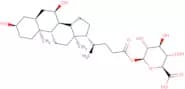
CAS:Chenodeoxycholic acid 24-acyl-b-D-glucuronide (CDCA) is a drug that is used to treat gallstones and primary biliary cirrhosis. CDCA has been shown to be effective in treating gallstones by reducing the amount of cholesterol and other bile salts in the bile. It is also prescribed for patients with primary biliary cirrhosis, which is an autoimmune disease that causes inflammation of the small intestine. CDCA has been shown to decrease cholesterol levels and improve liver function in clinical studies. It also has a low toxicity profile, making it safe for long-term treatment. The major side effects are nausea, vomiting, headache, and diarrhea. CDCA binds to fatty acids in the liver cells and prevents their uptake into the cells by blocking fatty acid transporters such as LPL or FATP4 receptors. This increases the amount of free fatty acids available for oxidation by increasing β-oxidation rates within the cellFórmula:C30H48O10Pureza:Min. 95%Forma y color:White Off-White PowderPeso molecular:568.7 g/molMethyl 3,5-di-O-(2,4-dichlorobenzyl)-2-C-methyl-α-D-ribofuranoside
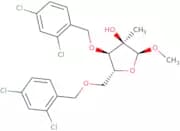
CAS:Building block for the synthesis of 2'-âC-âmethyl substituted nucleosidesFórmula:C21H22Cl4O5Pureza:Min. 95%Forma y color:Yellow PowderPeso molecular:496.21 g/molL-Iditol
CAS:L-Iditol is a sugar alcohol that is found in small quantities in nature and is used as a food additive and pharmaceutical excipient. L-Iditol has been shown to inhibit the growth of bacteria such as Escherichia coli K-12 at concentrations of 0.1% to 1%. This compound was also shown to have a protective effect on human erythrocytes from oxidative damage. The long-term toxicity of L-Iditol has not been well studied, but it does not seem to be toxic when ingested in doses up to 2000 mg/kg body weight.Fórmula:C6H14O6Pureza:Min. 95%Forma y color:White PowderPeso molecular:182.17 g/mol2-Acetamido-2-deoxy-3-O-(β-D-galactopyranosyl)-α-D-galactopyranosyl-1-O-L-serine
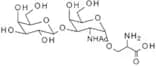
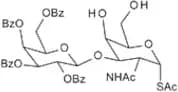
CAS:2-Acetamido-2-deoxy-3-O-(β-D-galactopyranosyl)-a-D-galactopyranosyl-1-O-[4-(aminomethyl)benzoyl]-L-serine (2ADOGB) is a side chain of the amino acid L -serine. It has been shown to have antihypertensive, vasodilatory, and diuretic properties in mice. 2ADOGB is converted to an erythroimidazole derivative by aminomethylation and then binds to DNA as a tautomer. This binding inhibits transcription of genes that encode enzymes responsible for synthesizing prostaglandins, thereby reducing inflammation and pain.Fórmula:C17H30N2O13Pureza:Min. 95%Peso molecular:470.43 g/mol1-S-Acetyl-2-acetamido-3-O-(2,3,4,6-tetra-O-benzoyl-β-D-galactopyranosyl)-2-deoxy-D-thiogalactopyranose
1-S-Acetyl-2-acetamido-3-O-(2,3,4,6-tetra-O-benzoyl-b-D-galactopyranosyl)-2-deoxy--D thiogalactopyranose is a custom synthesis of a complex carbohydrate. It is an Oligosaccharide that has been modified with methylation and glycosylation. This product is available in high purity and has been fluorinated for synthetic purposes.Fórmula:C44H43NO15SPureza:Min. 95%Peso molecular:857.88 g/molPropyl b-D-glucuronide
CAS:Propyl b-D-glucuronide is a synthetic compound that belongs to the family of carbohydrates. It has a fluorinated hydroxyl group at the C3 position and an esterified carboxylic acid at the C1 position. This compound can be used as a building block for oligosaccharides and polysaccharides, which are complex carbohydrates. Propyl b-D-glucuronide is soluble in water and has a molecular weight of 176.Fórmula:C9H16O7Pureza:Min. 95%Forma y color:Tan To Brown SolidPeso molecular:236.22 g/molMethyl 4-O-(b-D-galactopyranosyl)-D-glucopyranoside
CAS:Methyl 4-O-(b-D-galactopyranosyl)-D-glucopyranoside is a cell death inducer that induces apoptosis in cancer cells. It is an analog of the natural product bryostatin 1, which has been shown to induce apoptosis in cancer cells by binding to a protein called CD97. This compound induces apoptosis by binding to CD97, inhibiting the formation of ATP, and activating caspases. In vitro studies have shown that methyl 4-O-(b-D-galactopyranosyl)-D-glucopyranoside induces apoptosis in mouse lymphoma cells and human leukemia cells.
Fórmula:C13H24O11Pureza:Min. 95%Forma y color:White PowderPeso molecular:356.32 g/molSalicylic acid ethyl ester b-D-glucuronide
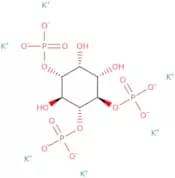
The synthesis of this compound is accomplished by a two-step process. First, the methylation of salicylic acid ethyl ester with sodium methoxide in methanol followed by the addition of b-D-glucuronide to afford the desired product. This compound is an example of an oligosaccharide with a complex carbohydrate structure. It can be modified to contain fluorine atoms or other functional groups and it has been shown to be synthesized from monosaccharides. The sugar chain can include a variety of saccharides, such as glucose, galactose, or fructose. The synthesis of this compound is accomplished by a two-step process. First, the methylation of salicylic acid ethyl ester with sodium methoxide in methanol followed by the addition of b-D-glucuronide to afford the desired product. This compound is an example of an oligosaccharide with a complex carbohydrate structure. It canFórmula:C15H18O9Pureza:Min. 95%Peso molecular:342.3 g/molD-myo-Inositol 1,4,5-triphosphate potassium salt
CAS:D-myo-Inositol 1,4,5-triphosphate potassium salt is an ion channel activator. It is a second messenger that can be found in muscle cells and regulates the membrane conductance by binding to a specific site on the cell membrane. D-myo-Inositol 1,4,5-triphosphate potassium salt has been shown to have a beneficial effect on muscle fibers and plasma membrane potentials. This compound also alters hormone levels and liver function. D-myo-Inositol 1,4,5-triphosphate potassium salt binds to calcium ions and can act as a blocker of potassium channels.Fórmula:C6H9K6O15P3Pureza:Min. 95%Forma y color:PowderPeso molecular:648.64 g/molD-Arabinaric acid dipotassium salt
CAS:D-Arabinaric acid dipotassium salt is a custom synthesis with complex carbohydrate, which can be modified by methylation, glycosylation, and carbonylation. It has CAS number 6703-05-5 and a high purity. This product is also fluorinated, which makes it an excellent synthetic reagent.Fórmula:C5H6K2O7Pureza:Min. 95 Area-%Forma y color:White Off-White PowderPeso molecular:256.29 g/molSucralfate
CAS:Sucralfate is a drug that is used to treat and prevent injury-related inflammation by forming a protective barrier on the lining of the stomach and duodenum. Sucralfate has been shown to be effective in the treatment of infectious diseases, such as viral or bacterial infections, and also for radiation enteritis and ulcerative colitis. Sucralfate may interfere with the absorption of other drugs, such as acyclic nucleoside phosphonates, which are used to treat HIV/AIDS. This drug has also been shown to have anti-inflammatory properties through inhibition of prostaglandin synthesis. Sucralfate has been shown to have anti-inflammatory properties through inhibition of prostaglandin synthesis.
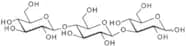
Fórmula:C12H54Al16O75S8Forma y color:White Off-White PowderPeso molecular:2,086.74 g/mol1,3:1,4-b-Glucotriose (B)
CAS:1,3:1,4-B-Glucotriose (B) is a carbohydrate that is a monosaccharide. It is also an oligosaccharide that is classified as a complex carbohydrate. This compound can be synthesized with high purity and custom synthesis. 1,3:1,4-B-Glucotriose (B) can be modified with fluorination, methylation, glycosylation, and click modification. This product has CAS No. 157544-59-7.Fórmula:C18H32O16Pureza:Min. 95%Forma y color:White PowderPeso molecular:504.44 g/mol(3R, 5R) -1-Benzyl-3, 4, 5- piperidinetriol
(3R, 5R) -1-Benzyl-3, 4, 5- piperidinetriol is a modification of the parent compound. The modification of the parent compound is accomplished by the introduction of a benzyl group at the 3' and 5' positions of the molecule. This modification can be used to synthesize oligosaccharides, which are complex carbohydrates. (3R, 5R) -1-Benzyl-3, 4, 5- piperidinetriol is synthesized from high purity (99%) monosaccharide methylated with formaldehyde in aqueous solution with hydrochloric acid and sodium hydroxide as catalysts. It has CAS number 8056-97-2 and molecular weight of 231.24 grams per mole.Pureza:Min. 95%GQ1b-Ganglioside sodium
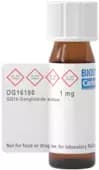
CAS:GQ1b ganglioside (sodium salt) has a core tetrasaccharide structure (Galβ1,3GalNAcβ1,4Galβ1,4Glc) with two sialic acids (NeuAc) linked α2,3/α2,8 to the inner galactose residue, two sialic acids (NeuAc) linked α2,3/α2,8 to the terminal galactose residue and ceramide linked β to position 1 on the reducing terminal glucose residue (Ledeen, 2009). Anti-GQ1b ganglioside antibody is associated with Miller Fisher syndrome and is also found in patients with related conditions that may share the same pathogenic mechanism, such as, Bickerstaff brainstem encephalitis. Thus, the measurement of the anti-GQ1b antibody in suspected cases of Miller Fisher syndrome is a useful diagnostic marker (Paparounas, 2004). It has been found that GQ1b ganglioside contributes to synaptic transmission and synapse formation. Low concentrations of GQ1b ganglioside, evoked dopamine (DA) release from laboratory tissues (Chen, 2018).Fórmula:C106H182N6O56·4NaPureza:Min. 95%Forma y color:White PowderPeso molecular:2,528.55 g/mol1-O-Methyl-β-D-glucopyranoside
CAS:1-O-Methyl-β-D-glucopyranoside is a β-glucosidase inducer.
Fórmula:C7H14O6Pureza:Min. 98.0 Area-%Peso molecular:194.19 g/molRef: 3D-M-3592
5gA consultar25gA consultar50gA consultar100gA consultar250gA consultar-Unit-ggA consultarCotinine-N-b-glucuronide-D3
Producto controladoCotinine-N-b-glucuronide-D3 is a modification of the natural product cotinine, which is a methylated form of nicotine and can be synthesized from the plant Nicotiana tabacum. Cotinine-N-b-glucuronide-D3 is a complex carbohydrate that has been custom synthesized for the purpose of modifying an oligosaccharide. This modification will allow for the synthesis of high purity monosaccharides. Cotinine has been shown to have antiinflammatory properties, which may be due to its inhibition of prostaglandin synthesis.Fórmula:C16H17N2O7D3Pureza:Min. 95%Peso molecular:355.36 g/mol6-aminomethyl-6-deoxy-γ-cyclodextrin
This gamma-cyclodextrin (γ-CD) derivative is a modified cyclic oligosaccharide composed of eight glucose units, featuring a larger cavity size than α- and β-cyclodextrins. This structural characteristic allows γ-CDs to form inclusion complexes with a wider range of guest molecules, making it particularly versatile in various industries. In the food sector, it is used as a carrier and stabilizer for flavors, fat-soluble vitamins, and polyunsaturated fatty acids, protecting volatile compounds from evaporation. In pharmaceuticals, it enhances the solubility and bioavailability of poorly water-soluble drugs and, thanks to its larger ring size, allows for the encapsulation of larger molecules or even entire drug molecules. γ-CDs and derivatives are also used for environmental remediation and, in analytical chemistry, for the extraction and concentration of target substances.
Fórmula:C55H104N8O32Pureza:Min. 95%Peso molecular:1,389.45 g/molMethyl 2,3,4-tri-O-methyl-α-D-glucopyranoside
CAS:Methyl 2,3,4-tri-O-methyl-α-D-glucopyranoside is a synthetic monosaccharide that has been fluorinated with bromine. The synthetic process for this compound is click chemistry, which involves the use of copper and a chiral ligand. Methyl 2,3,4-tri-O-methyl-α-D-glucopyranoside is an example of a carbohydrate modification. It is also an oligosaccharide that contains three monosaccharides.
Methyl 2,3,4-tri-O-methyl-α-D-glucopyranoside can be used in glycosylation or methylation reactions due to its high purity and custom synthesis. This compound can also be used as an Oligosaccharide due to its saccharide composition.Fórmula:C10H20O6Pureza:Min. 95%Forma y color:PowderPeso molecular:236.26 g/mol3'-Sialyllactose-sp-biotin
CAS:3'-Sialyllactose-sp-biotin is a monosaccharide that is modified with fluorine. It has been used in the synthesis of glycosylated proteins and peptides. 3'-Sialyllactose-sp-biotin is also used to modify glycoproteins, which are proteins that contain carbohydrate chains. The modification with fluorine makes this product ideal for use in the synthesis of glycosylated proteins and peptides.Fórmula:C42H71N5O22SPureza:Min. 95%Forma y color:White Off-White PowderPeso molecular:1,030.1 g/mol