Glycoscience
La glicociencia es el estudio de los carbohidratos y sus derivados, así como de las interacciones y funciones biológicas en las que participan. Este campo de investigación es crucial para comprender una amplia variedad de procesos biológicos, incluyendo el reconocimiento celular, la señalización, la respuesta inmune y el desarrollo de enfermedades. La glicociencia tiene aplicaciones importantes en la biotecnología, la medicina, y el desarrollo de nuevos fármacos y terapias. En CymitQuimica, ofrecemos una amplia selección de productos de alta calidad y pureza para la investigación en glicociencia. Nuestro catálogo incluye monosacáridos, oligosacáridos, polisacáridos, glicoconjugados, y reactivos específicos, diseñados para apoyar a los investigadores en sus estudios sobre la estructura, función y aplicaciones de los carbohidratos en sistemas biológicos. Estos recursos están destinados a facilitar descubrimientos científicos y aplicaciones prácticas en diversas áreas de la biociencia y la medicina.
Subcategorías de "Glycoscience"
- Aminoazúcares(108 productos)
- Anticuerpos relacionados con azúcares(282 productos)
- Glicolípidos(46 productos)
- Glicosaminoglicanos (GAGs)(55 productos)
- Glucósidos(419 productos)
- Monosacáridos(6.624 productos)
- Oligosacáridos(3.682 productos)
- Polisacáridos(503 productos)
Se han encontrado 11046 productos de "Glycoscience"
Ordenar por
Pureza (%)
0
100
|
0
|
50
|
90
|
95
|
100
Glyco-diosgenin
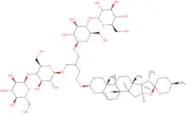
CAS:<p>Glyco-diosgenin is an amphipathic molecule that has been found to stabilize proteins. It has the potential to be developed as a drug target for stabilizing proteins in cells. Glyco-diosgenin was synthesized by chemical modification of diosgenin, which is a steroidal saponin found in plants. The chemical modification that occurred at the 3-hydroxyl position of glyco-diosgenin produced a more effective molecule due to increased solubility and decreased toxicity. The protein stabilization properties of glyco-diosgenin have been shown by cryo-electron microscopy on plant cells, titration calorimetry, and functional studies on various proteins.</p>Fórmula:C56H92O25Pureza:Min. 97 Area-%Forma y color:PowderPeso molecular:1,165.31 g/molγ-Cyclodextrin hydrate
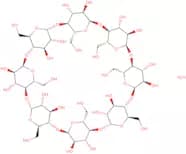
CAS:Gamma-cyclodextrin (γ-CD) is a cyclic oligosaccharide composed of eight glucose units, featuring a larger cavity size than α- and β-cyclodextrins. This structural characteristic allows γ-CDs to form inclusion complexes with a wider range of guest molecules, making it particularly versatile in various industries. In the food sector, it is used as a carrier and stabilizer for flavors, fat-soluble vitamins, and polyunsaturated fatty acids, protecting volatile compounds from evaporation. In pharmaceuticals, it enhances the solubility and bioavailability of poorly water-soluble drugs and, thanks to its larger ring size, allows for the encapsulation of larger molecules or even entire drug molecules. γ-CDs and derivatives are also used for environmental remediation and, in analytical chemistry, for the extraction and concentration of target substances.Fórmula:C48H80O40•(H2O)xPureza:Min. 95%Forma y color:PowderPeso molecular:1,297.12 g/molSafflor Yellow A
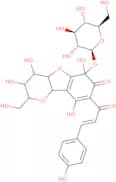
CAS:Safflor Yellow A is a natural drug that has been shown to have hypoglycemic effects. It is a potent inhibitor of glucose-6-phosphatase and glucose-6-phosphate dehydrogenase, which are enzymes involved in the conversion of glucose to glycogen. Safflor Yellow A also inhibits neuronal death, as it blocks the enzyme activities that lead to neuronal cell death. This drug has also shown antitumor activity, as it induces apoptosis in tumor cells. Safflor Yellow A also has antihyperlipidemic effects and can be used for the treatment of coronary heart disease. Low doses of this drug have been shown to reduce systolic pressure in rats and improve blood coagulation. The mechanism of action for this drug is not yet known but may involve toll-like receptor 4 signaling pathways or polymerase chain reaction (PCR).Fórmula:C27H30O15Pureza:Min. 95%Forma y color:PowderPeso molecular:594.52 g/molD-Arabinose-5-phosphate
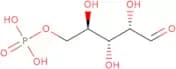
CAS:D-Arabinose-5-phosphate is an intermediate in the pentose phosphate pathway. It is synthesized from D-xylulose-5-phosphate by xylitol dehydrogenase. D-Arabinose-5-phosphate inhibits the enzyme xylitol dehydrogenase, which converts xylulose to d-xylulose, and thus prevents the formation of 5-hydroxyisoxazole phosphate, a precursor to the synthesis of NADPH. In this way, it blocks the synthesis of NADPH, which is essential for aerobic metabolism. This inhibition leads to a decrease in ATP production and consequently cell death.Fórmula:C5H11O8PPureza:Min. 95%Peso molecular:230.11 g/molSucrose cocoate
CAS:Blend of sucrose esters with fatty acid esters from coconut oil used in Cosmetic industry applications.Pureza:Min. 95%1-Deoxy-D-glucitol
CAS:1-Deoxy-D-glucitol is a sugar alcohol that is a reduction product of glucose. It can be produced by the reduction of glucose 6-phosphate in muscle cells. The enzyme dehydrogenase catalyzes this reaction, which is influenced by the presence of gemini surfactants such as DMSO. 1-Deoxy-D-glucitol has been shown to have anti-fungal properties against Aspergillus parasiticus and other organisms. This activity may be due to its ability to inhibit phosphofructokinase, hexokinases, or other enzymes that are involved in the metabolism of glucose by these organisms.Fórmula:C6H14O5Pureza:Min. 95%Peso molecular:166.17 g/mol1,2,4,6-Tetra-O-acetyl-3-O-(2,3,4,6-tetra-O-acetyl-a-D-galactopyranosyl)-D-galactopyranose
CAS:<p>1,2,4,6-Tetra-O-acetyl-3-O-(2,3,4,6-tetra-O-acetyl-aDgalactopyranosyl)-Dgalactopyranose is a modified sugar that can be synthesized by the Click chemistry reaction. It has been used in the modification of saccharides and polysaccharides. This product is CAS No. 123809-61-0 and is available for custom synthesis. 1,2,4,6 tetra O acetyl 3 O-(2 3 4 6 tetra O acetyl a D galactopyranosyl) D galactopyranose is a high purity carbohydrate with glycosylation and fluorination.<br>END> END></p>Fórmula:C28H38O19Pureza:Min. 95%Peso molecular:678.59 g/mol2,3-Di-O-benzyl-6-O-tert-butyldimethylsilyl-gamma-cyclodextrin
<p>This gamma-cyclodextrin (γ-CD) derivative is a modified cyclic oligosaccharide composed of eight glucose units, featuring a larger cavity size than α- and β-cyclodextrins. This structural characteristic allows γ-CDs to form inclusion complexes with a wider range of guest molecules, making it particularly versatile in various industries. In the food sector, it is used as a carrier and stabilizer for flavors, fat-soluble vitamins, and polyunsaturated fatty acids, protecting volatile compounds from evaporation. In pharmaceuticals, it enhances the solubility and bioavailability of poorly water-soluble drugs and, thanks to its larger ring size, allows for the encapsulation of larger molecules or even entire drug molecules. γ-CDs and derivatives are also used for environmental remediation and, in analytical chemistry, for the extraction and concentration of target substances.</p>Fórmula:C208H288O40SI8Pureza:Min. 95%Peso molecular:4,475.79 g/molLacto-N-neofucopentaose
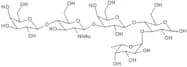
<p>Neutral pentasasaccharide naturally present in human breast milk</p>Fórmula:C32H55NO25Pureza:Min. 90 Area-%Forma y color:PowderPeso molecular:853.77 g/mol3-Acetamido-3,6-dideoxy-D-galactose
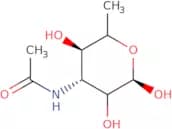
CAS:<p>3-Acetamido-3,6-dideoxy-D-galactose is a monosaccharide with two functional groups. It has been shown to be bifunctional and can act as a glycosyl donor or acceptor. 3-Acetamido-3,6-dideoxy-D-galactose was isolated from the type strain of Streptomyces venezuelae. It is also found in fatty acids and some strains of bacteria, such as Bacillus megaterium. The biological properties of 3-acetamido--3,6-dideoxy--D--galactose have been studied using monoclonal antibodies, magnetic resonance spectroscopy (MRS), and 13C nuclear magnetic resonance spectroscopy (NMR).</p>Fórmula:C8H15NO5Pureza:Min. 95%Forma y color:PowderPeso molecular:205.21 g/molBenzyl 2-acetamido-2-deoxy-α-D-glucopyranoside
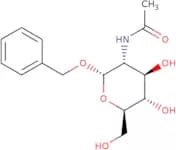
CAS:Benzyl 2-acetamido-2-deoxy-α-D-glucopyranoside is a synthetic compound with a molecular weight of 342.45 g/mol. It is a white to pale yellow crystalline solid that is soluble in water and methanol. The chemical formula for this compound is C12H14N2O6 and its structural formula is represented as CH2(COOCH3)COOC8H11O6. The CAS number for this compound is 13343-62-9, and the IUPAC name for it is benzyl 2-(2-acetamido)-2,3,4,5,6-pentaacetoxy αDglucopyranoside. This compound has been used in methylation reactions and click chemistry applications due to its ability to form stable carbonyl bonds with other molecules. Benzyl 2-(2-acetamido)-2,3,4,5,6Fórmula:C15H21NO6Pureza:Min. 98 Area-%Forma y color:White PowderPeso molecular:311.33 g/molN-Acetyl-2,7-anhydro-α-neuraminic acid
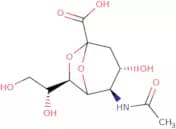
CAS:N-Acetyl-2,7-anhydro-a-neuraminic acid is a synthetic derivative of a naturally occurring sugar that is found in the human brain and other tissues. It has been proposed as a potential drug for the treatment of inflammatory bowel disease due to its ability to inhibit the growth of cells in the colon and prevent inflammation. N-Acetyl-2,7-anhydro-a-neuraminic acid has been shown to have antiinflammatory properties by inhibiting the synthesis of proinflammatory cytokines. This compound binds to an enzyme called galactosamine kinase, which is involved in making certain proteins that are necessary for inflammation. The chemical structure of N-Acetyl-2,7-anhydro-a-neuraminic acid was determined through structural analysis and carbon source titration calorimetry. Magnetic resonance spectroscopy showed that this compound reacts with water molecules and chemical ionization revealed that itFórmula:C11H17NO8Pureza:Min. 95%Peso molecular:291.25 g/molPseudaminic acid
<p>Pseudaminic acid is a sugar molecule that is found in the cell walls of bacteria, where it provides structural support. It is synthesized enzymatically by transferring the terminal hydroxyl group from glucose-1-phosphate to glycerol-3-phosphate. Pseudaminic acid can be chemoenzymatically synthesized in a scalable manner and has been shown to inhibit the growth of infectious bacteria in biological studies. Structural studies have revealed that pseudaminic acid contains an hydroxyl group and two glycosidic bonds, which are formed between the carbon atom at position C2 and C6 of glucose. This molecule also has an ester linkage between C1 and C2 of mannose. Pseudaminic acid is biosynthesized through a series of reactions that involve phosphorylation, dephosphorylation, and oxidation. This molecule also participates in protein glycosylation as well as water molecules that hydrogen bond</p>Fórmula:C13H22N2O8Pureza:Min. 95%Forma y color:PowderPeso molecular:334.32 g/molDanaparoid sodium - mixture of dermatan sulfate, heparan sulfate and chondroitin sulfate
CAS:<p>Danaparoid sodium (the active pharmaceutical ingredient in Orgaran; Merck Sharp and Dohme) is a biopolymeric non-heparin drug that is used as anticoagulant and antithrombotic agent, approved for the prophylaxis of postoperative deep-vein thrombosis. It consists of a mixture of three glycosaminoglycans: heparan sulphate, dermatan sulphate, and chondroitin sulphate. Danaparoid, has well established antithrombotic activity. The drug has a high antifactor Xa to antifactor IIa (thrombin) activity ratio, a low tendency to cause bleeding and minimal effects on the fibrinolytic system.</p>Pureza:Min. 95%Forma y color:White Powder2-Acetamido-3,4,6-tri-O-acetyl-1-O-[(N-Cbz-aminoethoxy)ethoxy]-2-deoxy-β-D-galactopyranose
CAS:2-Acetamido-3,4,6-tri-O-acetyl-1-O-[(N-Cbz-aminoethoxy)ethoxy]-2-deoxy-b-D-galactopyranose is a custom synthesis of a complex carbohydrate. It is a polysaccharide that contains fluorine and has been modified with methylation, glycosylation, click modification, and polysaccharide modifications. 2-Acetamido-3,4,6-tri-O -acetyl -1 -O-[(N -Cbz -aminoethoxy)ethoxy] -2 deoxy b D galactopyranose is also known as CAS No. 1261568 35 7 and it's molecular weight is 546.81 g/mol.Fórmula:C26H36N2O12Pureza:Min. 95%Peso molecular:568.57 g/molIrbesartan N-b-D-glucuronide
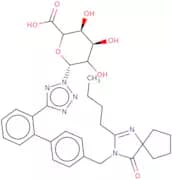
CAS:<p>Irbesartan N-b-D-glucuronide is a complex carbohydrate that is a synthetic saccharide. It is an intermediate in the synthesis of irbesartan, which is an angiotensin II receptor antagonist. Irbesartan N-b-D-glucuronide has been shown to have antihypertensive properties, inhibiting the activity of the renin-angiotensin system and increasing blood flow to the kidneys. It also inhibits the growth of cancer cells. This compound can be custom synthesized for your specific needs and purities can be controlled to meet your specifications.</p>Fórmula:C31H36N6O7Pureza:Min. 98 Area-%Forma y color:White PowderPeso molecular:604.65 g/mol2,3,4,6-Tetra-O-acetyl-a-D-mannopyranosyl azide
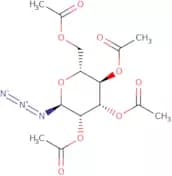
CAS:<p>2,3,4,6-Tetra-O-acetyl-a-D-mannopyranosyl azide is a crystalline solid that can be obtained by heating 2,3,4,6-tetra-O-acetyl-a-D-mannopyranose with sodium azide. This compound has been used in the x-ray crystallographic technique for obtaining electron density maps. The x ray data collected from this compound showed the distinct difference between the electron density of the atoms and their surroundings.</p>Fórmula:C14H19N3O9Forma y color:PowderPeso molecular:373.32 g/molValidamine
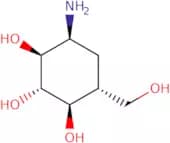
CAS:<p>Inhibitor of alpha-glucosidase</p>Fórmula:C7H15NO4Pureza:Min. 95%Forma y color:PowderPeso molecular:177.2 g/mol1,2,3-Tri-O-benzoyl-α-L-fucopyranose
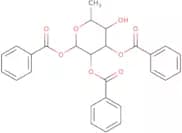
CAS:<p>1,2,3-Tri-O-benzoyl-a-L-fucopyranose is a synthetic, fluorinated monosaccharide that can be synthesized from D-glucose in two steps. It is a useful building block for the synthesis of oligosaccharides and polysaccharides with different glycosylation patterns. This compound has been shown to react with methyl iodide to form 1,2,3-triiodo-a-L-fucopyranose. It has also been used as a click modification reagent for carbohydrates.</p>Fórmula:C27H24O8Pureza:Min. 95%Peso molecular:476.47 g/molPolysorbate 60
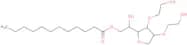
CAS:<p>Polysorbate 60 is a polyoxyethylene-polyoxypropylene block copolymer that is composed of two different saturated fatty acid chains. It has been used as a surfactant and stabilizer in the manufacture of pharmaceuticals, foods, cosmetics, and other products. Polysorbate 60 has been shown to inhibit the growth of epidermal cells by binding to epidermal growth factor (EGF) receptors on the cell surface. The effects of polysorbate 60 are also mediated through hydrogen bonding with the EGF receptor. The pharmacokinetic properties of polysorbate 60 have been studied in vitro using human serum. This polymer is used as an excipient in solid dispersions for oral administration and can be administered intravenously or subcutaneously. Polysorbate 60 is chemically stable at acidic pH levels and hydrochloric acid does not affect its structure. Polysorbate 60 also has protease activity against trypsin at high temperatures,</p>Fórmula:C64H126O26Pureza:Min. 95%Forma y color:Light (Or Pale) Yellow To Yellow Solid Or Liquid (May Vary)Peso molecular:1,311.67 g/mol





![2-Acetamido-3,4,6-tri-O-acetyl-1-O-[(N-Cbz-aminoethoxy)ethoxy]-2-deoxy-β-D-galactopyranose](/_next/image/?url=https%3A%2Fstatic.cymitquimica.com%2Fproducts%2F3D%2Fthumb-webp%2FMA137616.webp&w=3840&q=75)