Glycoscience
La glicociencia es el estudio de los carbohidratos y sus derivados, así como de las interacciones y funciones biológicas en las que participan. Este campo de investigación es crucial para comprender una amplia variedad de procesos biológicos, incluyendo el reconocimiento celular, la señalización, la respuesta inmune y el desarrollo de enfermedades. La glicociencia tiene aplicaciones importantes en la biotecnología, la medicina, y el desarrollo de nuevos fármacos y terapias. En CymitQuimica, ofrecemos una amplia selección de productos de alta calidad y pureza para la investigación en glicociencia. Nuestro catálogo incluye monosacáridos, oligosacáridos, polisacáridos, glicoconjugados, y reactivos específicos, diseñados para apoyar a los investigadores en sus estudios sobre la estructura, función y aplicaciones de los carbohidratos en sistemas biológicos. Estos recursos están destinados a facilitar descubrimientos científicos y aplicaciones prácticas en diversas áreas de la biociencia y la medicina.
Subcategorías de "Glycoscience"
- Aminoazúcares(108 productos)
- Anticuerpos relacionados con azúcares(282 productos)
- Glicolípidos(46 productos)
- Glicosaminoglicanos (GAGs)(55 productos)
- Glucósidos(419 productos)
- Monosacáridos(6.624 productos)
- Oligosacáridos(3.682 productos)
- Polisacáridos(503 productos)
Se han encontrado 11046 productos de "Glycoscience"
Ordenar por
Pureza (%)
0
100
|
0
|
50
|
90
|
95
|
100
β-1,3-Glucan
CAS:β-1,3-Glucan is a bioactive polysaccharide, which is located predominantly in the cell walls of yeast, fungi, and certain cereals. This compound is characterized by its unique branched structure, which is crucial for its biological function. The mode of action of β-1,3-Glucan involves the binding to specific receptors on immune cells, such as dectin-1, which triggers a cascade of immune responses. This interaction enhances the activity of macrophages, neutrophils, and natural killer cells, thus bolstering the body's innate immune defenses.The uses and applications of β-1,3-Glucan are broad, primarily focused on immunological research and potential therapeutic strategies. It is extensively utilized in studies examining its effects as an immunomodulator, leveraging its ability to potentiate immune system function and examining its role in adjunctive cancer therapies, where it may enhance the efficacy of certain treatments. Additionally, β-1,3-Glucan is investigated for its potential benefits in reducing infection rates and improving recovery times in clinical settings. Moreover, its applications in dietary supplements and functional foods continue to be a subject of scientific inquiry, aiming to harness its health-promoting properties within nutrition science.Pureza:Min. 95%Forma y color:PowderN-Trimethylchitosan
CAS:Quaternization of the primary amine in N-Trimethylchitosan increases the water solubility of chitosan and keeps chitosan soluble over a wide pH range. N-Trimethylchitosan is soluble in water and ethanol, making it ideal for use in biotechnology applications.The degree of quaternization is 30-70%Pureza:Min. 90%Tween 65
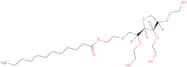
CAS:Tween 65 is a polyoxyethylene sorbitan monooleate (polysorbate) surfactant that is used as a film-forming polymer and dispersing agent in solid preparations. Tween 65 has been shown to inhibit the proliferation of prostate cancer cells, which may be due to its ability to bind to anti-prostate specific antigen (anti-pcsk9) antibody causing the antibody to aggregate and form a particle. This process inhibits the interaction between the antibody and its target, preventing it from binding with PCSK9 protein. The addition of propranolol hydrochloride has been shown to increase the effectiveness of Tween 65.Methyl b-D-fructofuranoside
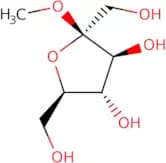
CAS:<p>Methyl b-D-fructofuranoside is a chemical compound that is used in the production of esters and fatty acids. Methyl b-D-fructofuranoside is produced by a dehydration reaction between two molecules of acetone. The product of this reaction, methyl b-D-fructopyranoside, can be broken down into two molecules of acetone and one molecule each of methyl alcohol and carbon dioxide. This process is called alkylation. Furanocoumarin derivatives are often found in plants such as asperulosidic acid and quinquefasciatus. These compounds are found in many species of plant, but they are most concentrated in the roots of these plants because they are more metabolically active there than other parts of the plant. Environmental pollution can lead to high concentrations of furanocoumarins in plants, which can have toxic effects on organisms that come into contact with them.</p>Fórmula:C7H14O6Pureza:Min. 98 Area-%Forma y color:Clear LiquidPeso molecular:194.18 g/molMethyl 2-deoxy-5-O-toluoyl-L-ribofuranoside
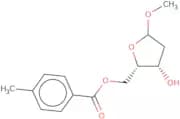
CAS:<p>Methyl 2-deoxy-5-O-toluoyl-L-ribofuranoside is a high purity, custom synthesis, methylated, Glycosylation and Oligosaccharide. It has CAS No. 676598-19-9 and is Glycosylated and Methylated. This complex carbohydrate is a synthetic, monosaccharide or saccharide that can be modified with fluorination, Click modification or glycosylation.</p>Fórmula:C14H18O5Pureza:Min. 95%Forma y color:Brown oil.Peso molecular:266.3 g/molL-Lyxosamine HCl
L-Lyxosamine HCl is a synthetic monosaccharide that has been modified to contain a fluorine atom. L-Lyxosamine HCl is a methyl donor in the Methylation reaction and can be used as an intermediate for the synthesis of oligosaccharides and polysaccharides. This product is available in high purity, with an average yield of 97%. The CAS No. for this product is 590-81-6.Fórmula:C5H11NO4HClPureza:Min. 95%Peso molecular:185.61 g/mol2-Acetamido-3-O-(2-acetamido-2-deoxy-b-D-glucopyranosyl)-2-deoxy-D-galactopyranose
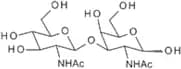
CAS:2-Acetamido-3-O-(2-acetamido-2-deoxy-b-D-glucopyranosyl)-2-deoxy-D-galactopyranose is a methylated, saccharide, Polysaccharide. It is a custom synthesis of a carbohydrate sugar. It is fluorinated to increase its bioavailability. 2 Acetamido 3 O 2 acetamido 2 deoxy b D glucopyranosyl 2 deoxy D galactopyranose has CAS No. 95673 98 6 and the molecular weight is 524.87 g/mol. It has a purity of >99% and comes in powder form.Fórmula:C16H28N2O11Pureza:Min. 95%Forma y color:White PowderPeso molecular:424.4 g/mol3'-b-Sialyl-N-acetyllactosamine
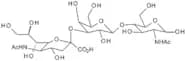
CAS:<p>3'-b-Sialyl-N-acetyllactosamine is an oligosaccharide that is synthesized from L-arabinose and 3'-phosphoadenosine 5'-phosphosulfate. It has a high degree of purity and is custom synthesized to order. The CAS number for this product is 210418-18-1.</p>Fórmula:C25H42N2O19Pureza:Min. 95%Forma y color:White PowderPeso molecular:674.6 g/mol2,5-Anhydro-D-glucitol-1,6-diphosphate
CAS:<p>2,5-Anhydro-D-glucitol-1,6-diphosphate is a cell signaling molecule that is involved in the regulation of glycolysis and the phosphofructokinase enzyme. It binds to platelets and regulates platelet aggregation. This enzyme has been shown to be a potential drug target for cancer. Cancer cells have been found to contain higher concentrations of 2,5-Anhydro-D-glucitol-1,6-diphosphate than their normal counterparts. The increased concentration of this enzyme in cancer cells is due to an allosteric change in the enzyme’s activity. The increased activity leads to a more rapid metabolism of glucose, which provides energy for tumor growth and metastasis. This enzyme can be used as a marker for malignancy in human diseases such as breast cancer or prostate cancer.</p>Fórmula:C6H14O11P2Pureza:Min. 98%Forma y color:Clear LiquidPeso molecular:324.12 g/mol5-Deoxy-D-ribose
CAS:<p>5-Deoxy-D-ribose is a molecule that is an intermediate in the shikimate pathway, which produces the aromatic amino acids. 5-Deoxy-D-ribose can be synthesized from D-ribose and shikimic acid. The biosynthesis of 5-deoxy-D-ribose is catalyzed by the enzyme ribose 5'-phosphate kinase, which converts ribose 5'-phosphate to 5-deoxy--D--ribose phosphate. This reaction requires ATP as a source of energy, and it is inhibited by phosphoribosyl pyrophosphate (PRPP). The asymmetric synthesis of 5-deoxy--D--ribose has been achieved with a chiral Lewis acid catalyst. The molecular structure of 5-deoxy--D--ribose has been determined by NMR spectroscopy. Shikimate pathways are present in mammalian cells, but not in plants or bacteria.</p>Fórmula:C5H10O4Pureza:Min. 95 Area-%Forma y color:Orange Clear LiquidPeso molecular:134.13 g/molPhenethyl glucosinolate potassium salt
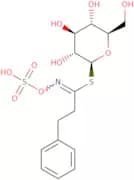
CAS:Phenethyl glucosinolate potassium salt is a compound found in plants belonging to the Brassicaceae family. It has been shown to be highly toxic to larvae of the cabbage butterfly and other insects that feed on brassica plants. Phenethyl glucosinolate potassium salt has been shown to inhibit the development of these insects, probably by inhibiting protein synthesis in the insect's gut. The major sulfur-containing compound in this product is gluconasturtiin, which has been shown to inhibit growth of pekinensis at high temperatures. This compound also inhibits radiation-induced DNA damage and does not show significant effects on nonsignificant organisms such as yeast and mold.Fórmula:C15H20NO9S2KPureza:Min. 95%Forma y color:PowderPeso molecular:461.55 g/molCorchoionoside C
CAS:Corchoionoside C is a natural compound classified as an iridoid glycoside. This compound is isolated from various plant species, particularly those within the Boraginaceae family. The mode of action of Corchoionoside C involves modulation of biological pathways, likely through its interaction with cellular enzymes and receptors, contributing to its potential therapeutic effects.Pureza:Min. 98%Man-3 Glycan, 2-AB labelled
2-AB labeled core pentasaccharide found in most N-linked oligosaccharides. Purified from the oligosaccharide pool released from bovine serum by hydrazinolysis using a combination of HPLC and glycosidase digestion.Pureza:Hplc.Forma y color:PowderMethyl 1-C-[4-chloro-3-[[4-[[(3S)-tetrahydro-3-furanyl]oxy]phenyl]methyl]phenyl]-a-D-glucopyranoside
CAS:Intermediate in the synthesis of empagliflozinFórmula:C24H29ClO8Pureza:Min. 95%Peso molecular:480.94 g/molD-Fructose-1,6-diphosphate dibarium
CAS:<p>D-Fructose-1,6-diphosphate dibarium salt is a synthetic sugar that is used in the synthesis of oligosaccharides and polysaccharides. This compound can be custom synthesized to meet your specifications. D-Fructose-1,6-diphosphate dibarium salt has been shown to be soluble in water, ethanol, acetone, and chloroform. D-Fructose-1,6-diphosphate dibarium salt is a fluorinated carbohydrate with a purity of 99%. It can be modified with methylation or click modification for further applications.</p>Fórmula:C6H14O12P2•(Ba)2Pureza:Min. 95%Forma y color:PowderPeso molecular:614.75 g/molOnitin 2'-O-glucoside
CAS:Onitin 2'-O-glucoside is a sugar that is custom synthesized and purified. It is a modification of oligosaccharides, complex carbohydrates, and polysaccharides. Onitin 2'-O-glucoside is an Oligosaccharide Carbohydrate which can be used in the synthesis of high purity monosaccharides and methylations. It also has the ability to form glycosylation with saccharides, such as glucose or fructose. This product can also be fluorinated to produce saccharides that are water soluble.Pureza:Min. 95%11a-Hydroxy progesterone b-D-glucuronide
CAS:<p>11a-Hydroxy progesterone b-D-glucuronide is a fluorinated steroid that is synthesized with high purity. It has been modified with methylation and glycosylation. 11a-Hydroxy progesterone b-D-glucuronide is a complex carbohydrate, which consists of saccharides in the form of oligosaccharides. The sugar in 11a-hydroxy progesterone b-D-glucuronide is a monosaccharide, which can be modified with fluorination or click chemistry to create a new compound. This product has CAS No. 77710-64-6 and can be custom synthesized to meet your specifications.</p>Fórmula:C27H38O9Pureza:Min. 95%Forma y color:PowderPeso molecular:506.59 g/mola-D-Glucoheptonic acid calcium salt hydrate
CAS:a-D-Glucoheptonic acid calcium salt hydrate is a modification of a glycosylation reaction that is typically used in the synthesis of oligosaccharides. The modification is called Click chemistry, and it occurs through a copper-catalyzed reaction between an azide and an alkyne. This type of modification can be used to produce complex carbohydrates by linking together different monosaccharides or polysaccharides. It is also used for the production of high-purity monosaccharides and polysaccharides with custom syntheses. The methylation, glycosylation, fluorination, and saccharide modifications are all variations on this process.Fórmula:C14H26CaO16·xH2OForma y color:White PowderPeso molecular:490.42 g/molLacto-N-neodifucohexaose
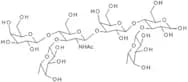
Neutral difucosylated hexasasaccharide naturally present in human breast milkFórmula:C38H65NO29Pureza:Min. 75%Forma y color:PowderPeso molecular:999.93 g/molN-Propionyl-D-glucosamine
CAS:N-Propionyl-D-glucosamine is a sugar used in the synthesis of peptidoglycan, a structural component of bacterial cell walls. N-Propionyl-D-glucosamine is synthesized from formaldehyde and propionic acid. It is used as an antibiotic to treat bacterial infections caused by Gram-positive bacteria such as streptococci and staphylococci. N-Propionyl-D-glucosamine has also been shown to have anti-fungal properties against Candida albicans and Saccharomyces cerevisiae. The biosynthesis of this compound takes place through phosphorylation of the amide group on the sugar residue, which is catalyzed by a number of enzymes including phosphotransacetylase, acetate kinase, and phosphoenolpyruvate synthase. This process requires ATP, phosphate ions, ammonium ion, and water molecules.Fórmula:C9H17NO6Pureza:Min. 95%Forma y color:White PowderPeso molecular:235.23 g/mol






![Methyl 1-C-[4-chloro-3-[[4-[[(3S)-tetrahydro-3-furanyl]oxy]phenyl]methyl]phenyl]-a-D-glucopyranosi…](/_next/image/?url=https%3A%2Fstatic.cymitquimica.com%2Fproducts%2F3D%2Fthumb-webp%2FMM137435.webp&w=3840&q=75)