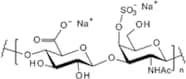
Glycoscience
La glicociencia es el estudio de los carbohidratos y sus derivados, así como de las interacciones y funciones biológicas en las que participan. Este campo de investigación es crucial para comprender una amplia variedad de procesos biológicos, incluyendo el reconocimiento celular, la señalización, la respuesta inmune y el desarrollo de enfermedades. La glicociencia tiene aplicaciones importantes en la biotecnología, la medicina, y el desarrollo de nuevos fármacos y terapias. En CymitQuimica, ofrecemos una amplia selección de productos de alta calidad y pureza para la investigación en glicociencia. Nuestro catálogo incluye monosacáridos, oligosacáridos, polisacáridos, glicoconjugados, y reactivos específicos, diseñados para apoyar a los investigadores en sus estudios sobre la estructura, función y aplicaciones de los carbohidratos en sistemas biológicos. Estos recursos están destinados a facilitar descubrimientos científicos y aplicaciones prácticas en diversas áreas de la biociencia y la medicina.
Subcategorías de "Glycoscience"
- Aminoazúcares(108 productos)
- Anticuerpos relacionados con azúcares(282 productos)
- Glicolípidos(46 productos)
- Glicosaminoglicanos (GAGs)(55 productos)
- Glucósidos(419 productos)
- Monosacáridos(6.624 productos)
- Oligosacáridos(3.682 productos)
- Polisacáridos(503 productos)
Se han encontrado 11046 productos de "Glycoscience"
Ordenar por
Pureza (%)
0
100
|
0
|
50
|
90
|
95
|
100
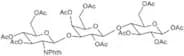
1,2,3,6-Tetra-O-acetyl-4-O-[2,4,6-tri-O-acetyl-3-O-(3,4,6-tri-O-acetyl-2-deoxy-2-phthalimido-b-D-glucopyranosyl)-b-D-galactopyranosy l]-b-D-glucopyranose
<p>The modification of this product has been completed with a high level of purity and the CAS number is 57-49-6. It is an oligosaccharide that is a complex carbohydrate. This product can be synthesized through custom synthesis and it is a synthetic product. It is classified as a monosaccharide, methylation, glycosylation, and polysaccharide. The chemical formula for this compound is C12H14O11. This compound has been fluorinated to increase its solubility in water.</p>Fórmula:C46H55NO27Pureza:Min. 95%Peso molecular:1,053.92 g/molSucrose dipalmitate
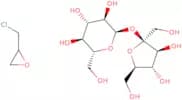
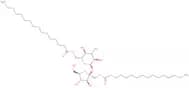
CAS:<p>Sucrose dipalmitate is a pharmaceutical dosage form that is made of sucrose, a high-energy sugar, and palmitic acid. It has a low energy content and can be used as a diagnostic agent in nuclear medicine. Sucrose dipalmitate can be used as an emulsifier in the preparation of nanoemulsions. The particle size of sucrose dipalmitate can be adjusted to achieve the desired effect. In addition, this compound is used for the treatment of cardiac disease and other conditions such as high blood pressure and diabetes.</p>Fórmula:C44H82O13Pureza:Min. 95%Peso molecular:819.11 g/molSucrose octasulfate potassium salt
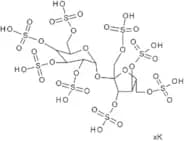
CAS:<p>This comound is generally known as sucralfates and are medications primarily taken to treat active duodenal ulcers. They are also used for the treatment of gastroesophageal reflux disease (GERD) and stress ulcers. Sucralfate is a sucrose sulfate-aluminium complex that binds to the ulcer, creating a physical barrier that protects the gastrointestinal tract from stomach acid and prevents the degradation of mucus. It also promotes bicarbonate production and acts like an acid buffer with cytoprotective properties.</p>Fórmula:C12H22O35S8•(K)xPureza:Min. 95 Area-%Forma y color:White PowderPeso molecular:982.81Polyguluronic acid
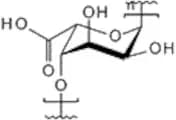
CAS:<p>Polyguluronic acid is produced from alginates by partial hydrolysis and chromatography of brown algae such as Laminaria digitata, Ascophyllum nodosum and Fucus spp.<br>The image was kindly provided by Prof Mike Guiry from Cork who runs ‘The Seaweed Site’.MW is ca 6000 - 8000Da.poly-M levels are ca 3%</p>Pureza:(%) Min. 80%Forma y color:Off-White PowderPeso molecular:194.14Benzoyl 2,3-O-isopropylidene-L-ribofuranoside
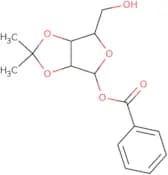
CAS:Benzoyl 2,3-O-isopropylidene-L-ribofuranoside is a custom synthesis that can be modified with fluorination and methylation. It is a monosaccharide that has been synthesized from L-ribose, which are sugar molecules found in the cell walls of bacteria. The chemical structure of benzoyl 2,3-O-isopropylidene-L-ribofuranoside has been shown to be similar to the sugar molecule found on glycoproteins on the surface of staphylococci. This chemical has also been shown to inhibit the production of enzymes that are necessary for the synthesis of glycosaminoglycans.Fórmula:C15H18O6Pureza:Min. 95%Peso molecular:294.3 g/mol(5R, 8S, 9S) -8- [(4S) - 2, 2- Dimethyl- 1, 3- dioxolan- 4- yl] - 9- hydroxy- 2, 2- dimethyl- 1, 3, 7- trioxaspiro[4.4] nonan- 6- on e
(5R, 8S, 9S) -8- [(4S) - 2, 2- Dimethyl- 1, 3- dioxolan- 4- yl] - 9- hydroxy- 2, 2- dimethyl- 1, 3, 7- trioxaspiro[4.4] nonan- 6- on e is an Oligosaccharide that is synthesized by click chemistry. The product is a synthetic glycosylation that contains fluorine atoms and methyl groups. It has a purity of 99% and a CAS number of 5963872.Pureza:Min. 95%Methyl 4,6-O-benzylidene-2-deoxy-a-D-glucopyranoside
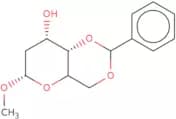
Methyl 4,6-O-benzylidene-2-deoxy-a-D-glucopyranoside is a modification of the sugar, glucopyranose. This modified sugar can be used to produce complex carbohydrates or polysaccharides. It is synthesized by reacting methyl groups with the hydroxyl group at position 6 of glucopyranose and then reacting with an aldehyde group at position 2. Methyl 4,6-O-benzylidene-2-deoxy-a-D-glucopyranoside is also known as DMBG for its chemical name. This compound has CAS number 537894 and a molecular weight of 264.24 g/mol. It has a purity of 99% and can be used in various applications such as glycosylation reactions and fluorination reactions.Fórmula:C14H18O5Pureza:Min. 95%Peso molecular:266.3 g/mol2,3-O-Isopropylidene-1,4-di-O-tosyl-D-threitol
CAS:<p>Please enquire for more information about 2,3-O-Isopropylidene-1,4-di-O-tosyl-D-threitol including the price, delivery time and more detailed product information at the technical inquiry form on this page</p>Fórmula:C21H26O8S2Pureza:Min. 95%Forma y color:PowderPeso molecular:470.56 g/molN-Acetylmuramic acid
CAS:<p>Component of peptidoglycan in bacterial cell walls. Peptidoglycan is a mesh-like polymer, made of a glycan backbone containing alternating subunits of Nâacetylglucosamine (GlcNAc) and Nâacetylmuramic acid (MurNAc). An enzyme substrate that is used to characterize and differentiate MurNAc and GlcNAc kinases.</p>Fórmula:C11H19NO8Pureza:Min. 97 Area-%Forma y color:White PowderPeso molecular:293.27 g/mol1,2,3,4-Tetra-O-acetyl-α-L-fucopyranose
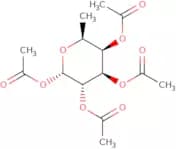
CAS:1,2,3,4-Tetra-O-acetyl-α-L-fucopyranose is a chiral compound and it has been used as a biocatalyst in the industrial production of L-amino acids. The enantiomers are obtained by enzymatic hydrolysis of the racemic mixture with lipases. It has been shown that 1,2,3,4-Tetra-O-acetyl-α-L-fucopyranose is an enantioselective substrate for lipolytic enzymes. Lipolytic enzymes are also screened for lipase activity using this compound as a surrogate.Fórmula:C14H20O9Pureza:Min. 95%Forma y color:White Off-White PowderPeso molecular:332.3 g/mol(R)-3,6-O-Benzylidene-2,6-dideoxy-L-galactono(glucono)-1.4-lactone
CAS:(R)-3,6-O-Benzylidene-2,6-dideoxy-L-galactono(glucono)-1.4-lactone is a synthetic compound that has been prepared by methylation and click modification of the corresponding L-galactonolactone. The product is an oligosaccharide with a polysaccharide chain consisting of saccharides and monosaccharides. This product is also a complex carbohydrate with high purity, custom synthesis, and modification. The synthetic compound has been used in the synthesis of other compounds such as saccharides.Pureza:Min. 95%iota-Cyclodextrin
CAS:<p>Iota-cyclodextrin (ι-CD) contains 14 glucose units. This cyclodextrin has potential applications in host-guest chemistry, particularly for large molecules or assemblies.</p>Fórmula:C84H140O70Pureza:Min. 95%Peso molecular:2,269.97 g/mol6-Amino-6-deoxy-D-lactosylamine
<p>6-Amino-6-deoxy-D-lactosylamine is a modified sugar that is used to synthesize glycosides. It is also used as a reagent for the methylation of saccharides and polysaccharides. This product can be custom synthesized or ordered from our catalog. We offer high purity 6-amino-6-deoxy-D-lactosylamine, which has been chemically modified with fluorine and has a CAS number of 7092-12-3. It is available in different quantities and can be ordered with other custom modifications, such as Click chemistry.</p>Pureza:Min. 95%Methyl 2,3,4-tri-O-acetyl-6-azido-6-deoxy-a-D-glucopyranoside
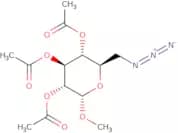
CAS:Methyl 2,3,4-tri-O-acetyl-6-azido-6-deoxy-a-D-glucopyranoside is a modification of the sugar glucose. It is a synthetically modified oligosaccharide that is used in the synthesis of complex carbohydrates and polysaccharides. Methyl 2,3,4-tri-O-acetyl-6-azido-6-deoxyglucopyranoside has been used for the fluorination and saccharide methylation reactions.Fórmula:C13H19N3O8Pureza:Min. 95%Forma y color:White PowderPeso molecular:345.31 g/molCarboxymethyl cellulose
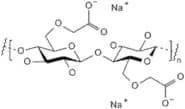
CAS:<p>Carboxymethyl cellulose is used in food as a viscosity modifier, thickener, to stabilise emulsions and are found in gluten-free and reduced-fat products. It is also a constituent of toothpaste, laxatives, diet pills, water-based paints, detergents, textile sizing, and various paper products. In laundry detergents, it is used as a soil suspension polymer. It is also used in pharmaceuticals as a thickening agent and in the oil-drilling industry as a viscosity modifier and water-retaining agent.</p>Fórmula:C8H16O8Pureza:Min. 95%Forma y color:White PowderPeso molecular:240.21 g/molHyaluronic acid sodium salt - Average MW 0.6 - 1.0 million Da
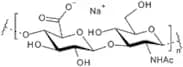
CAS:<p>Gycosaminoglycan in many organs; joint lubricant and shock absorber</p>Fórmula:(C14H20NO11Na)nPureza:Min. 95%Forma y color:Powder1,5-Anhydro-D-fructose
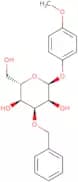
CAS:<p>Antioxidant; antibacterial; suppresses LPS-induced inflammatory response</p>Fórmula:C6H10O5Pureza:Min. 95%Forma y color:PowderPeso molecular:162.14 g/mol4-Methoxyphenyl 3-O-benzyl-β-D-galactopyranoside
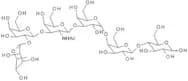
CAS:<p>4-Methoxyphenyl 3-O-benzyl-β-D-galactopyranoside is a microstructural stabilizer that can be used in the production of thermoelectric materials. It has been shown to inhibit the growth of bacteria and fungi at temperatures as low as −5°C. The compound has also been shown to have neuroprotective effects, which may be due to its ability to stabilize mitochondria and reduce oxidative stress. 4-Methoxyphenyl 3-O-benzyl-β-D-galactopyranoside is an endogenous ligand for unidentified receptors. It also binds to the amyloid protein in Alzheimer's disease, but does not show any significant toxicity in mice and rats.</p>Fórmula:C20H24O7Pureza:Min. 95%Forma y color:Off-White PowderPeso molecular:376.4 g/molGlobo-H hexaose
CAS:<p>Cancer-associated carbohydrate antigen</p>Fórmula:C38H65NO30Pureza:Min. 90%Forma y color:White PowderPeso molecular:1,015.91 g/mol1,2:3,4-Di-O-isopropylidene-a-D-galactopyranose
CAS:1,2:3,4-Di-O-isopropylidene-a-D-galactopyranose, also known as diacetone-D-galactose and galactose diacetonide, is a partially protected monosaccharide building block with isopropylidene groups on the 1,2 and 3,4 hydroxyls. The 6-hydroxyl is unprotected and able to undergo a variety of chemical transformations, such as glycosylation acting as a glycosyl acceptor to form 1,6-linked disaccharides.Fórmula:C12H20O6Pureza:Min. 96.5 Area-%Forma y color:Clear Viscous LiquidPeso molecular:260.28 g/molD-Raffinose pentahydrate
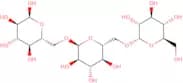
CAS:<p>Raffinose is the most abundant of the family of oligosaccharides that are α-galactosyl derivatives of sucrose (Collins, 2006). The other main member of the group is the tetrasaccharide stachyose. Raffinose is found in sugar beet molasses and whole grains. Soybean oligosaccharides make up approximately 5% of dry matter in whole beans and up to 8% of dry matter in soybean meal. Together raffinose and stachyose rank second only to sucrose in abundance, as water-soluble carbohydrates (Kumar, 2010).</p>Fórmula:C18H42O21Pureza:Min. 97 Area-%Peso molecular:594.52 g/molRef: 3D-R-1000
10gA consultar1kgA consultar5kgA consultar10kgA consultar2500gA consultar-Unit-kgkgA consultar1-Chloro-1-deoxy-D-fructose
CAS:<p>glycosidase enzyme inhibitor. Formerly code MC04178.</p>Fórmula:C6H11ClO5Peso molecular:198.60 g/molTri-b-GalNAcAc3-6-aminoheaxanoate TFA
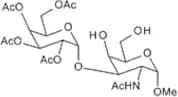
<p>Tri-b-GalNAc-6-aminohexanoate TFA is the peracetylated TFA salt from MT184237. It is a synthetic ligand designed to target the asialoglycoprotein receptor (ASGPR) on hepatocytes. The three terminal beta-N-acetylgalactosamine (GalNAc) sugars provide an efficient ASGPR binding. It serves as a platform for lysosomal targeting chimera (LYTAC) development, allowing for the creation of chimeras that specifically target unwanted proteins for degradation within hepatocytes. In addition, tri-b-GalNAc-6-aminohexanoate facilitates the delivery of therapeutic cargo, such as RNA or Cas9 complexes, directly to hepatocytes via ASGPR-mediated endocytosis. This approach is promising for gene therapy and RNAi applications in the liver due to the specificity of ASGPR targeting and the versatility of the conjugation moiety.</p>Fórmula:C85H140N11O37C2F3O2Pureza:Min. 95 Area-%Peso molecular:2,021.09 g/molMethyl 2-acetamido-3-O-(2,3,4,6-tetra-O-acetyl-a-D-galactopyranosyl)-2-deoxy-a-D-galactopyranoside
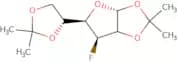
Methyl 2-acetamido-3-O-(2,3,4,6-tetra-O-acetyl-a-D-galactopyranosyl)-2-deoxy-a-D-galactopyranoside is a custom synthesis product that can be fluorinated, methylated and glycosylated. This compound has a CAS number and is polysaccharide in nature. It's complex carbohydrate with oligosaccharides and saccharides.Fórmula:C23H35NO15Pureza:Min. 95%Peso molecular:565.52 g/mol3-Deoxy-3-fluoro-1,2:5,6-di-O-isopropylidene-a-D-allofuranose
<p>3-Deoxy-3-fluoro-1,2:5,6-di-O-isopropylidene-a-D-allofuranose is a modification of the naturally occurring 3,6-anhydro form of D allofuranose. It is an oligosaccharide that is the product of a synthetic process and has been shown to be useful in glycosylation reactions. 3DFIODA can be methylated at its hydroxyl groups and glycosylated with saccharides. It is also fluorinated at C3 and C6 positions. This compound has CAS number 141173-26-8 and molecular weight of 228.</p>Fórmula:C12H19FO5Pureza:Min. 95%Peso molecular:262.27 g/molDihydrozeatin-O-glucoside riboside
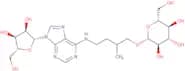
CAS:<p>Dihydrozeatin-O-glucoside riboside is a plant hormone that is found in the roots of Eucomis species. It has been shown to interact with indole-3-acetyl-L-aspartic acid and inhibit the growth of plantlets. The interaction between dihydrozeatin and indole-3-acetyl-L-aspartic acid has been shown to be due to the formation of an intermediate, which is also metabolized by rhizobia. Dihydrozeatin also interacts with ammonium formate and profiles have been obtained for its metabolic products. This molecule also inhibits the production of growth regulators such as abscisic acid, alnifolia, and salicylic acid.</p>Fórmula:C21H33N5O10Pureza:Min. 95 Area-%Forma y color:PowderPeso molecular:515.51 g/molL-[1-13C]Fucose
CAS:L-[1-13C]Fucose is a custom synthesis. It is an oligosaccharide that consists of D-fucose, which is a sugar found in the cell wall of bacteria. L-[1-13C]Fucose has been used as a substrate for methylation reactions and click chemistry modifications to study the binding affinity of various proteins. This compound has also been used in saccharide modification studies and glycosylation reactions.Fórmula:CC5H12O5Pureza:Min. 95%Forma y color:PowderPeso molecular:195.19 g/mol2,4,7,8,9-Penta-O-acetyl-N-azidoacetyl-b-neuraminic acid methyl ester
CAS:<p>2,4,7,8,9-Penta-O-acetyl-N-azidoacetyl-b-neuraminic acid methyl ester is a custom synthesis of a monosaccharide. It is modified with fluorine and methyl groups to give it a higher degree of reactivity. This product can be used for the synthesis of oligosaccharides and polysaccharides. 2,4,7,8,9-Penta-O-acetyl-N-azidoacetyl-b-neuraminic acid methyl ester is also used for click modification reactions on saccharide molecules. The CAS number for this product is 1357804-21-7.</p>Fórmula:C22H30N4O1Pureza:Min. 95%Peso molecular:366.5 g/molSucrose acetoisobutyrate
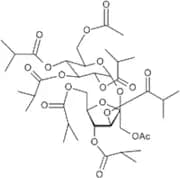
CAS:<p>Sucrose acetoisobutyrate (SAIB) is an emulsifier and is compatible with a wide variety of polymers, resins, plasticisers, oils and waxes - where it is used in surface coatings. Food applications have been developed for this compound and it has an E number (E444). It is recognized as a safe food additive in cocktail mixers, beer, malt beverages, or wine coolers and is a potential replacement for brominated vegetable oil.</p>Fórmula:C40H62O19Pureza:(Saponification Value) Min. 90%Forma y color:Clear LiquidPeso molecular:846.91 g/molMethyl 4-O-methyl-β-L-arabinopyranoside
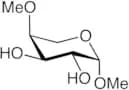
CAS:<p>Methyl 4-O-methyl-β-L-arabinopyranoside is an L-arabinose analogue</p>Fórmula:C7H14O5Pureza:Min. 95%Forma y color:PowderPeso molecular:178.18 g/mol1,3,4,6-Tetra-O-acetyl-N-azidoacetylmannosamine
CAS:<p>1,3,4,6-Tetra-O-acetyl-N-azidoacetylmannosamine, also called ManNAz tetraacetate, 1,3,4,6-tetra-O-acetyl-N-azidoacetyl-D-mannosamine and Ac4ManNAz, is an azide-containing metabolic glycoprotein labelling reagent that can be incorporated into the sialic acid biosynthesis pathway. The azide is able to react with an alkyne in a 1,3-dipolar cycloaddition reaction (click chemistry) to enable linking to a fluorescent probe or a biotin.</p>Fórmula:C16H22N4O10Pureza:Min. 95%Forma y color:PowderPeso molecular:430.37 g/mol2,3,4,6-Tetra-O-acetyl-a-D-glucopyranosyl trichloroacetimidate
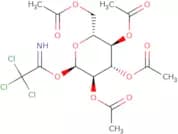
CAS:2,3,4,6-Tetra-O-acetyl-a-D-glucopyranosyl trichloroacetimidate (2TG) is a mannose targeting agent that can be used to target specific cells in the body. This compound has been shown to inhibit the growth of cancer cells and induce photodynamic therapy. 2TG is a conjugate that consists of a 6-phosphate group attached to an acetylated mannose molecule. The 6-phosphate group is an important feature for tumor targeting, as it allows for the attachment of other molecules such as monoclonal antibodies and drugs. 2TG functions by binding with high affinity to glycoproteins on the surface of cancer cells and animal tissues. These glycoproteins are found in large quantities on the surface of cancer cells and animal tissue, which makes them good targets for anti-cancer drug development.Fórmula:C16H20Cl3NO10Pureza:Min. 95%Forma y color:PowderPeso molecular:492.69 g/mol3,5-Dideoxy-3,5-imino-1,2-O-isopropylidene-N-methyl-L-idofuranose
3,5-Dideoxy-3,5-imino-1,2-O-isopropylidene-N-methyl-L-idofuranose is a custom synthesis that can be modified to the customer's specifications. This product has CAS No. and is a polysaccharide with modification. It is a carbohydrate that is a saccharide with methylation, glycosylation and click modification. This product is high purity, fluorinated and synthetic.Pureza:Min. 95%1-O-Galloyl-b-D-glucose
CAS:1-O-Galloyl-b-D-glucose is a molecule that is found in plants and has been used as an inhibitor of p-hydroxybenzoic acid (PHBA) enzyme activities. 1OGG inhibits the growth of viruses by inhibiting the enzymatic activity of their RNA polymerases. It also inhibits mitochondrial membrane potential, which is vital for cellular respiration. 1OGG has shown to be active against urinary infections and opportunistic fungal infections such as Candida glabrata. In vitro assays have shown that it may have anti-inflammatory properties.Fórmula:C13H16O10Pureza:Min. 98 Area-%Forma y color:White PowderPeso molecular:332.26 g/molBlood Group A tetrasaccharide type V
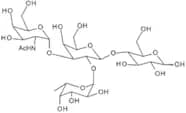
CAS:<p>Core antigen fragment in ABO blood group system</p>Fórmula:C26H45NO20Pureza:Min. 90%Forma y color:White PowderPeso molecular:691.63 g/molBenzyl 2-acetamido-2-deoxy-3,4,6-tri-O-acetyl-β-D-glucopyranoside
CAS:Benzyl 2-acetamido-2-deoxy-3,4,6-tri-O-acetyl-b-D-glucopyranoside is a synthetic sugar that is used as a glycosylation reagent for the synthesis of oligosaccharides and polysaccharides. It reacts with saccharides in the presence of 1,3-dicyclohexylcarbodiimide (DCC) and 4-(dimethylamino)pyridine (DMAP). The benzyl group can be modified to include fluorine atoms or methyl groups. This compound is an important building block for the synthesis of complex carbohydrates.Fórmula:C21H27NO9Pureza:Min. 95%Forma y color:White To Off-White SolidPeso molecular:437.44 g/molD-Galactose-1-phosphate disodium
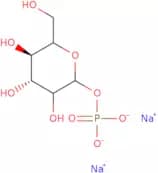
CAS:D-Galactose-1-phosphate disodium is an organic compound that is used as a methylation and glycosylation reagent. It can be used in the synthesis of oligosaccharides, polysaccharides, and other complex carbohydrates. D-Galactose-1-phosphate disodium is a fluorinated saccharide that can be custom synthesized to order. It is also available in high purity and has CAS No. 147072-63-7.Fórmula:C6H13O9P•(Na)2Pureza:(31P-Nmr) Min. 98%Forma y color:PowderPeso molecular:304.1 g/mol2,6-Dideoxy-D-glucose
CAS:2,6-Dideoxy-D-glucose is a glycosyl acceptor that has been shown to induce apoptosis in cancer cells. It is an anticancer agent that inhibits the production of ATP by inhibiting glycolysis. 2,6-Dideoxy-D-glucose can also inhibit the translocation of proteins from the cytoplasm to the nucleus and thereby prevent nuclear accumulation of these proteins. This drug may also have anticancer effects through its ability to inhibit DNA synthesis and potentiate anticancer effects of other chemotherapeutic agents. 2,6-Dideoxy-D-glucose has been shown to be effective against cardiac cancer cells and leukemia cells.Fórmula:C6H12O4Pureza:Min. 95%Forma y color:PowderPeso molecular:148.16 g/mol2-Azido-2-deoxy-3,5-O-benzylidene-L-xylono-1,4-lactone
<p>2-Azido-2-deoxy-3,5-O-benzylidene-L-xylono-1,4-lactone is a sugar compound that can be custom synthesized. It has been shown to be a methylation product of 2,3,4,6-tetraacetylgalactose and is an oligosaccharide with a saccharide chain that includes glucose and xylose. The chemical formula for this compound is C11H13NO7. This compound has a CAS Number of 73028-81-2 and can be purchased from various vendors at high purity levels. 2Azido2deoxy3,5ObenzylideneLxylono1,4lactone is used as a reagent in the synthesis of complex carbohydrates. It can also be used to modify monosaccharides and sugar compounds with fluorination or modification reactions.</p>Pureza:Min. 95%Dextran 2000 - MW: 1,500,000 to 3,500,000
CAS:<p>Dextran 2000 is a high molecular weight biocompatible polymer with transport properties. It is used in a variety of medical applications, such as red blood cell transfusions and the prevention of post-surgical adhesions. Dextran 2000 has been shown to be a safe and effective means of preventing hemolysis during red blood cell transfusion. This agent binds to amine groups on the surface of erythrocytes, which prevents complement activation and subsequent lysis. Additionally, dextran 2000 has been shown to exhibit low cytotoxicity against neuronal cells in vitro.</p>Pureza:Min. 95%Forma y color:White Off-White PowderLaminaritetraose
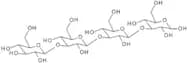
CAS:Ex algal/bacterial polysaccharides-value in b1-3 glucanase assays & diagnosticsFórmula:C24H42O21Pureza:Min. 95 Area-%Forma y color:White PowderPeso molecular:666.6 g/molTri-b-GalNAcAc3-6-aminohexyl-NHCbz
CAS:<p>Tri-b-GalNAc-6-aminohexyl-NHCbz is the peracetylated form with a protected terminal amino group (NHCbz). It is a synthetic ligand designed to target the asialoglycoprotein receptor (ASGPR) on hepatocytes. The three terminal beta-N-acetylgalactosamine (GalNAc) sugars provide an efficient ASGPR binding. It serves as a platform for lysosomal targeting chimera (LYTAC) development, allowing for the creation of chimeras that specifically target unwanted proteins for degradation within hepatocytes. In addition, tri-b-GalNAc-6-aminohexanoate facilitates the delivery of therapeutic cargo, such as RNA or Cas9 complexes, directly to hepatocytes via ASGPR-mediated endocytosis. This approach is promising for gene therapy and RNAi applications in the liver due to the specificity of ASGPR targeting and the versatility of the conjugation moiety.</p>Fórmula:C93H145N11O39Pureza:Min. 95 Area-%Peso molecular:2,041.2 g/molD-Galacturonic acid monohydrate
CAS:D-Galacturonic acid (GalA) is a hexuronic acid with the CH2OH at C5 of galactose replaced by a carboxyl group (Collins, 2006). D-galacturonic acid is abundant in pectic polysaccharides which are characterized by a high α-1,4 linked galacturonic acid content and include pectic acid (polygalacturonic acid), rhamnogalacturonan I (Oomen, 2002), rhamnogalacturonan (RG) II (Vidal, 2000), xylogalacturonan, and homogalacturonan. These polymers play roles in strengthening cell walls, cell adhesion and are established as part of signaling cascades that detect cell wall degradation upon pathogen attack.Fórmula:C6H10O7·H2OPureza:(Titration) Min. 97%Forma y color:White Off-White PowderPeso molecular:212.15 g/molPolysucrose 400
CAS:<p>Water-soluble, nontoxic, enzyme-resistant polymer for biological applications</p>Forma y color:White PowderPeso molecular:400.01,5:2,3-Dianhydro-4,6-O-benzylidene-D-mannitol
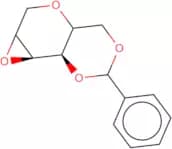
CAS:<p>1,5:2,3-Dianhydro-4,6-O-benzylidene-D-mannitol is a modification of an oligosaccharide that has been synthesized by the glycosylation of D-mannitol. The methylation and fluorination reactions have also been performed on this sugar. This product is high purity and is in the form of a white powder.</p>Fórmula:C13H14O4Pureza:Min. 95%Forma y color:PowderPeso molecular:234.25 g/molIsosorbide dinitrate - 60% lactose and 40% Isosorbide dinitrate
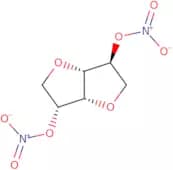
CAS:<p>Isosorbide dinitrate is used to treat chronic bronchitis and congestive heart failure. It dilates blood vessels, allowing more oxygen-rich blood to reach the heart. Isosorbide dinitrate is also used to relieve chest pain (angina) and reduce complications after a heart attack. Isosorbide dinitrate is a prodrug that is converted in vivo to its active form, isosorbide mononitrate, by the enzyme nitric oxide synthase in response to hypoxia. In addition, it has been shown that this drug reduces levels of low-density lipoprotein cholesterol (LDL-C) and may be useful for the treatment of high cholesterol.<br>The mechanism of action for reducing LDL-C levels is not known but may be due to increased clearance of LDL-C from plasma or decreased production of very low density lipoproteins (VLDL). This medication does not affect triglycerides or high density lip</p>Fórmula:C6H8N2O8Pureza:Min. 95%Forma y color:White PowderPeso molecular:236.14 g/mol1,2,3,4-Tetra-O-pivaloyl-6-O-(tert-butyldimethylsilyl)-b-D-glucopyranose
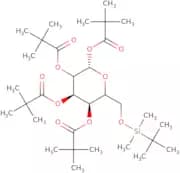
<p>1,2,3,4-Tetra-O-pivaloyl-6-O-(tert-butyldimethylsilyl)-b-D-glucopyranose is a high purity oligosaccharide that can be custom synthesized to your specifications. This modification is an Oligosaccharide and Carbohydrate which is a complex carbohydrate. It has CAS No. and Monosaccharide as well as Methylation and Glycosylation. It is also a Sugar and Fluorination with saccharides.</p>Fórmula:C32H58O10SiPureza:Min. 95%Peso molecular:630.9 g/molHeparin disaccharide II-S trisodium salt
CAS:<p>Heparin breakdown product</p>Fórmula:C12H16NNa3O16S2Pureza:Min. 95 Area-%Forma y color:White Off-White PowderPeso molecular:563.35 g/mol1,4-b-D-Mannotetraose
CAS:<p>Isolated from ivory-nut mannan, Picea glauca and Pinus strobus glucomannans</p>Fórmula:C24H42O21Pureza:Min. 95 Area-%Forma y color:White PowderPeso molecular:666.58 g/molChondroitin sulfate sodium salt
CAS:Chondroitin sulphate is the most abundant glycosaminoglycan in mammalian tissues and occurs both in skeletal and soft connective tissue. The disaccharide repeat unit consists of N-acetyl galactosamine sulphate linked β1,4 to glucuronic acid.Pureza:Min. 95%Forma y color:White Off-White Powder

![(5R, 8S, 9S) -8- [(4S) - 2, 2- Dimethyl- 1, 3- dioxolan- 4- yl] - 9- hydroxy- 2, 2- dimethyl- 1, 3…](/_next/image/?url=https%3A%2Fstatic.cymitquimica.com%2Fproducts%2F3D%2Fthumb-webp%2FMD170669.webp&w=3840&q=75)







![L-[1-13C]Fucose](/_next/image/?url=https%3A%2Fstatic.cymitquimica.com%2Fproducts%2F3D%2Fthumb-webp%2FMF08310.webp&w=3840&q=75)