Glycoscience
Subcategorías de "Glycoscience"
- Aminoazúcares(108 productos)
- Anticuerpos relacionados con azúcares(282 productos)
- Glicolípidos(46 productos)
- Glicosaminoglicanos (GAGs)(55 productos)
- Glucósidos(419 productos)
- Monosacáridos(6.624 productos)
- Oligosacáridos(3.682 productos)
- Polisacáridos(504 productos)
Se han encontrado 11047 productos de "Glycoscience"
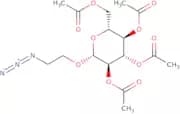
2-Azidoethyl 2,3,4,6-tetra-O-acetyl-b-D-glucopyranoside
CAS:2-Azidoethyl 2,3,4,6-tetra-O-acetyl-b-D-glucopyranoside is a sugar that is custom synthesized. It is a synthetic compound that has been fluorinated and methylated. This product can be used for glycosylation or oligosaccharide synthesis. It is a high purity product with a purity of 98% and has been modified with click chemistry. The CAS number for this product is 140428-81-5.Fórmula:C16H23N3O10Forma y color:White PowderPeso molecular:417.37 g/molPhenyl b-D-thioglucuronide
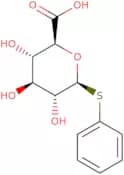
CAS:Phenyl b-D-thioglucuronide is a synthetic molecule that has been used in studies of the carotid, abdominal and symmetric techniques. It can be used to study water absorption and squamous cell growth. Phenyl b-D-thioglucuronide has been used as a crosslinking agent for optical imaging techniques, such as fluorescence microscopy and confocal microscopy. The basic protein form of phenyl b-D-thioglucuronide is found in the human brain and spinal cord. There have been reports that phenyl b-D-thioglucuronide causes death and teratomas in mice when injected into the sigmoid colon or teratoma. Phenyl b-D-thioglucuronide also causes neuroinflammation, which may be due to its ability to induce matrix metalloproteinase production.
Fórmula:C12H14O6SPureza:(%) Min. 95%Peso molecular:286.3 g/mol1,2:3,4-Diacetone-β-D-glucopyranoside
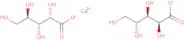
CAS:1,2:3,4-Diacetone-b-D-glucopyranoside is a glycosylation agent that is used in the synthesis of polysaccharides. It reacts with the hydroxyl groups of saccharide molecules to form glycosidic bonds. 1,2:3,4-Diacetone-b-D-glucopyranoside can be modified by methylation and fluorination reactions to produce different derivatives. This product is CAS No. 496879-67-5 and has a purity of >98%.Fórmula:C12H20O6Pureza:Min. 97 Area-%Forma y color:PowderPeso molecular:260.29 g/molCalcium-D-arabonate
CAS:Calcium-D-arabonate is a fatty acid that is used as a functional ingredient in the food industry. It has been shown to increase the rate of reactions, such as glycosidic bond cleavage and polymerization, by acting as an oxidation catalyst. This product also has a high molecular weight and can be used to modify the structure of polymers. Calcium-D-arabonate is often used in model systems because it reacts with other substances at a pH optimum of 6.0-7.5.
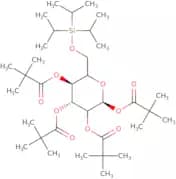
Fórmula:C5H9O6CaPureza:Min. 98%Forma y color:White PowderPeso molecular:185.16 g/mol1,2,3,4-Tetra-O-pivaloyl-6-O-triisopropylsilyl-b-D-galactopyranose
One of the most important properties of this product is that it has a high degree of purity. It is a custom synthesis, complex carbohydrate and an oligosaccharide. This product is a CAS No., Polysaccharide, Modification, saccharide, Methylation, Glycosylation, Click modification, Carbohydrate and sugar. The molecular weight of this product is 1,2,3,4-Tetra-O-pivaloyl-6-O-triisopropylsilyl-b-D-galactopyranose. It also has a fluorination and synthetic modification.
Fórmula:C35H64O10SiPureza:Min. 95%Peso molecular:672.98 g/mol6-Deoxy-2,3:4,5-di-O-isopropylidene-D-gulonic acid methyl ester
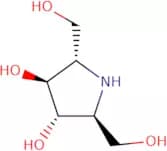
6-Deoxy-2,3:4,5-di-O-isopropylidene-D-gulonic acid methyl ester is a monosaccharide that can be used as a glycosylation and methylation reagent. It's also an important building block in the synthesis of complex carbohydrate polymers. This product is custom synthesized to meet your requirements.Pureza:Min. 95%(1R) -1- [(2S, 3R,4S) -4-(Acetylamino)methyl-3- hydroxy- 1- azetidinyl] -1, 2- ethanediol hydrochloride
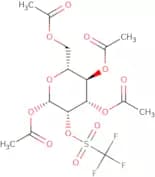
(1R) -1- [(2S, 3R,4S) -4-(Acetylamino)methyl-3- hydroxy- 1- azetidinyl] -1, 2- ethanediol hydrochloride is a custom synthesis of a fluorinated and methylated saccharide. It is modified with a click modification reaction to introduce an azetidine ring at the C6 position of the sugar. This saccharide has been shown to inhibit glycosylation in vitro and in vivo.Pureza:Min. 95%1,3,4,6-Tetra-O-acetyl-2-O-trifluoromethanesulfonyl-b-D-mannopyranose
CAS:1,3,4,6-Tetra-O-acetyl-2-O-trifluoromethanesulfonyl-b-D-mannopyranose is a chemical compound that belongs to the group of fatty acids. It is a product of chemical reactions and has been shown to be able to react with positrons in an organic solution. This compound can also react with potassium ions in water vapor. The reaction solution is suitable for testing samples and cell culture.Fórmula:C15H19F3O12SPureza:Min. 98 Area-%Forma y color:PowderPeso molecular:480.37 g/mol(5R, 8S, 9S) -8- [(4R) - 2, 2- Dimethyl- 1, 3- dioxolan- 4- yl] - 9- hydroxy- 2, 2- dimethyl- 1, 3, 7- trioxaspiro[4.4] nonan- 6- on e
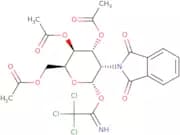
(5R, 8S, 9S) -8- [(4R)-2,2-Dimethyl-1,3-dioxolan-4-yl] -9-hydroxy-2, 2-dimethyl-1,3, 7-trioxaspiro[4.4] nonan-6-on e is a synthetic compound that is used in the synthesis of oligosaccharides and glycosylations. It can be used as a building block for modification of saccharides and polysaccharides with click chemistry and fluorination. This product has high purity and is suitable for custom synthesis.Pureza:Min. 95%3,4,6-Tri-O-acetyl-2-deoxy-2-phthalimido-b-D-glucopyranosyl trichloroacetimidate
CAS:3,4,6-Tri-O-acetyl-2-deoxy-2-phthalimido-b-D-glucopyranosyl trichloroacetimidate is a custom synthesis that has been modified with fluorine. It is a white powder and is soluble in water. 3,4,6-Tri-O-acetyl-2-deoxy-2-phthalimido-b-D--glucopyranosyl trichloroacetimidate is used for the production of saccharide and carbohydrate derivatives. This product has a CAS number of 871906788 and an ACD/IEC number of P077G10.
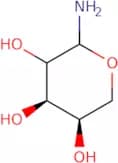
Fórmula:C22H21Cl3N2O10Forma y color:PowderPeso molecular:579.77 g/molD-Lyxosylamine
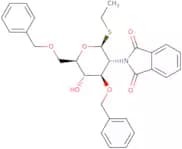
CAS:D-Lyxosylamine is a drug that has been shown to have anticancer activity against leishmania species. It inhibits the growth of the parasite by binding to the lectin, sialic, and glycoconjugates on the surface of cells. This inhibition leads to a blockage in the transport of glucose and amino acids, which are essential for cell growth and replication. D-Lyxosylamine has also been shown to have anti-leukemic effects, which may be due to its ability to kill lymphocytic leukemia cells. The drug was administered orally in a clinical trial with human volunteers in order to test its effectiveness against Leishmania major infections. D-Lyxosylamine administered at 50mg/kg/day for 28 days had no significant effect on Leishmania major infection rates.Fórmula:C5H11NO4Pureza:Min. 95%Forma y color:White PowderPeso molecular:149.1 g/molEthyl 3,6-di-O-benzyl-2-deoxy-2-N-phthalamido-β-D-thioglucopyranoside
CAS:Ethyl 3,6-di-O-benzyl-2-deoxy-2-N-phthalamido-β-D-thioglucopyranoside is a modification of 2,6 anhydro sugar. It is a white crystalline powder with a melting point of 142°C. This compound has been synthesized by the custom synthesis method and has been shown to be high purity. It has also been methylated and glycosylated. The molecular weight of this compound is 572.81 g/mol.Fórmula:C30H31NO6SPureza:Min. 95%Peso molecular:533.64 g/molD-Ribose-5-phosphate disodium salt hydrate
CAS:Precursor for the synthesis of nucleotides;Fórmula:C5H9Na2O8PForma y color:White Yellow PowderPeso molecular:274.07 g/mol2-C-Methyl- 2, 3- O- isopropylidene - D- lyxonic acid g- lactone
2-C-Methyl- 2,3-O-isopropylidene -D-lyxonic acid g-lactone is a synthetic monosaccharide that is used as a building block in the synthesis of complex carbohydrates. It can be fluorinated and glycosylated to form saccharides. This product has been custom synthesized and is offered at high purity levels.Pureza:Min. 95%6-Deoxy-L-altritol
6-Deoxy-L-altritol is a carbohydrate that belongs to the class of saccharides. It is a synthetic carbohydrate, and its structure is similar to that of D-mannitol. 6-Deoxy-L-altritol can be used for medical purposes as it inhibits bacterial growth and is an anti-inflammatory agent. 6-Deoxy-L-altritol has been modified with fluorine atoms to give it potent antibacterial activity against Gram negative bacteria, such as Salmonella typhi, Escherichia coli, and Pseudomonas aeruginosa. This modification also makes 6-deoxy L-altritol stable at high temperatures and resistant to acid hydrolysis.Pureza:Min. 95%1,2,5-Tri-O-benzoyl-3-methyl-D-xylofuranose
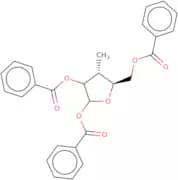
CAS:1,2,5-Tri-O-benzoyl-3-methyl-D-xylofuranose is a triol that is a methyl glycoside of 3,4,6-trihydroxybenzoic acid. It is an important building block in the synthesis of various saccharides and oligosaccharides. This product is often used as a precursor in the modification of saccharides to produce new products with different properties. This molecule has been shown to be resistant to degradation by enzymes such as glycosidases and oxidases. 1,2,5-Tri-O-benzoyl-3-methyl-D-xylofuranose can also be fluorinated or modified with other chemical groups. 1,2,5-Tri -O -benzoyl -3 -methyl -D -xylofuranose may be available from one or more custom synthesis providers.Fórmula:C27H24O7Pureza:Min. 95%Peso molecular:460.48 g/molMethyl 4,6-O-(4-methoxybenzylidene)-2,3-di-O-pivaloyl-a-D-glucopyranoside
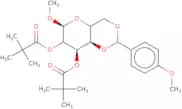
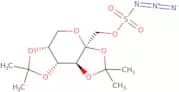
Methyl 4,6-O-(4-methoxybenzylidene)-2,3-di-O-pivaloyl-a-D-glucopyranoside is a methylated saccharide that is used as an intermediate in the synthesis of other saccharides. It is a custom synthesis that can be synthesized to high purity and with low cost. Methyl 4,6-O-(4-methoxybenzylidene)-2,3-di-O-pivaloyl-a-D-glucopyranoside has been modified with click chemistry to provide a variety of functional groups. This modification allows for the production of complex carbohydrates such as oligosaccharides and glycosylation products.Fórmula:C25H36O9Pureza:Min. 95%Peso molecular:480.56 g/mol2,3:4,5-Di-O-isopropylidene-b-D-fructopyranose azide sulphate
CAS:2,3:4,5-Di-O-isopropylidene-b-D-fructopyranose azide sulphate is a custom synthesis. It has been fluorinated and methylated by the click chemistry method. The compound is a complex carbohydrate with a high purity and modification level. 2,3:4,5-Di-O-isopropylidene-b-D-fructopyranose azide sulphate can be used for glycosylation or oligosaccharide synthesis. CAS No. 106881-35-0Fórmula:C12H19N3O8SPureza:Min. 95%Peso molecular:365.36 g/molD-Cellotetraose
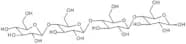
CAS:Substrate for cellulasesFórmula:C24H42O21Pureza:Min. 95 Area-%Forma y color:White Off-White PowderPeso molecular:666.58 g/molGhatti gum
CAS:Gum ghatti is an exudate gum from the tree Anogeissus latifolia found in India and Sri Lanka. Applications are similar to Gum arabic in the food and pharmaceutical industries, where it is used as an emulsifier. The polysaccharide is reported to have an extremely complex structure which contains both oligosaccharides and polysaccharide elements. The polysaccharide contains Ara, Gal, Man, GlcA and Rha in a molar ratio of 61:39:6:10:6, a backbone of (1,6)-linked β-D-galactopyranosyl units and side chains of L-arabinofuranose units with some (1,4)-D-glucopyranosyluronic acid units, some joining (1,2)-D-mannopyranosyl units.
Forma y color:Off-White PowderGalacturonan DP7/DP8 sodium
Mixed DP 7/8 Na galacturonans (α-1,4 galacturonoheptoses and octaoses), are derived from pectin or pectic acid, by enzymatic or partial acid hydrolysis. They are used in galacturonic acid metabolism research as a substrate to identify, differentiate, and characterized endo- and exopolygalacturonase(s), and gluconase(s). The addition of very short fragments of homogalacturonan oligosaccharides, restores development in dark-grown, de-etiolated seedling mutants, suggesting that they are unable to generate de-methylesterified pectin fragments. A model of spatiotemporally separated photoreceptive and signal-responsive cell types has been proposed, that contains overlapping subsets of the regulatory network of light-dependent seedling development.Pureza:Min. 95%Forma y color:PowderMethyl 2-O-(a-D-mannopyranosyl)-a-D-mannopyranoside
CAS:Used for structural and conformational studies and as enzyme substratesFórmula:C13H24O11Pureza:Min. 95%Forma y color:PowderPeso molecular:356.32 g/molPhenyl-β-D-thioglucuronic acid
CAS:Phenyl-beta-D-thioglucuronic acid is a drug that is used to treat inflammatory diseases and autoimmune diseases. It is a basic structure that has been shown to have anti-estrogenic effects in vitro, although the mechanism of action is not well understood. Phenyl-beta-D-thioglucuronic acid can be crosslinked with proteins to form a matrix for wound healing. This drug has also been shown to be a potent inhibitor of proteases, and may inhibit other enzymes such as matrix metalloproteinases and serine proteases.
Fórmula:C12H14O6SPeso molecular:286.31 g/molRef: 3D-P-4300
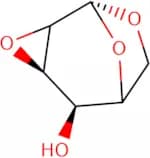
1gA consultar5gA consultar10gA consultar500mgA consultar2500mgA consultar-Unit-ggA consultar1,6:2,3-Dianhydro-b-D-mannopyranose
CAS:1,6:2,3-Dianhydro-b-D-mannopyranose is a high purity sugar used in the synthesis of complex carbohydrates. This compound is an oligosaccharide that has been modified by methylation and glycosylation. It can be found in the CAS registry number 3868-03-9.
Fórmula:C6H8O4Pureza:Min. 95%Forma y color:PowderPeso molecular:144.13 g/molGlycyl-lacto-N-neodifucohexaose I
Glycyl-lacto-N-neodifucohexaose I is a synthetic carbohydrate that has been modified to include a fluorine atom. Glycyl-lacto-N-neodifucohexaose I is an oligosaccharide that belongs to the class of carbohydrates and is composed of glycosylated and methylated monosaccharides. This product can be custom synthesized for your specific needs.Fórmula:C40H69N3O29Pureza:Min. 95%Peso molecular:1,055.98 g/molPhenylethyl b-D-thiogalactopyranoside
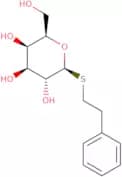
CAS:?-galactosidase inhibitorFórmula:C14H20O5SForma y color:PowderPeso molecular:300.37 g/mol4-Methoxyphenyl 3,6-di-O-benzyl-4-O-{2-O-acetyl-3-O-[3,6-di-O-benzyl-2,4-di-O-(3,4,6-tri-O-acetyl-2-deoxy-2-phthalimido-β-D-glucopyr anosyl)-α-D-mannopyranosyl]-6-O-[3,4-di-O-acetyl-2,6-di-O-(3,4,6-tri-O-acetyl-2-deoxy-2-phthalimido-β-D-glucopyranosyl
This product is a custom synthesis of an oligosaccharide. It is a complex carbohydrate that has been modified with methylation, glycosylation, and fluorination. It is synthesized from monosaccharides and saccharides. The CAS number for this product is _________________.Fórmula:C153H157N5O62Pureza:Min. 95%Peso molecular:3,057.88 g/molMethyl b-D-ribofuranoside
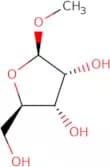
CAS:Methyl b-D-ribofuranoside is a compound that has been found to be a substrate for the phosphodiesterase enzyme. This natural product can be used to study the function of this enzyme and its effect on cellular processes. The rate of hydrolysis at 25 degrees Celsius is about 0.03 min-1, which is about one order of magnitude faster than the rate at 37 degrees Celsius, which is about 0.003 min-1. In addition, methyl b-D-ribofuranoside hydrolyzes more rapidly in anaerobic conditions than in aerobic conditions. It also has a constant sedimentation coefficient of 1.10 ± 0.01 Svedbergs, which indicates that it consists of long unbranched chains with a high molecular weight (e.g., dodecyl). Methyl b-D-ribofuranoside has been found to inhibit intramolecular hydrogen transfer reactions, such as those catalyzed
Fórmula:C6H12O5Pureza:Min. 95%Forma y color:White PowderPeso molecular:164.16 g/molMuramic acid hydrate
CAS:Muramic acid hydrate as an amino sugar with a carboxylic acid group. It occurs in nature as N-acetylmuramic acid which is typically found in cell wall of bacterial.Fórmula:C9H17NO7•(H2O)xPureza:Min. 95%Forma y color:White PowderPeso molecular:269.25 g/molHydroxypropyl cellulose - Average MW 370,000
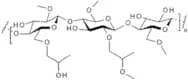
CAS:In water, hydroxypropyl cellulose forms liquid crystals with many mesophases depending on concentration. These mesophases include isotropic, anisotropic, nematic and cholesteric, the latter resulting in many colors such as violet, green and red. Pharmaceutical applications include treatments for medical conditions such as dry eye syndrome (keratoconjunctivitis sicca), recurrent corneal erosions, decreased corneal sensitivity, exposure and neuroparalytic keratitis. It is also used as a binder in tablets. Hydroxypropylcellulose is also used as a thickener, a binder and emulsion stabiliser in foods with E number E463. HPC is used as a support matrix for DNA separations by capillary and microchip electrophoresis.Pureza:Min. 95%Forma y color:Powder1,2,3,4-Tetra-O-acetyl-6-O-(2,3,4,6-tetra-O-acetyl-a-D-galactopyranosyl)-b-D-thioglucopyranose
CAS:A tetra-O-acetyl-6-O-(2,3,4,6-tetra-O-acetyl-a-D-galactopyranosyl)-b-D-thioglucopyranose is a 1,2,3,4 tetraol. It is synthesized by the modification of a disaccharide that has been modified with fluorine and methyl groups on the C1 and C4 positions of the sugar. The complex carbohydrate is a glycosylated sugar that is composed of one monosaccharide and one oligosaccharide. This product is CAS No. 1820574-50-2.Fórmula:C28H38O18SPureza:Min. 95%Peso molecular:694.66 g/molb-D-Galactopyranosyl azide
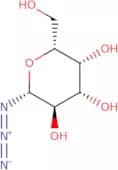
CAS:b-D-Galactopyranosyl azide is a fluorescent probe that can be used to identify the presence of beta-glucosidase in muscle tissue. This compound is hydrolyzed by alpha-galactosidase and it is detectable under UV light, yielding a green fluorescence. The b-D-Galactopyranosyl azide has been shown to be able to differentiate between alpha-galactosidase and beta-glucosidase, which are both glycosidases, by measuring the rate of hydrolysis of the probe. This chemical can also be used as an indicator for detecting muscle glycogen in homogenates.Fórmula:C6H11N3O5Pureza:Min. 95%Forma y color:PowderPeso molecular:205.17 g/molDL-Glyceraldehyde 3-phosphate - 45-55 mg/mL aqueous solution
CAS:Glyceraldehyde 3-phosphate (G3P) is an intermediate in the glycolytic pathway. It is also a component of polysaccharides and glycosaminoglycans. G3P is synthesized from glucose by the enzyme triose phosphate isomerase. The synthesis of G3P can be achieved by a number of methods, including methylation, fluorination, and click chemistry. This product contains 45-55 mg/mL of Glyceraldehyde 3-phosphate in water solution at pH 7.0 and at a temperature range of 2-8°C.Fórmula:C3H7O6PPureza:Min. 95 Area-%Peso molecular:170.06 g/molL-Gulonic acid-1,4-lactone
CAS:L-Gulonic acid-1,4-lactone is an ascorbic acid derivative that inhibits the production of matrix metalloproteinases (MMPs) and other enzymes. L-Gulonic acid-1,4-lactone has been shown to inhibit the activity of MMPs in hl-60 cells, which may be due to its ability to chelate metal ions, such as zinc and copper. This molecule also has a stabilizing effect on collagen type I because it prevents cross linking between lysine amino acids. The discovery process for this molecule was found by screening clones from a cDNA library with biochemical properties similar to those of ascorbic acid. This molecule has been shown to inhibit the activation of protein kinase C (PKC) and phosphorylation of extracellular signal regulated kinase (ERK). L-Gulonic acid-1,4-lactone is metabolized through plant metabolism
Fórmula:C6H10O6Pureza:Min. 95 Area-%Forma y color:White PowderPeso molecular:178.14 g/mol1,2,3,4-Tetra-O-acetyl-D-galacturonic acid
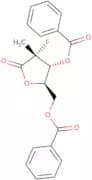
CAS:1,2,3,4-Tetra-O-acetyl-D-galacturonic acid is a carbohydrate that belongs to the group of oligosaccharides and sugars. It is used as a synthetic intermediate in the production of complex carbohydrates and glycosylations. 1,2,3,4-Tetra-O-acetyl-D-galacturonic acid is also used as an active ingredient in some topical medications. The fluorination of this product leads to increased solubility and stability. It has been shown to be resistant to degradation by enzymes such as alpha amylase or beta amylase. This product can be customized for customers requirements with high purity and custom synthesis services.Fórmula:C14H18O11Pureza:Min. 95%Forma y color:PowderPeso molecular:362.29 g/mol3,5-Di-O-benzoyl-2-deoxy-2-fluoro-2C-methyl-D-ribono-1,4-lactone
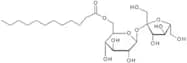
CAS:3,5-Di-O-benzoyl-2-deoxy-2-fluoro-2C-methyl-D-ribono-1,4-lactone is a synthetic compound with the molecular formula C6H12F6O8. It has a molecular weight of 536.14 and an empirical formula of C24H32F6O8. 3,5-Di-O-benzoyl -2,3,4,5,-tetra-, 2C-, methyl -D-, ribo-, 1,4-, lactone is soluble in water and it can be synthesized from D-(+)-glucose and methyl 4-(trifluoromethyl)benzoate in three steps. The structure of 3,5 Di O benzoic acid was first determined by XRD analysis. The compound is a white crystalline solid with melting point at 180°C to 181°C and boilingFórmula:C20H17FO6Pureza:Min. 97 Area-%Forma y color:White Off-White PowderPeso molecular:372.34 g/molDodecanoyl D-sucrose
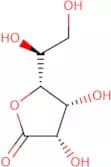
CAS:Non-ionic detergent for solubilising membrane proteins; surfactantFórmula:C24H44O12Pureza:Min. 95%Forma y color:White PowderPeso molecular:524.6 g/molL-Galactono-1,4-lactone
CAS:L-Galactono-1,4-lactone is a biochemical compound that is found in plants and some living cells. It is an intermediate in the Krebs cycle and can be used as a nutrient solution for plant science research. L-Galactono-1,4-lactone has been shown to have enzyme activities on chronic exposure to sephadex g-100. This compound also has an optimum pH of 5.2 and shows acid formation with titration calorimetry. L-Galactono-1,4-lactone is also used in vitro assays for polymerase chain reactions (PCR).Fórmula:C6H10O6Pureza:Min. 98%Forma y color:White Off-White PowderPeso molecular:178.14 g/mol2,3,2',3',4',6'-Hexa-O-acetyl-1,6-anhydro-b-D-cellobiose
CAS:2,3,2',3',4',6'-Hexa-O-acetyl-1,6-anhydro-b-D-cellobiose is a synthetic monosaccharide. It can be modified with methylation, fluorination and click modification to produce 2,3,2',3',4',6'-hexamethylene-1,6-anhydro-b-D-cellobiose. This carbohydrate has been shown to have antiinflammatory activities in vitro and in vivo.Fórmula:C24H32O16Pureza:Min. 95%Forma y color:PowderPeso molecular:576.5 g/mol2-Deoxy-3,4-O-benzylidene-2-methylidene-D-ribono-1,5-lactone
2-Deoxy-3,4-O-benzylidene-2-methylidene-D-ribono-1,5-lactone is a synthetic sugar that has been modified at the 3 and 4 positions of the sugar ring. The 2 position on the sugar ring has been fluorinated. It is monosaccharide that has been methylated at the 2 position of the sugar ring. The saccharide is a glycosylate and it has been glycosylated at the 1 and 5 positions of the sugar ring. It is a carbohydrate that belongs to a complex carbohydrate class.Pureza:Min. 95%Kephir gum
CAS:‘Water kefir’ is a home-made beverage, which was thought to contain significant amounts of bacterial exopolysaccharides. It has now been reported that the exopolysaccharide fraction of this material contains dextrans with similar structures, having a number of (1,3) linkages, branched at positions O3 and position O2 and with a wide range of molecular weights. In addition, it was shown that a small amount of levan is also present.Pureza:Min. 95%Forma y color:Powder3-(b-D-Glucopyranosyl)-D-mannose
3-(b-D-Glucopyranosyl)-D-mannose is a sugar that is a component of the complex carbohydrate called glycosaminoglycan. It can be used in the synthesis of oligosaccharides and monosaccharides or as a modification to saccharides. 3-(b-D-Glucopyranosyl)-D-mannose is synthesized through Click modification with fluorination, glycosylation, and methylation. This sugar has CAS No. 27212-79-4 and molecular weight of 360.3 g/mol.
Pureza:Min. 95%1,4-b-D-Mannotriose
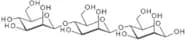
CAS:Isolated from the partial acid and enzymic hydrolysates of several of the mannans, galactomannans and glucomannans. While the trisaccharide has been isolated from all of these sources the tetrasaccharide has only been isolated from ivory-nut mannan, white spruce (Picea glauca) and Pinus strobus glucomannans. Crystalline penta- and hexa-saccharides have been isolated from ivory-nut mannan hydrolysates.
Fórmula:C18H32O16Pureza:Min. 95 Area-%Forma y color:White PowderPeso molecular:504.44 g/molMethyl(methyl 2,3,4-tri-O-methyl-α-D-galactopyranoside)uronate
CAS:A methyl galactoside analogue
Fórmula:C11H20O7Pureza:Min. 95%Forma y color:PowderPeso molecular:264.27 g/molXylitol
CAS:Xylitol is a sugar alcohol that has been shown to have antimicrobial properties. It is also used as a sweetener in chewing gum and toothpaste. Xylitol inhibits the growth of bacteria by binding to the enzyme adenosine triphosphate (ATP) synthase, which is required for energy metabolism. The binding of xylitol to ATP synthase prevents the formation of ATP and blocks bacterial growth, leading to cell death. Xylitol can be produced from xylose, a sugar found in plants and animals, through biochemical reactions that are catalyzed by enzymes such as xylitol dehydrogenase and xylulokinase. This process is anaerobic and does not require oxygen or organic nutrients. Xylitol has been shown to have physiological effects on wild-type strain bacteria such as Aerobacter aerogenes.Fórmula:C5H12O5Pureza:Min. 95%Forma y color:White PowderPeso molecular:152.15 g/mol4,6-Di-O-methyl-D-glucose
CAS:A partially methylated glucose with the anomeric position free
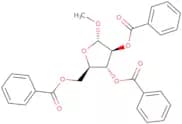
Fórmula:C8H16O6Pureza:Min. 95%Forma y color:PowderPeso molecular:208.21 g/molMethyl 2,3,5-tri-O-benzoyl-α-D-arabinofuranoside
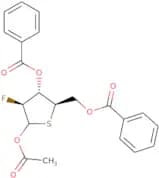
CAS:Methyl 2,3,5-tri-O-benzoyl-α-D-arabinofuranoside is an antiperspirant that prevents the formation of sweat. It is a mixture of two active ingredients: methyl 2,3,5-tri-O-benzoyl-α-D-arabinofuranoside and zinc oxide. The former inhibits the formation of sweat by binding to the protein in eccrine glands and preventing it from absorbing chloride ions. Zinc oxide reduces body odor by binding to sulfur compounds that are secreted by bacteria on skin surfaces. Methyl 2,3,5-triO-benzoyl arabinofuranoside and zinc oxide are used as a combination for their complementary effects.Fórmula:C27H24O8Pureza:Min. 95%Forma y color:PowderPeso molecular:476.47 g/mol1-O-Acetyl-3,5-di-O-benzyl-2- deoxy- 2- fluoro- 4- thio- D- arabinofuranose
CAS:1-O-Acetyl-3,5-di-O-benzyl-2-deoxy-2-fluoro-[4]-thio-[D]-arabinofuranose (1OABFT) is a synthetic sugar with a high degree of methylation and glycosylation. It has been modified to be resistant to enzymes that would normally break the sugar down. 1OABFT is used in glycoproteomics research for its ability to help identify the types of sugars attached to proteins. This modification can also be used as an alternative to fluorination for improving the stability of saccharides in biological systems.
Fórmula:C21H19FO6SPureza:Min. 95%Peso molecular:418.44 g/mol7-Deoxy-D-glycero-L-ido-heptitol
7-Deoxy-D-glycero-L-ido-heptitol is a synthetic carbohydrate that is a methylated, saccharide and polysaccharide. It is a custom synthesis and can be modified with Click chemistry. This product has CAS number 90319-73-6 and can be modified with fluorination. 7DGHLH is a high purity product that has been synthesized from carbon dioxide and hydrogen gas. It is an oligosaccharide that has been glycosylated and is available in the form of a powder or liquid.
Pureza:Min. 95%


![(1R) -1- [(2S, 3R,4S) -4-(Acetylamino)methyl-3- hydroxy- 1- azetidinyl] -1, 2- ethanediol hydrochl…](/_next/image/?url=https%3A%2Fstatic.cymitquimica.com%2Fproducts%2F3D%2Fthumb-webp%2FMA163412.webp&w=3840&q=75)
![(5R, 8S, 9S) -8- [(4R) - 2, 2- Dimethyl- 1, 3- dioxolan- 4- yl] - 9- hydroxy- 2, 2- dimethyl- 1, 3…](/_next/image/?url=https%3A%2Fstatic.cymitquimica.com%2Fproducts%2F3D%2Fthumb-webp%2FMD170675.webp&w=3840&q=75)