Glycoscience
Subcategorías de "Glycoscience"
- Aminoazúcares(108 productos)
- Anticuerpos relacionados con azúcares(282 productos)
- Glicolípidos(46 productos)
- Glicosaminoglicanos (GAGs)(55 productos)
- Glucósidos(419 productos)
- Monosacáridos(6.624 productos)
- Oligosacáridos(3.682 productos)
- Polisacáridos(504 productos)
Se han encontrado 11047 productos de "Glycoscience"
D-Glucuronic acid, sodium salt monohydrate
CAS:Chiral D-Glucuronic acid is the most basic building bloc of hyaluronic acid and chondroitin sulfate and precursor of Vitamin C, the chief detoxifying agent in both plants and animals. Humectant in skin care products.
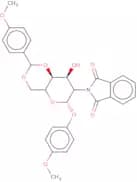
Fórmula:C6H11NaO8Peso molecular:234.14 g/mol4-Methoxyphenyl 2-deoxy-4,6-O-(4-methoxybenzylidene)-2-phthalimido-β-D-glucopyranoside
4-Methoxyphenyl 2-deoxy-4,6-O-(4-methoxybenzylidene)-2-phthalimido-b-D-glucopyranoside is a complex carbohydrate that has been modified with methylation and glycosylation. This product can be used for custom synthesis and is a high purity product. It is soluble in water. The CAS number for this compound is 57810-97-0. The molecular weight of this product is 576. The chemical formula for this compound is C24H28N2O8F3O7, which corresponds to an empirical formula of C24H28N2O8F3O7.Fórmula:C29H27NO9Pureza:Min. 95%Peso molecular:533.53 g/mol3α,4β-Galactotriose
CAS:Obtained by the partial acetolysis of lambda-carrageenanFórmula:C18H32O16Pureza:Min. 95 Area-%Forma y color:White PowderPeso molecular:504.44 g/mol2, 4-Anhydro-5-O-tert.butyldimethylsilyl- 6- deoxy- L- mannonic acid methyl ester
2, 4-Anhydro-5-O-tert.butyldimethylsilyl-6-deoxy-L-mannonic acid methyl ester is a modification of mannose. It is an oligosaccharide with a complex carbohydrate structure. 2, 4-Anhydro-5-O-tert.butyldimethylsilyl-6-deoxy-L-mannonic acid methyl ester has been synthesized using custom synthesis methods. This product has high purity and CAS number: 29674–84–3.Pureza:Min. 95%1,3-Diazido-1,2,3-trideoxy-4-O-(2,6-diazido-2,6-dideoxy-a-D-glucopyranosyl)-D-myo-inositol
CAS:1,3-Diazido-1,2,3-trideoxy-4-O-(2,6-diazido-2,6-dideoxy-a-D-glucopyranosyl)-D-myo--inositol is a synthetic sugar that is used for glycosylation. It can be modified with fluorine to produce a fluorinated sugar. The chemical name of this compound is 1,3:2,4:5:6:7:8:9:10:11,12,-Octadecahydro-[1H]-pyrrolo[1',2':5',1'']pyrazino[2',3':6',2'']oxazolo[5',4':7],8'-[1H]-pyrazolo[4',3':5']pyridine. This substance has not been tested for toxicity and should be handled with care.Fórmula:C12H18N12O6Pureza:Min. 95%Peso molecular:426.35 g/molLincosamine
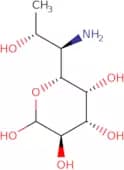
CAS:Lincosamine is a nitrogen nucleophile that reacts with the electrophilic carbon of an activated aromatic ring in a chemical reaction. Lincosamine has been shown to be effective against infectious diseases caused by bacteria, such as Staphylococcus and Streptococcus, but not against viruses. The glycosidic bond between lincosamine and glucose is stereoselective. Lincosamine binds to the hybridoma cell strain through its monoclonal antibody and can be used for pharmacokinetic properties studies. Lincosamine has been used as an antimicrobial agent in biological samples such as urine, blood, and sputum.
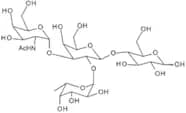
Fórmula:C8H17NO6Pureza:Min. 95%Peso molecular:223.22 g/molBlood Group A tetrasaccharide type V
CAS:Core antigen fragment in ABO blood group systemFórmula:C26H45NO20Pureza:Min. 90%Forma y color:White PowderPeso molecular:691.63 g/molBenzyl 2-acetamido-2-deoxy-3,4,6-tri-O-acetyl-β-D-glucopyranoside
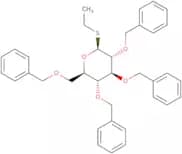
CAS:Benzyl 2-acetamido-2-deoxy-3,4,6-tri-O-acetyl-b-D-glucopyranoside is a synthetic sugar that is used as a glycosylation reagent for the synthesis of oligosaccharides and polysaccharides. It reacts with saccharides in the presence of 1,3-dicyclohexylcarbodiimide (DCC) and 4-(dimethylamino)pyridine (DMAP). The benzyl group can be modified to include fluorine atoms or methyl groups. This compound is an important building block for the synthesis of complex carbohydrates.Fórmula:C21H27NO9Pureza:Min. 95%Forma y color:White To Off-White SolidPeso molecular:437.44 g/molEthyl 2,3,4,6-tetra-O-benzyl-β-D-thioglucopyranoside
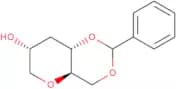
CAS:Ethyl 2,3,4,6-tetra-O-benzyl-b-D-thioglucopyranoside is a sugar alcohol that is selective for the formation of disaccharides. It has a constant yield and can be synthesized from phenyl glycosides or acetonitrile.Fórmula:C36H40O5SPureza:Min. 95%Forma y color:PowderPeso molecular:584.77 g/mol1,5-Anhydro-4,6-O-benzylidene-3-deoxy-D-glucitol
CAS:1,5-Anhydro-4,6-O-benzylidene-3-deoxy-D-glucitol (1,5BPG) is a form compound that is conformationally restricted to the chair conformation. It has inhibitory activity against human macrophages and low activity against thp-1 cells. The 1,5BPG inhibits the activation of Nlrp3 and induces apoptosis in macrophages. These effects are mediated through binding to the hydroxyl group of C2 on the glucose moiety of 1,5BPG. The 1,5BPG also has high activity against marrow derived macrophages. This is due to its ability to inhibit the synthesis of phosphatidic acid and other lipids in these cells.
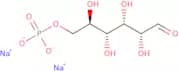
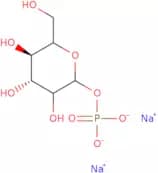
Fórmula:C13H16O4Pureza:Min. 95%Forma y color:PowderPeso molecular:236.26 g/molD-Galactose-1-phosphate disodium
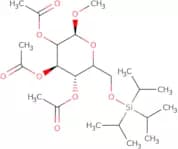
CAS:D-Galactose-1-phosphate disodium is an organic compound that is used as a methylation and glycosylation reagent. It can be used in the synthesis of oligosaccharides, polysaccharides, and other complex carbohydrates. D-Galactose-1-phosphate disodium is a fluorinated saccharide that can be custom synthesized to order. It is also available in high purity and has CAS No. 147072-63-7.Fórmula:C6H13O9P•(Na)2Pureza:(31P-Nmr) Min. 98%Forma y color:PowderPeso molecular:304.1 g/molMethyl 2,3,4-tri-O-acetyl-6-O-triisopropylsilyl-a-D-galactopyranoside
CAS:Methyl 2,3,4-tri-O-acetyl-6-O-triisopropylsilyl-a-D-galactopyranoside is a synthetic glycoside. It is used as a building block for the synthesis of complex carbohydrates. This compound has been shown to have high purity with a purity of 99% by mass. It has not been evaluated by the Food and Drug Administration (FDA) and therefore cannot be sold in the United States.Fórmula:C22H40O9SiPureza:Min. 95%Peso molecular:476.64 g/mol4-Methoxyphenyl 4-O-{4-O-[[2-O-Ac-3-O-[2,4-di-O-(3,4,6-tri-O-Ac-2-PhthN-β-D-Glc)-3,6-di-O-Bn-α-D-Man]-4,6-O-benzylidene-β-D-Man]]-3, 6-di-O-Bn-2-PhthN-β-D-Glc}-3-O-Bn-6-O-(tri-O-Bn-α-L-Fuc)-2-PhthN-β-D-Glc
4-Methoxyphenyl 4-O-{4-O-[[2-O-Ac-3-O-[2,4-di-O-(3,4,6-tri-O-Ac-2-PhthNbDGlc)-3,6--Di--O--Bn--aDMan]-4,6--O--Benzylidene--bDMan]]} -3, 6--Di--Obn2PhthNbDGlc} -2 PhthNbDGlc is a sugar that has been modified by methylation. It also contains saccharide and polysaccharides. This product is CAS No. 899891–14–8 and can be purchased through custom synthesis. The purity of this product is high and the modification is fluorination.
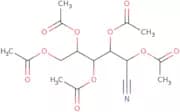
Fórmula:C158H156N4O47Pureza:Min. 95%Peso molecular:2,862.93 g/mol2,3,4,5,6-Penta-O-acetyl-D-galactononitrile
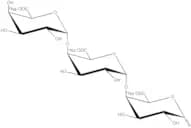
CAS:2,3,4,5,6-Penta-O-acetyl-D-galactononitrile is a synthetic chemical compound that can be used in glycosylation reactions. It has been synthesized by the click modification of 2,3,4,5-tetra-O-acetyl-D-galactose with pentaerythritol tri(nitrile) followed by fluorination. The saccharide was then converted to the methyl ester and acetylated using acetic anhydride. This product is highly pure and can be custom synthesized according to your needs. 2,3,4,5,6-Penta-O-acetyl-D-galactononitrile has a molecular weight of 434.2 g/mol and its CAS number is 35439-42-0.Fórmula:C16H21NO10Pureza:Min. 95%Peso molecular:387.34 g/molGalacturonan DP3 sodium salt
Sodium Trigalacturonate (α-1,4 sodium galacturonotriose) is derived from pectin or pectic acid, by enzymatic or partial acid hydrolysis (Combo, 2012). It is used inâ¯galacturonic acidâ¯metabolism research as a substrate to identify, differentiate, and characterize endo- and exopolygalacturonase(s), and gluconase(s) (Jayani, 2005). The addition of very short fragments of homogalacturonan, tri-galacturonate, and tetra-galacturonate oligosaccharides, restore development in dark-grown, de-etiolated seedling mutants, suggesting that they are unable to generate de-methylesterified pectin fragments. A model of spatiotemporally separated photoreceptive and signal-responsive cell types has been proposed, that contains overlapping subsets of the regulatory network of light-dependent seedling development (Sinclair, 2017).
Pureza:Min. 75 Area-%Forma y color:PowderL-Arabinose
CAS:The aldopentose L-arabinose (Ara) is, after xylose, the second most abundant pentose in nature. It is found in plant cell walls as a component of polysaccharides, including: hemicelluloses, pectin, arabinogalactan-protein complexes and in exudate plant gums, such as: Gum Arabic (Fehér, 2018). L-arabinose is an important component of the mycobacterial cell wall and is involved in the synthesis of arabinogalactan and lipoarabinomannan, which suggests that it can modulate cell wall permeability and drug resistance. Mycobacterium smegmatis is a useful tool for research into Mycobacteria due to it being a "fast grower" and non-pathogenic (Zhou, 2019).Fórmula:C5H10O5Pureza:Min. 99 Area-%Peso molecular:150.13 g/molRef: 3D-A-8240
1kgA consultar25gA consultar250gA consultar500gA consultar2500gA consultar-Unit-kgkgA consultar(5R, 6R, 7R, 8S) -8- (HydroxymHthyl) - 1- azabicyclo[4.2.0] octane- 5, 7- diol
CAS:(5R, 6R, 7R, 8S) -8- (Hydroxymethyl) - 1- azabicyclo[4.2.0] octane- 5,7-diol is a synthetic compound that belongs to the group of sugar derivatives and is used in the synthesis of oligosaccharides. It is a white solid with an mp of 153°C and a molecular weight of 226.3 g/mol. This compound is soluble in water and ethanol but insoluble in ether or hexane. It has been shown to have high purity and can be modified with fluorination, glycosylation, methylation, or saccharide modification.Pureza:Min. 95%1,2:3,4-Di-O-isopropylidene-6-deoxy-6-C-(2-pyridyl)-D-galactopyranose
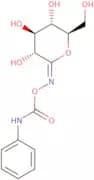
This product is a high purity, custom synthesis, sugar. It is Click modification, fluorination, glycosylation and synthetic. This product has CAS No. and Oligosaccharide, Monosaccharide, saccharide and Carbohydrate. This product also has complex carbohydrate.Fórmula:C17H23NO5Pureza:Min. 95%Peso molecular:321.34 g/molO-(D-Glucopyranosylidene)amino N-phenylcarbamate
CAS:O-(D-glucopyranosylidene)amino N-phenylcarbamate is a synthetic monosaccharide that is used in our laboratory as an intermediate for the synthesis of complex carbohydrates. It is also used in the modification of polysaccharides and glycosylations. This compound has been shown to be stable to hydrolysis, methylation, and oxidation. O-(D-glucopyranosylidene)amino N-phenylcarbamate has been shown to be a high purity product with a CAS number of 104012-84-2.
Fórmula:C13H16N2O7Pureza:Min. 95%Peso molecular:312.28 g/mol2,6-Dideoxy-D-glucose
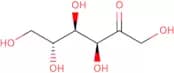
CAS:2,6-Dideoxy-D-glucose is a glycosyl acceptor that has been shown to induce apoptosis in cancer cells. It is an anticancer agent that inhibits the production of ATP by inhibiting glycolysis. 2,6-Dideoxy-D-glucose can also inhibit the translocation of proteins from the cytoplasm to the nucleus and thereby prevent nuclear accumulation of these proteins. This drug may also have anticancer effects through its ability to inhibit DNA synthesis and potentiate anticancer effects of other chemotherapeutic agents. 2,6-Dideoxy-D-glucose has been shown to be effective against cardiac cancer cells and leukemia cells.Fórmula:C6H12O4Pureza:Min. 95%Forma y color:PowderPeso molecular:148.16 g/molD-Fructose
CAS:D-Fructose (Fru) is the most common reducing keto-hexose and is often known as levulose, arabino-hexulose, fruit sugar (Collins, 2006). In an aqueous solution, fructose exhibits mutarotation (approx., 70-75% β-pyranose, 20-23% β-furanose, 5% α-furanose, 2% α-pyranose, 0.7% open chain) (Angyal, 1984). Sucrose from sugar cane and sugar beet is made up of 50% fructose and is found in many fruits and vegetables; it is the predominant sugar in apples, grapes, oranges and watermelon, as well as comprising of up to half of the total sugars in honey. High fructose corn syrup (HFCS) containing around 50% fructose is an important food ingredient produced from glucose syrup by the action of the enzyme glucose isomerase (Hanover, 1993). However, dietary sugars including fructose, have long been implicated in the epidemic of obesity. Evidence to link the relation of foods and beverages containing fructose with overweight or obesity has recently been obtained (Zurbau, 2020).Fórmula:C6H12O6Pureza:Min. 99 Area-%Forma y color:White PowderPeso molecular:180.16 g/molMan-6 Glycan, 2-AB labelled
Man-6 Glycan, 2-AB labelled is a custom synthesis of mannose-6-phosphate, a monosaccharide. The molecule contains six carbons and one phosphate group. It can be modified with fluorination, methylation, or click modification. This glycan is synthesized by the addition of an oligosaccharide to a polysaccharide. Mannose-6-phosphate is an Oligosaccharide that carries out glycosylation reactions in the body. It is used as a precursor for other glycans such as N-Acetylglucosamine and N-Acetylgalactosamine.
Pureza:Min. 95%4-(4-(2-Pyridinyl)-3-(E)-buten-2-one-1-yl)piperidine-2,6-dione
4-(4-(2-Pyridinyl)-3-(E)-buten-2-one-1-yl)piperidine-2,6-dione is a synthetic compound that has been modified with fluorination, methylation, and click modification. It is an oligosaccharide molecule that was synthesized in the laboratory. The molecular weight of this compound is 718.Pureza:Min. 95%2,3:4,5-Di-O-isopropylidene-D-gulonic acid methyl ester
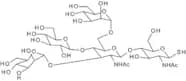
2,3:4,5-Di-O-isopropylidene-D-gulonic acid methyl ester is a custom synthesis that has been modified with fluorination and methylation. It is a monosaccharide, which is synthesized by the click modification of an oligosaccharide. The CAS number for this compound is 7791-54-2. This chemical can be used to produce polysaccharides and complex carbohydrates.Pureza:Min. 95%2-Acetamido-4-O-[2-acetamido-4-O-(β-D-glucopyranosyl)-3,6-di-O-(α-D-mannopyranosyl)-2-deoxy-β-D-glucopyranosyl]-2-deoxy-β-D-thiogluc opyranoside
2-Acetamido-4-O-[2-acetamido-4-O-(b-D-glucopyranosyl)-3,6-di-O-(a-D-mannopyranosyl)-2,6-di-O-(a,b,c,d)-D mannopyranosyl]-2,6-di-O-(a,b,c,d)-D mannopyranosyl]-2 deoxy -b D thioglucopyranose is a carbohydrate that belongs to the class of saccharides. This compound is modified with fluorination and methylation and can be custom synthesized. It has high purity and can be glycosylated or click modified.Fórmula:C34H58N2O25SPureza:Min. 95%Forma y color:SolidPeso molecular:926.89 g/mol2,6-Anhydro-D-glycero-D-gluo-heptonic acid amide
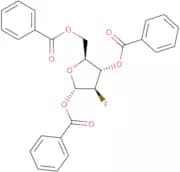
2,6-Anhydro-D-glycero-D-gluo-heptonic acid amide is a synthetic glycoside that is used as an intermediate in the synthesis of oligosaccharides and polysaccharides. The compound is a fluorinated sugar with a methoxy group at the 2 position. This modification provides for increased stability to oxidation reactions and improved solubility in organic solvents. The compound can be modified to include other functional groups, such as methyl or click modifications. 2,6-Anhydro-D-glycero-D-gluo-heptonic acid amide has CAS number 8881–41–8 and can be purchased from various chemical suppliers.Pureza:Min. 95%1,3,5-Tri-O-benzoyl-2-deoxy-2-fluoro-α-L-arabinofuranose
CAS:Intermediate in synthesis of clevudineFórmula:C26H21FO7Pureza:Min. 98 Area-%Forma y color:PowderPeso molecular:464.44 g/mol2-Deoxy- 4-C-methyl-2- methylene- 3, 4- O- isopropylidene -L- erythro- pentonic acid d- lactone
2-Deoxy-4-C-methyl-2-methylene-3,4-O-isopropylidene -L-erythro pentonic acid d-lactone is a methylated sugar with a degree of substitution of 1.0, which can be used for the synthesis of various saccharides and polysaccharides. This product has been modified with click chemistry. It is available in custom synthesis and high purity. The CAS number for this compound is 121592-71-8, and it can be used to synthesize glycans or oligosaccharides. This product can be fluorinated or complexed with other sugars.Pureza:Min. 95%2,6-di-n-pentyl-γ-cyclodextrin
2,6-di-n-pentyl-gamma-cyclodextrin is a glycosylation reagent that is used in the synthesis of oligosaccharides and polysaccharides. It has been used to synthesize an anti-inflammatory agent for the treatment of inflammatory bowel disease. This compound can be modified by Click chemistry, which allows for the attachment of different molecules to its surface. 2,6-di-n-pentyl-gamma-cyclodextrin is also a fluorinated compound with CAS number 689069-46-2.Fórmula:C128H240O40Pureza:Min. 95%Peso molecular:2,419.25 g/molAllyl 6-O-benzyl 2-deoxy-3-O-((R)-1'-ethoxycarbonylethyl)-2-(2,2,2-trichloroethoxycarbonylamino)-a-D-glucopyranoside
Allyl 6-O-benzyl 2-deoxy-3-O-(R)-1'-ethoxycarbonylethyl)-2-(2,2,2-trichloroethoxycarbonylamino)-a-D-glucopyranoside is a synthetic carbohydrate that can be custom synthesized. It is a saccharide, an oligosaccharide, and a sugar. This product has been fluorinated and methylated. The CAS number for Allyl 6-O-benzyl 2-deoxy-3-O-(R)-1'-ethoxycarbonylethyl)-2-(2,2,2-trichloroethoxycarbonylamino)-a-D-glucopyranoside is 589791.
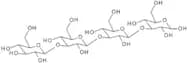
Pureza:Min. 95%Laminaritetraose
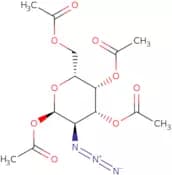
CAS:Ex algal/bacterial polysaccharides-value in b1-3 glucanase assays & diagnosticsFórmula:C24H42O21Pureza:Min. 95 Area-%Forma y color:White PowderPeso molecular:666.6 g/mol1,3,4,6-Tetra-O-acetyl-2-azido-2-deoxy-a-D-galactopyranose
CAS:1,3,4,6-Tetra-O-acetyl-2-azido-2-deoxy-a-D-galactopyranose is an azide sugar that is resistant to the activity of sulfide and can be used as a probe for sulfide in the distal colon. It has been shown that this sugar binds to recombinant human erythrocyte enzymes and inhibits their activities. The hydrolysis of this sugar by pancreatic enzymes has been shown to be dependent on the conformational state of the enzyme. This sugar also inhibits salivary amylase and intestinal sucrase activities.Fórmula:C14H19N3O9Pureza:Min. 95%Forma y color:White PowderPeso molecular:373.32 g/molTri-b-GalNAcAc3-6-aminohexyl-NHCbz
CAS:Tri-b-GalNAc-6-aminohexyl-NHCbz is the peracetylated form with a protected terminal amino group (NHCbz). It is a synthetic ligand designed to target the asialoglycoprotein receptor (ASGPR) on hepatocytes. The three terminal beta-N-acetylgalactosamine (GalNAc) sugars provide an efficient ASGPR binding. It serves as a platform for lysosomal targeting chimera (LYTAC) development, allowing for the creation of chimeras that specifically target unwanted proteins for degradation within hepatocytes. In addition, tri-b-GalNAc-6-aminohexanoate facilitates the delivery of therapeutic cargo, such as RNA or Cas9 complexes, directly to hepatocytes via ASGPR-mediated endocytosis. This approach is promising for gene therapy and RNAi applications in the liver due to the specificity of ASGPR targeting and the versatility of the conjugation moiety.
Fórmula:C93H145N11O39Pureza:Min. 95 Area-%Peso molecular:2,041.2 g/molD-Galacturonic acid monohydrate
CAS:D-Galacturonic acid (GalA) is a hexuronic acid with the CH2OH at C5 of galactose replaced by a carboxyl group (Collins, 2006). D-galacturonic acid is abundant in pectic polysaccharides which are characterized by a high α-1,4 linked galacturonic acid content and include pectic acid (polygalacturonic acid), rhamnogalacturonan I (Oomen, 2002), rhamnogalacturonan (RG) II (Vidal, 2000), xylogalacturonan, and homogalacturonan. These polymers play roles in strengthening cell walls, cell adhesion and are established as part of signaling cascades that detect cell wall degradation upon pathogen attack.Fórmula:C6H10O7·H2OPureza:(Titration) Min. 97%Forma y color:White Off-White PowderPeso molecular:212.15 g/mol5-Chloro-8-hydroxyquinoline b-D-glucuronide
CAS:Chromogenic substrate targeting beta-glucuronidase
Fórmula:C15H14ClNO7Pureza:Min. 98 Area-%Forma y color:White PowderPeso molecular:355.73 g/mol3-O-Benzyl-1,2,4-tri-O-acetyl-D-xylopyranoside
3-O-Benzyl-1,2,4-tri-O-acetyl-D-xylopyranoside is a methylated saccharide that has been modified with the click chemistry. This product can be used for the synthesis of complex carbohydrates and glycosylations. This product is available in high purity and custom synthesis. It is soluble in water or aqueous solutions, making it ideal for use in biological applications. 3-O-Benzyl-1,2,4-tri-O-acetyl-D-xylopyranoside can be used as an intermediate for the synthesis of oligosaccharides and glycoconjugates. It has CAS number 69936–76–5.Pureza:Min. 95%a-D-Glucopyranosyl fluoride
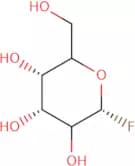
CAS:a-D-Glucopyranosyl fluoride is an irreversible inhibitor of the enzyme glycosidase. This product has been used to study the kinetic and mechanism of human serum alpha-glucosidase, which is a key enzyme in the digestion of carbohydrates. Kinetic studies have shown that 4-hydroxycinnamic acid and glucose are competitive inhibitors of the enzyme. The reaction mechanism for this product involves hydrogen fluoride cleavage of the glycosidic bond. The optimum pH for this product is 7.
Fórmula:C6H11FO5Pureza:Min. 95%Forma y color:White PowderPeso molecular:182.15 g/molPolysucrose 400
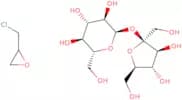
CAS:Water-soluble, nontoxic, enzyme-resistant polymer for biological applications
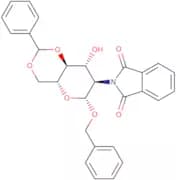
Forma y color:White PowderPeso molecular:400.0Benzyl 4,6-O-benzylidene-2-deoxy-2-phthalimido-b-D-glucopyranoside
CAS:Benzyl 4,6-O-benzylidene-2-deoxy-2-phthalimido-b-D-glucopyranoside is a modified glycosylated deoxyhexose. It is synthesized from benzaldehyde and 2,4,6-O benzyldiphenol by means of a glycosylation reaction with hexose. This product has been fluorinated to give it the desired properties. Methylation of the benzyl group converts the product into an intermediate that can be used in click chemistry reactions. Monosaccharides are then added to produce oligosaccharides. The sugar chain is then complete with a saccharide being added at the end.
Fórmula:C28H25NO7Pureza:Min. 95%Forma y color:White PowderPeso molecular:487.51 g/molSunitinib N-glucuronide
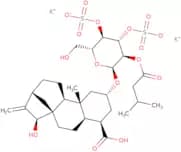
Sunitinib N-glucuronide is a synthetic small molecule with a molecular weight of 517.63 Da and a chemical formula of C14H18F3N5O6S. Sunitinib N-glucuronide is a monosaccharide sugar that is modified with fluorine. It is one of the products of the methylation, custom synthesis, and click modification reactions. The CAS number for this product is 70698-74-7. Sunitinib N-glucuronide has a purity level of 98%, which means that it has less than 2% impurities. This product can be used in oligosaccharides, polysaccharides, or saccharides as a complex carbohydrate or high purity carbohydrate. It can also be used as an additive to modify the properties of monosaccharides and sugars.Pureza:Min. 95%Atractyloside dipotassium salt
CAS:Atractyloside is a natural compound that can be extracted from plants. It has been shown to have pluripotent activity, which means it can differentiate into different types of cells. Atractyloside also exhibits antioxidant and anti-apoptotic properties, which are believed to be due to its ability to increase mitochondrial membrane potential and reduce reactive oxygen species production. Atractyloside has also been shown to protect against neuronal death in vitro and in vivo by inhibiting the activation of caspase-dependent cell death pathways. Atractyloside has been shown to have a cardioprotective effect in animal models of myocardial infarcts, although it is unclear if this effect is due to the drug or due to the atractyloside contained in traditional Chinese medicine.Fórmula:C30H44K2O16S2Pureza:Min. 90 Area-%Forma y color:White/Off-White SolidPeso molecular:802.99 g/molD-Glucose-6-phosphate disodium salt dihydrate
CAS:Glucose 6-phosphatase substrateFórmula:C6H11Na2O9P·2H2OPureza:Min. 98%Forma y color:White PowderPeso molecular:340.13 g/mol4-Isothiocyanatophenyl-a-D-mannopyranoside
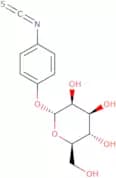
CAS:4-Isothiocyanatophenyl-a-D-mannopyranoside is a synthetic molecule that is used for the modification of saccharides and polysaccharides. It is used in glycosylation reactions to introduce an alpha-N-acetylgalactosamine residue with a methyl group at position 6 of the pyranose ring to produce N,O-linked glycans. This product can be custom synthesized to meet specific customer requirements. It has high purity, excellent solubility in water, and does not contain any toxic impurities.Fórmula:C13H15NO6SPureza:Min. 95 Area-%Forma y color:Off-White PowderPeso molecular:313.33 g/mol3-O-Benzyl-1-O-tert-butyldimethylsilyl- D- glucitol cyclic 5, 6- carbonate
3-O-Benzyl-1-O-tert-butyldimethylsilyl- D- glucitol cyclic 5, 6- carbonate (3BTBDMS) is an organic compound that is used as a synthetic intermediate. It can be used for the synthesis of oligosaccharides and saccharides. 3BTBDMS can also be fluorinated, glycosylated, or methylated to create other compounds. This product has a molecular weight of 288.36 g/mol and a CAS number of 106929–04–8.Pureza:Min. 95%1,5:2,3-Dianhydro-4,6-O-benzylidene-D-mannitol
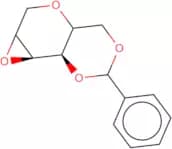
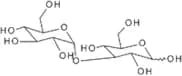
CAS:1,5:2,3-Dianhydro-4,6-O-benzylidene-D-mannitol is a modification of an oligosaccharide that has been synthesized by the glycosylation of D-mannitol. The methylation and fluorination reactions have also been performed on this sugar. This product is high purity and is in the form of a white powder.Fórmula:C13H14O4Pureza:Min. 95%Forma y color:PowderPeso molecular:234.25 g/molNigerose
CAS:Nigerose is a chemical compound that belongs to the group of oligosaccharides. It is a glycan with a basic structure and has inhibitory properties. Nigerose is an important intermediate in the synthesis of high-mannose-type oligosaccharides, which are used as vaccines against infectious diseases. Nigerose has been shown to be an inhibitor of glycosyltransferases and can be used for wastewater treatment. This compound reacts with water to produce hydrogen gas, which can be harnessed for energy production. Nigerose also reacts with base solution in a titration calorimetry experiment to produce heat, indicating that it has a basic structure.
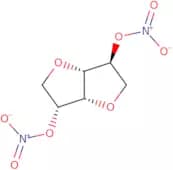
Fórmula:C12H22O11Pureza:Min. 93 Area-%Forma y color:White PowderPeso molecular:342.3 g/molIsosorbide dinitrate - 60% lactose and 40% Isosorbide dinitrate
CAS:Isosorbide dinitrate is used to treat chronic bronchitis and congestive heart failure. It dilates blood vessels, allowing more oxygen-rich blood to reach the heart. Isosorbide dinitrate is also used to relieve chest pain (angina) and reduce complications after a heart attack. Isosorbide dinitrate is a prodrug that is converted in vivo to its active form, isosorbide mononitrate, by the enzyme nitric oxide synthase in response to hypoxia. In addition, it has been shown that this drug reduces levels of low-density lipoprotein cholesterol (LDL-C) and may be useful for the treatment of high cholesterol.
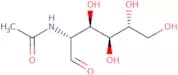
The mechanism of action for reducing LDL-C levels is not known but may be due to increased clearance of LDL-C from plasma or decreased production of very low density lipoproteins (VLDL). This medication does not affect triglycerides or high density lipFórmula:C6H8N2O8Pureza:Min. 95%Forma y color:White PowderPeso molecular:236.14 g/molN-Acetyl-D-glucosamine
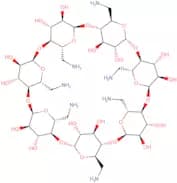
CAS:N-acetyl D-glucosamine (GlcNAc) is an aldohexose (2-acetamido-2-deoxyglucose) in which the hydroxyl group at position 2 is replaced by NHAc (Collins, 2006). N-acetyl D-glucosamine forms the exoskeletons of molluscs and insects as the building block of the polysaccharide chitin (Rudrapatnam, 2003). N-acetyl D-glucosamine is a key component of N- and O-linked glycans, present in glycolipids and the glycosaminoglycan hyaluronic acid (Fallacara, 2018). A recent study has suggested that N-acetyl D-glucosamine may have therapeutic potential for COVID-19 as it affects the spike protein-ACE2 receptor interaction during the infection with SARS-CoV-2 virus (Baysal, 2021).Fórmula:C8H15NO6Pureza:Min. 98 Area-%Forma y color:PowderPeso molecular:221.21 g/mol6-Amino-6-deoxy-b-cyclodextrin hydrochloride
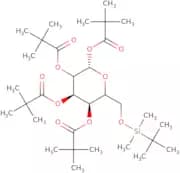
CAS:This beta-cyclodextrin (β-CD) derivative is a functionalized cyclic oligosaccharide composed of seven glucose units, characterized by a hydrophilic exterior and a lipophilic cavity (bigger than α-CD and smaller than γ-CDs), which allows it to encapsulate various guest molecules. This structural feature facilitates its use in multiple applications, including pharmaceuticals, food enhancement, and cosmetics. In the pharmaceutical industry, it enhances the solubility and stability of poorly water-soluble drugs, improving their bioavailability and efficacy while also masking unpleasant tastes. The food sector utilizes it as a stabilizer for flavors, colors, and nutrients, extending shelf life by protecting sensitive ingredients from degradation. In cosmetics, it serves as a complexing agent for fragrances and active components, ensuring their stability and controlled release. Its use expands to many other fields, including nanotechnology for drug delivery systems, environmental remediation for extracting organic pollutants, textiles for slow-release fragrances, and analytical chemistry for chiral separation.Fórmula:C42H77N7O28·7HClPureza:Min. 95%Forma y color:White Slightly Yellow PowderPeso molecular:1,383.32 g/mol1,2,3,4-Tetra-O-pivaloyl-6-O-(tert-butyldimethylsilyl)-b-D-glucopyranose
1,2,3,4-Tetra-O-pivaloyl-6-O-(tert-butyldimethylsilyl)-b-D-glucopyranose is a high purity oligosaccharide that can be custom synthesized to your specifications. This modification is an Oligosaccharide and Carbohydrate which is a complex carbohydrate. It has CAS No. and Monosaccharide as well as Methylation and Glycosylation. It is also a Sugar and Fluorination with saccharides.
Fórmula:C32H58O10SiPureza:Min. 95%Peso molecular:630.9 g/mol






![(5R, 6R, 7R, 8S) -8- (HydroxymHthyl) - 1- azabicyclo[4.2.0] octane- 5, 7- diol](/_next/image/?url=https%3A%2Fstatic.cymitquimica.com%2Fproducts%2F3D%2Fthumb-webp%2FMH163378.webp&w=3840&q=75)