Glycoscience
Subcategorías de "Glycoscience"
- Aminoazúcares(108 productos)
- Anticuerpos relacionados con azúcares(282 productos)
- Glicolípidos(46 productos)
- Glicosaminoglicanos (GAGs)(55 productos)
- Glucósidos(419 productos)
- Monosacáridos(6.624 productos)
- Oligosacáridos(3.682 productos)
- Polisacáridos(504 productos)
Se han encontrado 11047 productos de "Glycoscience"
Amylopectin - from maize
CAS:Amylopectin is composed of between 2,000 to 200,000 glucose residues linked α (1→4) with α (1→6) branching. The molecule is highly branched, every 24 to 30 glucose units, resulting in a soluble molecule with many terminal residues. Starch is made of about 70% amylopectin by weight, though it varies depending on the source (higher in medium-grain rice to 100% in glutinous rice, waxy potato starch, waxy corn, and lower in long-grain rice, amylomaize, and russet potatoes).
Forma y color:Powder6-O-Benzhydryloxybis(trimethylsilyloxy)silyl-1,2:4,5-di-O-isopropylidene-D-glycero-D-manno-heptitol
6-O-Benzhydryloxybis(trimethylsilyloxy)silyl-1,2:4,5-di-O-isopropylidene-D-glycero-D-mannoheptitol is a custom synthetic oligosaccharide. It is a complex carbohydrate that can be found in the human body. It is an Oligosaccharide with CAS No. and has been modified with Methylation and Glycosylation. The saccharide content is high purity and it has been fluorinated to increase its stability. This product has been synthesized using Click chemistry for ease of use.Pureza:Min. 95%Blood group B hexasaccharide type I
Gala1-3(Fuca1-2)Galb1-3GlcNAcb1-3Galb1-4Glc (B antigen hexasaccharide Type I)Fórmula:C38H65NO30Pureza:Min. 90 Area-%Forma y color:PowderPeso molecular:1,015.91 g/molEthyl b-D-galactopyranoside
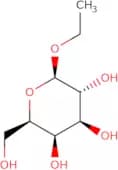
CAS:Ethyl b-D-galactopyranoside is a galactosylated glycoside that can be synthesized by the transfer of an acetyl group from ethyl alcohol to a sugar. It has antibacterial activity and is used in solvents as a stabilizer. The chemical structure of this compound consists of two benzene rings with an -OH group on one end, which are linked together by a covalent bond. The spacing between these two benzene rings is important for the stability of this compound, and it will break down when there is not enough space for the electron clouds to interact with each other. Ethyl b-D-galactopyranoside has been shown to be effective against tuberculosis bacteria, Mycobacterium tuberculosis, and Mycobacterium avium complex.
Fórmula:C8H16O6Forma y color:White PowderPeso molecular:208.21 g/molChloramphenicol glucuronide
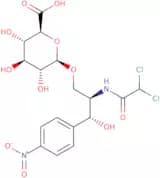
CAS:Chloramphenicol glucuronide is an active metabolite of chloramphenicol. It can be detected in human serum and urine, as well as rat liver microsomes. Chloramphenicol glucuronide binds to the cytosolic protein, cytochrome b5 reductase, which inhibits protein synthesis and cell growth. This compound has been shown to be effective for treating infectious diseases such as typhoid fever, pelvic inflammatory disease, and pneumonia. The chloramphenicol glucuronide group also includes a number of other metabolites that are formed from chloramphenicol by conjugation with glucuronic acid.Fórmula:C17H20Cl2N2O11Pureza:Min. 95 Area-%Forma y color:PowderPeso molecular:499.26 g/molEthyl 2-acetamido-2-deoxy-b-D-galactopyranoside
Ethyl 2-acetamido-2-deoxy-b-D-galactopyranoside is a custom synthesis, fluorinated, modified with methyl and acetamido groups, monosaccharide with a CAS number. It is synthesized by the modification of galactose with an acetamido group and then reacting it with ethyl bromoacetate. It is a saccharide that can be used to modify glycoproteins. This compound has been used in the synthesis of oligosaccharides and polysaccharides. Ethyl 2-acetamido-2-deoxy-b-D-galactopyranoside is also known as a sugar or carbohydrate.
Fórmula:C10H19NO6Pureza:Min. 95%Forma y color:SolidPeso molecular:249.26 g/molα-D-Fucose
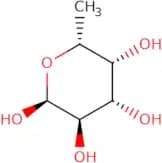
CAS:Fucose is a 6-carbon sugar that is an essential component of the human diet. It is found in many vegetables and fruits, but it can also be produced by the body from glucose. Fucose is involved in a number of important biochemical processes, including calcium metabolism and the synthesis of galactose, l-glutamic acid, and other carbohydrates. Fucose has been shown to inhibit leukemia cells through programmed cell death and may also have a role in regulating cell proliferation.
Fórmula:C6H12O5Pureza:Min. 98.0 Area-%Peso molecular:164.16 g/molRef: 3D-F-8000
1gA consultar5gA consultar10gA consultar25gA consultar50gA consultar-Unit-ggA consultarNigeran
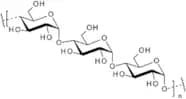
CAS:Nigeran is a polysaccharide found in the cell wall of lower fungi. In certain Aspergillus and Penicillium spp., nigeran was first isolated from Penicillium expansum and Aspergillus niger (illustrated). The polysaccharide contains unbranched α-D- glucopyranose residues linked 1,3 and 1,4. Nigeran is part of the hyphal cell wall, where it can contribute up to 40 % of the cell dry weight. The polysaccharide occupies several domains or location on the hyphal wall and is highly crystalline in vivo. Deposition of nigeran is primarily at the outer surface of the hyphal wall.
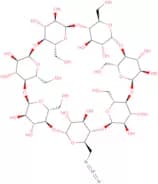
Pureza:Min. 95%Forma y color:Powder6-Azido-6-deoxy-b-cyclodextrin
CAS:This beta-cyclodextrin (β-CD) derivative is a functionalized cyclic oligosaccharide composed of seven glucose units, characterized by a hydrophilic exterior and a lipophilic cavity (bigger than α-CD and smaller than γ-CDs), which allows it to encapsulate various guest molecules. This structural feature facilitates its use in multiple applications, including pharmaceuticals, food enhancement, and cosmetics. In the pharmaceutical industry, it enhances the solubility and stability of poorly water-soluble drugs, improving their bioavailability and efficacy while also masking unpleasant tastes. The food sector utilizes it as a stabilizer for flavors, colors, and nutrients, extending shelf life by protecting sensitive ingredients from degradation. In cosmetics, it serves as a complexing agent for fragrances and active components, ensuring their stability and controlled release. Its use expands to many other fields, including nanotechnology for drug delivery systems, environmental remediation for extracting organic pollutants, textiles for slow-release fragrances, and analytical chemistry for chiral separation.
Fórmula:C42H69N3O34Pureza:Min. 98 Area-%Forma y color:PowderPeso molecular:1,160 g/molHyaluronic acid from Bacteria
CAS:Hyaluronic acid is a polysaccharide composed of repeating units of the disaccharide N-acetylglucosamine and D-glucuronic acid. It is found in many connective tissues, including the skin, where it binds water and maintains elasticity. This product is custom synthesized by modifying the structure to include fluorine atoms, methyl groups, and monosaccharides. It is synthesized from synthetic building blocks that are modified with click chemistry to form oligosaccharides. The saccharide units are then glycosylated with sugar molecules, creating a complex carbohydrate with an average molecular weight between 50,000 and 100,000 Daltons.
Pureza:(%) Min. 90%D-Gluco-2,4-O-Isopropylidene-2,3,4,5-tetrahydroxy-1,6-dicarboxylic acid 3,6-lactone methyl ester
D-Gluco-2,4-O-Isopropylidene-2,3,4,5-tetrahydroxy-1,6-dicarboxylic acid 3,6-lactone methyl ester is a custom synthesis of D-glucose with a methyl group at the 2 position. The compound has been fluorinated to increase its hydrophobicity and is used as an intermediate in the synthesis of oligosaccharides and polysaccharides. It has also been used in the modification of saccharides such as glycosides. This product is offered in high purity and can be modified according to customer specifications.Pureza:Min. 95%N-Acetyl-de-O-sulfated heparin sodium salt
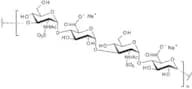
CAS:N-Acetyl-de-O-sulphated heparin is a glycosaminoglycan, which occurs in many mammalian tissues and has important anticoagulant and thrombolytic properties. The chemical structure is composed mainly of two disaccharide repeating units A and B. A is L-iduronic acid 2-suplhate linked α-(1,4) to 2-deoxy-2-sulfamido-D-galactose 6-sulphate, while B is D-glucuronic acid β-(1,4) linked to 2-deoxy-2-sulfamido-D-glucose 6-sulphate.
Pureza:Min. 95%Forma y color:PowderLacto-N-neooctaose
Neutral octasaccharide naturally present in human breast milkFórmula:C54H91N3O41Pureza:Min. 90%Forma y color:PowderPeso molecular:1,438.3 g/mol5-Thio-a-D-mannose
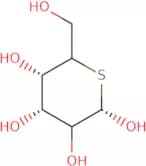
CAS:5-Thio-a-D-mannose is a disaccharide that contains a sulfhydryl group. It has been shown to be a cellular and trackable molecule, which can be acetylated by mercuric chloride. The glycosidases of this molecule are mannosidases, which cleave the 5th carbon from the glycosidic linkage of the sugar. This is an important process for a variety of biological functions, such as the synthesis of DNA and proteins. In addition, this disaccharide is involved in various metabolic pathways, including glycolysis and gluconeogenesis.
Fórmula:C6H12O5SPureza:Min. 95%Peso molecular:196.22 g/molHyacinthacine B3
CAS:Hyacinthacine B3 is a compound that was synthesized by the Sharpless asymmetric dihydroxylation of polyhydroxylated aldehyde. It has inhibitory activities against nitrogen atoms and amines, which are important for the synthesis of proteins. The compounds with petasis amines have been shown to be effective in the treatment of influenza A virus.Fórmula:C9H17NO4Pureza:Min. 95%Peso molecular:203.24 g/molRaloxifene 4'-D-glucuronide
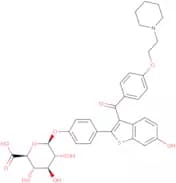
CAS:Raloxifene 4'-D-glucuronide is a drug that is a prodrug of raloxifene, and it can be used to treat osteoporosis. The compound is metabolized by glucuronidation in the liver, and it has been found to have bioequivalence with the parent drug. Raloxifene 4'-D-glucuronide is marketed under the trade name Evista.Fórmula:C34H35NO10SPureza:Min. 95%Forma y color:PowderPeso molecular:649.71 g/molD-Erythrose - min 50% purity as a 70% aq. solution
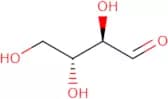
CAS:Erythrose is a sugar that is used in the biosynthesis of other sugars, such as ribose and D-erythrose. It is also an intermediate in the pentose phosphate pathway for the production of NADPH. Erythrose can be converted to erythritol by reductase enzymes, which are necessary for the synthesis of DNA. The enzyme erythrose reductase has been shown to act on wild-type strains. Erythrose reduces d-erythrose to erythritol, which inhibits polymerase chain reactions by blocking transcription and replication of DNA. Erythrose has also been shown to have inhibitory properties against Toll-like receptor signaling pathways, which may be due to its ability to reduce reactive oxygen species (ROS) and hydrogen peroxide levels in cells.
Fórmula:C4H8O4Pureza:Min. 50 Area-%Forma y color:Clear LiquidPeso molecular:120.1 g/molProbenecid acyl b-D-glucuronide
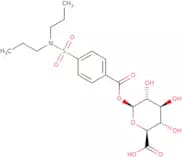
CAS:Probenecid is a weak acid that is rapidly converted to an active metabolite in the body. It is used as an analgesic, antipyretic, and anti-inflammatory drug. Probenecid has been shown to inhibit the formation of biliary acids in animals and humans and has been used in the treatment of chronic inflammatory conditions such as rheumatoid arthritis. The most common route of administration for this drug is orally, although it can also be given intravenously or intramuscularly. Probenecid also acts as a nonsteroidal anti-inflammatory drug (NSAID). This means that it inhibits prostaglandin synthesis by blocking cyclooxygenase enzymes. This reduces inflammation, pain, and fever by inhibiting the production of prostaglandins that play a role in these processes.
Fórmula:C19H27NO10SPureza:Min. 95%Forma y color:White To Off-White SolidPeso molecular:461.48 g/mol2-Acetamido-2-deoxy-4-O-(b-D-galactopyranosyl)-6-sulfo-D-glucopyranose sodium salt
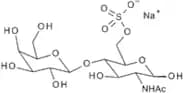
CAS:2-Acetamido-2-deoxy-4-O-(b-D-galactopyranosyl)-6-sulfo-D-glucopyranose sodium salt is a synthetic compound that is used in glycosylation reactions. It can be used for the production of oligosaccharides and complex carbohydrates, as well as for the modification of natural products. 2 Acetamido -2 deoxy -4 O-(b-D galactopyranosyl) -6 sulfo D glucopyranose sodium salt has a purity of 98% and was synthesized by fluorination. The CAS number is 145447 78 5.
Fórmula:C14H24NO14S·NaPureza:90%Forma y color:White PowderPeso molecular:485.39 g/molD-Xylonic acid ammonium
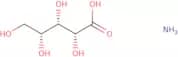
CAS:D-Xylonic acid ammonium salt is a synthetic glycosylation agent that is used in the synthesis of oligosaccharides, polysaccharides, and monosaccharides. D-Xylonic acid ammonium salt is also used to modify glycoproteins and proteoglycans for use in the treatment of various diseases. D-Xylonic acid ammonium salt can be synthesized by the fluorination of D-xylose followed by methylation. This agent can be modified through click chemistry or complex carbohydrate modification. It has a high purity and is readily available for purchase.Fórmula:C5H10O6•H3NPureza:Min. 95%Peso molecular:183.16 g/molFlurbiprofen sorbitol ester
Flurbiprofen is an anti-inflammatory drug that belongs to the group of non-steroidal anti-inflammatory drugs. It is a prodrug that is converted to the active form, flurbiprofen acid, in the liver. Flurbiprofen is used to reduce inflammation and relieve pain. The synthesis of this compound starts with the fluorination of 2,3-dihydroxybenzoic acid using N-fluorobenzenesulfonimide as a reagent. This reaction produces an alkylating agent, which reacts with sucrose in the presence of sodium methoxide to produce methylated sucrose ester. This is then oxidized with potassium permanganate to produce methylated sucrose ester oxide, which undergoes a click modification reaction with tetramethyl orthosilicate and triethylamine to produce flurbiprofen sorbitol ester (FSE).Fórmula:C21H25FO7Pureza:Min. 95%Forma y color:PowderPeso molecular:408.42 g/molGM2-Oligosaccharide-sp-biotin
Biotin-labelled oligosaccharide domain of the monosialylated glycosphingolipid GM2 of a-series. The compound is present on neuronal cells and plays a key role in the regulation of dendritogenesis in cortical pyramidal neurons. In lysosomal storage disorders Tay-Sachs and Sandhoff disease, where hexosaminases A and B are deficient, GM2 ganglioside accumulates in the nervous system. GM2 is also overexpressed in melanomas and other tumours of neuro-ecto origin. Moreover, the sugar moiety of this ganglioside is a receptor allowing viral infection of cells with reovirus and rotavirus.Fórmula:C54H88N9O29S•NaPureza:Min. 95%Forma y color:PowderPeso molecular:1,382.38 g/molGDP-L-galactose sodium salt
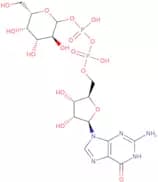
CAS:GDP-L-galactose is a sugar molecule that is an intermediate in the biosynthesis of ascorbate. GDP-L-galactose is synthesized from GDP-D-mannose and GDP-L-glucose by the enzyme GDP-mannose 4,6 dehydratase. The enzyme GDP-L-galactose dehydrogenase then converts GDP-L-galactose to ascorbic acid (vitamin C). Ascorbate is essential for many biological functions such as synthesis of collagen and neurotransmitters, regulation of gene expression, and protection against oxidative stress. The biosynthesis of ascorbate occurs in a light dependent reaction involving L -galactono 1,4 diphosphate synthase and UDP glucose 6 phosphate uridylyl transferase. This process is regulated by transcriptional factors such as MYB and NAC2/NAC4.
Fórmula:C16H23N5O16P2Na2Pureza:(Hplc-Ms) Min. 95 Area-%Forma y color:White Off-White PowderPeso molecular:649.3 g/mol2-Azido-2-deoxy-3,4-O-isopropylidene-L-idonic acid methyl ester
2-Azido-2-deoxy-3,4-O-isopropylidene-L-idonic acid methyl ester is a custom synthesis that is available in high purity. It is a complex carbohydrate that has been modified with methylation and glycosylation. This product has CAS number 16078-04-1 and is a monosaccharide synthesized from similar compounds.Pureza:Min. 95%2,3,4,6-Tetra-O-acetyl-b-D-galactopyranosyl cyanide
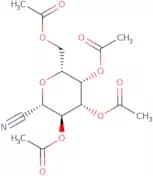
CAS:2,3,4,6-Tetra-O-acetyl-b-D-galactopyranosyl cyanide is a carbohydrate that is used in the synthesis of conjugates for use as immunogens. It has been modified to create a high purity product. Click chemistry is used to attach a fluorine atom to the sugar. The glycosylation reaction with the monosaccharides and disaccharides is then performed followed by methylation of the saccharide with methanol to produce 2,3,4,6-Tetra-O-acetyl-b-D-galactopyranosyl cyanide.Fórmula:C15H19NO9Pureza:Min. 95 Area-%Forma y color:White Off-White PowderPeso molecular:357.31 g/molFerric carboxymaltose
CAS:Ferric carboxymaltose is a form of iron that is administered intravenously and is used to treat iron deficiency. Ferric carboxymaltose has been shown to be effective in treating iron deficiency anemia as well as other conditions, such as inflammation of the bowel or hematologic response. Ferric carboxymaltose binds to free iron in the blood and prevents it from oxidizing. Ferric carboxymaltose also exhibits an anti-inflammatory effect by inhibiting the production of pro-inflammatory cytokines and chemokines. The polymerase chain reaction (PCR) technique has been used to measure ferritin levels in the blood, which are then used to determine whether treatment with ferric carboxymaltose is necessary.Forma y color:Powder6-o-a-D-Glucosyl-maltose
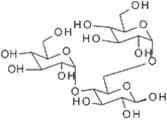
CAS:Minor trisaccharide component of honey
Fórmula:C18H32O16Pureza:Min. 95%Forma y color:White Off-White PowderPeso molecular:504.44 g/mol1,2:3,4-Di-O-isopropylidene-α-D-fucopyranose
CAS:1,2:3,4-Di-O-isopropylidene-a-D-fucopyranose is a tailored drug that was developed to have the same chemical structure as endogenous natural fucopyranosides. It has been shown to be a potent inhibitor of bacterial growth in vitro. The drug has been shown to have anti-inflammatory effects in vivo and may be useful for the treatment of autoimmune diseases. 1,2:3,4-Di-O-isopropylidene-a-D-fucopyranose has been observed to inhibit the production of inflammatory cytokines such as IL1β and TNFα by macrophages at concentrations of 10 μM or less. It has also been shown to inhibit NFκB activation by inhibiting IκB kinase activity.
Fórmula:C12H20O5Pureza:Min. 95%Forma y color:Clear colourless to yellow oil.Peso molecular:244.28 g/molL-Ribonic acid-1,4-lactone
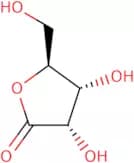
CAS:L-Ribonic acid-1,4-lactone is a synthetic process that is used as an antiviral agent. It is a sugar reactant in the production of riboflavin. L-Ribonic acid-1,4-lactone has been shown to inhibit the synthesis of viral RNA and DNA, which prevents replication of the virus. The mechanism of L-ribonic acid lactone's antiviral activity is not currently known.
Fórmula:C5H8O5Pureza:(%) Min. 90%Forma y color:PowderPeso molecular:148.12 g/mol2,3,4,6-Tetra-O-acetyl-D-glucopyranose
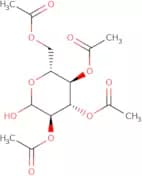
CAS:2,3,4,6-Tetra-O-acetyl-D-glucopyranose is a carbohydrate that is used in the synthesis of besifloxacin. This compound has been studied as an analog for many other natural compounds and its derivatives have shown to be effective against bacteria such as Staphylococcus aureus and Clostridium perfringens. The acetyl groups on this molecule allow it to be easily converted into other compounds with desired properties. This compound has been found to be acidic and can be used as a medicinal preparation or analytical chemistry reagent. The hydroxyl group on the 2 carbon atom allows the molecule to form glycoside derivatives. The halides on this molecule are also important for making new molecules by replacing one of the hydrogen atoms with another halogen atom. The phenylpropanoid glycosides are found in plants and may contain an enantiomeric form of 2,3,4
Fórmula:C14H20O10Pureza:Min. 95%Forma y color:White PowderPeso molecular:348.3 g/molHuman milk sialylated oligosaccharides
This mixture contains some of the sialylated oligosaccharides found in human milk.Pureza:Min. 95%Forma y color:PowderGlobo-H BSA conjugate
Useful for study of immune response in cancer vaccine development
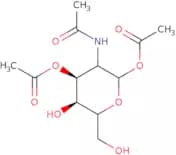
Forma y color:PowderPeso molecular:1539.562-Acetamido-1,3-di-O-acetyl-2-deoxy-D-glucopyranose
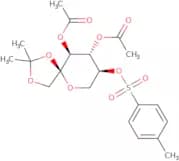
CAS:2-Acetamido-1,3-di-O-acetyl-2-deoxy-D-glucopyranose is a synthetic sugar that is used in the synthesis of complex carbohydrates. It has been shown to be an effective fluorinating agent for glycosylations and can be methylated or click modified. 2-Acetamido-1,3-di-O-acetyl-2-deoxy-D-glucopyranose has high purity and can be custom synthesized to order.Fórmula:C12H19NO8Pureza:Min. 95%Forma y color:White PowderPeso molecular:305.28 g/mol3,4-Di-O-acetyl-1,2-O-isopropylidene-5-O-p-toluenesulfonyl-a-L-sorbopyranose
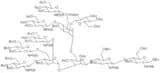
CAS:3,4-Di-O-acetyl-1,2-O-isopropylidene-5-O-p-toluenesulfonyl-a-L-sorbopyranose is a fluorinated glycosylation product with a synthetic route. It is a high purity custom synthesis and can be modified according to customer needs. 3,4-Di-O-acetyl-1,2-O isopropylidene -5 O p toluenesulfonyl A L sorbopyranose has been used in the synthesis of oligosaccharides and saccharides.Fórmula:C20H26O10SPureza:Min. 95%Peso molecular:458.48 g/molBenzyl 6-O-acetyl-3-O-benzyl-4-O-{4-O-[2,4-di-O-acetyl-3-O-(3-O-benzyl-2,4,6-tri-O-(3,4,6-tri-O-benzyl-2-deoxy-2-phthalimido-b-D-glu copyranosyl)-a-D-mannopyranosyl)-6-O-(3-O-benzyl-2,4,6-tri-O-(3,4,6-tri-O-acetyl-2-deoxy-2-phthalimido-b-D-glucopyrano
Benzyl 6-O-acetyl-3-O-benzyl-4-O-[2,4-di-O-(3,4,6-tri-O-(3,4,6-tri-O-(3,4,6-tri-O-(3,4,6,-triacetyl)-2deoxyglucopyranoside)-2phthalimido]-bDgluco pyranoside (BBAG) is a complex carbohydrate that is synthesized from benzyl 6 O acetate and 3 O benzyl 4 O (2 2 4 di O acetyl 3 O ( 3 0 benzyl 2 4 6 tri O acetyl 2 deoxyglucopyranoside)-2phthalimido b D glucopyranose). It has a CAS number of 10560138. BBAG is a glycosidic compound that can be modified at methyl or sugar positions. It has a high purityFórmula:C244H238N8O78SPureza:Min. 95%Peso molecular:4,562.57 g/molbeta-Gentiobiose octaacetate
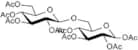
CAS:Beta-gentiobiose octaacetate is a macrocyclic structure that is glycosidated with an antigen. It has a neutralizing effect on the biological properties of the antigen. Beta-gentiobiose octaacetate has shown antitumour activity in animals, which may be due to its ability to inhibit tumor cell proliferation. Beta-gentiobiose octaacetate also has high fluidity and can be used as an oligosaccharide antigen in biological research. The molecule has a constant molecular weight of 400 Da and is conjugated with proton, which makes it useful for electron microscopy.
Fórmula:C28H38O19Pureza:Min. 95%Forma y color:White PowderPeso molecular:678.59 g/mol3-O-Benzyl-1,2:5,6-di-O-isopropylidene-α-D-allofuranose
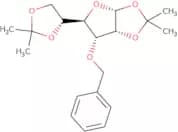
CAS:3-O-Benzyl-1,2:5,6-di-O-isopropylidene-α-D-allofuranose is a carbohydrate that belongs to the group of saccharides. It is an oligosaccharide with a molecular weight of 607.3 g/mol and a CAS number of 22331-21-1. 3OBAF is used in the synthesis of complex carbohydrates or as a sugar substitute and can be custom synthesized to meet your specifications. This product is available for sale and can be shipped internationally.Fórmula:C19H26O6Pureza:Min. 95%Forma y color:White Off-White PowderPeso molecular:350.41 g/molMethyl β-D-fructopyranoside
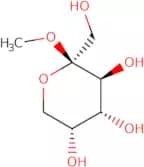
CAS:Methyl β-D-fructopyranoside is a glycoside that is made up of a pyranose ring and the sugar d-fructose. This molecule is stable because of its hydrogen bonds, which are formed between the oxygen atom of the hydroxyl group and the hydrogen atom of the methyl group. Methyl β-D-fructopyranoside has two chiral centers, so it can exist as two enantiomers. The most common form is D-(+)-methyl β-d-fructopyranoside, which has a configuration of R (right) and S (left).
Fórmula:C7H14O6Pureza:One SpotForma y color:PowderPeso molecular:194.18 g/mol2-O-Benzyl-2,4-di-C-methyl-3,4-O-isopropylidene-L-arabinonic acid γ-lactone
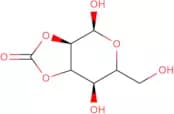
2-O-Benzyl-2,4-di-C-methyl-3,4-O-isopropylidene-L-arabinonic acid gamma-lactone is a custom synthesis of a complex carbohydrate. It has CAS No. and can be modified by methylation and glycosylation. This product is high purity, fluorinated, and synthetic.Pureza:Min. 95%2,3-O-Carbonyl-a-D-mannopyranose
CAS:2,3-O-Carbonyl-a-D-mannopyranose is a modified sugar that can be synthesized from D-mannose. It is used to produce oligosaccharides and polysaccharides. This compound has been shown to be useful for the fluorination of proteins and for click modification reactions. 2,3-O-Carbonyl-a-D-mannopyranose has high purity and can be custom synthesized for quality assurance purposes.Fórmula:C7H10O7Pureza:Min. 95%Forma y color:PowderPeso molecular:206.15 g/mol(2S,3R,4R,5S)-3-O-Benzyl-3,4,5-trihydroxy-2-hydroxymethylpiperidine
(2S,3R,4R,5S)-3-O-Benzyl-3,4,5-trihydroxy-2-hydroxymethylpiperidine is a custom synthesis that is used as a building block for the preparation of sugar oligosaccharides and polysaccharides. It is also used in glycosylation reactions to form complex carbohydrates. This compound has been a valuable reagent for the introduction of fluorine atoms into carbohydrate molecules. The structure contains an oxygen atom at C1 and two hydroxyl groups at C2 and C5. The molecule has CAS number .Pureza:Min. 95%Man-8D1D3 N-Glycan
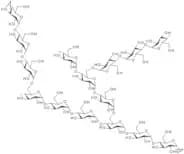
CAS:Man-8D1D3 N-Glycan is a custom synthesis carbohydrate that is used as a structural component in polysaccharides and glycoproteins. This compound is used for the modification of saccharides, methylation, glycosylation, and click chemistry. The purity of this substance is high and it has been fluorinated for synthetic purposes.
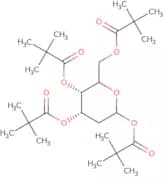
Fórmula:C64H108N2O51Pureza:Min. 90%Forma y color:PowderPeso molecular:1,721.53 g/mol2-Deoxy-1,3,4,6-tetra-O-pivaloyl-D-glucopyranose
2-Deoxy-1,3,4,6-tetra-O-pivaloyl-D-glucopyranose is a glycosylation sugar that belongs to the category of complex carbohydrates. It is a methylated sugar that can be fluorinated or modified with other saccharides. This product can be custom synthesized and has high purity.
Fórmula:C26H44O9Pureza:Min. 95%Peso molecular:500.64 g/molGlucostrophanthidin
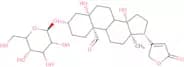
CAS:Glucostrophanthidin is a cardiac glycoside, which is derived from natural plant sources, specifically from species in the Apocynaceae family. This compound exerts its effects primarily through inhibition of the sodium-potassium ATPase enzyme, leading to an increase in intracellular sodium concentration. The downstream effect of this process involves an increase in intracellular calcium via the sodium-calcium exchange mechanism, ultimately enhancing the contractility of cardiac muscle fibers.
Fórmula:C29H42O11Pureza:Min. 95%Peso molecular:566.64 g/mol3-o-Benzyl-diacetonide-d-glucose
3-O-benzyl-diacetonide-d-glucose is a synthetic monosaccharide that can be used as a building block for oligosaccharides and polysaccharides. It is custom synthesized to meet your specific needs and can be modified with fluorination, methylation, or glycosylation. 3-O-benzyl-diacetonide-d-glucose has been shown to have high purity and is available in small quantities for custom synthesis.
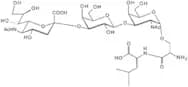
Pureza:Min. 95%(Neu5Ac a(2-3)-Gal-b(1-3)-GalNAc)SL-OH
Neu5Ac a(2-3)-Gal-b(1-3)-GalNAc)SL-OH is an Oligosaccharide that is a complex carbohydrate with a Methylation modification. It is the product of Click chemistry and has been Fluorinated and saccharide, Modification, sugar, Oligosaccharide, Synthetic, CAS No., Monosaccharide, Custom synthesis, High purity.
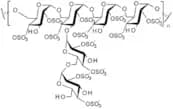
Pureza:Min. 95%Dextran sulfate sodium salt - MW 9,000-16,000
CAS:Dextran sulphate is a dextran derivative whose ulcer (colitis) -causing properties were first reported in hamsters and extrapolated a few years later to mice and rats. The exact mechanisms through which dextran sulphate induces intestinal inflammation are unclear but may be the result of direct damage of the monolayer of epithelial cells in the colon, leading to the crossing of intestinal contents (for e.g. commensal bacteria and their products) into underlying tissue and therefore induction of inflammation. The dextran sulphate sodium induced ulceration model in laboratory animals has some advantages, when compared to other animal models of colitis, due to its simplicity and similarities to human inflammatory bowel disease.Forma y color:Powder6-O-Methyl-D-glucose
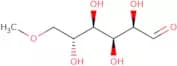
CAS:6-O-Methyl-D-glucose is a non-carbohydrate that can be found in Mycobacterium tuberculosis. It is an electron microscopic study of proton and fatty acid molecules, which has shown that the cell membrane of mycobacterial cells are susceptible to inhibition by fatty acids. 6-O-Methyl-D-glucose is a nucleophilic attack on cellular fatty acids, which may inhibit their synthesis and lead to cell death. 6-O-Methyl-D-glucose has been shown to be synthesized from glucose and glycosylated with hydroxyl groups during biosynthesis. This chemical is also used in the synthesis of oligosaccharides because it has a molecular weight of 180, making it more easily scalable than other carbohydrates.
Fórmula:C7H14O6Pureza:Min. 95%Forma y color:White Off-White PowderPeso molecular:194.18 g/molD-Gluconic acid manganese salt
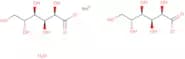
CAS:D-Gluconic acid manganese salt (DGM) is a glycol ether that is used as an antimicrobial agent in the treatment of infectious diseases. It binds to the metal ions in bacterial cell walls and disrupts their function. DGM has been shown to inhibit enzymes such as phosphoglucoisomerase, glucose-6-phosphate dehydrogenase, and pyruvate kinase. DGM also has covalent linkages that may be involved in its antimicrobial activity. The structure of DGM has been determined by X-ray diffraction data and electrochemical impedance spectroscopy, which show that it belongs to group p2.
Fórmula:C6H11O7·MnPureza:Min. 98%Forma y color:PowderPeso molecular:445.24 g/molGlycyl-Oligosaccharidesmannose 3(a)
Glycyl-Oligosaccharidesmannose 3(a) (GL3(a)) is a complex carbohydrate that is composed of mannose and glycyl chains. It has been modified with methyl, click, fluorination, and saccharide modifications. GL3(a) has been synthesized using custom synthesis methods that yield high purity.
Fórmula:C36H62N4O26Pureza:Min. 95%Peso molecular:966.89 g/mol