


Glycoscience
Subcategorías de "Glycoscience"
- Aminoazúcares(108 productos)
- Anticuerpos relacionados con azúcares(282 productos)
- Glicolípidos(46 productos)
- Glicosaminoglicanos (GAGs)(55 productos)
- Glucósidos(419 productos)
- Monosacáridos(6.618 productos)
- Oligosacáridos(3.711 productos)
- Polisacáridos(503 productos)
Se han encontrado 11016 productos de "Glycoscience"
6- Azido- 6- deoxy- 1, 2:3, 5- bis- isopropylidene-D- glycero- L- gulo- heptitol
CAS:6-Azido-6-deoxy-1,2:3,5-bisisopropylidene-D-glycero-L-guloheptitol is a synthetic monosaccharide that can be used for the synthesis of oligosaccharides and complex carbohydrates. It is prepared by the fluorination of 6,6'-azido-1,2:3,5 bisisopropylidene D-glycero L guloheptitol. The chemical name of 6,6'-azido 1,2:3,5 bisisopropylidene D glycero L guloheptitol is 2-(6'-Amino)-2-(6'-deoxy)-1-(isopropylidene)ethanol. This compound has been shown to react with carbonyl groups in sugar molecules to form new compounds called glycosides. 6,6'-Amino 1,
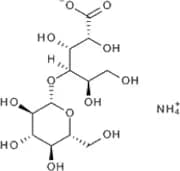
Fórmula:C13H23N3O6Pureza:Min. 95%Peso molecular:317.34 g/molCellobionic acid ammonium salt
CAS:Cellobionic acid is produced by oxidative enzymes working on cellulose. These compounds have found application in cosmetic antiaging formulations, moisturizers, and peels, and in treatment products to improve hyperpigmentation and acne. The bionic acids such as cellobionic acid offer the benefits of α-hydroxyacids without irritation. They also provide additional antioxidant/chelation, barrier strengthening, and moisturizing effects.
Fórmula:C12H25NO12Pureza:Min. 95%Forma y color:Off-White PowderPeso molecular:375.33 g/molN-[2-(4'-Methylphenylacetonitrile)]-2,3,4,6-tetra-O-pivaloyl-D-glucopyranoside
CAS:Ramipril is a drug used for the treatment of high blood pressure and congestive heart failure. It belongs to the group of ACE inhibitors, which inhibit the enzyme angiotensin-converting enzyme (ACE). Ramipril is not active in its prodrug form, but is converted in vivo to enalaprilat, its active metabolite. This conversion takes place mainly in the liver. Enalaprilat prevents the conversion of angiotensin I to angiotensin II, reducing vasoconstriction. Ramipril also improves mental function by enhancing memory and cognition and may have an effect on improving learning ability. The effective dose for ramipril is 5-20 mg/kg per day, with captopril being an alternative medication that has similar effects.Fórmula:C35H52N2O9Pureza:Min. 95%Peso molecular:644.8 g/mol6-Deoxy-6-fluoro-D-lactosylamine
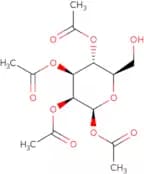
6-Deoxy-6-fluoro-D-lactosylamine (6DFDLA) is a Custom synthesis, Modification, Fluorination, Methylation, Monosaccharide, Synthetic, Click modification, Oligosaccharide, saccharide. It is a polysaccharide that contains a glycosyl linkage between two or more monosaccharides. The carbons of 6DFDLA are derived from glucose and galactose. 6DFDLA is a carbohydrate that can be classified as either simple or complex carbohydrates.Pureza:Min. 95%1,2,3,4-Tetra-O-acetyl-β-D-mannopyranose
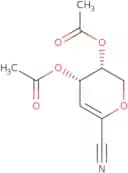
CAS:1,2,3,4-Tetra-O-acetyl-β-D-mannopyranose is a fluorinated monosaccharide that has been synthesized. It is a complex carbohydrate with the molecular formula C12H24O8 and a molecular weight of 256.24 g/mol. 1,2,3,4-Tetra-O-acetyl-β-D-mannopyranose has been modified with glycosylation and polysaccharides to create a click modification. It can be used in custom synthesis and provides high purity.Fórmula:C14H20O10Pureza:Min. 95%Forma y color:White Off-White PowderPeso molecular:348.3 g/mol4,5-Di-O-acetyl-2,6-anhydro-3-deoxy-D-erythro-hex-2-enononitrile
CAS:4,5-Di-O-acetyl-2,6-anhydro-3-deoxy-D-erythro-hex-2-enononitrile is a custom synthesis carbohydrate. It has been modified with methyl and glycosylation groups. This product can be used as an intermediate in the synthesis of other compounds. 4,5 Di O acetyl -2,6 anhydro 3 deoxy D erythro hex 2 enononitrile is a white crystalline solid that is soluble in water and ethanol. It has a melting point of 74°C and it is stable up to 168°C.Fórmula:C10H11NO5Pureza:Min. 95%Peso molecular:225.2 g/mol(2R, 3S, 4R, 5S) -Methyl- 1- nonyl-3, 4, 5- piperidinetriol
(2R, 3S, 4R, 5S) -Methyl- 1- nonyl-3, 4, 5- piperidinetriol is a custom synthesis that has been modified with fluorination and methylation. This product is a monosaccharide or a synthetic oligosaccharide that is glycosylated with sugar. Carbohydrates are made up of complex carbohydrates.Pureza:Min. 95%Sodium alginate, viscosity 250 - 350 mPa.s
CAS:Sodium alginate is a natural polysaccharide that is extracted from seaweed and used as an emulsifier, thickener, and stabilizer in food products. It is also used to create a gel with water or other liquids. The viscosity of sodium alginate can be modified by adding sugar, glycosylation, or methylation. Click modification is used to introduce fluorine atoms into the polymer backbone. Sodium alginate may be modified by adding oligosaccharides or monosaccharides for use as a bio-sorbent in wastewater treatment plants.Forma y color:Powder2,3,4-Tri-O-acetyl-6-deoxy-6,6-difluoro-a-D-mannopyranosyl-1-bis[2-(acetylthio)ethyl]phosphate
CAS:Fucosylation inhibitorFórmula:C20H29F2O13PS2Peso molecular:610.54 g/molL-Fucose - mycoplasma free, suitable for cell culture
CAS:L-fucose is used in cell culture to supplement the cell culture medium and provide a building block for cellular processes like fucosylation. When cells take up L-fucose they convert it to GDP-L-fucose MG01912 which is then used for adding fucose residues to glycoproteins. This is useful for studying metabolic pathways, correcting fucosylation deficiencies, or enhancing cellular functions.Our material is extensively purified in our Swiss manufacturing site to ensure it is mycoplasma free and low endotoxin.Fórmula:C6H12O5Pureza:Min. 98 Area-%Peso molecular:164.16 g/mol2,3-O-Isopropylidene-hamamelono-1,4-lactone
2,3-O-Isopropylidene-hamamelono-1,4-lactone is an Oligosaccharide with a Glycosylation that is Synthetic and Fluorinated. It has a Custom synthesis and Methylation. This product is Monosaccharide and Polysaccharide. It has a Click modification, a complex carbohydrate, and is High purity. The CAS number for this product is 62968-07-1.
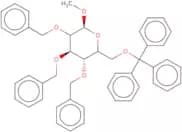
Pureza:Min. 95%Methyl 2,3,4-tri-O-benzyl-6-O-trityl-a-D-galactopyranoside
CAS:Methyl 2,3,4-tri-O-benzyl-6-O-trityl-a-D-galactopyranoside is a synthetic modified oligosaccharide. It has been shown to have potent antiplaque activity in animal models of dental caries and has been demonstrated to be an effective inhibitor of the glycosylation reaction. Methyl 2,3,4-tri-O-benzyl-6-O-trityl galactopyranoside is soluble in water and can be used as a fluorinated monosaccharide. The compound can also be used as a click modification with other sugars or saccharides.Fórmula:C47H46O6Pureza:Min. 95%Peso molecular:706.89 g/mol1,1,1,1,1-Kestoheptaose
CAS:Kestoheptaose is a long-chain inulin with a molecular weight of 1,000 Da. It is found in the plant family Asteraceae and is the only natural polysaccharide with seven glucose units. Kestoheptaose has been shown to be involved in the regulation of muscle glycogen levels and can be used as a supplement for athletes or those who are active. The biochemical functions of Kestoheptaose have been validated using an oral ethanol extract, which was shown to increase muscle glycogen levels by up to 132%. This extract also decreased malondialdehyde concentrations by up to 41% and increased urea nitrogen levels by up to 89%.
Fórmula:C42H72O36Pureza:Min. 75 Area-%Forma y color:White PowderPeso molecular:1,153 g/molCroscarmellose sodium
CAS:Superdisintegrant used in pharmaceutical formulationsForma y color:White PowderPeso molecular:982.442-Deoxy-2-fluoro-D-glucose 6-phosphate barium salt
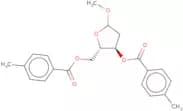
CAS:2-Deoxy-2-fluoro-D-glucose 6-phosphate barium salt is a glucose analogue used in positron emission tomography (PET) imaging of cancer. It is an inhibitor of glycolysis and phosphofructokinase, which are enzymes that catalyze the conversion of glucose to pyruvate. 2-Deoxy-2-fluoro-D-glucose 6-phosphate barium salt is taken up by the cell by active transport, then metabolized into 2 deoxy 2 fluoro D mannose phosphate and finally converted to glucosylceramide. The PET scan detects the accumulation of this molecule in cells with high glycolytic activity, such as cancer cells. This compound has been shown to inhibit hepatocellular carcinoma (HCC) cell growth in vitro and in vivo.Fórmula:C6H10FO8P·BaPureza:Min. 95%Forma y color:PowderPeso molecular:397.44 g/molMethyl 2-deoxy-3,5-di-O-toluoyl-L-ribofuranoside
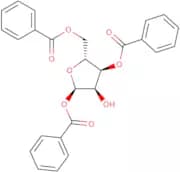
CAS:Methyl 2-deoxy-3,5-di-O-toluoyl-L-ribofuranoside is a custom synthesis that is a complex carbohydrate that is used in the modification of saccharides. It has been shown to be able to methylate and glycosylate carbohydrates and can be fluorinated for use in click chemistry experiments. Methyl 2-deoxy-3,5-di-O-toluoyl-L-ribofuranoside is highly pure and can be synthesized with high yield.Fórmula:C22H24O6Pureza:Min. 95%Forma y color:Brown oil.Peso molecular:384.43 g/mol1,3,5-Tri-O-benzoyl-a-D-ribofuranose
CAS:1,3,5-Tri-O-benzoyl-a-D-ribofuranose is a modified carbohydrate. It is synthesized by the methylation of 1,3,5-tri-O-benzoyl-a-D-arabinopyranose followed by glycosylation with 3,6-dideoxyhexose. This compound has been used as a substrate in enzymatic studies to investigate the modification of carbohydrates by glycosylation and methylation and can be used for the synthesis of other saccharides.
Fórmula:C26H22O8Pureza:Min. 95%Forma y color:White PowderPeso molecular:462.45 g/molMethyl 4-C-Hydroxymethyl-2,3-O-isopropylidene-b-D-ribofuranoside
CAS:Methyl 4-C-Hydroxymethyl-2,3-O-isopropylidene-b-D-ribofuranoside is a modification of the monosaccharide, D-ribose. It is synthesized by the selective methylation of the hydroxymethyl group at position C4. The synthesis of this compound starts with the oxidation of D-ribose to form 2,3'-diisopropylidene boronate ester (1). This compound is then reacted with methyl iodide in the presence of an acid to form 4-(methyloxy)benzaldehyde (2). The final step involves conversion of 2 to 4-(methyloxy)benzylidene boronate ester (3), which is then hydrolyzed to yield methyl 4-C-hydroxymethyl-2,3-O-isopropylidene ribofuranoside.Pureza:Min. 95%3-O-Benzyl-1,2-O-isopropylidene-a-D-xylofuranose
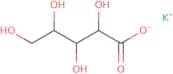
3-O-Benzyl-1,2-O-isopropylidene-a-D-xylofuranose is a monosaccharide that is synthesized by methylation of the corresponding aldose. It has been used in the synthesis of oligosaccharides and polysaccharides. 3-O-Benzyl-1,2-O-isopropylidene-a-D-xylofuranose has also been shown to be useful in the fluorination of saccharide chains.Pureza:Min. 95%Arabinonic acid potassium salt
CAS:Arabinonic acid potassium salt is a fluorinated monosaccharide that is used as a building block for the synthesis of oligosaccharides and polysaccharides. Arabinonic acid potassium salt is chemically synthesized by the glycosylation of 2-deoxy-D-ribose with arabinonitrile followed by hydrolysis to form arabinonic acid. This chemical can also be modified with methyl groups, nitro groups, or other functional groups. It has CAS number 36232-89-0 and molecular weight of 176.17 g/mol. Arabinonic acid potassium salt is a high purity product with 98% minimum purity and no detectable impurities.Fórmula:C5H9KO6Pureza:Min. 95%Forma y color:PowderPeso molecular:204.22 g/mol(1S) -1- [(2S, 3R) - N-Butyl-3- hydroxy- 1- azetidinyl] -1, 2- ethanediol
(1S) -1- [(2S, 3R) - N-Butyl-3- hydroxy- 1- azetidinyl] -1, 2- ethanediol is a synthetic carbamate which is a modification of the sugar D-glucose. It has been fluorinated at the C4 position and glycosylated at the C2 position. This compound is also methylated at the C3 position. (1S) -1- [(2S, 3R) - N-Butyl-3- hydroxy- 1- azetidinyl] -1, 2- ethanediol has CAS number 7145636 and has been custom synthesized to be high purity and with custom synthesis modifications.
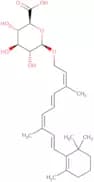
Pureza:Min. 95%E-Retinyl b-glucuronide
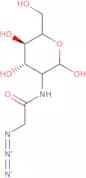
CAS:E-Retinyl b-glucuronide is a metabolite of vitamin A that is formed in the liver by glucuronidation of retinol. It has been shown to have immunomodulatory effects and can be used to activate various immune cells, such as T lymphocytes, monocytes, and natural killer cells. E-Retinyl b-glucuronide binds to cell surface antigens and induces the expression of surface markers on mononuclear cells. In vitro studies have shown that this metabolite has growth-promoting activity for certain types of cancerous cells including colon carcinoma, breast carcinoma, and thyroid carcinoma. E-Retinyl b-glucuronide is also known to inhibit the binding of 13-cis retinoic acid to its receptor, thereby preventing the activation of genes in target tissues.Fórmula:C26H38O7Pureza:Min. 95%Peso molecular:462.58 g/molN-Azidoacetylgalactosamine
Click reagent for metabolic labeling of GalNAcFórmula:C8H14N4O6Pureza:Min. 98 Area-%Forma y color:White PowderPeso molecular:262.22 g/molOctyl beta-D-thioglucopyranoside
CAS:Non-denaturing, non-ionic detergent for membrane protein solubilisation. Previously under code O-2710 and DO06354.Fórmula:C14H28O5SPureza:Min. 98 Area-%Peso molecular:308.44 g/mol4-Acetamidophenyl b-D-glucuronide sodium salt
CAS:4-Acetamidophenyl b-D-glucuronide sodium salt is a pharmaceutical drug that is a metabolite of acetaminophen. It can be detected in the urine by biochips, which are microarrays that contain immobilized binding sites for specific analytes. The analysis of 4-acetamidophenyl b-D-glucuronide sodium salt in urine is used to screen for the use of acetaminophen and to identify cytochrome P450 2C19 (CYP2C19) activity. This drug can also be detected by spectrometric methods using biochemical assays on plates or hepatocytes and mass spectrometric detection methods using liquid chromatography/mass spectrometry (LC/MS). Acetaminophen has been shown to have toxic effects on the liver, kidneys, and lungs in humans, as well as on diode photoluminescence.Fórmula:C14H16NNaO8Pureza:Min. 95%Forma y color:PowderPeso molecular:349.27 g/mol2-Azido-2,6-dideoxy-3,5-((R)-benzylidene-L-mannofuranose
2-Azido-2,6-dideoxy-3,5-((R)-benzylidene-L-mannofuranose) is a synthetic, fluorinated carbohydrate that can be used to modify saccharides, oligosaccharides, or polysaccharides with click chemistry. This product has been modified by the addition of an azido group at the 2 position and a fluoride atom at the 6 position. The CAS number for this product is 52765-69-0.Pureza:Min. 95%1,2:3,4:5,6-Tri-O-isopropylidene-D-glycero-L-gulo-heptitol
1,2:3,4:5,6-Tri-O-isopropylidene-D-glycero-L-gulo-heptitol is a fluorinated monosaccharide that is synthesized from D-glucose. It is used as an experimental carbohydrate for glycosylation and modification reactions with other compounds. 1,2:3,4:5,6-Tri-O-isopropylidene-D-glycero-L-gulo-heptitol has a CAS number of 152400–59–1.
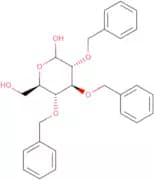
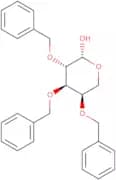
Pureza:Min. 95%2,3,4-Tri-O-benzyl-D-glucopyranose
CAS:2,3,4-Tri-O-benzyl-D-glucopyranose is a thioglucoside that can be synthesized from D-glucose and benzyl bromide. This compound is a protonated nucleophile with a hydroxyl group that can interact with the sulfur of a thiol or disulfide group. The interaction between 2,3,4-tri-O-benzyl-D-glucopyranose and S. aureus has been shown to be dependent on the concentration of 2,3,4 tri O benzyl glucopyranose. The reaction between this compound and oligosaccharides led to the formation of dioxane ring structures that were hydrophobic.Fórmula:C27H30O6Pureza:Min. 95%Forma y color:PowderPeso molecular:450.52 g/mol1,2:5,6-Di-O-isopropylidene-a-D-allofuranose
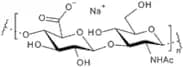
CAS:Synthetic building blockFórmula:C12H20O6Pureza:Min. 95%Forma y color:White PowderPeso molecular:260.28 g/molHyaluronic acid sodium, average MW 2.0 - 2.5 million Da
CAS:Gycosaminoglycan in many organs; joint lubricant and shock absorberFórmula:(C14H20NO11Na)nPureza:Min. 95%Forma y color:PowderD-Mannuronic acid sodium salt
CAS:D-Mannuronic acid (ManA) is a hexuronic acid having the CH2OH at C5 of mannose replaced by a carboxyl group (Collins, 2006). The major source of D-mannuronic acid is the polysaccharide, alginic acid, found in brown seaweeds (Phaeophyceae). The polysaccharide is a linear glycuronan consisting of (1+4)-linked residues of D-mannuronic acid and L-guluronic acid arranged in a block fashion in the polymer chain, with blocks containing one type of residue being separated by segments in which the two residues aIternate (Percival, 1967). In addition to algal sources, two genera of bacteria have been shown to secrete alginate-like polysaccharides, Pseudomonas and Azotobacter. Most of the research into bacterial alginate biosynthesis has been conducted on the opportunistic human pathogen Pseudomonas aeruginosa or the soil dwelling Azotobacter vinelandii. In both cases, bacterial alginate is partially acetylated (Hay, 2013).Fórmula:C6H10O7•NaPureza:Min. 98 Area-%Forma y color:White PowderPeso molecular:217.13 g/mol2-Acetamido-1,3,4-tri-O-butanoyl-2-deoxy-D-mannopyranose
CAS:2-Acetamido-1,3,4-tri-O-butanoyl-2-deoxy-D-mannopyranose is a protected mannosamine carbohydrate.
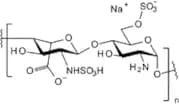
Fórmula:C23H39NO9Pureza:Min. 95%Peso molecular:473.56 g/molDe-N-sulfated heparin sodium
CAS:Porcine mucosal heparin derivative; no anti-coagulant activityForma y color:Powder2,3,4-Tri-O-benzyl-b-D-arabinopyranose
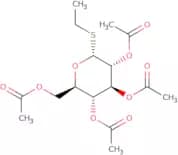
CAS:2,3,4-Tri-O-benzyl-b-D-arabinopyranose (TBA) is a sugar that is found in the skin of primates. It has been shown to promote epidermal growth factor (EGF) production and maturation of the epidermis. TBA has also been shown to have a gestational age effect on epidermal growth. This compound has been used as a synchronizing agent for animal studies in vitro and has been investigated as a treatment for cesarean sections, which may help to reduce the risk of infection and postoperative complications. TBA has also been used to treat skin diseases such as psoriasis and ichthyosis by stimulating keratinocyte proliferation and differentiation.Fórmula:C26H28O5Pureza:Min. 95%Forma y color:PowderPeso molecular:420.5 g/molEthyl 2,3,4,6-tetra-O-acetyl-a-D-thioglucopyranoside
CAS:Ethyl 2,3,4,6-tetra-O-acetyl-a-D-thioglucopyranoside is an orthorhombic sugar that is composed of a mannopyranoside and a thioglucopyranoside. The crystal structure has been determined to be space group P2(1)/c.Fórmula:C16H24O9SPureza:Min. 98 Area-%Forma y color:White PowderPeso molecular:392.42 g/mol1,2:5,6-Di-O-isopropylidene-3-O-methanesulfonyl-α-D-glucofuranose
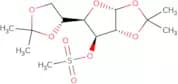
CAS:A protected glucofuranose.
Fórmula:C13H22O8SPureza:Min. 95%Forma y color:White To Off-White SolidPeso molecular:338.37 g/mol2-Acetamido-2,6-dideoxy-D-galactose
CAS:2-Acetamido-2,6-dideoxy-D-galactose (2ADG) is a structural analogue of the natural monosaccharide 2,6-dideoxy-D-galactose. It has been shown to have an antimicrobial effect against aerobacter aerogenes in vitro. 2ADG is metabolized by glycosidases and methyl glycosides to form 1,4-anhydro-2,3,4,6 tetraacetamido-2,4,6 dideoxy D galactose. This compound inhibits the growth of bacterial strains that are resistant to polymyxin b., such as Pseudomonas aeruginosa. The inhibition of these bacteria is due to the inhibition of the synthesis of their outer membrane lipopolysaccharides by 2ADG. The antibacterial activity is also attributed to its ability to inhibit the metabolism of glycan molecules in some bacteria
Fórmula:C8H15NO5Pureza:Min. 95%Forma y color:White PowderPeso molecular:205.21 g/mol3,6-Dideoxy-3,6-imino-4,5-O-isopropylidene-D-mannitol
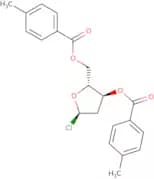
3,6-Dideoxy-3,6-imino-4,5-O-isopropylidene-D-mannitol is a complex carbohydrate that is a sugar. It is an oligosaccharide and has CAS No. 123725-27-8. 3,6-Dideoxy-3,6-imino-4,5-O-isopropylidene D mannitol is a saccharide and it can be modified with methylation or glycosylation. 3,6-Dideoxy D mannitol can be fluorinated in the presence of elemental fluorine to produce 3,6 difluoro 2,5 dihydroxyhexanoic acid. 3,6 Dideoxy D mannitol is synthesized from 2 acetylacetone and tetrachloroethanol as starting materials.Pureza:Min. 95%1-Chloro-2-deoxy-3,5-di-O-toluoyl-a-D-ribofuranose
CAS:1-Chloro-2-deoxy-3,5-di-O-toluoyl-a-D-ribofuranose (also known as Hoffer’s chlorosugar) is a synthetic building block used in nucleic acid research to afford an array of both alpha and beta linked 2’-deoxyribose derivatives. Naturally occurring nucleosides are typically beta linked and the efficient synthesis of alpha linked analogues, which are often more stable, offers access to interesting variations in 3D structure and biochemical reactivity.Fórmula:C21H21ClO5Pureza:Min. 90 Area-%Forma y color:PowderPeso molecular:388.84 g/mol1,2:3,4-Di-O-isopropylidene-a-L-galactopyranose
CAS:1,2:3,4-Di-O-isopropylidene-a-L-galactopyranose is a synthetic sugar that is used for the saccharide modification of proteins. It has been shown to be an efficient and cost effective way to synthetically modify proteins with oligosaccharides or polysaccharides. 1,2:3,4-Di-O-isopropylidene-a-L-galactopyranose can be modified with fluorine atoms using a click chemistry reaction. This reaction is catalyzed by copper ions and generates a reactive thiol group on the sugar molecule that can then react with amino groups on protein molecules. The resulting product is a glycosylation site on the protein that can be further modified with other sugars or molecules. The fluorination step eliminates any possibility of adverse reactions being caused by the presence of reactive hydroxyl groups.Fórmula:C12H20O6Pureza:Min. 95%Forma y color:Colorless Clear LiquidPeso molecular:260.28 g/molMethyl 2-deoxy-2-phthalimido-β-D-glucopyranoside
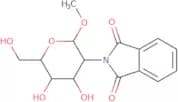
CAS:Methyl 2-deoxy-2-phthalimido-b-D-glucopyranoside is a synthetic sugar that has been modified with fluorine. It is an important building block for the synthesis of complex carbohydrates. Methyl 2-deoxy-2-phthalimido-b-D-glucopyranoside can be used to modify saccharides and oligosaccharides, as well as to add fluorine atoms to glycosyl units. This modification can be done using a click chemistry reaction with azide functionalized molecules. The chemical structure of Methyl 2-deoxy-2-phthalimido-b-D-glucopyranoside is shown below:Fórmula:C15H17NO7Pureza:Min. 95%Forma y color:White to off-white solid.Peso molecular:323.3 g/molPhenyl-beta-D-thioglucopyranoside
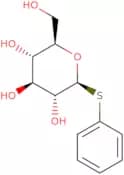
CAS:Phenyl-beta-D-thioglucopyranoside is a heterocycloalkyl compound that contains a phenyl group and a beta-D-thioglucopyranoside. It is used as an intermediate in the production of pharmaceuticals, yellow dye, and cancer drugs. Phenyl-beta-D-thioglucopyranoside binds to the cell membrane of cancer cells and induces apoptosis by inhibiting the synthesis of proteins. This compound also has alkenyl and haloalkyl groups, which may be important for its biological activity. Phenyl-beta-D-thioglucopyranoside can be crystallized in two different forms: one with a crystalline form, which is yellow; the other with a crystalline form, which is colorless.
Fórmula:C12H16SO5Pureza:Min. 95%Forma y color:PowderPeso molecular:272.32 g/mol1,2,3-Tri-O-acetyl-5-deoxy-b-D-ribofuranose
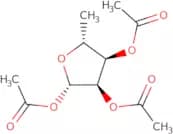
CAS:1,2,3-Tri-O-acetyl-5-deoxy-b-D-ribofuranose is a fluoropyrimidine prodrug. It can be converted to 5-fluorocytosine in vivo and has been shown to have antitumor properties. The positron emission from 1,2,3-triacetyl-5-deoxyribofuranose is used as a radiotracer for colorectal cancer.Fórmula:C11H16O7Pureza:Min. 95%Forma y color:White PowderPeso molecular:260.24 g/mol1,2,3,4-Tetra-O-benzoyl-6-O-trityl-a-D-mannopyranose
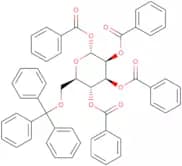
CAS:1,2,3,4-Tetra-O-benzoyl-6-O-trityl-a-D-mannopyranose is a methylated saccharide. It is a synthetic product that can be used for the modification of oligosaccharides and polysaccharides. This product has been fluorinated and can be used in the synthesis of complex carbohydrates. It can also be used for the synthesis of monosaccharides or sugars.Fórmula:C53H42O10Pureza:Min. 95%Peso molecular:838.89 g/molβ-Cyclodextrin
CAS:Beta-Cyclodextrin is a cyclic oligosaccharide with 7 D-glucose residues which are alpha-1,4-linked. beta-cyclodextrin is used in the food industry to encapsulate flavours and fragrances. Beta-cyclodextrin can increase the water solubility of compounds, such as curcumin; further, the cyclodextrin-curcumin complex also allows for a controlled, sustainable release in a wound healing study.Fórmula:C42H70O35Pureza:Min. 98.0 Area-%Peso molecular:1,134.99 g/mol2-Acetamido-1,2-dideoxy-galactonojirimycin
CAS:2-Acetamido-1,2-dideoxy-galactonojirimycin is a microbial infection drug that belongs to the class of chemical species. It has been shown to be a potent inhibitor of sodium carbonate (NaCO) and can be used as a control in analytical studies. This drug also inhibits vasoactive intestinal peptide, which may lead to the development of cancer. 2-Acetamido-1,2-dideoxy-galactonojirimycin is an acyl chain with galacturonic acid and can be used as diagnostic agents for human serum and hepatic steatosis. It has been shown to have anti-inflammatory properties that are useful for the treatment of autoimmune diseases.Fórmula:C8H16N2O4Pureza:Min. 95%Forma y color:PowderPeso molecular:204.22 g/molHyaluronic acid sodium salt - Extra low molecular weight 8,000-15,000
CAS:Gycosaminoglycan in many organs; joint lubricant and shock absorberFórmula:(C14H20NO11Na)nPureza:Min. 91 Area-%Forma y color:Powder5-Deoxy-L-ribose
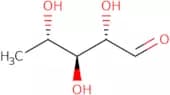
CAS:5-Deoxy-L-ribose is found in a variety of organisms, including humans. It is stereoselective, with the (-) form being more common than the (+) form. 5-Deoxy-L-ribose is synthesized by the glycosidic bond between l-arabinose and D-ribose. This compound is an inexpensive way to produce 5-deoxy analogs of other sugars, such as glucose, fructose, and mannose. The biosynthesis of 5-deoxy-L-ribose relies on a molybdenum cofactor and involves oxidation of L-arabinonate by aldehyde oxidase to give L-xylulose. Lactate dehydrogenase converts this into D-xylulose. Dihydroorotate reductase then reduces this to give D-(+)-5--deoxy--D--erythro--pentitol phosphate, which cyclFórmula:C5H10O4Pureza:Min. 95%Forma y color:Slightly Yellow Clear LiquidPeso molecular:134.13 g/mol2, 4- Anhydro-5-O-benzyl- 6- deoxy- L- mannonic acid methyl ester
2, 4-Anhydro-5-O-benzyl-6-deoxy-L-mannonic acid methyl ester is a synthetic oligosaccharide that can be used as a fluorinated carbohydrate. It is modified by the addition of methyl groups to the hydroxyl group of an anhydro sugar moiety. It can be used in various applications such as glycosylation and click chemistry. 2, 4-Anhydro-5-O-benzyl-6-deoxy--L--mannonic acid methyl ester has CAS number 167801–91–9 and molecular weight of 538.4 g/mol. It is soluble in water and ethanol.Pureza:Min. 95%N- [(Phenylmethoxy) carbonyl] glycylglycyl- 2- amino- 2- deoxy-a- D- manno- 2- heptulofuranosonic acid methyl ester
CAS:N- [(Phenylmethoxy) carbonyl] glycylglycyl- 2- amino- 2- deoxy-a- D- manno- 2- heptulofuranosonic acid methyl ester is a custom synthesis of an oligosaccharide, polysaccharide, and a complex carbohydrate. It is modified with methylation, glycosylation, and click modification. The CAS number for this compound is 161086-37-9. This product is highly pure, fluorinated, and synthetic.Pureza:Min. 95%

![N-[2-(4'-Methylphenylacetonitrile)]-2,3,4,6-tetra-O-pivaloyl-D-glucopyranoside](/_next/image/?url=https%3A%2Fstatic.cymitquimica.com%2Fproducts%2F3D%2Fthumb-webp%2FMM08499.webp&w=3840&q=75)
![2,3,4-Tri-O-acetyl-6-deoxy-6,6-difluoro-a-D-mannopyranosyl-1-bis[2-(acetylthio)ethyl]phosphate](/_next/image/?url=https%3A%2Fstatic.cymitquimica.com%2Fproducts%2F3D%2Fthumb-webp%2FMT96598.webp&w=3840&q=75)


![(1S) -1- [(2S, 3R) - N-Butyl-3- hydroxy- 1- azetidinyl] -1, 2- ethanediol](/_next/image/?url=https%3A%2Fstatic.cymitquimica.com%2Fproducts%2F3D%2Fthumb-webp%2FMB163416.webp&w=3840&q=75)









![N- [(Phenylmethoxy) carbonyl] glycylglycyl- 2- amino- 2- deoxy-a- D- manno- 2- heptulofuranosonic …](/_next/image/?url=https%3A%2Fstatic.cymitquimica.com%2Fproducts%2F3D%2Fthumb-webp%2FMP163942.webp&w=3840&q=75)