Glycoscience
Subcategorías de "Glycoscience"
- Aminoazúcares(108 productos)
- Anticuerpos relacionados con azúcares(282 productos)
- Glicolípidos(46 productos)
- Glicosaminoglicanos (GAGs)(55 productos)
- Glucósidos(419 productos)
- Monosacáridos(6.624 productos)
- Oligosacáridos(3.682 productos)
- Polisacáridos(504 productos)
Se han encontrado 11047 productos de "Glycoscience"
6-Hydroxyestradiol-6-O-b-D-glucuronide
6-Hydroxyestradiol-6-O-b-D-glucuronide is a synthetic, 6-hydroxyestradiol derivative that is useful for the study of estrogen metabolism and the development of progesterone agonists. The compound has been shown to have high purity, and is custom synthesized in accordance with customer specifications. 6-Hydroxyestradiol-6-O-b-D-glucuronide can be modified by glycosylation, methylation, or fluorination. This product also has a number of applications in the biomedical field due to its ability to act as an intermediate in the synthesis of oligosaccharides and saccharides.Pureza:Min. 95%Allyl 3-O-benzyl-a-D-glucopyranoside
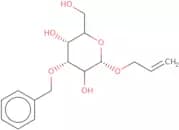
CAS:Allyl 3-O-benzyl-a-D-glucopyranoside is a synthetic, monosaccharide carbohydrate. The product is a modification of the natural polysaccharide allyl 3-O-benzyl-a-D-glucopyranoside. Allyl 3-O-benzyl-a -D glucopyranoside is an Oligosaccharide with CAS No. 145454-72 -4 and has the molecular formula C14H20O6 and molecular weight of 312.32 g/mol. The product is available in high purity and can be synthesized to order. Allyl 3-O -benzyl -a D glucopyranosides are useful as a Fluorination, saccharide for use in glycosylation or methylation reactions or as a complex carbohydrate in the synthesis of oligosaccharides, polysaccharides, or sugar chains.Fórmula:C16H22O6Pureza:Min. 95%Peso molecular:310.34 g/molChitopentaose hydrochloride
CAS:Pentasaccharide derived from chitin
Fórmula:C30H57N5O21·5HClPureza:Min. 95 Area-%Forma y color:White PowderPeso molecular:1,006.01 g/mol1-Deoxy-2,3:4,5-Bis-O-(1-methylethylidene)- D-glycero-D-gulo-heptitol
CAS:1-Deoxy-2,3:4,5-Bis-O-(1-methylethylidene)-D-glycero-D-guloheptitol is a fluorinated monosaccharide that is synthesized to have a specific glycosylation pattern. This product is used in the synthesis of complex carbohydrates, glycosylations and polysaccharides. 1-Deoxy-2,3:4,5-Bis-O-(1-methylethylidene)-D-glycero--D--guloheptitol has high purity and can be custom synthesized to order.Pureza:Min. 95%3-Fucosyllactose
CAS:3-Fucosyllactose (3-FL) is a small and neutral human milk oligosaccharide (HMO) that is metabolized by bacteria in the large intestine. It's a trisaccharide composed of L-fucose, D-galactose and D-glucose and like many other HMOs it offers great interest for the studies of baby milk formula.Fórmula:C18H32O15Pureza:Min. 95%Forma y color:White PowderPeso molecular:488.44 g/mol2,3,4-Tri-O-acetyl-b-L-arabinopyranosyl azide
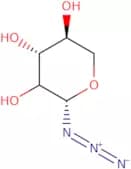
2,3,4-Tri-O-acetyl-b-L-arabinopyranosyl azide is a custom synthesis that is modified with fluorination, methylation, and monosaccharide. It can be synthesized using click modification and oligosaccharide. This compound is a carbohydrate that has saccharide as its main component. Carbohydrate is the most abundant organic molecule in the human body. Complex carbohydrates are polysaccharides made up of many monosaccharides linked together. Polysaccharides are also called glycans or glycosaminoglycans (GAGs). Glycosylation is the process by which sugars are attached to proteins or lipids.
Fórmula:C5H9N3O4Pureza:Min. 95%Peso molecular:175.14 g/molMan-8D1D2 N-Glycan
Man-8D1D2 N-glycan is a synthetic glycan that is used as a monosaccharide or polysaccharide. This product is produced through the modification of the natural Man-8D1D2 glycan by the addition of fluorine atoms and methyl groups to the sugar, making it a useful reagent for chemical synthesis. The purity of this product is high and its CAS number is 56612-59-6.Pureza:Min. 95%4-Hydroxy-L-isoleucine
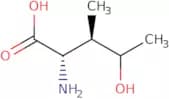
CAS:Insulinotropic; anti-diabeticFórmula:C6H13NO3Pureza:Min. 98 Area-%Forma y color:White PowderPeso molecular:147.17 g/molPhenylethyl β-D-galactopyranoside
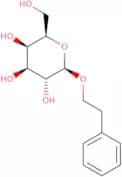
CAS:Phenylethyl b-D-galactopyranoside is a galactose compound that can be hydrolyzed by esterases in the presence of water. It is toxic to organisms, such as E. coli and S. typhimurium, at high concentrations and can be used for the treatment of infections caused by these bacteria. Phenylethyl b-D-galactopyranoside has been shown to have a permeability effect on cells, which may be due to its ability to inhibit the production of ATP in the cell membrane by blocking specific enzymes that are responsible for ATP synthesis.Fórmula:C14H20O6Pureza:Min. 95%Forma y color:PowderPeso molecular:284.31 g/mol2-Azido-((R)-3,6-O-benzylidene)-2,6-dideoxy- L-galacto(gluco)furanose
CAS:2-Azido-((R)-3,6-O-benzylidene)-2,6-dideoxy- L-galacto(gluco)furanose is a synthetic sugar that is used as a substrate in glycosylation reactions. It is also used for click modification and fluorination reactions. The chemical structure of 2-azido-(R)-3,6-O-benzylidene)-2,6-dideoxy-- L--galacto(gluco)furanose is shown below:Pureza:Min. 95%Stachyose hydrate
CAS:Stachyose hydrate is a methylated, custom-synthesized, click-modified oligosaccharide that is used as a synthetic complex carbohydrate. It is synthesized from the saccharide stachyose by fluorination and modification with methyl groups. This product may be used in biological research or as a fluoropolymer precursor. Stachyose hydrate has been shown to have high purity and can be modified to contain monosaccharides and sugars.Fórmula:C24H42O21·xH2OPureza:Min. 98.0 Area-%Peso molecular:666.58 g/mol5'-O-(2-Amino-2-deoxy-D-glucopyranosyl)-thymidine
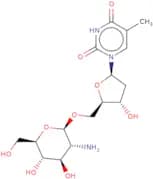
CAS:5'-O-(2-Amino-2-deoxy-D-glucopyranosyl)-thymidine is a custom synthesis of saccharide that is fluorinated, methylated, and monosaccharide. This compound has been modified with a click modification and an oligosaccharide. The saccharide is glycosylated with sugar and Carbohydrate. 5'-O-(2-Amino-2-deoxy-D-glucopyranosyl)-thymidine has CAS No. 631842-24-5Fórmula:C16H25N3O9Pureza:Min. 95%Peso molecular:403.38 g/molKinetin-9-glucoside
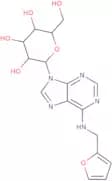
CAS:Kinetin-9-glucoside is a conjugate of kinetin and glucose. It has been shown to inhibit the growth of several types of bacteria, including Pseudomonas aeruginosa, Staphylococcus aureus, and Streptococcus pyogenes. Kinetin-9-glucoside also has anti-inflammatory properties that may be due to its ability to inhibit prostaglandin synthesis. Kinetin-9-glucoside is used in tissue culture for the induction of plant regeneration from callus tissue or from excised root tissues. Kinetin-9-glucoside has been shown to stimulate the formation of apical roots in plantlets and promote cell division in neuronal cells.Fórmula:C16H19N5O6Pureza:Min. 95 Area-%Forma y color:PowderPeso molecular:377.35 g/mol1-Deoxy-D-fructose
CAS:1-Deoxy-D-fructose is a sugar that is found in plants. It has been shown to stimulate insulin release from the pancreas and regulate glucose levels. 1-Deoxy-D-fructose has been used as a pharmaceutical preparation for the treatment of diabetes mellitus. 1-Deoxy-D-fructose is not metabolized by cells, but is taken up by cells and reacts with reactive oxygen species (ROS) to produce hydrogen peroxide. This reaction may be responsible for the biological effects of 1-deoxy-d-fructose.Fórmula:C6H12O5Pureza:Min. 97%Forma y color:Colorless Clear LiquidPeso molecular:164.16 g/molLacto-N-biose
CAS:Neutral disaccharide naturally present in human breast milk and possible bifidus factor, acceptor for the Helicobacter pylori enzyme α1,2-fucosyltransferase and disaccharide involved in the expression of Lewis blood group antigens.Fórmula:C14H25NO11Pureza:Min. 90%Forma y color:White PowderPeso molecular:383.35 g/molTrehalose hexaacetate
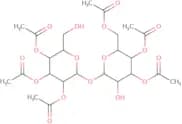
CAS:Trehalose hexaacetate is a polysaccharide that is used as a food additive. It has been shown to be a potent inhibitor of methylation and fluorination, which are post-translational modifications that are important for the function of proteins. Trehalose hexaacetate also has a high degree of glycosylation, which makes it an excellent candidate for complex carbohydrate synthesis. The compound can be custom synthesized with high purity and at low cost.Fórmula:C24H34O17Pureza:Min. 95 Area-%Forma y color:PowderPeso molecular:594.52 g/mol1-Deoxy-L-fructose
Deoxy-L-fructose is a sugar that is synthesized by the cleavage of sucrose, which is a disaccharide composed of glucose and fructose. Deoxy-L-fructose can be obtained from the hydrolysis of sucrose or it can be synthesized by the hydrogenation of d-talitol. This compound is used in various industrial processes as an intermediate in the production of other sugars and alcohols. 1-Deoxy-L-fructose has been found to have antimicrobial properties against Enterobacter aerogenes, Lactobacillus plantarum, and Lactobacillus acidophilus. It also inhibits the growth of Escherichia coli (E. coli) bacteria when tested in vitro at concentrations between 0.2 and 2mM. The antibiotic activity against E. coli may be due to its ability to inhibit ribosome synthesis and protein synthesis in these cellsPureza:Min. 95%3,6-Anhydro-D-glucose
CAS:3,6-Anhydro-D-glucose is a compound that is produced by the dehydration of D-glucose. It has been synthesized in an acidic hydrolysis reaction involving mercaptoacetic acid and sodium carbonate. The synthesis of 3,6-Anhydro-D-glucose involves the use of chloride as a reactive agent and metal ion catalysis. This compound can be used to create isomers with other sugars. It also has supramolecular chemistry properties due to its ability to form complexes with other molecules.Fórmula:C6H10O5Pureza:Min. 97 Area-%Forma y color:White Off-White PowderPeso molecular:162.14 g/mol2-Acetamido-2,6-dideoxy-3,5-((R)-benzylidene-L-mannofuranose
2-Acetamido-2,6-dideoxy-3,5-((R)-benzylidene-L-mannofuranose) is a custom synthetic glycosylation product that has been fluorinated. This product has been synthesized with methylation and click modification. The CAS number for this compound is 66572-01-0. It is a high purity custom synthesis that is an oligosaccharide sugar with a saccharide type of polysaccharide and monosaccharide type of saccharide.Pureza:Min. 95%L-Fucose
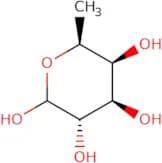
CAS:Fucose (Fuc, 6-deoxy L-galactose) has a methyl group at C6 in place of a hydroxyl group and this gives the molecule a greater degree of hydrophobicity than galactose (Collins, 2006). L-fucose is found in fucoidan, a polysaccharide that occurs in the brown seaweeds (Phaeophyceae) (Percival, 1967). Fucose is also a key component in many mammalian N- and O-linked glycans, glycolipids, blood group substances and Lewis antigens (Becker, 2003). In human milk, neutral (fucosylated) oligosaccharides (HMO) contain fucose at the terminal position (e.g. 2â -fucosyllactose and lactodifucopentaose). They represent 35% to 50% of the total HMO content and many in vitro studies suggest that HMOs directly modulate immune responses, acting either locally on cells of the mucosa-associated lymphoid tissues or systemically to inhibit the expression of inflammatory genes, mainly cytokines (Plaza-Diaz, 2018).
Fórmula:C6H12O5Pureza:Min. 98 Area-%Peso molecular:164.16 g/mol3-Amino-3-deoxy-D-mannose HCl
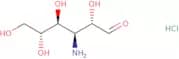
CAS:3-Amino-3-deoxy-D-mannose HCl is a synthetic, fluorinated monosaccharide. It is a complex carbohydrate that can be found in glycosylations and polysaccharides. 3-Amino-3-deoxy-D-mannose HCl is synthesized through the use of Click chemistry and methylation methods. 3-Amino-3-deoxy-D-mannose HCl is used as a sugar modification for glycoconjugates and proteins, which are natural substances made up of sugars. This product has been purified to high purity standards and can be used in a variety of applications, including pharmaceuticals, biotechnology, diagnostics, and cell biology.Fórmula:C6H13NO5·HClPureza:Min. 95%Forma y color:PowderPeso molecular:215.63 g/molSalicylic acid-acyl-b-D-glucuronide
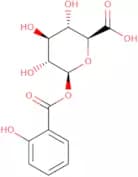
CAS:Salicylic acid-acyl-b-D-glucuronide is an anti-inflammatory compound that is found in the urine of diabetic patients. It has been shown to inhibit the production of a number of proinflammatory compounds, including prostaglandin E2 (PGE2), in human serum. Salicylic acid-acyl-b-D-glucuronide is formed by the reaction of salicylic acid with acetylsalicylic acid. The rate of formation is dependent on the concentration of salicylic acid and pH. The reactive product can form covalent adducts with tyrosinase and other proteins, leading to inhibition of tyrosinase activity and melanin synthesis.Fórmula:C13H14O9Pureza:Min. 95%Forma y color:White PowderPeso molecular:314.24 g/molEpilactose
CAS:Epilactose is a monosaccharide with biological properties. It is the 2-epimer of lactulose, and can be synthesized from cellobiose by epimerase. Epilactose has been shown to have beneficial effects on bowel disease in mice, which may be related to its ability to stimulate intestinal motility and improve the intestinal microflora. Epilactose has also been shown to have anti-inflammatory activity in rats with colitis. Epilactose can be used as a structural probe for oligosaccharides, due to its ability to form hydrogen bonds with sugars. In addition, epilactose has been found in marine microalgae such as Chlorella pyrenoidosa, but not in higher plants or animals.Fórmula:C12H22O11Pureza:Min. 95%Forma y color:PowderPeso molecular:342.3 g/molD-Cellopentaose
CAS:Cellotriose is a bifunctional sugar that can be chemically converted to cellobiose and D-cellopentaose. Cellotriose is a component of cellulose, which is the most abundant biopolymer on Earth. Cellotriose is a source of chitin, which is a major component of the exoskeleton of insects and crustaceans. The molecule has been observed using atomic force microscopy to have an amphiphilic nature, in that it has both hydrophobic and hydrophilic regions. Cellotriose has been synthesized in the laboratory for use as an artificial sweetener, but it does not taste as good as sucrose because it lacks the sweetness profile. When heated, cellotriose undergoes a color change from yellow to blue-green due to its ability to form hydrogen bonds with oxygen molecules. This property can be used as a colorimetric test for cellulase activity in solutions.
Fórmula:C30H52O26Pureza:Min. 95%Forma y color:White Off-White PowderPeso molecular:828.72 g/mol1,2-O-Isopropylidene-5-O-tert-butyldiphenylsilyl-b-D-arabinofuranose
CAS:1,2-O-Isopropylidene-5-O-tert.butyldiphenylsilyl-b-D-arabinofuranose is a modified sugar that can be used in the synthesis of complex carbohydrates. It has been custom synthesized and is available in high purity with a CAS number. It is an oligosaccharide that can be methylated or glycosylated. The chemical name for 1,2-O-Isopropylidene-5-O-tert.butyldiphenylsilyl-b-D-arabinofuranose is 5-(1,1'-Biphenylethyl)-3'-hydroxybenzaldehyde O-(4,4'-dimethoxytrityl)ester. This product also has fluorination and saccharide properties.
Fórmula:C24H32O5SiPureza:Min. 95%Peso molecular:428.59 g/molMethyl 2,3,4-tri-O-acetyl-6-O-tert-butyldimethylsilyl-a-D-glucopyranoside
CAS:Methyl 2,3,4-tri-O-acetyl-6-O-tert-butyldimethylsilyl-a-D-glucopyranoside is a glycosylation reagent and a synthetic monosaccharide that is custom synthesized and available in high purity. It is a saccharide with a molecular weight of 244.24 g/mol and chemical formula C12H21NO8Si. This product is often used as an intermediate for modified oligosaccharides and polysaccharides. Methyl 2,3,4-tri-O-acetyl-6-O-tert-butyldimethylsilyl -a D glucopyranoside can be used for the synthesis of complex carbohydrate, methylation, click modification, fluorination saccharide, modification or other reactions. This product has CAS No. 637341162 and can be found inFórmula:C19H34O9SiPureza:Min. 95%Peso molecular:434.56 g/mol2,3:5,6-Di-O-isopropylidene-2-C-(tert.butyldimethylsilyloxy)methyl-D-allono-1,4-lactone
2,3:5,6-Di-O-isopropylidene-2-C-(tert.butyldimethylsilyloxy)methyl-D-allono-1,4-lactone is a sugar molecule. It is composed of two monosaccharides, D and L allose. The D allose is an alpha(1→2)-linked glucose with the terminal hydroxyl group on C2 and the L allose is a beta(1→4)-linked galactose with the terminal hydroxyl group on C4. The chemical formula for 2,3:5,6-Di-O-isopropylidene-2-C-(tert.butyldimethylsilyloxy)methyl-D-allono-1,4-lactone is C12H22O11.Pureza:Min. 95%Carboxymethyl-dextran sodium salt - Average MW 20,000
CAS:Sodium carboxymethyl dextran is a white, odourless and tasteless powder, which is freely soluble in water or electrolyte solutions. Applications that have been described for carboxymethyl dextran include carriers of paramagnetic contrast agents, preparation of conjugates of pharmacologically active compounds and carboxymethyl dextrans in biosensors. A number of other uses in cosmetics, agriculture, foods, paints and textiles have been the subject of patent applications.
Forma y color:PowderD-glycero-D-galacto-Heptose
CAS:D-Glycero-D-galacto-heptose is a sugar that has been shown to have antimicrobial properties and inhibit the growth of oral pathogens. It inhibits the enzyme glycosyltransferase, which is responsible for synthesizing D-galactosyl sugars. This inhibition prevents the formation of a substrate for the enzyme β-1,4-N acetylglucosaminyltransferase, which is necessary for bacterial cell wall synthesis. This leads to cell death as a result of impaired membrane integrity. D-Glycero-D-galacto-heptose has been shown to have inhibitory properties against both Gram negative and Gram positive bacteria in vitro assays. The mechanism of action is through target enzymes such as glycosyltransferases, which are necessary for bacterial cell wall synthesis. Inhibition of these enzymes leads to cell death by impairing membrane integrity.Fórmula:C7H14O7Pureza:Min. 98 Area-%Forma y color:PowderPeso molecular:210.18 g/molGuar gum
CAS:Guar gum is obtained from the seed of the legume Cyamopsis tetragonolobus, an annual plant that grows mainly in semi-arid regions of India. The structure of the polysaccharide consists of a main chain of (1,4)-linked β-D-mannopyranosyl units with single α-D-galactopyranosyl units linked (1,6) on average to every second main chain unit. Guar has a high viscosity in aqueous solution, shows marked pseudoplastic behaviour and forms synergistic gels in the presence of other gums such as carrageenan and xanthan gum.
Fórmula:C10H14N5Na2O12P3Forma y color:White PowderPeso molecular:535.15 g/molColchicoside
CAS:Colchicoside is a natural compound that belongs to the chemical family of phenylpropanoids. It is used in the treatment of gout and pseudogout, and has been shown to be effective against demecolcine-induced hemolytic activity. Colchicoside has also shown to be an analog for other compounds with toxicological studies, such as hydrochloric acid and potassium dichromate. The toxicity studies performed on colchicoside have shown that it can cause damage to cells in culture by inhibiting DNA repair mechanisms.
Fórmula:C27H33NO11Pureza:Min. 95%Forma y color:PowderPeso molecular:547.55 g/mol1-Deoxy- 3- O- tert.butyldimethylsilyl - 4, 5- O- isopropylidene -D- fructose
1-Deoxy-3-O-tert.butyldimethylsilyl -4,5-O-isopropylidene -D-fructose is a glycosylation reagent used to modify the carbohydrate moieties of proteins and other molecules. It reacts with a protein to produce an alpha O-linked glycosylation at the N terminus of the protein. 1DOTBSDF can be prepared by reacting 1,3,5,7-tetraacetylbenzene with methyl methanolate in the presence of butyllithium. The product is purified by crystallization from hexane and diethylether and has a melting point range of 114°C – 117°C. This compound has been reported in the literature as being used for Click modification reactions that have been reported to have improved yields in comparison to other methods.
Pureza:Min. 95%3-O-Benzyl-1,2-O-isopropylidene-6-O-trityl-a-D-glucofuranose
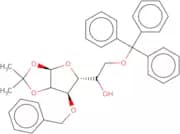
CAS:3-O-Benzyl-1,2-O-isopropylidene-6-O-trityl-a-D-glucofuranose is a synthetic oligosaccharide. It is a glycosylation product of the 6′ position of β-(3,4-)dihydroxybenzoyl α-(1,6)-Dglucopyranosyl bromide with 3,5,-O-(tetraisopropyldisiloxanyl) benzyl alcohol. The molecular weight is 588.8 g/mol and it has the molecular formula C28H31NO14. 3BBIG is soluble in water and methanol, but insoluble in ethanol or ether. This compound can be used for methylation reactions or click chemistry modifications.Fórmula:C35H36O6Pureza:Min. 95%Peso molecular:552.66 g/mol3-Deoxy- 3- fluoro- 1, 2- O- isopropylidene - D- allofuranose
3-Deoxy-3-fluoro-1,2-O-isopropylidene-D-allofuranose is an oligosaccharide that has been fluorinated at the 3 position and 3' position of the allofuranose moiety. It is a synthetic monosaccharide that belongs to a family of complex carbohydrates. The modification of this sugar with fluorine atoms is done by click chemistry, which entails the use of copper (II) ions. This sugar can be used for glycosylation and polysaccharide synthesis. Its high purity makes it ideal for use in laboratory settings.Fórmula:C9H15FO5Pureza:Min. 95%Peso molecular:222.21 g/mol3,6-Dideoxy-3,6-imino-1,2-O-isopropylidene-a-D-glucofuranose
3,6-Dideoxy-3,6-imino-1,2-O-isopropylidene-a-D-glucofuranose is an oligosaccharide that has been modified to contain fluorine. This sugar is a complex carbohydrate that can be custom synthesized for use in glycosylation reactions. It can be used to modify polysaccharides and has been shown to have a high purity.Pureza:Min. 95%2-O-Benzhydryloxybis(trimethylsilyloxy)silyl-3, 4- O- isopropylidene - L- arabinonic acid γ-lactone
2-O-Benzhydryloxybis(trimethylsilyloxy)silyl-3,4-O-isopropylidene -L-arabinonic acid gamma-lactone (2BHOS) is an oligosaccharide that is synthesized from arabinose. It is a product of the Click modification and is used to synthesize a glycosylation with a monosaccharide or saccharide donor molecule. 2BHOS can be modified by fluorination, glycosylation, methylation, or other chemical modifications. 2BHOS has CAS number 47311-27-8.Pureza:Min. 95%(1R) -1- [(2S, 3R,4S) -4-Hydroxymethyl-3- hydroxy- 1- azetidinyl] -1, 2- ethanediol hydrochloride
(1R) -1- [(2S, 3R,4S) -4-Hydroxymethyl-3- hydroxy- 1- azetidinyl] -1, 2- ethanediol hydrochloride is a synthetic modification of oligosaccharides and polysaccharides. It is an oligosaccharide with a high degree of polymerization (DP) and a high purity. The fluorination of saccharides can be used for the synthesis of this product.Pureza:Min. 95%Methyl 2,3,4-tri-O-benzyl-6-O-tert-butyldimethylsilyl-a-D-galactopyranoside
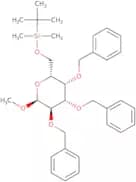
CAS:Methyl 2,3,4-tri-O-benzyl-6-O-tert-butyldimethylsilyl-a-D-galactopyranoside is a fluorinated monosaccharide that is used as a building block for the synthesis of oligosaccharides and polysaccharides. This chemical has been modified with methylation and click chemistry to give it an interesting utility in glycosylation reactions. Methyl 2,3,4-tri-O-benzyl-6-O-tert butyldimethylsilyl -a D galactopyranoside has a CAS number of 862730 60 7. It is soluble in methanol and ethanol and can be purified by recrystallization or chromatography. It has been shown to be nonmutagenic and nontoxic.Fórmula:C34H46O6SiPureza:Min. 95%Peso molecular:578.83 g/mol3'-Sialyl-N-acetyllactosamine sodium salt
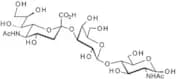
CAS:Component of glycoproteins and glycolipids expressed in antigens and receptors of proteins, bacteria and viruses. Found in the free form in human biofluids, including urine and milk - preventing adhesion of bacteria to urinary epithelium and inhibiting enteric pathogens respectively. An efficient inhibitor of neutrophil-activating protein of H.pylori (HPNAP)-mediated neutrophil activation.Fórmula:C25H42N2O19·NaPureza:Min. 95%Forma y color:White Off-White PowderPeso molecular:697.59 g/mol1,2,3,4,6-Penta-O-benzyl-β-D-thiogalactopyranoside
CAS:1,2,3,4,6-Penta-O-benzyl-b-D-thiogalactopyranoside is a custom synthesis that is a complex carbohydrate. It has a CAS number of 210358-01-3 and a molecular weight of 603. It is modified with saccharide, methylation, glycosylation, and carbonyl groups. This product is available in high purity and without fluorination or synthetic modification.
Fórmula:C41H42O5SPureza:Min. 95%Forma y color:PowderPeso molecular:646.84 g/molMethyl 2,3-di-O-benzyl-α-D-glucopyranoside
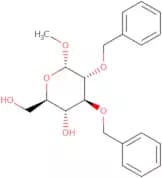
CAS:Methyl 2,3-di-O-benzyl-a-D-glucopyranoside is a chiral sugar that can be synthesized by sulfidation of methyl 1,2,3,4-tetra-O-benzyloxycarbonyl-a-D-glucopyranoside. This sugar was used in the synthesis of oxathianes and sulfones as well as other synthetic methodology.Fórmula:C21H26O6Pureza:Min. 95%Forma y color:PowderPeso molecular:374.43 g/mol1-Chloro-2-deoxy-3,5-di-O-toluoyl-a-D-ribofuranose
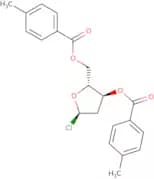
CAS:1-Chloro-2-deoxy-3,5-di-O-toluoyl-a-D-ribofuranose (also known as Hoffer’s chlorosugar) is a synthetic building block used in nucleic acid research to afford an array of both alpha and beta linked 2’-deoxyribose derivatives. Naturally occurring nucleosides are typically beta linked and the efficient synthesis of alpha linked analogues, which are often more stable, offers access to interesting variations in 3D structure and biochemical reactivity.Fórmula:C21H21ClO5Pureza:Min. 90 Area-%Forma y color:PowderPeso molecular:388.84 g/molMethyl 2-deoxy-2-phthalimido-β-D-glucopyranoside
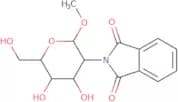
CAS:Methyl 2-deoxy-2-phthalimido-b-D-glucopyranoside is a synthetic sugar that has been modified with fluorine. It is an important building block for the synthesis of complex carbohydrates. Methyl 2-deoxy-2-phthalimido-b-D-glucopyranoside can be used to modify saccharides and oligosaccharides, as well as to add fluorine atoms to glycosyl units. This modification can be done using a click chemistry reaction with azide functionalized molecules. The chemical structure of Methyl 2-deoxy-2-phthalimido-b-D-glucopyranoside is shown below:Fórmula:C15H17NO7Pureza:Min. 95%Forma y color:White to off-white solid.Peso molecular:323.3 g/molIsomaltopentaose
CAS:Produced from high maltose syrup by treatment with transglucosidase
Fórmula:C30H52O26Pureza:Min. 95%Forma y color:White PowderPeso molecular:828.7 g/molMethyl 2,3,4-tri-O-benzyl-6-O-trityl-a-D-mannopyranoside
CAS:Methyl 2,3,4-tri-O-benzyl-6-O-trityl-a-D-mannopyranoside is a complex carbohydrate that contains a glycosylation site. This compound has a CAS number of 40653-13-2, and is available for custom synthesis. Methyl 2,3,4-tri-O-benzyl-6-O-trityl-aD mannopyranoside is water soluble and has high purity. The chemical structure of this compound can be modified to include fluorination or Click modification. This compound is also an oligosaccharide containing sugar residues and monosaccharides with a molecular weight of approximately 1000 Da.Fórmula:C47H46O6Pureza:Min. 95%Peso molecular:706.89 g/mol3,4,6-Tri-O-acetyl-2-O-trifluoromethanesulfonyl-b-D-mannopyranosyl azide
CAS:3,4,6-Tri-O-acetyl-2-O-trifluoromethanesulfonyl-b-D-mannopyranosyl azide is a chemically synthesized compound that can be used for methylation reactions. It is an Oligosaccharide with a molecular weight of 597.5 and contains the following structural features: A saccharide composed of three monosaccharides (D-glucose, D-mannose, and D-galactose), which is bonded by alpha 1,6 linkages. The chemical formula is C12H14F3N3O8. The CAS number is 1159265-99-2.Fórmula:C13H16F3N3O10SPureza:Min. 95%Forma y color:PowderPeso molecular:463.34 g/mol1,2-O-Cyclohexylidene-a-D-glucofuranose
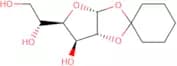
CAS:1,2-O-Cyclohexylidene-a-D-glucofuranose is a fluorinated cyclic monosaccharide. It is a synthetic oligosaccharide that belongs to the class of complex carbohydrates. This product has been modified by glycosylation, methylation, and click chemistry. The chemical name for this compound is 1,2:6,7-di-O-isopropylidene-α-D-glucofuranose. This product has not been evaluated by the U.S. Food and Drug Administration (FDA) so it should be used in laboratory research only.Fórmula:C12H20O6Pureza:Min. 95%Forma y color:PowderPeso molecular:260.28 g/mol2,5-Anhydro-D-mannitol
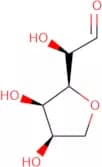
CAS:2,5-Anhydro-D-mannitol is a glucose analogue that is metabolized by the body to produce energy. It has been shown to inhibit the proliferation of HL-60 cells in vitro, and also inhibits glucose uptake and utilization in liver cells. 2,5-Anhydro-D-mannitol has been shown to have a direct effect on cellular metabolism and ATP levels. This molecule interacts with cell surface glycoproteins and nitrous oxide (NO) through hydrogen bonding interactions. 2,5-Anhydro-D-mannitol also appears to regulate peptide hormone production in the liver. The hydroxyl group on this molecule is responsible for its redox potential. In addition, 2,5-Anhydro-D-mannitol can induce cell lysis by interfering with protein synthesis due to its enzyme activities.
Fórmula:C6H12O5Pureza:Min. 98 Area-%Forma y color:PowderPeso molecular:164.16 g/mol2,3-O-Isopropylidene-2-C-methyl-D-ribono-1,4-lactone
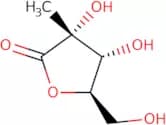
CAS:2,3-O-Isopropylidene-2-C-methyl-D-ribono-1,4-lactone is a crystalline compound that is obtained by the reaction of dimethylamine with epichlorohydrin. The compound has an asymmetric carbon atom and exists in two enantiomeric forms. It can be used as an acceptor in crystallographic analysis. The chemical structure of 2,3-O-Isopropylidene-2-C-methyl-D-ribono-1,4 -lactone is a lactone form of episulfide. Episulfides are lactones with episulfide groups attached to the C2 and C3 positions on the D ring. The episulfide group is formed by the reaction between the alcohol and sulfhydryl group from cysteamine with sulfur trioxide. The chemical formula for this compound is C13H20N2O8SFórmula:C9H14O5Pureza:Min. 95%Forma y color:PowderPeso molecular:202.2 g/mol














![(1R) -1- [(2S, 3R,4S) -4-Hydroxymethyl-3- hydroxy- 1- azetidinyl] -1, 2- ethanediol hydrochloride](/_next/image/?url=https%3A%2Fstatic.cymitquimica.com%2Fproducts%2F3D%2Fthumb-webp%2FMH163402.webp&w=3840&q=75)