Glycoscience
La glicociencia es el estudio de los carbohidratos y sus derivados, así como de las interacciones y funciones biológicas en las que participan. Este campo de investigación es crucial para comprender una amplia variedad de procesos biológicos, incluyendo el reconocimiento celular, la señalización, la respuesta inmune y el desarrollo de enfermedades. La glicociencia tiene aplicaciones importantes en la biotecnología, la medicina, y el desarrollo de nuevos fármacos y terapias. En CymitQuimica, ofrecemos una amplia selección de productos de alta calidad y pureza para la investigación en glicociencia. Nuestro catálogo incluye monosacáridos, oligosacáridos, polisacáridos, glicoconjugados, y reactivos específicos, diseñados para apoyar a los investigadores en sus estudios sobre la estructura, función y aplicaciones de los carbohidratos en sistemas biológicos. Estos recursos están destinados a facilitar descubrimientos científicos y aplicaciones prácticas en diversas áreas de la biociencia y la medicina.
Subcategorías de "Glycoscience"
- Aminoazúcares(108 productos)
- Anticuerpos relacionados con azúcares(282 productos)
- Glicolípidos(46 productos)
- Glicosaminoglicanos (GAGs)(55 productos)
- Glucósidos(419 productos)
- Monosacáridos(6.624 productos)
- Oligosacáridos(3.682 productos)
- Polisacáridos(503 productos)
Se han encontrado 11046 productos de "Glycoscience"
Ordenar por
Pureza (%)
0
100
|
0
|
50
|
90
|
95
|
100
1,3-Di-O-acetyl-5-O-benzoyl-2-deoxy-D-xylofuranose
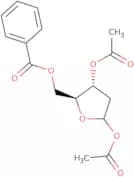
CAS:<p>1,3-Di-O-acetyl-5-O-benzoyl-2-deoxy-D-xylofuranose is a complex carbohydrate that has been custom synthesized. It is a monosaccharide with a methyl group at the C1 position and an acetyl group at the C3 position. The chemical formula for 1,3 Di-O-acetyl 5 O benzoyl 2 deoxy D xylofuranose is C11H21NO6. The molecular weight of 1,3 Di O acetyl 5 O benzoyl 2 deoxy D xylofuranose is 277.27 g/mol. 1,3 Di O acetyl 5 O benzoyl 2 deoxy D xylofuranose may have glycosidic bonds and be used in the synthesis of other carbohydrates or as a reagent in organic chemistry reactions.</p>Fórmula:C16H18O7Pureza:Min. 95%Peso molecular:322.31 g/mol2-Acetamido-6-O-(2-acetamido-2-deoxy-b-D-glucopyranosyl)-2-deoxy-D-galactopyranose
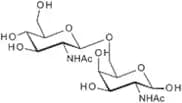
CAS:<p>2-Acetamido-6-O-(2-acetamido-2-deoxy-β-D-glucopyranosyl)-2,3,4,6-tetraacetamido-2,3,4,6,-tetra deoxygalactose is an acetylated disaccharide that is used in the synthesis of 6 fluoro 3 indoxyl beta D galactopyranoside. It is a residue of polysaccharides and proteins. 2 Acetamido 6 O 2 acetamido 2 deoxy β D glucopyranosyl 2 deoxy D galactopyranose is a disaccharide that can be found as a component of many polysaccharides and proteins.</p>Fórmula:C16H28N2O11Pureza:Min. 95%Peso molecular:424.4 g/molSodium alginate, viscosity 100 - 150 mPa.s
CAS:Sodium alginate is a soluble fiber that is extracted from brown seaweed. It is a natural carbohydrate that can be modified to create a variety of sugar-based derivatives, such as Oligosaccharides, Monosaccharides, and Custom Synthesis. Sodium alginate has been modified with Fluorination, Methylation, Glycosylation, and Click Modification to create high-purity products for various applications.Pureza:90.8 To 106.0%Forma y color:PowderLewis X trisaccharide-sp-biotin
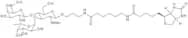
<p>Lewis X trisaccharide-sp-biotin is a synthetic compound with fluorination, monosaccharide, and oligosaccharide. The sugar is a complex carbohydrate. It is synthesized by glycosylation and polysaccharide modification. The product has high purity and is custom synthesis for research purposes only. This product does not have CAS number because it is a custom synthesis.</p>Fórmula:C39H67N5O18SPureza:Min. 95 Area-%Forma y color:White Off-White PowderPeso molecular:926.04 g/molChondroitin disaccharide di-diSB trisodium salt
CAS:Chondroitin disaccharide di-diSB trisodium salt is a chondroitin sulfate binding agent that can be used in the diagnosis of subcutaneous tumors. It binds to the chondroitin sulfate component of proteoglycans and stains these proteins under light microscopy. This agent can also be used to detect monoclonal antibodies that bind to the chondroitin sulfate component of proteoglycans. The detection of this agent may be done by enzyme-linked immunosorbent assay or fluorescence microscopy.Fórmula:C14H18NNa3O17S2Pureza:Min. 95%Forma y color:PowderPeso molecular:605.39 g/molChondroitin disaccharide di-triS tetrasodium salt
<p>Chondroitin disaccharide di-triS tetrasodium salt is a synthetic, custom synthesis, and a glycosylation of chondroitin disaccharide. It is an oligosaccharide that has been modified with fluorination, monosaccharide, methylation, and click modification. The CAS No. for this compound is</p>Fórmula:C14H17NNa4O20S3Pureza:Min. 95%Forma y color:PowderPeso molecular:707.44 g/mol3-Deoxy-2-keto-D-xylonate lithium
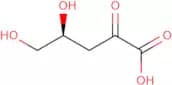
CAS:<p>3-Deoxy-2-keto-D-xylonate lithium salt is a synthetic compound that is used in the synthesis of protamine. It is produced by the reduction of an aldehyde with borohydride. 3-Deoxy-2-keto-D-xylonate lithium salt has been shown to be active against E. cloacae, which can cause diarrhea and other gastrointestinal disorders. 3-Deoxy-2-keto-D-xylonate lithium salt inhibits the growth of E. cloacae by inhibiting glycolaldehyde reductase and aldolases, which are enzymes that are essential for glycolysis and citrate metabolism, respectively. The cleavage products formed by this reaction inhibit bacterial growth by interfering with cell wall biosynthesis, preventing protein synthesis, or blocking ATP production (oxidative phosphorylation).</p>Fórmula:C5H8O5•LixPureza:Min. 95%Forma y color:PowderPeso molecular:148.11 g/molBlood Group B trisaccharide, spacer-biotin conjugate
CAS:<p>Blood group B antigen conjugated to spacer arm and biotin</p>Fórmula:C37H64N4O18SPureza:Min. 95%Forma y color:PowderPeso molecular:884.99 g/mol(±)-Muscarine chloride
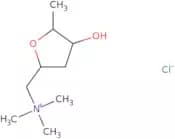
CAS:Producto controlado<p>Muscarine chloride is a potent acetylcholine receptor agonist that causes activation of the postsynaptic membrane by increasing the K+ concentration and hyperpolarizing the membrane. Muscarine chloride increases spontaneous activity in muscle and ganglion cells, which may be due to its ability to activate cholinergic receptors. Muscarine chloride has been shown to cause paralysis of skeletal muscle when injected into frog sciatic nerve, which is caused by its ability to block nerve impulses. Muscarine chloride is effective at doses as low as 0.1 ug/kg and can be used for research purposes when activating acetylcholine receptors.br> br></p>Fórmula:C9H20NO2•ClPureza:Min. 95%Forma y color:PowderPeso molecular:209.71 g/molADP-L-glycero-b-D-manno-heptose
<p>ADP-L-glycero-b-D-manno-heptose is a synthetic, fluorinated oligosaccharide that is custom synthesized and modified. It has a high purity level and CAS No., as well as being a complex carbohydrate that can be modified with methylation or click modification to generate desired properties. ADP-L-glycero-b-D-manno-heptose is an Oligosaccharide with a glycosylation and methylation. This compound can be used in the synthesis of saccharides, polysaccharides, or other complex carbohydrates.</p>Pureza:Min. 95%NGA5B N-Glycan
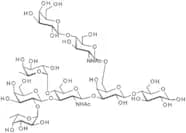
CAS:<p>NGA5B N-Glycan is a custom synthesis that can be modified by fluorination, methylation, and monosaccharide. It is synthesized from natural and synthetic substances. This N-glycan is a modification of glycans that have been shown to have anti-cancer effects. The glycosylation of the saccharide has been shown to have anti-inflammatory properties.</p>Fórmula:C82H136N8O56Pureza:Min. 95%Forma y color:PowderPeso molecular:2,129.98 g/molCellooctaose
CAS:<p>Cellooctaose is a synthetic, water-soluble oligosaccharide with a molecular weight of 1,000 daltons. It is produced by the reaction of propionate and intramolecular hydrogen with a water molecule to form glycosidic bonds. Cellooctaose can be used as a coating for pharmaceutical tablets and capsules to prevent dissolution in gastric acid. Cellooctaose is homologous to cellulose and has been used in recombinant protein production for the purpose of modifying viscosity. Cellooctaose has also been shown to inhibit the growth of cancer cells via lysosomal membrane permeability enhancement. This may be due to its ability to bind to fatty acids on the surface of cancer cells, which then leads to increased cell death.</p>Fórmula:C48H82O41Pureza:Min. 95%Forma y color:PowderPeso molecular:1,315.14 g/mol1-[[4-(Hydroxymethyl)phenyl]carbamate]-2,3,5-triacetate-β-D-glucopyranuronic acid methyl ester
CAS:1-[[4-(Hydroxymethyl)phenyl]carbamate]-2,3,4-triacetate-β-D-glucopyranuronic acid methyl ester is an enzymically cleavable spacer used for anthracycline prodrugs.Fórmula:C21H25NO12Peso molecular:483.42 g/molDifucosyllacto-N-hexaose (c)
CAS:<p>Difucosyllacto-N-hexaose (c) is an oligosaccharide that can be found in human breast milk. It has been shown to have an anti-inflammatory effect on the ileum, which may be due to its ability to stimulate the production of short-chain fatty acids in the large intestine and inhibit the release of proinflammatory cytokines.</p>Fórmula:C52H88N2O39Pureza:Min. 95%Peso molecular:1,365.25 g/molGalactostatin
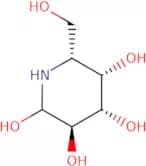
CAS:Galactostatin is a protein synthesis inhibitor that binds to the l-tartaric acid site of the bacterial 30S ribosomal subunit. It inhibits the binding of aminoacyl-tRNA to the ribosome, preventing translation and inhibiting cell growth. Galactostatin has been shown to be effective against HIV infection in mammalian cells. This drug also has a chaperone effect that protects cells from heat or cold stress.Fórmula:C6H13NO5Pureza:Min. 95%Peso molecular:179.17 g/molBlood Group A trisaccharide, spacer-biotin conjugate
CAS:Blood group A antigen conjugated to spacer arm and biotinFórmula:C39H67N5O18SPureza:Min. 95 Area-%Forma y color:PowderPeso molecular:926.04 g/mol3-Deoxy-2-keto-6-phospho-D-galactonate lithium salt
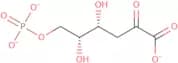
CAS:<p>The enzyme aldolase, which is involved in the metabolism of carbohydrates, catalyzes the cleavage of 3-deoxy-2-keto-6-phospho-D-galactonate to form aldol and 6-phosphoglycerate. The reaction mechanism involves an initial dehydration step that converts the substrate to an enolate ion. This intermediate then reacts with water to produce aldol and 6-phosphoglycerate. The enzyme is active only at low pH levels due to its dependence on divalent cations. The enzyme is also inhibited by other substrates or products of the reaction, such as D-tagatose, D-sorbose, and maltophilia.</p>Fórmula:C6H11O9P·xLiPureza:Min. 95%4-O-(b-D-Galactopyranosyl)-D-mannopyranose
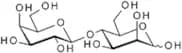
CAS:<p>Inhibitor of conversion of primary bile acids to secondary bile acids</p>Fórmula:C12H22O11Pureza:Min. 95%Forma y color:White PowderPeso molecular:342.3 g/molChondroitin disaccharide di-UA2S disodium salt
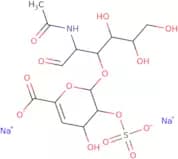
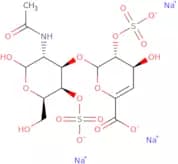
CAS:<p>Chondroitin disaccharide di-UA2S disodium salt is a high purity, custom synthesis, sugar, click modification, fluorination, glycosylation, synthetic oligosaccharide. It is a complex carbohydrate of the monosaccharide and saccharides which are composed of glucose and glucuronic acid. The molecular weight is 721.00 g/mol with a CAS number of 149368-04-7. This product has been modified to include methyl groups on N-6 and N-2 positions in the side chains of both uronic acids. Chondroitin disaccharide di-UA2S disodium salt is an oligosaccharide that has been synthesized from chondroitin sulfate with a molecular weight of 5400.00 g/mol.</p>Fórmula:C14H19NNa2O14SPureza:Min. 90 Area-%Forma y color:PowderPeso molecular:503.34 g/mol1,4-Dideoxy-1,4-epithio-D-ribitol
CAS:<p>1,4-Dideoxy-1,4-epithio-D-ribitol is a complex carbohydrate that belongs to the group of oligosaccharides. It is an Oligosaccharide with a molecular weight of 538.77. It has been modified by methylation and glycosylation and fluorination. The compound is synthesized in high purity and is available for custom synthesis.</p>Fórmula:C5H10O3SPureza:Min. 95%Peso molecular:150.2 g/mol




![1-[[4-(Hydroxymethyl)phenyl]carbamate]-2,3,5-triacetate-β-D-glucopyranuronic acid methyl ester](/_next/image/?url=https%3A%2Fstatic.cymitquimica.com%2Fproducts%2F3D%2Fthumb-webp%2FMH184603.webp&w=3840&q=75)