Antimicrobianos
Subcategorías de "Antimicrobianos"
- Antibióticos(4.138 productos)
- Antifúngicos(907 productos)
- Antiparasitarios(703 productos)
- Antivirales(766 productos)
Se han encontrado 2431 productos de "Antimicrobianos"
Ledipasvir diacetone
CAS:Ledipasvir is a synthetic drug that inhibits the viral enzyme NS5A, which is necessary for viral replication. Ledipasvir has been shown to inhibit the growth of microorganisms such as bacteria and fungi. It also has antiviral properties, and is active against HIV-1. Ledipasvir can be used in chemotherapy to treat cancer and other diseases. This drug has high purity and is available at life science stores.Fórmula:C55H66F2N8O8Pureza:Min. 95%Peso molecular:1,005.2 g/molIvermectin
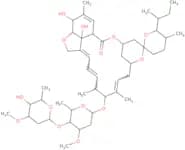
CAS:Naturally produced by the soil bacterium Streptomyces avermitili, it is clinically used in the treatment of parasitosis in both humans and animals. Ivermectin is commercially available as a mixture of 80% 22, 23-dihydroavermectin B1a and 20% 22, 23-dihydroavermectin B1b. In 2020, Ivermectin indicated that it was a good antiviral agent in the treatment of SARS-CoV-2 and a new mechanism of action has been suggested. Ivermectin would act on importin α/β heterodimer and affect nuclear transport and the translocation of viral proteins.Fórmula:C48H74O14Pureza:85%MinPeso molecular:875.1 g/molMacrolactin Z
CAS:Please enquire for more information about Macrolactin Z including the price, delivery time and more detailed product information at the technical inquiry form on this pageFórmula:C29H40O8Pureza:Min. 95%Peso molecular:516.6 g/molTCA1
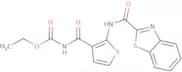
CAS:TCA1 is a synthetic small molecule, which is specifically derived from complex organic synthesis processes, designed to target bacterial metabolic pathways. It operates primarily by inhibiting essential enzymatic functions, thereby disrupting normal metabolic activity within bacterial cells. This inhibitory action results in weakened or halted protein synthesis, directly affecting bacterial growth and proliferation.Fórmula:C16H13N3O4S2Pureza:Min. 95%Peso molecular:375.4 g/molNorvancomycin trifluoroacetate
CAS:Norvancomycin trifluoroacetate is an antibiotic compound, which is a glycopeptide derived from the bacterium Amycolatopsis orientalis. Its mode of action involves inhibiting bacterial cell wall synthesis. Specifically, Norvancomycin disrupts the cross-linking of peptidoglycan layers in the bacterial cell wall by binding to the D-alanyl-D-alanine terminus of cell wall precursors. This disruption weakens the bacterial cell wall, ultimately leading to cell lysis and death, thereby exerting a bactericidal effect.Fórmula:C65H73Cl2N9O24•(C2HF3O2)xPureza:Min. 95%(+)-Oxanthromicin
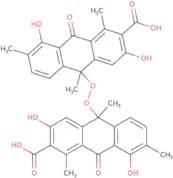
CAS:(+)-Oxanthromicin is a natural compound classified as a polyketide antibiotic, which is derived from certain strains of soil-dwelling actinomycetes. These microorganisms are known to produce a variety of biologically active secondary metabolites. The mode of action of (+)-Oxanthromicin involves the inhibition of specific bacterial enzymes, disrupting essential processes within the microbial cells. This interference can lead to growth inhibition or cell death, showcasing its potential as a therapeutic agent.
Fórmula:C36H30O12Pureza:Min. 95%Peso molecular:654.6 g/molCefteram
CAS:Cefteram is a third-generation cephalosporin antibiotic, which is synthesized through chemical processes starting from cephalosporin C, a compound derived from the fungus Acremonium. As a cephalosporin, it functions by inhibiting bacterial cell wall synthesis. This is achieved through the binding to penicillin-binding proteins (PBPs), which are critical in the formation of the bacterial cell wall. By disrupting this process, Cefteram leads to the lysis and death of the bacteria.
Fórmula:C16H17N9O5S2Pureza:Min. 95%Forma y color:White To Off-White SolidPeso molecular:479.5 g/molBombinin-like peptide (blp-1)
CAS:Bombinin-like peptide (blp-1) is an antimicrobial peptide, which is derived from the skin secretion of certain amphibians, specifically the *Bombina* species of frogs. This peptide functions by disrupting microbial cell membranes, leading to cell lysis and death. Its ability to compromise the integrity of the cell membrane makes it effective against a range of pathogenic microorganisms, including bacteria and fungi.
Fórmula:C115H194N34O33Pureza:Min. 95%Peso molecular:2,581 g/molStreptidine dihydrochloride
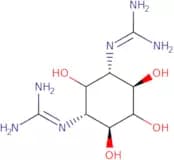
CAS:Streptidine dihydrochloride is a biochemical compound, specifically a derivative of streptomycin, which is obtained through chemical modification of the aminoglycoside antibiotic streptomycin. It is composed of streptidine, a constituent sugar derivative, that is integral to the structure of streptomycin, rendered as a hydrochloride salt to enhance solubility and stability.
Fórmula:C8H18N6O4·2HClPureza:Min. 95%Duocarmycin analog
CAS:Duocarmycin analog is a chemotherapeutic compound, which is a synthetic analog derived from natural products originally isolated from Streptomyces bacteria. These analogs operate through a unique mode of action by binding to the minor groove of DNA and subsequently alkylating adenine bases. This process results in DNA strand scission, preventing replication and leading to cell death, particularly in rapidly dividing cancer cells.Fórmula:C34H31ClN4O5Pureza:Min. 95%Peso molecular:611.1 g/molRifamdin
CAS:Rifamdin is an antibiotic, which is a chemical substance derived from the source compound rifampicin. Its mode of action involves the inhibition of bacterial DNA-dependent RNA polymerase, which effectively suppresses bacterial RNA synthesis, leading to cell death. This mechanism primarily targets Mycobacterium tuberculosis, the causative agent of tuberculosis.
Fórmula:C46H64N4O12Pureza:Min. 95%Peso molecular:865.02 g/mol7,10-Dihydroxy-8(E)-octadecenoic acid
CAS:7,10-Dihydroxy-8(E)-octadecenoic acid is a hydroxylated fatty acid, which is derived from the microbial transformation of oleic acid by certain bacterial species, particularly Pseudomonas aeruginosa. This compound features a unique structure characterized by its dihydroxy modifications and a cis double bond. The compound's mode of action involves modulating bacterial growth and metabolic pathways, possessing antimicrobial properties that result from its ability to interfere with cell membrane integrity and function.
Fórmula:C18H34O4Pureza:Min. 95%Peso molecular:314.50 g/molNafcilllin sodium monohydrate
CAS:Nafcillin sodium monohydrate is a beta-lactam antibiotic, which is derived from the penicillin class of antimicrobials. It is specifically a semi-synthetic penicillin and is commonly sourced through chemical synthesis to enhance its stability and spectrum of activity. Nafcillin primarily exerts its bactericidal effects by inhibiting bacterial cell wall synthesis. It achieves this through its strong affinity for penicillin-binding proteins (PBPs), which are essential for maintaining the bacterial cell wall structure. By disrupting the formation of peptidoglycan cross-links, nafcillin effectively weakens the bacterial cell wall, leading to cell lysis and death, especially in gram-positive bacteria such as Staphylococcus aureus, including methicillin-sensitive strains (MSSA).Fórmula:C21H21N2O5SNa·H2OPureza:Min. 95%Forma y color:White to off-white solid.Peso molecular:454.47 g/molSulfadiazine
CAS:Sulfadiazine is a sulfonamide antibiotic with action on bacterial folate synthesis inhibition and is used for treating toxoplasmosis and urinary tract infections.Fórmula:C10H10N4O2SPureza:Min. 95%Forma y color:PowderPeso molecular:250.28 g/molAvermectin b1a aglycone
CAS:Avermectin B1a aglycone is a potent antiparasitic agent, which is a semi-synthetic derivative of avermectins. Avermectins are naturally sourced from the microorganism *Streptomyces avermitilis*, known for producing macrolide compounds. The mode of action of Avermectin B1a aglycone involves binding to glutamate-gated chloride channels in nerve and muscle cells of invertebrates, leading to increased permeability and disruption of neurotransmission. This action ultimately results in paralysis and death of the targeted parasites.Fórmula:C34H48O8Pureza:Min. 95%Peso molecular:584.7 g/molKanamycin sulfate
CAS:Kanamycin sulfate is an aminoglycoside antibiotic, derived from the bacterium *Streptomyces kanamyceticus*. Its mode of action involves binding to the 30S subunit of the bacterial ribosome, thereby inhibiting protein synthesis and ultimately leading to bacterial cell death. This mechanism is particularly effective against gram-negative bacteria and certain gram-positive bacteria.
Fórmula:C18H40N4O16SPureza:Min. 95%Peso molecular:600.6 g/mol7,8-Didemethyl-8-hydroxy-5-deazariboflavin
CAS:7,8-Didemethyl-8-hydroxy-5-deazariboflavin is a cofactor often referred to as a deazaflavin. It is a derivative of riboflavin and is primarily sourced from methanogenic archaea. These microorganisms are found in anaerobic environments and play a crucial role in the process of methanogenesis.
Fórmula:C16H17N3O7Pureza:Min. 95%Peso molecular:363.32 g/mol3'-N,N-Di(desmethyl)-3'-N-formyl azithromycin
CAS:3'-N,N-Di(desmethyl)-3'-N-formyl azithromycin is a semisynthetic macrolide antibiotic derivative, which is synthesized through chemical modification of azithromycin. Azithromycin is originally derived from erythromycin, which is produced by the bacterium Saccharopolyspora erythraea. The modifications in this derivative result in enhanced specificity and altered pharmacokinetic properties compared to the parent compound.
Fórmula:C37H68N2O13Pureza:Min. 95%Forma y color:White/Off-White SolidPeso molecular:748.94 g/molPNU 103017
CAS:PNU 103017 is an experimental neuroprotective compound, which is a derivative of pharmacological agents developed for neurological research. It is sourced through synthetic modification processes aimed at enhancing specific receptor interactions in the central nervous system. Its mode of action involves targeting and modulating specific neurotransmitter receptors, such as the sigma receptors, which play a crucial role in neuronal signaling and protection against excitotoxicity.Fórmula:C28H28N2O5SPureza:Min. 95%Peso molecular:504.6 g/molTadalafil-N-ethyl
CAS:Tadalafil-N-ethyl is a synthetic compound derived from Tadalafil, a well-known phosphodiesterase type 5 (PDE5) inhibitor. This product is chemically synthesized through pharmaceutical processes involving ethylation, enhancing its pharmacological profile for research purposes. Its mode of action primarily involves the selective inhibition of the PDE5 enzyme, leading to an increased concentration of cyclic guanosine monophosphate (cGMP) in the corpus cavernosum. This results in vasodilation and increased blood flow, facilitating penile erection.Fórmula:C23H21N3O4Pureza:Min. 95%Peso molecular:403.4 g/mol